First Few EBDs Take Impact Declarations to the Building Scale

News Brief

First Few EBDs Take Impact Declarations to the Building Scale

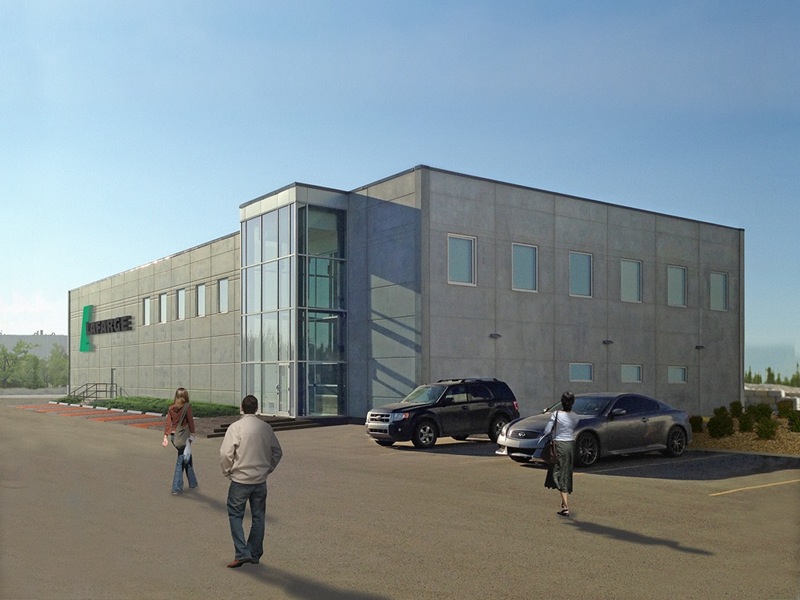
Following the trend of product declarations, Lafarge Canada has published one of the first environmental building declarations for its new research facility.

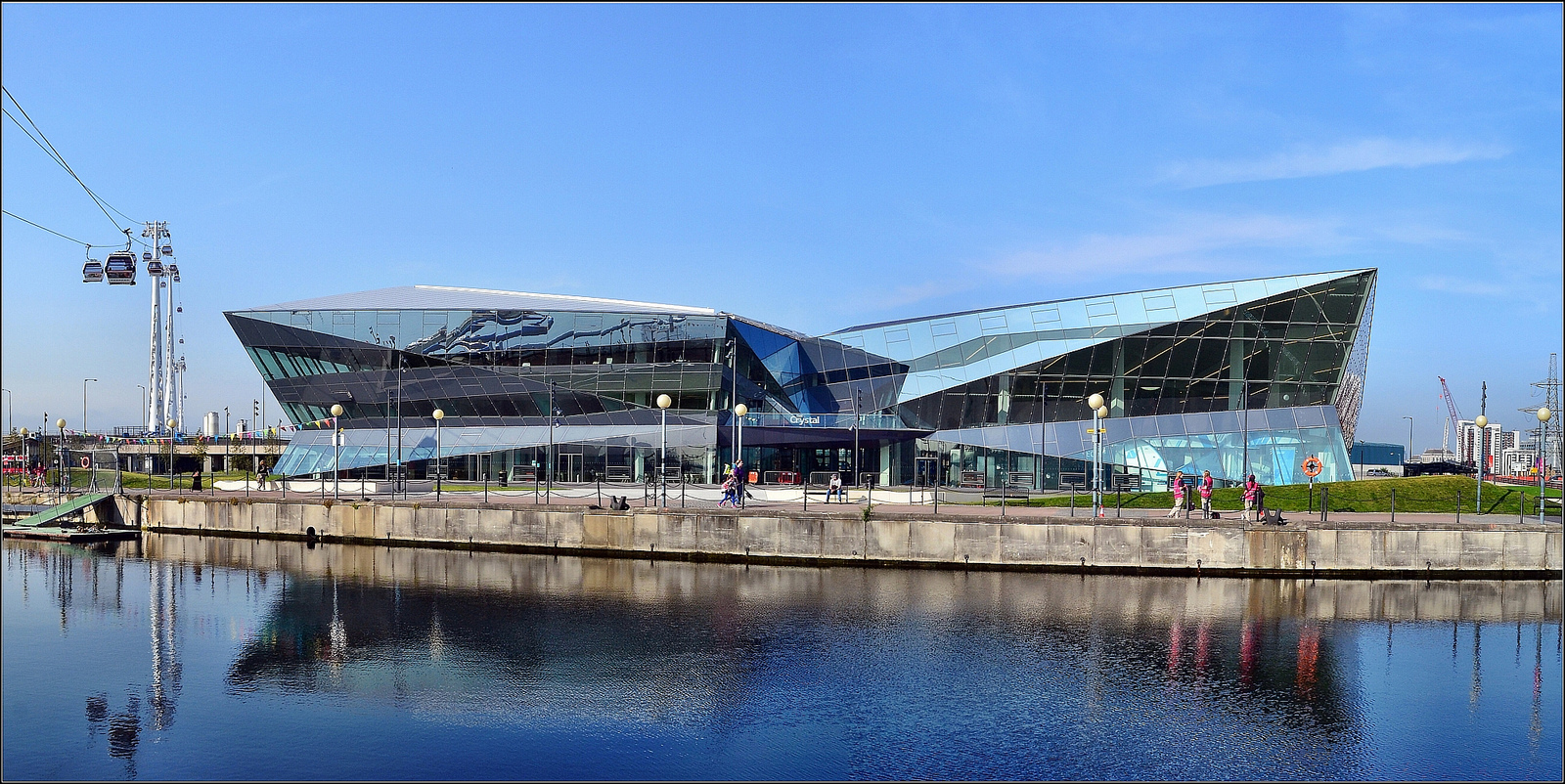
The Lafarge Innovation Hub in Edmonton, Alberta, recently became one of the first buildings in North America to undertake and disclose an environmental building declaration (EBD). Similar to an environmental product declaration (EPD) but for a whole building, an EBD reports lifetime environmental impacts gleaned from conducting a whole-building life-cycle assessment (LCA—see Whole-Building Life-Cycle Assessment: Taking the Measure of a Green Building).

The EBD takes into account embodied impacts of all major building materials for core, shell, and interior partitions but excludes finishes, landscaping materials, furnishings, and mechanical or electrical equipment as well as the building’s projected operating energy and water consumption. Given this scope, the Lafarge building shows a total embodied global warming potential of 1,150,000 kg of CO2-equivalent over a 75-year service life (around the annual greenhouse gas emissions of 242 passenger vehicles).

Since precast concrete made up a significant part of the building, a sensitivity analysis was conducted to test what influence a greater percentage of fly ash content would have had on the LCA data; results of an increase of 10 kg/m3 of fly ash content was estimated to reduce global warming potential minimally (about 0.5%).

Lafarge will display a summary of its EBD onsite in the building’s lobby, which the Athena Sustainable Materials Institute—the organization commissioned to publish the EBD in compliance with the standard EN 15978—is calling “the future of how we talk about and validate green buildings.” Athena also published what is considered to be the first EBD in North America in June 2013 for Enermodal Engineering. 

For more information:

Athena Sustainable Materials Institute

http://www.athenasmi.org/news

Published December 31, 1969

(2014, November 3). First Few EBDs Take Impact Declarations to the Building Scale. Retrieved from https://www.buildinggreen.com/departments/newsbrief

Add new comment

To post a comment, you need to register for a BuildingGreen Basic membership (free) or login to your existing profile.

Six Gulf Coast Homes Achieve Resilience Star Certification

News Brief

Six Gulf Coast Homes Achieve Resilience Star Certification

Projects in Mississippi and Alabama are certifiably hurricane-resilient under a Department of Homeland Security resilience program.

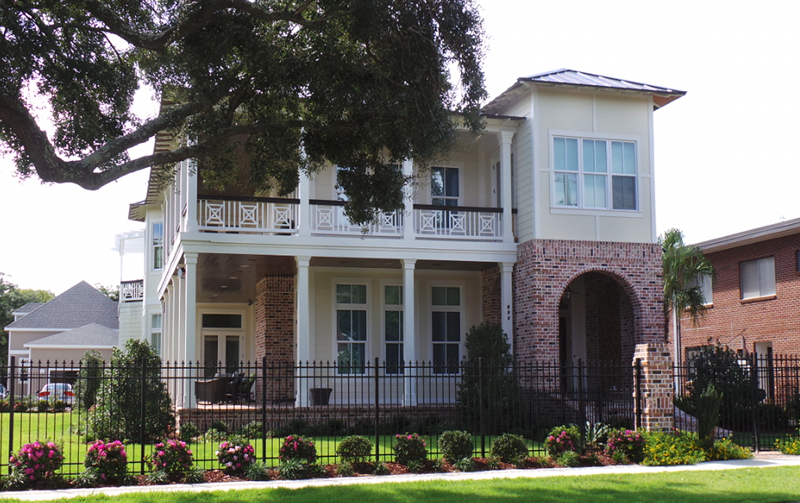
The U.S. Department of Homeland Security (DHS) has recognized six Gulf Coast homes through its Resilience Star pilot program. The designation is based on compliance with various Fortified Home standards developed by the Insurance Institute for Business & Home Safety (IBHS), with the pilot focusing on the Fortified Home–Hurricane certification program.

To achieve the designation, homes had to be built to withstand at least a Category 1 hurricane by following the prescriptive Fortified Home requirements for roof, gable, and overhang details. Five of the homes were new construction; a home in Gulf Shores, Alabama, achieved the certification through a retrofit.

Although the Fortified Home standards have levels based on the severity of disaster the home is built to withstand (Bronze for Category 1, Silver for Category 2, Gold for Category 3), the Resilience Star designation currently applies to any building that meets the Bronze level or above. Four of the homes achieved Gold under the Fortified Home–Hurricane standard.

IBHS also has a specialized standard for high winds and hail as well as a nationwide standard, Fortified for Safer Living, that requires preparedness for region-specific perils such as earthquakes, floods, and severe winter storms. Learn more at disastersafety.org.

Published December 31, 1969

(2014, October 20). Six Gulf Coast Homes Achieve Resilience Star Certification. Retrieved from https://www.buildinggreen.com/departments/newsbrief

Add new comment

To post a comment, you need to register for a BuildingGreen Basic membership (free) or login to your existing profile.

Not Sure About Lighting System Payback? Check the Standard

News Brief

Not Sure About Lighting System Payback? Check the Standard

The economics of lighting upgrades and other capital improvements are not straightforward; new guidance makes it easier for designers.

Most lighting professionals went to school so they could learn to design lighting systems—not so they could learn how to pay for them. Yet economic analysis has become part of their job, with clients expecting designers to explain things like return on investment and when their LEDs are going to “pay for themselves.”

To help design professionals analyze such questions, the Illuminating Engineering Society of North America (IES) has developed Standard IES RP-31-14, “Recommended Practice for the Economic Analysis of Lighting.” The standard explains how to perform a life-cycle cost-benefit analysis (LCCBA), a method touted in an IES press release as “the most robust among analytical methods” because it accounts for net present value (the value in today’s dollars of an investment’s future returns, minus the initial investment; see Three Imperatives to Create the Future of Green Building for a deeper look at net present value).

The standard will help professionals calculate payback times more accurately and aid comparison of various systems to one another as well as to other capital improvements, according to IES.

For more information:

Illuminating Engineering Society of North America

ies.org/store

Published December 31, 1969

(2014, October 6). Not Sure About Lighting System Payback? Check the Standard. Retrieved from https://www.buildinggreen.com/departments/newsbrief

Add new comment

To post a comment, you need to register for a BuildingGreen Basic membership (free) or login to your existing profile.

Wood Structures Could Reduce Global Carbon by Almost a Third

News Brief

Wood Structures Could Reduce Global Carbon by Almost a Third

Using sustainably harvested timber in place of concrete, steel, and brick would have a massive positive impact, a new study asserts.

What would happen if we replaced all concrete, steel, and brick with wood products in new construction? A whole lot of good, suggests a new study from researchers at the Yale School of Forestry & Environmental Studies.

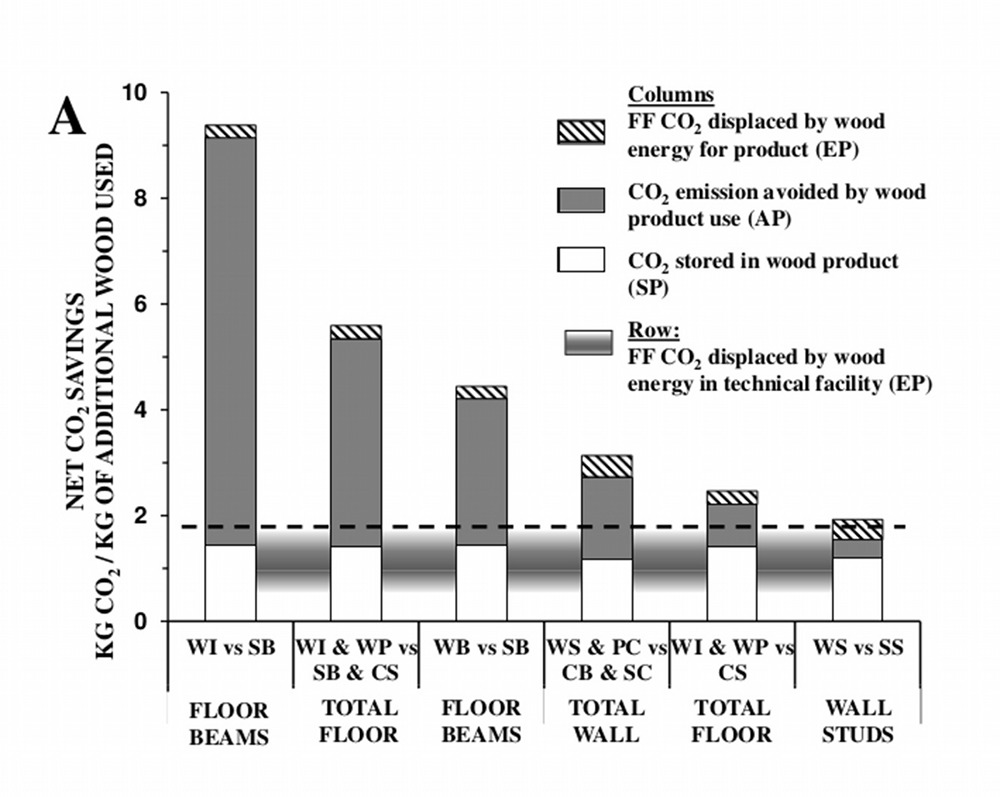
The analysis, “Carbon, Fossil Fuel, and Biodiversity Mitigation With Wood and Forests,” published in the Journal of Sustainable Forestry, concludes that total replacement would result in a 14%–31% reduction in global greenhouse gas emissions, a 12%–19% reduction in global fossil-fuel consumption, and a likely increase in biodiversity.

The ranges are so wide because impacts vary according to how trees are harvested and how efficiently the forestry products are used, the authors explain, pointing to cross-laminated timber as an efficient use of wood (see Engineering a Wood Revolution). Most of the savings in carbon would come from avoided emissions; some of the fossil-fuel savings would come from direct burning of scrap wood for energy. The impact of sequestering carbon in the wood itself—whether in a building or in a forest—is small by comparison.

Projected increases in biodiversity would result from “active management,” the authors argue, explaining that more-open forest structures tend to support the greatest number of species. Given the fragmented state of the world’s forests, it may be “prudent” to manage them in a way that creates more diversity rather than waiting for natural processes to take back over, they argue, adding that “in the process of this active management, some trees can be harvested and utilized.”

The researchers recommend that incentive programs and building codes should encourage the use of sustainably harvested wood in place of concrete and steel, and that forestry programs should account for the fact that carbon sequestration in forests may be “counterproductive” if it results in more concrete and steel production.

Published December 31, 1969

(2014, October 6). Wood Structures Could Reduce Global Carbon by Almost a Third. Retrieved from https://www.buildinggreen.com/departments/newsbrief

Add new comment

To post a comment, you need to register for a BuildingGreen Basic membership (free) or login to your existing profile.

LEED Helps Hotels Book Quickly and Charge More

News Brief

LEED Helps Hotels Book Quickly and Charge More

Continuing its series of investigations into the outcomes of greening hotels, Cornell finds LEED hotels benefit from higher revenues.

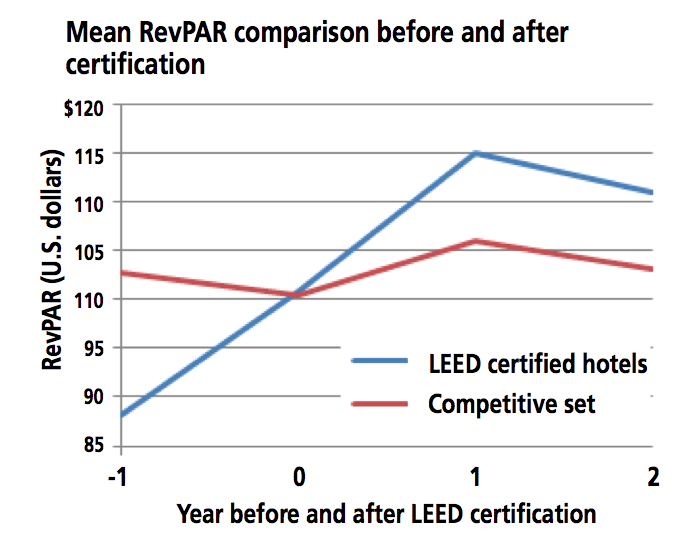
Contrary to an earlier study on consumer behavior suggesting that sustainability certifications do not increase booking revenues, a second Cornell report identifies the opposite trend by directly analyzing financial performance and narrowing its study sample to LEED-certified hotels.

The Impact of LEED Certification on Hotel Performance” compares the booking and occupancy rates of 93 LEED-certified hotels (the total number of hotels that had been certified by 2012) to 514 comparable competitors based on revenue data tracked by the firm STR. The researchers found that even though LEED-certified hotels are likely to either be new or have recently undergone renovation, they quickly attract clientele and typically match competitors’ occupancy levels within a year of certification. After two years, they still have an average daily rate $20 higher than that of non-LEED hotels. Longer-term studies are needed to determine if that revenue boost continues past year two and to be sure the higher rates are not simply a consequence of the hotels being new, researchers say.

The study differs from a previous examination that found hotels marketed on Travelocity as “eco-certified” achieved booking rates that were on average no better than their competitors’. “That showed customers are not willing to pay more just for sustainability,” according to Rohit Verma, Ph.D, who was a co-author on both studies, but the more recent study shows that the LEED subset of those hotels still benefits from significantly higher financial performance.

Taken together, the two reports suggest that the LEED label itself might not matter to customers but that the design strategies used to achieve certification make the hotels more attractive and thus more lucrative for owners. Along these lines, another study in which Verma participated found guests who stayed in hotels certified to ISO 14001 (a standard for environmental management systems) consistently reported higher satisfaction ratings.

Published December 31, 1969

(2014, October 6). LEED Helps Hotels Book Quickly and Charge More. Retrieved from https://www.buildinggreen.com/departments/newsbrief

Add new comment

To post a comment, you need to register for a BuildingGreen Basic membership (free) or login to your existing profile.

Plants in Offices Enhance Worker Engagement

News Brief

Plants in Offices Enhance Worker Engagement

Office plants make workers happier, which helps prevent the kind of disengagement that takes a toll on productivity, according a recent report.

New evidence suggests the office plant can help cut through the boredom and distractedness that settles over many workspaces.

A study published in The Journal of Experimental Psychology in July 2014 compiles three separate field experiments in which researchers controlled office workers’ visual access to potted plants. Subjects in the landscaped spaces generally reported enhanced workplace satisfaction, better concentration, and improved air quality. While perceived air quality benefits are likely greater than actual filtration rates, the study supports early findings linking plants to well-being improvements; see Bringing Nature Indoors: The Myths and Realities of Plants in Buildings.

However, when the researchers attempted to test claims of heightened concentration, they got mixed results. One study conducted at a health insurance call center found that workers increased their average time spent on each call when the office was outfitted with plants—an indicator that the company considered a loss of productivity. But the researchers argue that that measure of productivity is “ambiguous” because it did not take into account the quality of service. Operators who spent more time talking to customers might be more helpful and might sell more insurance, for example.

In contrast, applying “less problematic” metrics resulted in marked increases in productivity. When workers from a large consulting company were asked to perform a series of information-management and vigilance tasks (work similar to the auditing they normally performed), the presence of office plants increased productivity by 15% compared to a control group.

The report explains the discrepancy by suggesting that the mechanism through which indoor plants confer productivity benefits is through promoting work engagement. Plants stimulate employees to be more physically, cognitively, and emotionally engaged in their work, according to the report, which likely increases productivity in its fullest sense rather than shallow measures of efficiency.

Published December 31, 1969

(2014, September 29). Plants in Offices Enhance Worker Engagement. Retrieved from https://www.buildinggreen.com/departments/newsbrief

Add new comment

To post a comment, you need to register for a BuildingGreen Basic membership (free) or login to your existing profile.

Tree-Covered Neighborhoods Pop Out Healthier Babies

News Brief

Tree-Covered Neighborhoods Pop Out Healthier Babies

Babies of mothers living in greener areas had higher birth weights in a new study—regardless of air quality, walkability, and other factors.

The world’s newborns have it made in the shade.

A new study shows positive birth outcomes when mothers live in verdant neighborhoods, building on mounting evidence that trees and other vegetation have far-reaching, if poorly understood, positive health implications (for another example, see Tired Brain? Head for the Trees).

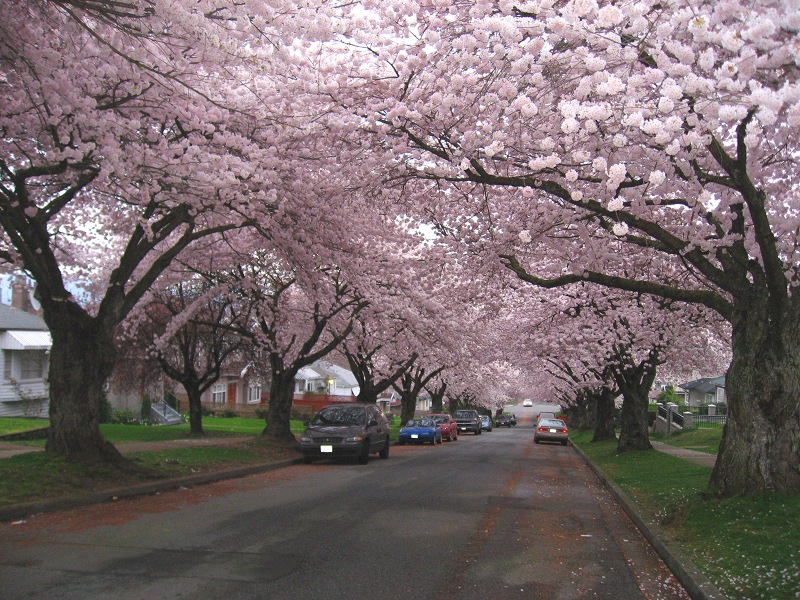
Residential Greenness and Birth Outcomes: Evaluating the Influence of Spatially Correlated Built-Environment Factors,” published in Environmental Health Perspectives, found a strong correlation between the weights of nearly 65,000 babies born over a three-year period in Vancouver, British Columbia, and the amount of greenery near their birth mothers’ homes. Mothers from more verdant neighborhoods on average gave birth to babies with significantly higher birth weights; they were also significantly less likely to have premature births or babies with low gestational weights.

Low birth weight is connected to a variety of health problems early in life as well as higher risk for obesity and Type 2 diabetes later in life.

Researchers said the correlation between greenery and birth weight remained significant even when adjusted for other factors, including neighborhood income, air quality, walkability, noise levels, and proximity to parks.

Published December 31, 1969

(2014, September 26). Tree-Covered Neighborhoods Pop Out Healthier Babies. Retrieved from https://www.buildinggreen.com/departments/newsbrief

Add new comment

To post a comment, you need to register for a BuildingGreen Basic membership (free) or login to your existing profile.

Entry-Level Green Doesn’t Cost Extra, U.K. Report Finds

News Brief

Entry-Level Green Doesn’t Cost Extra, U.K. Report Finds

All projects can achieve the lowest BREEAM rating for no additional cost if sustainability strategies are incorporated from the beginning.

The Building Research Establishment (BRE), publishers of the most popular sustainable building rating system in the U.K., say basic green buildings now cost the same as conventional buildings.

In a recent cost analysis, BRE researchers selected three case-study buildings to evaluate as representative building types—an office, a secondary school, and a community healthcare center. Sweett Group, a U.K.-based construction firm, then provided cost estimates for various designs that would achieve each level of Building Research Establishment Environmental Assessment Method (BREEAM) certification:  Pass, Good, Very Good, Excellent, and Outstanding.  

This analysis showed all three building types could achieve “Pass” for the same price as building to code. An office building could obtain an “Excellent” rating even in a rural location for an increased cost only 1.7% above the base capital cost, and estimated operational savings show this could be paid back within two to five years.

These low capital costs can partly be attributed to the fact that contractor performance credits amount to approximately 15%–20% of the total percentage score in BREEAM, according to the report. In the U.K., where the rating system is firmly established, many contractors have likely already mastered these best practices, so pursuing those credits does not come with extra training costs. Some of the other sustainability measures that the researchers consider zero-cost include commissioning, installing high-frequency ballasts to lighting fixtures, and selecting dual-flush toilets and low-flow faucets. 

The cost of each strategy was determined assuming that it was implemented at the most appropriate time of the design stage, but the researchers say the estimates are likely conservative because they were not able to factor in daylighting and natural ventilation features—typically very effective no- or low-cost strategies—because their reference buildings already had set forms.

For more information:

Delivering Sustainable Buildings: Savings and Payback

http://www.brebookshop.com/

Published December 31, 1969

(2014, September 25). Entry-Level Green Doesn’t Cost Extra, U.K. Report Finds. Retrieved from https://www.buildinggreen.com/departments/newsbrief

Add new comment

To post a comment, you need to register for a BuildingGreen Basic membership (free) or login to your existing profile.

Thermal Bridging Can Degrade Wall Performance 70%

News Brief

Thermal Bridging Can Degrade Wall Performance 70%

The Devil is in your details, and he’s letting staggering amounts of energy escape.

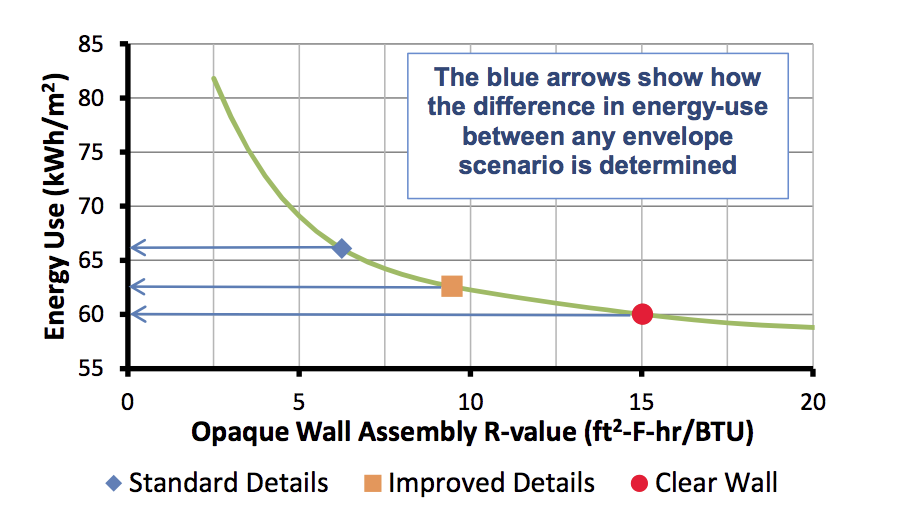
Designers routinely underestimate total heat flow through their wall assemblies by 20% to 70%, according to a new report prepared by the engineering firm Morrison Hershfield and sponsored by several other Canada-based partners. The good news? Tweaking envelope details may be more effective than adding another inch of insulation.

That’s because adding insulation doesn’t do a lot of good if thermal bridging allows heat to flow right through the assembly. “Building Envelope Thermal Bridging Guide – Analysis, Applications, and Insights” aims to help practitioners reduce thermal bridging with guidance on how to calculate the R-value of an entire assembly, accounting for the thermal performance of each part.

Details like small, cross-sectional areas of shelf angles, or flashing around windows, not only degrade assembly performance but also increase the risk of condensation (see The Hidden Science of High-Performance Building Assemblies). The guide catalogues the thermal performance of some common wall, floor, and balcony slab assemblies, glazing transitions, and parapets for easy comparison, and provides the material data used to calculate the performance of those details.

Construction cost estimates are also included, showing, for example, that a thermally broken concrete balcony can cost $266 more per meter, or $81 more per foot, compared to a continuous concrete balcony. However, “Even some expensive options look attractive when compared to the cost-effectiveness of adding insulation,” argues the report. A case study included in the appendix finds that, although upgrading to thermally broken balconies and parapets for a high-rise multi-unit residential building with 40% glazing would initially cost more than increasing the effective wall assembly R-value from R-15 to R-20, the payback period would be more than seven times shorter.

Published December 31, 1969

(2014, September 23). Thermal Bridging Can Degrade Wall Performance 70%. Retrieved from https://www.buildinggreen.com/departments/newsbrief

Add new comment

To post a comment, you need to register for a BuildingGreen Basic membership (free) or login to your existing profile.

PCBs Taint Paints, with Titanium Dioxide Bearing Some Blame

News Brief

PCBs Taint Paints, with Titanium Dioxide Bearing Some Blame

Long-banned toxic chemicals still contaminate building products and consumer goods thanks to a loophole in 1970s regulations.

Trace amounts of highly toxic PCBs (polychlorinated biphenyls) are ubiquitous in food packaging, office supplies, and certain building products, according to an analysis from the Washington State Department of Ecology. These aren’t traces left in the environment from older products (“legacy” PCBs) but rather compounds formed during current manufacturing processes that involve chlorine.

Health risks from direct exposure to these products have not been thoroughly studied. But officials worry that tainted pigments and dyes may be contributing to PCB pollution in the Puget Sound watershed—pollution that persists despite decades-old federal laws banning intentional production of the chemicals.

Thirteen of the fourteen paint products tested contained detectable levels of at least one PCB cogener, or chemical “family member.” Concentrations went from background levels up to 320 parts per billion (ppb), with yellow and green colorants apparently contributing to the highest concentrations of PCB-11, a byproduct of manufacturing certain yellow pigments.

A titanium dioxide (TiO2) paint colorant contained 1.26 ppb of PCB-209, a high-molecular-weight cogener. PCBs are a byproduct of TiO2 manufacture, which, according to the report, involves converting TiO2 ore into titanium tetrachloride (TiCl4) through the addition of chlorine. The report notes that one TiO2 manufacturer recently paid a $13.8 million fine to the U.S. Environmental Protection Agency for illegal dumping of PCB-contaminated waste.

Current U.S. regulations do not require manufacturers to eliminate PCBs if the compounds are created as byproducts.

Published December 31, 1969

(2014, September 18). PCBs Taint Paints, with Titanium Dioxide Bearing Some Blame. Retrieved from https://www.buildinggreen.com/departments/newsbrief

Add new comment

To post a comment, you need to register for a BuildingGreen Basic membership (free) or login to your existing profile.