U.N. Seeks to Create Disaster-Resilient Economies with R!SE

News Brief

U.N. Seeks to Create Disaster-Resilient Economies with R!SE

Helping corporations bolster their defenses against the economic effects of natural disasters is the focus of the new initiative.

After a record-breaking decade of economic losses due to natural disasters, the United Nations has launched an initiative to improve corporations’ disaster-risk-management strategies and investment planning.

The R!SE initiative aims to help corporations improve approaches to risk management and to create voluntary industry standards that would influence and strengthen the demand for risk-sensitive products. These investments—ranging from property, tourist destinations, or agricultural products—either are not highly prone to a disaster or have high adaptive capacity (see Property Giant Ties Cities’ Investment Prospects to Resilience). Disaster-related risks for corporations range from damaged reputations to disruptions in business to increased material costs along the supply chain. The overall objective of the R!SE initiative is to make all investments risk-sensitive, creating risk-resilient economies across the globe.

The U.N. Office for Disaster Risk Reduction (UNISDR) is collaborating with the Economist Intelligence Unit, Florida International University, AECOM and other global players on the initiative in an effort to facilitate a broad approach involving businesses, investors, insurance companies, nonprofits, educational establishments, and government organizations. UNISDR claims it is already working with 14 of the world's largest corporations, including Arup, ABB, and Shapoorhi Pallonji.

For more information:

PreventionWeb

preventionweb.net

Published December 31, 1969

(2014, August 3). U.N. Seeks to Create Disaster-Resilient Economies with R!SE. Retrieved from https://www.buildinggreen.com/departments/newsbrief

Add new comment

To post a comment, you need to register for a BuildingGreen Basic membership (free) or login to your existing profile.

Emerging Technologies Address the Water-Energy Nexus

News Brief

Emerging Technologies Address the Water-Energy Nexus

DOE is highlighting technologies that simultaneously save water and energy, including supercritical carbon dioxide recompression for power plants.

Exploring the challenges and opportunities of the water-energy nexus, a recent report from the U.S. Department of Energy (DOE) identifies several emerging technologies that will help conserve both resources.

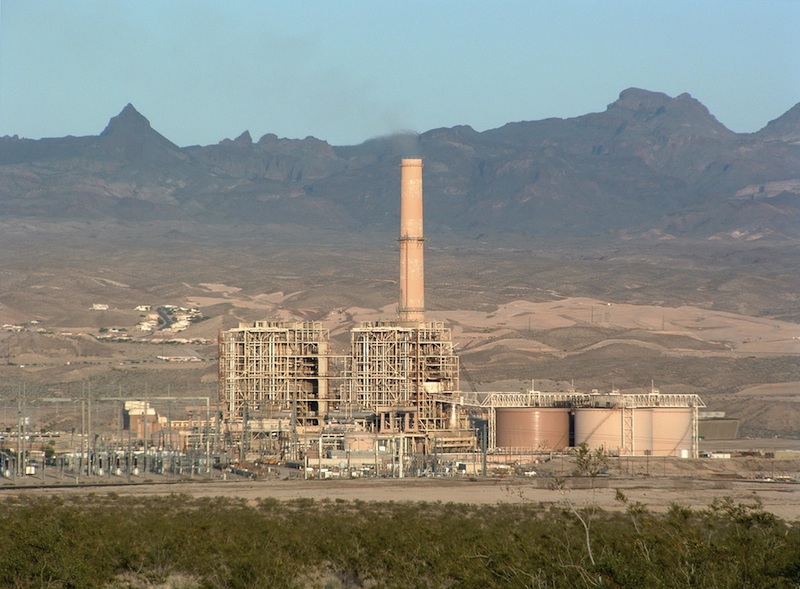
Some of the most promising technologies target thermoelectric power plants, which not only are the largest single source of water withdrawals in the U.S. but also convert less than half of their primary energy to electricity, according to the report (see Saving Water by Conserving Energy). One solution is the use of supercritical carbon dioxide (SCO2) recompression in a closed-loop Brayton cycle (RCBC).

Because carbon dioxide is denser than water and has a higher thermal storage capacity, this process uses less energy during recompression and recovers more waste heat, both of which also reduce cooling requirements. According to the report, this technology could improve total plant efficiency 3%-4% and could be applied to existing coal plants, nuclear reactors, and concentrating solar power towers. The materials needed to handle the requisite pressures and high power densities are expensive, but DOE recently produced a working prototype, and researchers have reported positive results at pilot scales.

Other emerging technologies covered by the report include advances in cooling systems, alternatives to fresh water for oil and gas production, desalination techniques, and methods for recovering energy and nutrients from wastewater.


Published December 31, 1969

(2014, August 3). Emerging Technologies Address the Water-Energy Nexus. Retrieved from https://www.buildinggreen.com/departments/newsbrief

Add new comment

To post a comment, you need to register for a BuildingGreen Basic membership (free) or login to your existing profile.

Twenty-Year Payback for Embodied Carbon of Triple-Glazed Windows

News Brief

Twenty-Year Payback for Embodied Carbon of Triple-Glazed Windows

It takes almost 20 years for triple-glazed windows to save enough energy to overcome their additional embodied carbon, according to a new study.

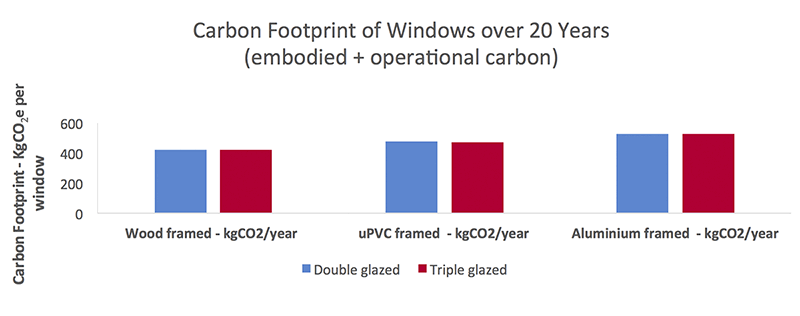
Triple-glazed windows may save more energy than double-paned windows, but a recent study conducted by U.K.-based consulting firm Inspired Efficiency and footprinting expert Circular Ecology finds that in terms of their life-cycle carbon footprint, they don’t necessarily come out ahead.

Researchers determined that the embodied carbon of an average triple-glazed window is 51 kgCO2e greater than a double-glazed window with the same frame type because of the carbon dioxide emissions that are released from extraction, refinement, transport, and processing of the additional layer of glass and pocket of gas between the panes. It would take almost 20 years for a triple-glazed window to pay back this additional embodied carbon—longer than the lifetime of many windows.

That doesn’t mean you shouldn’t specify triple-pane glazings; there are other benefits, including operational cost savings, construction cost savings from smaller mechanical systems, improved thermal comfort, and acoustics to name a few. Furthermore, if customers are seeking to reduce their carbon footprint, frame choice has a far larger impact, according to the researchers. Choosing wood over PVC saves 25kgCO2e—10 years’ worth of operational savings—so over 20 years, a triple-pane, wood-framed window will have a lower carbon footprint than a double-pane window with either a PVC or aluminum frame.

For more information:

Circular Ecology

circularecology.com/news/

Published December 31, 1969

(2014, August 3). Twenty-Year Payback for Embodied Carbon of Triple-Glazed Windows. Retrieved from https://www.buildinggreen.com/departments/newsbrief

Add new comment

To post a comment, you need to register for a BuildingGreen Basic membership (free) or login to your existing profile.

Product Watchdogs Pledge Standardized Ingredient Reporting Platform

News Brief

Product Watchdogs Pledge Standardized Ingredient Reporting Platform

A promised database funded by Google.org and USGBC aims to end marketplace confusion and lower the cost of ingredient disclosure.

Tracking potentially hazardous chemicals in building products has never been easier—or more confusing, whether you’re a designer or a manufacturer. As interest in this information grows and the market sorts out a confusing set of disclosure options (see Finding Products for LEED v4: A Guide), clarity may be on the way. A new effort supported by the U.S. Green Building Council (USGBC) through a grant from Google.org will harmonize how several different programs collect and report hazard information.

 “Intuitively, we thought there was alignment” among systems that include the Health Product Declaration, Cradle to Cradle, GreenScreen, and the Living Building Challenge Declare program, explained Stacy Glass of the Cradle to Cradle Products Innovation Institute (C2CPII). “Everyone’s gathering inventories in the same way.” The groups behind these programs, along with the Healthy Building Network, developer of the Pharos database, worked together on a harmonization report for USGBC, which the new efforts will build on.

The ultimate goal? A single, streamlined database that will help manufacturers and assessors screen products and look for inherently safer alternatives—“to make that really hard work of doing a chemical assessment so much easier,” said Glass. “That’s the goal we jointly want to work toward,” and USGBC’s support is “getting that platform up to speed,” she added.

The new platform will not merge the programs but instead help ensure that they are compatible—so that a manufacturer with an HPD, for example, will have already laid the groundwork for a Declare label or the Cradle to Cradle certification process rather than producing the same information in multiple ways for different programs.

Glass said the database would be developed over the next 18 months but added that the groups hoped to report significant progress at Greenbuild in October 2014.

Published December 31, 1969

(2014, July 18). Product Watchdogs Pledge Standardized Ingredient Reporting Platform. Retrieved from https://www.buildinggreen.com/departments/newsbrief

Add new comment

To post a comment, you need to register for a BuildingGreen Basic membership (free) or login to your existing profile.

Air Conditioners Are Heating Up Our Cities

News Brief

Air Conditioners Are Heating Up Our Cities

Waste heat from air conditioners contributes to higher nighttime temperatures, in turn increasing cooling demands, according to a new study.

It turns out when you left the door open during the summer, you weren’t “cooling the whole neighborhood” as your mother reprimanded; you were probably heating it. New research from Arizona State University suggests waste heat ejected from air conditioners is raising nighttime temperatures—at least in very hot and dry cities—contributing to an even greater need for cooling.

In a computer simulation of 10 days of extreme heat across the Phoenix metropolitan area, researchers found that the waste heat put out by air-conditioning systems did not have a significant effect on air temperatures during the day when it was typically already above 106°F. However, during the night, when temperatures dropped to around 80°F, heat expelled from the indoors warmed the city air almost 2°F in some locations.

With extreme heat projected to increase this century, this positive feedback loop could prove a public-health concern or put further strain on electrical grids; in Phoenix, energy used for cooling already sometimes rises to half of the region’s total electrical consumption.

The study’s authors note the potential for capturing waste heat for purposes such as heating water. That could save Phoenix roughly 1,200 MWh of electricity per day as well as help mitigate the urban heat-island effect (see Rural Areas Feel Heat from Cities) and global warming.

By coupling a Weather Research and Forecasting Model with data on buildings and energy use in the city, the modeling used in the study, “Anthropogenic Heating of the Urban Environment due to Air Conditioning,” accounted for both the size and shape of buildings as well as climatic factors like wind speed.

Published December 31, 1969

(2014, July 16). Air Conditioners Are Heating Up Our Cities. Retrieved from https://www.buildinggreen.com/departments/newsbrief

Add new comment

To post a comment, you need to register for a BuildingGreen Basic membership (free) or login to your existing profile.

$70 Million Fund Ready to Finance Building Energy Projects

News Brief

$70 Million Fund Ready to Finance Building Energy Projects

Capitalized with $70 million and a quick application process, Eutectics is ready to finance small solar and efficiency retrofits for commercial properties.

A new financing platform for small- and medium-sized energy-efficiency and renewable-energy projects is now available from the Minneapolis-based company Eutectics.

Geared toward commercial projects ranging from $25,000 to $5,000,000, the company plans to finance $70 million in projects across the nation in the first round of funding. Eutectics promises simple applications with quick turnarounds. Projects applying for less than $150,000 submit a one-page credit application and receive a response within 24 hours.  To receive a quote, contractors submit the same information that they would on a typical bid sheet.

The platform may serve the needs of smaller projects and cash-flow-dependent businesses that other financing mechanisms have trouble reaching, according to Eutectics executive director Jeremy Kalin (see PACE Financing for Energy Improvements). A separate program, Eutectics’ Home SolarNote is targeted toward homeowners.

For more information:

Eutectics Finance

eutecticsfinance.com

Published December 31, 1969

(2014, July 14). $70 Million Fund Ready to Finance Building Energy Projects . Retrieved from https://www.buildinggreen.com/departments/newsbrief

Add new comment

To post a comment, you need to register for a BuildingGreen Basic membership (free) or login to your existing profile.

EPA to Ban Several Common HFC Blowing Agents, Refrigerants

News Brief

EPA to Ban Several Common HFC Blowing Agents, Refrigerants

Aimed at curbing global warming, a proposed rule would ban HFC-134a, used in XPS production and for refrigeration.

As part of President Obama’s unfolding Climate Action Plan, the U.S. Environmental Protection Agency (EPA) has announced its intention to ban certain blowing agents and refrigerants. Hydrofluorocarbons (HFCs) were introduced in the 1990s to replace ozone-depleting substances, but many have extremely high global warming potential, or GWP (see Avoiding the Global Warming Impact of Insulation). EPA claims this move will prevent up to 42 million metric tons of carbon-equivalent emissions in the year 2020.

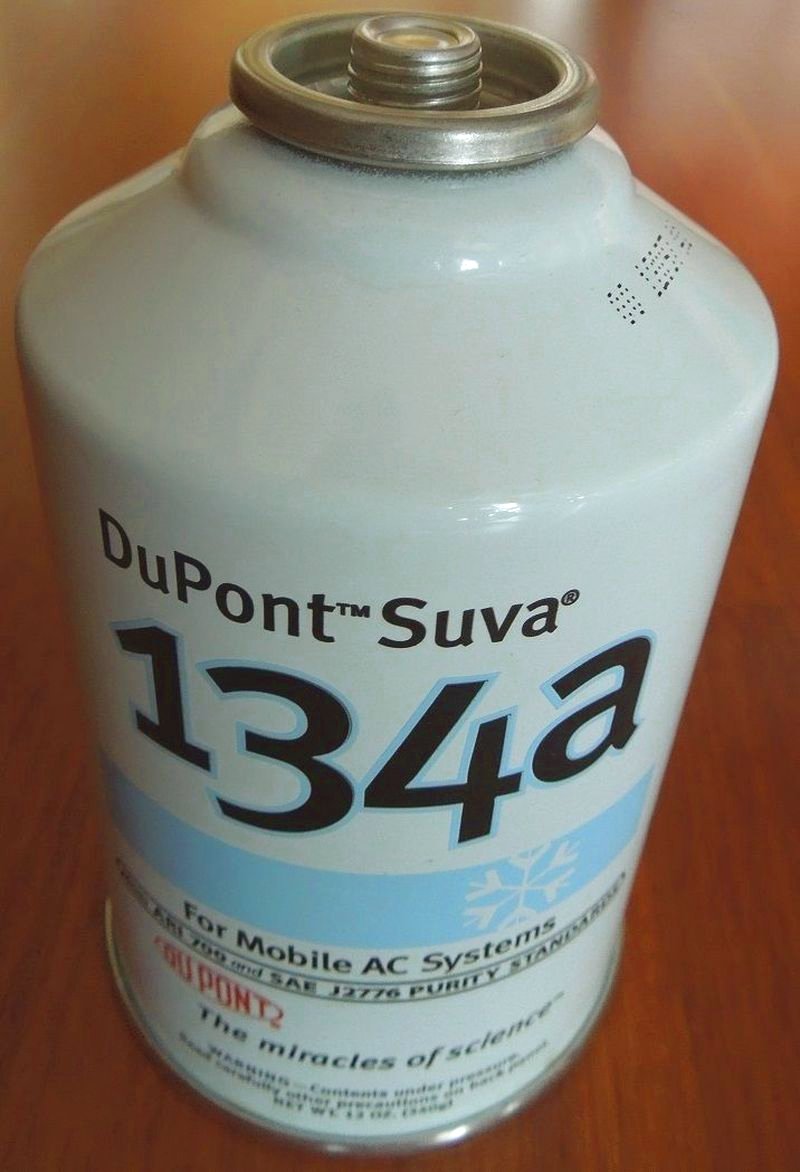
Specific substances to be banned include HFC-134a, commonly used as the blowing agent for extruded polystyrene (XPS) foam insulation; the compound will also no longer be permitted in automobile air conditioning or retail food refrigeration. HFC-143a and HFC-245fa will also be banned for production of many types of polyurethane foam but still allowed in spray polyurethane foam. A number of HFCs branded by DuPont under the name Formacel must also be phased out. The ban for blowing agents will take effect January 1, 2017, a year later than the bans for refrigerants and propellants.

Some insulation manufacturers have already begun to phase out high-GWP blowing agents in automobile and appliance insulation, replacing them with hydrofluoroolefins (HFOs) like Honeywell’s Solstice (see New Chemical to Reduce Climate Impact of Foam Insulation) or proprietary blends like DuPont’s Formacel 1100.

The rule still allows HFC blowing agents for spray foam because its manufacture on the building site makes it unique, according to EPA. Refrigerants for building air conditioners and heat pumps are likewise not addressed in the proposed rule, but the agency told EBN it is “interested in information concerning the current availability and use of alternatives in other end uses such as spray foam” during the 60-day public comment period.

For more information:

U.S. Environmental Protection Agency

epa.gov

Published December 31, 1969

(2014, July 11). EPA to Ban Several Common HFC Blowing Agents, Refrigerants. Retrieved from https://www.buildinggreen.com/departments/newsbrief

Add new comment

To post a comment, you need to register for a BuildingGreen Basic membership (free) or login to your existing profile.

DOE: ASHRAE 90.1-2013 Saves 8.5% Source Energy

News Brief

DOE: ASHRAE 90.1-2013 Saves 8.5% Source Energy

The U.S. Department of Energy seeks to require states to adopt the latest version of the key energy standard.

Preliminary research by the U.S. Department of Energy (DOE) has shown that the ASHRAE 90.1-2013 energy efficiency standard would achieve greater energy efficiency than the 2010 standard. In a Notice of Preliminary Determination posted May 15, the DOE has taken the first step in issuing a ruling that will likely establish Standard 90.1-2013 as the commercial building reference standard for state building energy codes.

DOE’s findings estimate Standard 90.1-2013’s national source energy savings at about 8.5% above ASHRAE 90.1-2010. In its May 15 notice in the federal register, DOE attributed the greater energy savings to better lighting, fans, commercial refrigeration, boilers, and controls, which were the result of improvements to the standard, whose full name is ANSI/ASHRAE/IES Standard 90.1-2013, Energy Standard for Buildings Except Low-Rise Residential Buildings.

If DOE’s preliminary determination is finalized, states would be required to review and certify that the provisions of their commercial building codes regarding energy efficiency are updated to meet or exceed Standard 90.1-2013. Currently, states must meet or exceed the 2010 standard, although some states lag behind.

In total, the DOE noted 52 positive impacts on energy efficiency from 90.1-2013 that it incorporated into the analysis. Many of these impacts, such as control requirements for lighting alterations and reduction of fan energy use, were the result of changes made through a public review process.

For more information:

U.S. Department of Energy

energy.gov


Published December 31, 1969

(2014, July 3). DOE: ASHRAE 90.1-2013 Saves 8.5% Source Energy. Retrieved from https://www.buildinggreen.com/departments/newsbrief

Add new comment

To post a comment, you need to register for a BuildingGreen Basic membership (free) or login to your existing profile.

Environmental Data for Window Glass Coming

News Brief

Environmental Data for Window Glass Coming

A product category rule for flat glass used in glazing will standardize life-cycle assessments for the industry and lead to EPDs.

NSF International has released a product category rule (PCR) for flat glass produced in the U.S. The document builds on efforts to encourage transparency and improve data quality through life-cycle assessments (LCAs) and environmental product declarations (EPDs), as explored in The Product Transparency Movement: Peeking Behind the Corporate Veil.

The PCR for flat glass, which was developed by the Glass Association of North America (GANA) with NSF as the third-party program operator, defines terms and specifies guidelines for calculating impacts from extraction and transport of raw materials, manufacturing, packaging, and waste management. As a “cradle-to-gate” PCR, it does not deal with impacts from transportation, use, or end-of-life issues.

Energy use during manufacturing—typically the largest impact from glass production—must be calculated using recent data on the facility’s local and regional electrical grid. The PCR also requires a sensitivity analysis examining each assumption made and its effect on the LCA.

For more information:

NSF Sustainability

nsf.org

Published December 31, 1969

(2014, June 29). Environmental Data for Window Glass Coming. Retrieved from https://www.buildinggreen.com/departments/newsbrief

Add new comment

To post a comment, you need to register for a BuildingGreen Basic membership (free) or login to your existing profile.

Streets Designed for Speed Faulted in Pedestrian Deaths

News Brief

Streets Designed for Speed Faulted in Pedestrian Deaths

Ranking cities by danger to pedestrians, a new report says bad design causes 5,000 pedestrian fatalities each year.

Florida may be the most dangerous state in which to walk, a new report from Smart Growth America’s National Complete Streets Coalition (NCSC) suggests.

Dangerous by Design 2014 ranks U.S. cities according to a “pedestrian danger index” (the rate of pedestrian deaths compared with the number of individuals walking to work) and finds that the four most dangerous cities­—Orlando, Tampa, Jacksonville, and Miami—are all in Florida.

Data are provided for every U.S. metro area, and the report includes state-by-state assessments as well as an interactive map highlighting where the most pedestrian fatalities have occurred. Whereas Florida proved to be the most dangerous state for pedestrians, Nebraska and Vermont both ranked low on the fatality index, averaging less than one fatality per 100,000 people, the report found.

Streets designed for speed rather than safety are to blame for more than 5,000 pedestrian deaths nationwide each year, according to Roger Miller, director of NCSC.

The research, which was supported by the American Association of Retired Persons (AARP) and the American Society of Landscape Architects (ASLA), also suggests that older people are especially at risk for pedestrian fatalities. Those over the age of 65 account for nearly 21% of pedestrian deaths nationwide, the report found. Evidence also pointed to speeding as a factor in nearly one-third of all traffic fatalities.

To alleviate the problem of roadside fatalities, the report offers some recommendations. In a press release, Nancy Somerville, executive vice president and CEO of ASLA, highlighted retrofits to traffic signals, pedestrian islands, and increased sidewalks as means of creating more walkable communities. Walking, said Somerville, shouldn’t be a luxury.

For more information:

Smart Growth America

smartgrowthamerica.org

Published December 31, 1969

(2014, June 19). Streets Designed for Speed Faulted in Pedestrian Deaths. Retrieved from https://www.buildinggreen.com/departments/newsbrief

Add new comment

To post a comment, you need to register for a BuildingGreen Basic membership (free) or login to your existing profile.