Mechanical—Not Natural—Drying Is a Must After a Flood

News Brief

Mechanical—Not Natural—Drying Is a Must After a Flood

Long-term research confirms that airing it out doesn’t cut the mustard (or the mold) after major moisture damage.

New research reinforces the importance of forced mechanical drying after long-term flooding. Mimicking conditions during and after Hurricane Katrina, researchers from Tuskegee University built, flooded for three weeks, and then dried a home to determine the effects of long-term saturation, natural and mechanical drying, and mold remediation on the building materials.

The results, published in Home Energy magazine, are a follow-up to earlier Tuskegee research on short-term flooding. The earlier findings suggested natural drying is adequate for homes flooded for three days and left sitting for five days, but long-term flooding likely calls for more aggressive action, author and lead researcher Heshmat Aglan, Ph.D., P.E., explains.

The findings provide empirical support for a variety of recommendations for drying and remediation after long-term flooding:

  • In the study, natural drying was not effective at reducing building material saturation after three weeks of flooding and three weeks of sitting.
  • Mold spores decreased after natural drying began, but forced drying made the process much faster, suggesting the latter is a more effective option after long-term flooding.
  • Absorbent furnishings and cabinetry should be removed from the building during drying.
  • Paper-faced building materials should be completely replaced after long-term flooding. According to Aglan, the paper facing on fiberglass batts and drywall both continued to show mold growth two years after drying and remediation of the test home.


Published December 31, 1969

(2014, December 1). Mechanical—Not Natural—Drying Is a Must After a Flood. Retrieved from https://www.buildinggreen.com/departments/newsbrief

Add new comment

To post a comment, you need to register for a BuildingGreen Basic membership (free) or login to your existing profile.

New Nanomaterial Could Dramatically Improve Concentrating Solar

News Brief

New Nanomaterial Could Dramatically Improve Concentrating Solar

A team of researchers at UC–San Diego has developed a silicon-based material with 90% conversion efficiency and remarkable durability.

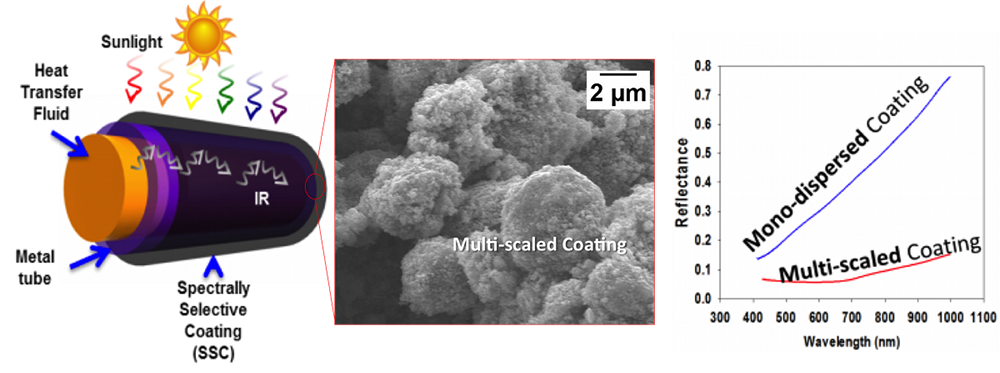
Researchers at the University of California–San Diego have designed a silicon-based coating they claim features 90% conversion efficiency for concentrating solar power (CSP), a solar thermal technology used at the industrial scale to create steam for turbine-generated power.

The material includes a variety of sizes of nano-scale silicon borides, resulting in what the researchers call a “multi-scaled” coating structure. This scaling, they claim, dramatically reduces reflectance when compared with typical CSP coatings. “We want the black hole of sunlight,” said Sungho Jin, Ph.D., an engineering professor at UC–San Diego and one of the material’s developers.

The material is also remarkably durable, the researchers say, and capable of withstanding temperatures up to 700ºC (1,292ºF)—important because efficiency of CSP technologies increases exponentially with temperature. This durability also protects the coating from “thermal oxidation,” a type of premature aging resulting from the high temperatures of CSP equipment operation. By reducing thermal oxidation, the coating could prevent the need for annual CSP-plant shutdowns while receiving equipment is re-coated.

The research was funded through the U.S. Department of Energy’s SunShot program. The researchers reported on the two key properties of the new coating—absorption and oxidation resistance—in a recent issue of Nano Energy.

Published December 31, 1969

(2014, December 1). New Nanomaterial Could Dramatically Improve Concentrating Solar. Retrieved from https://www.buildinggreen.com/departments/newsbrief

Add new comment

To post a comment, you need to register for a BuildingGreen Basic membership (free) or login to your existing profile.

Perkins+Will Shares Strategies to Avoid Flame Retardants

News Brief

Perkins+Will Shares Strategies to Avoid Flame Retardants

A chemist and an interior designer team up to compile design guidance for reducing exposure to harmful chemicals.

International architecture firm Perkins+Will has released design guidance regarding flame retardants in building products. Healthy Environments: Strategies for Avoiding Flame Retardants in the Built Environment—written by Michel Dedeo, Ph.D., science fellow at Perkins+Will, and Suzanne Drake, senior interior designer at the firm—focuses on eight practical steps design teams can take to avoid introducing the most toxic types of flame-retardant chemicals into occupied spaces. The authors also recommend testing for flame retardants after occupancy.

The report covers three types of flame retardants—halogenated, organophosphate, and mineral—and characterizes them as of “highest concern,” “high concern,” and “lower concern,” respectively. It also explains that both halogenated and organophosphate compounds can be semi-volatile, meaning they can slough off in dust and enter human bloodstreams through various routes. “It is up to architects, designers, owners, and contractors to exercise precaution and work together to design and construct buildings with as few of these chemicals as possible,” the report concludes.

Appendices include detailed reference tables of 193 flame retardants, including a list of those found in people (and in what type of tissue), in various indoor environments (such as homes, stores, hotels, and cars), and in a variety of consumer items and building products. The report is available for free on the Perkins+Will website.

For more information:

Perkins+Will

perkinswill.com

Published December 31, 1969

(2014, December 1). Perkins+Will Shares Strategies to Avoid Flame Retardants. Retrieved from https://www.buildinggreen.com/departments/newsbrief

Add new comment

To post a comment, you need to register for a BuildingGreen Basic membership (free) or login to your existing profile.

Phthalate Levels Connected to Reproductive Troubles

News Brief

Phthalate Levels Connected to Reproductive Troubles

Dashing female libido and shrinking your son’s male parts are now on the list of health hazards associated with phthalates. Now do we have your attention?

Two recent studies suggest phthalates, common plasticizers used primarily in flexible vinyl, may be affecting human reproduction by burning the candle at both ends: first decreasing women’s libido, then interfering with the genital development of their male offspring.

After measuring the levels of phthalates in the urine of 360 pregnant women and asking them how often they noticed a dip in their sex drive leading up to their pregnancy, Emily Barrett, Ph.D., of the University of Rochester School of Medicine, determined that those with the most phthalates in their bodies were two-and-a-half times as likely to say they had frequently lacked interest in sex as those with the least. The results of Barrett’s research were presented at the American Society for Reproductive Medicine’s annual conference.

A separate study published in Environmental Health Perspectives links high levels of the chemical di-isononyl phthalate (DiNP) in pregnant women to slightly shortened distances between the anus and the genitals of their baby boys—a sign of incomplete masculinization that, in grown men, is associated with abnormal testicular development and reduced semen quality. Previous studies found that the plasticizer DEHP (di-(2-ethylhexyl)phthalate) was associated with the same type of changes to genitalia, but this is the first time it’s been observed with DiNP, the supposedly safer substitute (see Phthalate Exposure Persists Despite Regulations).

These reproductive effects join the growing list of health and developmental hazards associated with phthalates, including higher instances of asthma, lower IQ scores, and endocrine disruption.

Published December 31, 1969

(2014, December 1). Phthalate Levels Connected to Reproductive Troubles. Retrieved from https://www.buildinggreen.com/departments/newsbrief

Add new comment

To post a comment, you need to register for a BuildingGreen Basic membership (free) or login to your existing profile.

EPA Ignoring Hundreds of Toxic Chemicals in Wastewater

News Brief

EPA Ignoring Hundreds of Toxic Chemicals in Wastewater

An investigation finds that only a fraction of hazardous wastewater pollutants are regulated, and of those, only a handful are monitored.

The Office of the Inspector General (OIG) of the U.S. Environmental Protection Agency (EPA) reports that EPA is failing in its oversight of industrial chemical releases from sewage treatment plants—one of the agency’s major duties under the Clean Water Act.

EPA has not updated its list of priority wastewater chemicals since 1981, according to the OIG report. At the heart of the problem is a discrepancy between the 300 chemicals regulated under hazardous waste laws (before discharges reach the sewer) versus those regulated under the Clean Water Act (after discharges reach the sewer). The OIG report argues these two lists should be more closely aligned.

In addition, EPA does not even monitor wastewater treatment plants for the limited number of chemicals it purports to regulate, except in four states (EPA’s Region 9, in the Southwest, monitors most of the regulated chemicals). “As a result,” the report states, “sewage treatment plants may not be adequately treating wastewater entering their facilities and are at risk of discharging hazardous chemicals into receiving bodies of water such as rivers and streams.” The researchers conclude, “These hazardous chemical discharges can have detrimental effects on human health and the environment.”

EPA responded to the report by agreeing to make most of the recommended changes by September 2015.

For more information:

Office of the Inspector General of the U.S. Environmental Protection Agency

epa.gov/oig

Published December 31, 1969

(2014, November 22). EPA Ignoring Hundreds of Toxic Chemicals in Wastewater . Retrieved from https://www.buildinggreen.com/departments/newsbrief

Add new comment

To post a comment, you need to register for a BuildingGreen Basic membership (free) or login to your existing profile.

Standard 189.1 Inches Toward LEED in New Revision

News Brief

Standard 189.1 Inches Toward LEED in New Revision

The 2014 version of the Green Building Standard responds to updates in Standard 90.1 and shows glimpses of future harmonization with LEED and IgCC.

The standard designed to “provide total building sustainability guidance” recently underwent a substantial update and will start impacting other building codes and standards like the International Green Construction Code (IgCC) in 2015. ASHRAE 189.1, the Standard for the Design of High-Performance, Green Buildings Except Low-Rise Residential, considered an entry-level green standard, is now published in a 2014 version and is available for download.

The updated standard incorporates 67 addenda, many of which are designed to align with recent changes to other ASHRAE standards (see Overhaul of ASHRAE 90.1 Brings New Requirements). These include changes to the fenestration orientation rules, new requirements for preoccupancy ventilation and building envelope moisture management, and an expanded indoor environmental quality section that now addresses lighting quality.

The revisions also show evidence of first steps toward the standard’s forthcoming alignment with LEED per an agreement reached earlier this year (see One Standard to Rule Them All: LEED, IgCC, 189.1 to Be Parts of Single System). Prescriptive and performance-based site options are now mandatory, and new requirements for multiple-attribute product declarations and certifications have been added, though full alignment with LEED baseline metrics is not expected until 2017.

Standard 189.1-2014 can be purchased at the ASHRAE bookstore for $128.

Published December 31, 1969

(2014, November 20). Standard 189.1 Inches Toward LEED in New Revision. Retrieved from https://www.buildinggreen.com/departments/newsbrief

Add new comment

To post a comment, you need to register for a BuildingGreen Basic membership (free) or login to your existing profile.

Attention, Employers: Green Design Tied to Fewer Sick Days

News Brief

Attention, Employers: Green Design Tied to Fewer Sick Days

Increased worker health and productivity offers a strong financial incentive for employers to adopt green design features, according to a recent report.

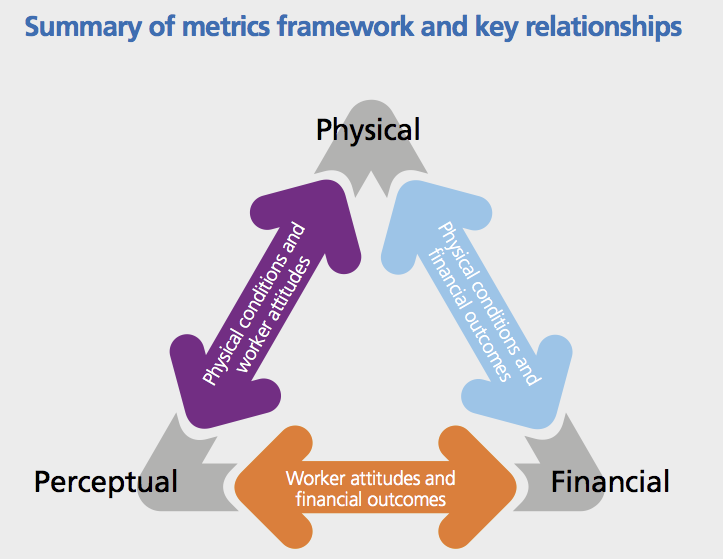
The World Green Building Council recently released a new toolkit to help businesses identify which aspects of their buildings may be detracting from the productivity of their employees—and consequently affecting their bottom lines.

Health, Wellbeing & Productivity in Offices” identifies seven top metrics that building owners widely use but don’t often put in the context of their buildings’ performance. These include absenteeism, staff turnover, revenue breakdown, medical costs, medical complaints, and physical complaints. By conducting an occupant perception study and assessing physical conditions in the office—like air quality, access to views, and acoustical comfort—owners can begin to understand the relationships between the space, the employees, and their output, according to the report.

The report also compiles evidence to support the idea that human benefits are derived from green design, which could help architects and sustainability consultants make the business case for the design features that they know will bring well-being benefits. The following are drawn from various studies to demonstrate the impact that design features have on staff costs:

  • Air-quality improvements are estimated to increase productivity 8%–11%.
  • An employee’s performance is likely impacted if air temperatures differ significantly from a baseline between 70°F and 73°F; performance can drop as much as 10% at a high of 86°F or a low of 59°F.  
  • A 66% drop in performance for a ‘memory for prose’ task was observed in one study when participants were exposed to different types of background noise, emphasizing the importance of acoustical comfort.

Published December 31, 1969

(2014, November 3). Attention, Employers: Green Design Tied to Fewer Sick Days. Retrieved from https://www.buildinggreen.com/departments/newsbrief

Add new comment

To post a comment, you need to register for a BuildingGreen Basic membership (free) or login to your existing profile.

Phthalates in the Womb Linked to Asthma-Prone Kids

News Brief

Phthalates in the Womb Linked to Asthma-Prone Kids

A longitudinal study suggests childhood asthma can be traced to the mother’s exposure to plasticizers during pregnancy.

Even before expectant mothers find themselves being told to “take deep breaths” to get through labor pains, plasticizers present in their blood could cause their baby to grow up gasping for air. Childhood asthma rates, according to a new study, are strongly correlated with prenatal exposure to two types of phthalates—BBzP, used to soften plastics such as vinyl floor tile, and DnBP, used in food packaging and some cosmetics.

A study of 300 inner-city children from New York, recently published in Environmental Health Perspectives, found the risk of asthma was up to 78% higher for children whose mothers were in the top third of the study sample for the amount of phthalates in their blood. Previous studies have linked phthalates to the development of asthma (see Report Warns of Asthma-Causing Chemicals in Building Products), but this is the first suggesting harmful exposure occurs this early.

Tellingly, 94 children in the study sample were diagnosed with asthma between 5 and 11 years of age—a rate three times higher than the national average. The expectant mothers chosen for the study, however, might have had a combination of other risk factors from residing in inner-city New York (where there might be more pollutants like vehicle exhaust, for example), so the “results may well not be able to generalize to other populations,” according to the study.

But the strong association still “raises new concerns” about “relatively ubiquitous environmental exposures” according to the report, especially because the phthalate levels measured in the study participants are comparable to those found in adults throughout the United States. Although levels of BBzP and DnBp have reportedly been dropping since the mothers were tested between 1998 and 2006, exposures to substitutes have increased (see Phthalate Exposure Persists Despite Regulations).


Published December 31, 1969

(2014, November 3). Phthalates in the Womb Linked to Asthma-Prone Kids . Retrieved from https://www.buildinggreen.com/departments/newsbrief

Add new comment

To post a comment, you need to register for a BuildingGreen Basic membership (free) or login to your existing profile.

In Milestone, Top Chemistry Award Goes to Green Pioneer

News Brief

In Milestone, Top Chemistry Award Goes to Green Pioneer

The Perkin Medal recognizes John Warner for developing more sustainable processes and educating the next generation of chemists.

A top honor in the chemistry field has gone for the first time to a green chemist. Society of Chemical Industry (SCI) America has awarded its Perkin Medal to one of the founders of green chemistry, John Warner, Ph.D. The medal acknowledges outstanding contributions to the field of industrial chemistry that have improved quality of life.

Warner co-authored the 2000 book Green Chemistry: Theory and Practice with Paul Anastas, Ph.D, for which the two developed twelve principles of green chemistry. The principles emphasize waste prevention, avoidance of human and environmental toxicity, use of renewable feedstocks, reductions in energy use for manufacturing, and engineering for innocuous degradation. Warner founded the first doctoral program in green chemistry during his tenure at the University of Massachusetts–Boston.

He also co-founded the Warner Babcock Institute for Green Chemistry in 2007, a company that partners with manufacturers to improve their processes; the institute specializes in non-animal toxicology testing, solvent-free coating production, and avoidance of hazardous reagents. He also co-founded the nonprofit organization Beyond Benign with his wife, Amy Cannon, Ph.D., to provide green chemistry curriculum to K–12 teachers.

For more information:

SCI America

sci-ameria.org

Published December 31, 1969

(2014, November 3). In Milestone, Top Chemistry Award Goes to Green Pioneer. Retrieved from https://www.buildinggreen.com/departments/newsbrief

Add new comment

To post a comment, you need to register for a BuildingGreen Basic membership (free) or login to your existing profile.

Cross-Laminated Timber Could Save 4% on Building Costs

News Brief

Cross-Laminated Timber Could Save 4% on Building Costs

Though cross-laminated timbers are still relatively rare, they are already cost-competitive and likely to get cheaper, an analysis suggests.

Using cross-laminated timber (CLT) as an alternative to concrete or steel would likely provide modest savings on construction costs while reducing the environmental impact of new construction, according to a feasibility study issued by Mahlum, Walsh Construction, and Coughlin Porter Lundeen. (For more on the environmental benefits of CLT, see Engineering a Wood Revolution.)

Using a recently completed existing building as a benchmark, the report compares concrete, steel, and CLT structural materials based on life-safety issues as well as cost for a hypothetical ten-story multifamily building in Seattle and concludes that a quicker construction time helps contribute to overall cost savings of approximately 4%.

Other factors contributing to savings included the ability to use a less skilled workforce, while the analysts considered the potential need for temporary protection of the structural materials as a mark against CLT’s affordability. “Because there is little local experience with this construction system,
 CLT construction is estimated at a cost premium until competency and familiarity 
is established,” the authors note, adding that the 4% savings is conservative because of unknowns. They also suggest that costs will come down even more if the materials sees market uptake in the region.

The full report can be downloaded on the Mahlum website.

Published December 31, 1969

(2014, November 3). Cross-Laminated Timber Could Save 4% on Building Costs. Retrieved from https://www.buildinggreen.com/departments/newsbrief

Add new comment

To post a comment, you need to register for a BuildingGreen Basic membership (free) or login to your existing profile.