Surgeon General to Designers: Promote More Walking

News Brief

Surgeon General to Designers: Promote More Walking

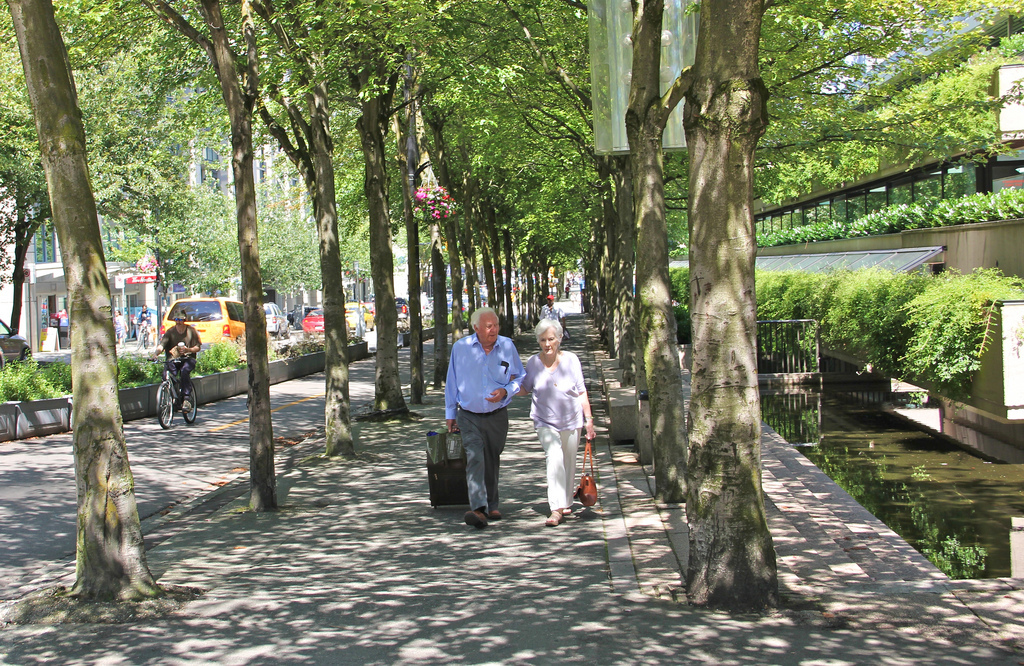
The U.S. Surgeon General has made walkable communities this year’s nationwide health focus.

Faced with an obesity epidemic and rising pedestrian fatalities, the U.S. Surgeon General recently issued a “call to action” urging designers and other professionals to do whatever is in their power to support walkable communities.

People who are physically active have about a 30% lower risk of early death than people who are active, according to the report, and walking presents one of the easiest and most common ways to get that exercise. However, having access to safe, desirable places to walk is increasingly difficult; in fact, of all traffic fatalities involving motor vehicle crashes, the share of pedestrian deaths has increased from 11% in 2004 to 14% in 2014.

The report offers the following guidelines for urban planners and architects:

  • Direct people to opportunities for physical activity with “point-of-decision” prompts, such as messages that encourage taking the stairs instead of the elevator.
  • Minimize block sizes and increase connectivity around transit hubs. A national study by the Center for Transit-Oriented Development reported that people who use public transit tended to spend around 21 minutes a day walking to and from their stop or station.
  • Improve safety for children walking to school by building entrances and exits that do not flow directly into streets.

The report points to plenty of benefits to justify walkability upgrades beyond health, including increasing social cohesion, reducing air pollution, and boosting local economies.

More on walkability

Driving to Green Buildings: The Transportation Energy Intensity of Buildings

Resilient Design: Smarter Building for a Turbulent Future

Walkable Texas Neighborhood Turns Out to Be Walked In

Published December 31, 1969

(2015, October 3). Surgeon General to Designers: Promote More Walking. Retrieved from https://www.buildinggreen.com/departments/newsbrief

Add new comment

To post a comment, you need to register for a BuildingGreen Basic membership (free) or login to your existing profile.

Gunlocke Seat Back Goes Red-List Free Using Mushrooms

Product Review

Gunlocke Seat Back Goes Red-List Free Using Mushrooms

The first furniture manufacturer incorporates Myco Board because the mushroom-based product is a sturdier alternative to plywood.

Myco Board, the engineered wood alternative made from mushroom “roots,” has found its first furniture application in the Savor guest chair seat back. Binding approximately 2.3 pounds of corn stalks for each chair back, mushroom tendrils (mycelium) grow for a while on the nutrients of agricultural waste and then are dried under heat and pressure, resulting in an extremely strong, stable material.

Gunlocke had been aware of Myco Board, which is manufactured by Ecovative, for a few years, according to Roy Green, director of stewardship at Gunlocke. But it wasn’t until its engineers complained that the expensive plywood in the seat back was splitting that the company decided to try Myco Board. “It was cost-competitive, had a green story, and also helped us solve a particular design problem,” Green told BuildingGreen. Myco Board is biobased and is certified Cradle to Cradle Gold, and because it can grow into a molded shape, it also eliminates the waste usually generated when cutting plywood to form (the mycelium dies during processing).

Published December 31, 1969

(2015, September 8). Gunlocke Seat Back Goes Red-List Free Using Mushrooms. Retrieved from https://www.buildinggreen.com/departments/newsbrief

Even Dust Is Fattening, Thanks to Phthalates

News Brief

Even Dust Is Fattening, Thanks to Phthalates

Household dust is laden with plasticizers and flame retardants that can trigger fat storage, researchers find.

Children eat approximately 50 mg of dust every day, the equivalent of a low dose of aspirin, according to the U.S. Environmental Protection Agency. New research reveals how that dust could be contributing to unintended fat storage, and potentially obesity.

A study led by Duke University researcher Heather Stapleton, Ph.D., investigated how 30 common semi-volatile organic compounds (SVOCs)—including brominated flame retardants, organophosphates, and phthalates—in actual samples from household dust react to PPARgamma (peroxisome proliferator-activated nuclear receptor gamma), a protein responsible for triggering fat metabolism and production in our bodies.

It turns out nearly all of these chemicals can activate PPARgamma.

The bad news is that this reactor is involved in many diseases, including obesity, diabetes, atherosclerosis (a cardiovascular disease), and cancer. When common SVOCs mimic natural hormones and flip the switch, PPARgamma triggers genes responsible for fat regulation, causing additional fat storage, which in turn changes hormone levels. These metabolic changes could contribute to obesity.

“Our idea is to mimic real environmental exposure, with many chemicals, at low levels,” said one of the researchers, Mingliang Fang, quoted in ChemicalWatch.

In this study, twenty-eight SVOCs or their metabolites out of 30 tested were found to be PPARgamma agonists. These included the plasticizer DEHP (di(2-ethylhexyl) phthalate), the organophosphate flame retardant BPDP (tert-butyl phenyl diphenyl phosphate), and the class of brominated flame retardants known as PBDEs (polybrominated diphenyl ethers).

More on SVOCs in building products

Flame Retardant Whack-a-Mole Continues

Finding Furniture Without Toxic Flame Retardants

Two Phthalate-Free Plasticizers Stand Out in a New Report

Published December 31, 1969

(2015, August 31). Even Dust Is Fattening, Thanks to Phthalates . Retrieved from https://www.buildinggreen.com/departments/newsbrief

Add new comment

To post a comment, you need to register for a BuildingGreen Basic membership (free) or login to your existing profile.

Four Reasons Building Performance Is Worse Than Predicted

News Brief

Four Reasons Building Performance Is Worse Than Predicted

It’s common for energy use to far exceed what models predict. Should outcome-based measures be the new standard?

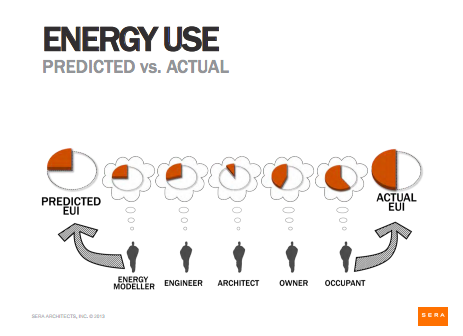
Energy use is often double what some energy modelers estimated at the start, according to a new report by the National Institute for Building Science (NIBS) and the New Buildings Institute (NBI).

The report outlines some of the reasons for this, including barriers to achieving energy goals:

  • Occupants are not consistently engaged to share responsibility and achieve efficiency.
  • Building operators are not engaged as part of the project team and often aren’t compensated in alignment with the important work they do.
  • Design-bid-build is still favored over integrative process, leaving efficiencies unrealized.
  • Benchmarking data and methods are both out of date; the authors argue that a more fluid system that can be updated easily and frequently would make more sense for benchmarking real-time performance.

The building institutes agree that “design and construction must be linked with operations and maintenance,” and they emphasize that “focus must be on two key areas: codes and policies, and industry practice.”

With these barriers and goals in mind, NIBS and NBI intend to outline tools and resources for policymakers and industry, develop a new method for collecting and storing building performance data, and then create pilot projects to test their ideas.

“The next step will be getting others in the building industry to begin preparing for outcome-performance as the new norm,” Ryan Colker, director of NIBS, states. One way that the group plans to achieve this is through successful case studies that will reveal the necessity of post-occupancy testing to accurately measure building performance.

Occupant Engagement: Where Design Meets Performance

Design Strategies for Occupant Engagement–And Why They Boost Performance

GSA Links High-Performance Outcomes to Integrated Design

IgCC Opens Compliance Pathway Based on Actual Energy Use

For more information:

New Buildings Institute

newbuildings.org

Published December 31, 1969

(2015, August 20). Four Reasons Building Performance Is Worse Than Predicted. Retrieved from https://www.buildinggreen.com/departments/newsbrief

Add new comment

To post a comment, you need to register for a BuildingGreen Basic membership (free) or login to your existing profile.

Impacts of Architectural Coatings to Be Measured Over 60 Years

News Brief

Impacts of Architectural Coatings to Be Measured Over 60 Years

The first PCR created for architectural coatings in North America

The American Coatings Association (ACA) has published the first North American product category review (PCR) for architectural coatings. PCRs establish the ground rules for measuring impacts in a life-cycle assessment (LCA). They help ensure that all products in the same category are measured in the same way. Types of coatings in the PCR include:

  • Concrete curing, sealing, and protective coatings
  • General exterior and interior coatings
  • Floor coatings
  • Primers, sealers, and undercoaters
  • Wood coatings: Includes lacquers, varnishes, sanding sealers, penetrating oils, shellacs, stains, wood conditioners, and wood sealers

The PCR looks at impacts from “cradle to grave,” meaning from the time raw materials are extracted to the time when it is recycled or disposed of. The functional unit defined by the PCR is one square meter of covered and protected substrate for a period of 60 years, the assumed lifetime of the building.

Since few architectural coatings hold up even close to that long, this choice of functional unit means the impacts of re-application are supposed to be included in an LCA. The PCR also specifies an assumed lifetime for different coatings, based on type of material and third-party durability testing.

According to the PCR, manufacturers must also incorporate ingredient reporting at levels required by law (see Safety Sheets Getting New Format—And Some New Data).

NSF International served as the program operator overseeing creation of the architectural coatings PCR. The PCR was created by a committee headed by Doug Mazeffa of the Sherwin-Williams Company, with representatives from ACA, Valspar, PPG Industries, and NSF International, in addition to a public health professional.

More on product category reviews

The DNA of EPDs: The Making of Product Category Rules

EPDSs Will Change How We Build- But Slowly

What’s an EPD? Environmental Product Declaration FAQs

For more information:

NSF International

standards.nsf.org

Published December 31, 1969

(2015, August 14). Impacts of Architectural Coatings to Be Measured Over 60 Years. Retrieved from https://www.buildinggreen.com/departments/newsbrief

Add new comment

To post a comment, you need to register for a BuildingGreen Basic membership (free) or login to your existing profile.

Tenant Submetering Now Mandatory in New York City

News Brief

Tenant Submetering Now Mandatory in New York City

Local Law 88 requires submetering and lighting upgrades for large non-residential buildings.

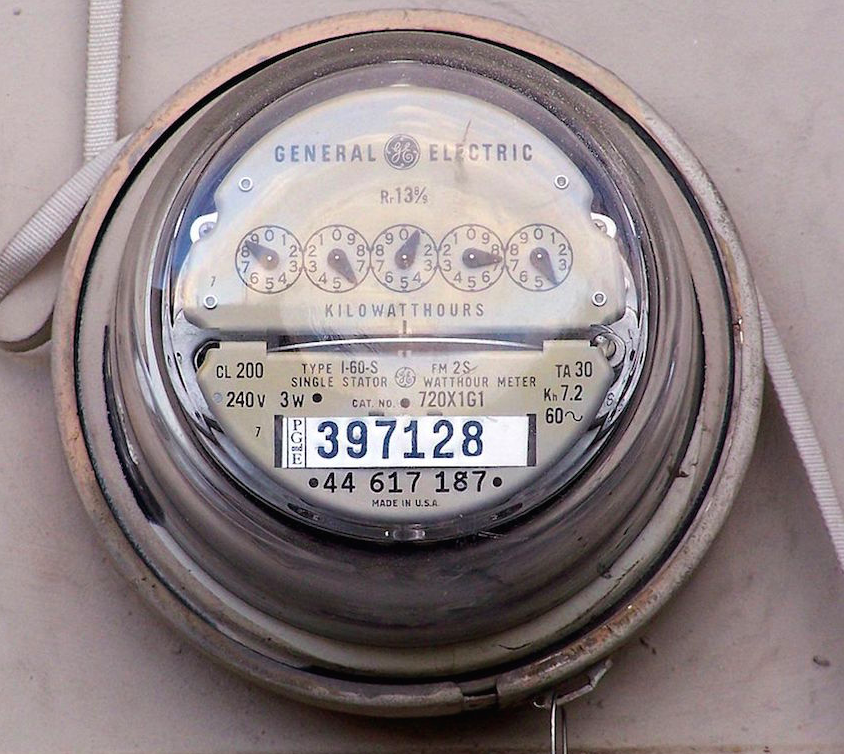
Building owners in New York City are now required to submeter all tenant spaces and upgrade all lighting as part of the city’s ongoing streak of innovative energy laws.

Enacted in 2009 as part of the Greener, Greater, Buildings Plan (GGBP) signed by former mayor Michael Bloomberg, Local Law 88 requires all non-residential buildings over 50,000 ft2 to install electrical submeters for each large non-residential tenant space and provide tenants with monthly energy statements.

The law also requires upgrading lighting to meet current New York City Energy Conservation Code standards by 2025. That date factors in the length of most leases, at 10 years, addressing the issue now as lease negotiations take place for the period when upgrades will need to happen.

Bonnie Hagen, chief operating officer at Bright Energy Services, explained to BuildingGreen that buildings with a master meter are all too common—so tenants that leave the lights on all night pay the same as those that are more conscious of energy consumption.

Building owners generally make a profit despite the flat rates they charge—another disincentive to savings. The flat-rate energy model is under consideration for its negative impact on energy accountability, but for now, submetering will be the first step.

It’s unclear how much will the reforms will cost. Hagen believes NYC companies will come up with creative submetering packages to sell building owners. The lighting upgrades Hagen calls “low-hanging fruit,” with “minimal construction required.” The results are also easy to see in the next month’s energy bill. Strengthening the electrical grid is far more expensive than reducing energy consumption, says Hagen, who adds that NYC’s grid needs all the support it can get.

Other key initiatives passed along with Law 88 as part of GGBP include Local Law 84, which mandated the city’s first benchmarking efforts, and Local law 87, which requires large buildings to conduct an energy audit and retro-commissioning every ten years.

More on energy management in New York City

Energy Data for NYC Buildings Released

Energy Reporting: It’s the Law

NYC Reshapes its “DNA” with Building Code Revisions

For more information:

Urban Green Council

urbangreencouncil.org

Published December 31, 1969

(2015, August 14). Tenant Submetering Now Mandatory in New York City . Retrieved from https://www.buildinggreen.com/departments/newsbrief

Add new comment

To post a comment, you need to register for a BuildingGreen Basic membership (free) or login to your existing profile.

How the 2015 EBie Award Winners Did It

News Brief

How the 2015 EBie Award Winners Did It

Underrated and overlooked building operators and facility managers received their due at this year’s annual EBie awards.
The 2015 EBie awards (pronounced EE-bee), sponsored by Urban Green Council, honor the hard work and perseverance that go into green renovations and day-to-day operation of existing buildings.

Each category of award offers a great story.

The All-Rounder

Dedicated to “the most improved building over multiple sustainability categories,” this prize went to Mt. Sinai Beth Israel Hospital in Brooklyn.

The team’s collaboration in the face of challenges unique to the hospital—such as aging HVAC systems, the need to keep the building fully functioning throughout renovation, and the need to adhere to the hospital’s guidelines for infection prevention—was its most notable victory. The central renovation to the project was the replacement of the boilers, which included the transition from steam-powered heat to a hot-water system.

Stephen Monez, assistant vice president, oversees four New York City hospitals, including Sinai, and is credited with spearheading the project.

The Smooth Operator 

The “most improved” award of the EBies goes to the Goizueta School of Business.

The building had received a LEED for Existing Buildings: Operations & Maintenance Gold certification in 2004, but efficiency had sunk in the decade after, according to the award submission. A building team led by Eric Gregory, commissioning manager, installed an alarm system to find the flaws in the energy system, and within ten months, they had paid for the project.

Says Gregory, “This process helps us keep performance optimized without drift and comes with the side bonus of greatly reducing occupant comfort complaints.”

Power to the People

Two winners were chosen for this award, which highlights the greatest reduction in building energy use (by percentage).

The first was awarded to a Passive House in Mamaroneck, New York, redesigned by consultant Andreas Benzing of A.M. Benzing PLLC. The building was retrofitted with a superinsulated, airtight, and thermally broken building envelope that decreased energy use by 70%. Another addition was a redwood pergola to provide shade for south-facing windows. Advice from the project team about building low-efficiency buildings? “Plan with an eye on future needs” so that building efficiency can stay low for years to come.

How would you like your employer to provide you with a hybrid vehicle and a discount on solar power? The other winner for “Power to the People” is the Melink Corporation’s headquarters, which, in addition to receiving LEED Platinum certification, has turned its facilities into a lab for renewable energy sources, and counts those perks among its initiatives. The building repurposes 90% of its waste. Steve Melink, CEO, is credited with leadership of the project.

Take Me to the River

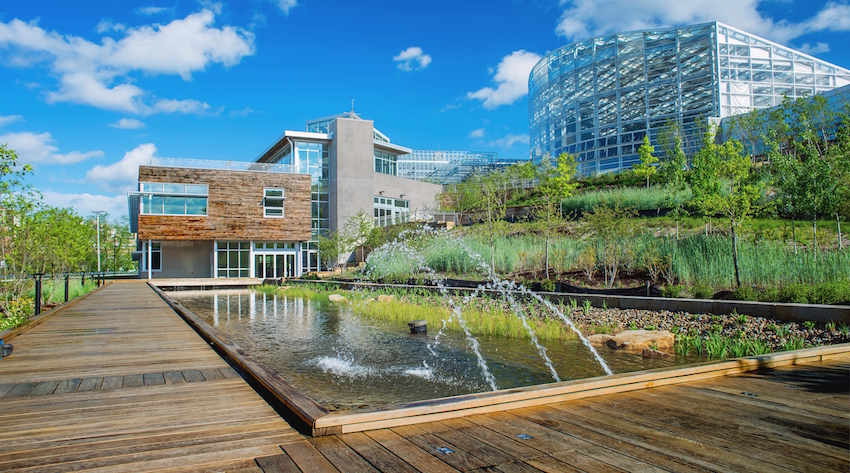
The EBie winner for largest savings in potable water went to the Phipps Conservatory in Pittsburgh.

Spearheading the project is Richard V. Piacentini, the executive director, who has led the way to the conservatory’s rise in green building over the past decade. Reducing its 12.5 million gallons of water and creating a net-zero-energy, 2.9-acre Center for Sustainable Landscapes, the botanical conservatory has come a long way in a short time.

How did they do it? See this image of the week to learn more.

It Takes a Village

The award for commercial tenant space across multiple sustainability categories goes to the Frost Bank Tower in Austin, Texas.

Bribed by “breakfast goodies” and coffee, according to Sammie Baker, senior property manager, the team was able to engage tenants in sustainability improvements by figuring out how they used the space and how they wanted to be involved.

The Austin high-rise also features a building automation system (BAS) that lowers costs and energy and that previously helped drop energy use by 16% over three years.

The Verdant Brainiac

This prize goes to the biggest challenge overcome and the most innovative renovation.

City Center Apartments in Richmond, California, takes home the trophy. Led by Ali Gaylord, senior project manager, the team replaced sloped and flat roofs, added double-glazed windows and sliding glass doors, and installed photovoltaic panels, along with other improvements.

The largest challenge, according to Gaylord, was immense condensation created by high-efficiency furnaces. The solution? Downspouts in the furnace closet that directed water off each unit’s balcony.

“Our project also offers a model of how an affordable housing project can incorporate energy- and water-efficiency projects, along with energy generation, into a re-capitalization scope,” says Gaylord.

Jury Award

This award, created this year, goes to a project that falls outside the purview of the other categories.

The Georgia World Conference Center (GWCC) “takes the LEED,” according to the EBie awards summary. Tim Trfezer, sustainability manager, was in charge of greening the mammoth conference center, which includes large, open spaces and a 24-hour operation schedule. The first LEED certification attempt in 2005 failed.

After 2010, low-flow restroom water fixtures were installed, and more than 500 air-handling units were evaluated. A green cleaning policy was enacted that required paper and cleaning products to meet sustainability criteria, in addition to improved solid-waste management following a waste audit.

As a result, the center diverted 602 tons of material from landfills and achieved 27% greater energy efficiency. Today, the GWCC is the largest LEED-certified convention center in the world. 

Read more about existing building performance

Why Post-Occupancy Review is the Future of Design (And How it Can Serve You Now)

Design Strategies for Occupant Engagement and How They Boost Performance

EBies 2014 Shine (Efficient) Spotlight on Existing Buildings


For more information:

EBie Awards

Published December 31, 1969

(2015, August 3). How the 2015 EBie Award Winners Did It. Retrieved from https://www.buildinggreen.com/departments/newsbrief

Add new comment

To post a comment, you need to register for a BuildingGreen Basic membership (free) or login to your existing profile.

How ‘Safe’ Chemicals Could Team Up to Cause Cancer

News Brief

How ‘Safe’ Chemicals Could Team Up to Cause Cancer

Chemicals that are benign on their own may turn malignant in combination with others circulating in the environment, researchers warn.

Even as scientists and the chemical industry are playing catch-up on studying the health impacts of thousands of chemicals, researchers are talking about a new concern: the effect of apparently “safe” chemicals mixing in dangerous combinations.
Even if certain chemicals are generally considered innocuous on their own, the cumulative effect of so many in our environment may cause or advance cancer by affecting multiple organs, systems, tissues, and pathways at once, according to a recent study published in the journal Carcinogenesis. The researchers selected 85 common chemicals—including bisphenol-A (BPA), cadmium, polybrominated diphenyl ethers (PBDEs) and phthalates—and studied whether they might impact any one mechanism that has been tied to cancer development.

Though none are considered carcinogenic when acting alone, 50 of these chemicals were found to support at least one key carcinogenic mechanism at current low levels of exposure. These mechanisms include sustained cell proliferation, genome instability, inhibited immune response, and changes to tumor micro-environments.

Can cancer result if you combine the effects of multiple chemicals? The experts don’t know. But given that 7%–19% of cancers are attributable to environmental exposures, according to the International Agency for Research on Cancer, chemical safety testing should start accounting for likely interactions, they argue.

“Every day, we are exposed to an environmental chemical soup, and we need testing to evaluate the effects of our ongoing exposure to the mixtures in this soup,” says lead author William Goodson III, M.D., a senior scientist at the California Pacific Medical Center in San Francisco.

More on product chemicals and health

The Product Transparency Movement: Peeking Behind the Corporate Veil

BPA, Phthalates Won’t Be EPA Chemicals of Concern

Take Control of Your Materials: Four Empowering Lessons from Teams That Beat the Red List

Published December 31, 1969

(2015, July 29). How ‘Safe’ Chemicals Could Team Up to Cause Cancer. Retrieved from https://www.buildinggreen.com/departments/newsbrief

Add new comment

To post a comment, you need to register for a BuildingGreen Basic membership (free) or login to your existing profile.

Cladding Industry Agrees to One Rulebook for Conducting LCAs

News Brief

Cladding Industry Agrees to One Rulebook for Conducting LCAs

One set of rules, called a PCR, now governs environmental reporting for all cladding products, regardless of whether they are wood, vinyl, or metal.

Cladding is the latest product category for which a general industry product category rule (PCR) has been set, joining others like concrete and flat glass. PCRs designate the rules for life-cycle assessment calculations if they are to be used for environmental product declarations (EPDs).

This cladding PCR is of particular interest because it supersedes 14 different material-specific PCRs already on the market, a situation that has led to dubious claims about which systems and materials have the lowest life-cycle impacts (see Cladding: More Than Just a Pretty Façade).

Now that the rules have been standardized across the industry, resulting EPDs are more likely to be a useful comparative instrument.

More on life-cycle assessments of cladding

Cladding: More Than Just a Pretty Façade

The Product Transparency Movement: Peeking Behind the Corporate Veil

Published December 31, 1969

(2015, July 29). Cladding Industry Agrees to One Rulebook for Conducting LCAs. Retrieved from https://www.buildinggreen.com/departments/newsbrief

Add new comment

To post a comment, you need to register for a BuildingGreen Basic membership (free) or login to your existing profile.

Consolidation of Green Codes Continues

News Brief

Consolidation of Green Codes Continues

In response to calls from the industry, the two most prominent green codes will be consolidated, with ASHRAE 189.1 to serve as the backbone of IgCC.

The International Code Council has announced that its International Green Construction Code (IgCC) will cease to be an independently developed building code and will instead draw on ASHRAE 189.1 for the 2018 version.

As BuildingGreen reported in 2014, the International Code Council (ICC) previously agreed to fully adopt a code-enforceable version of ASHRAE 189.1 as the basis for IgCC instead of developing its own system (see One Standard to Rule Them All: LEED, IgCC, 189.1 to Be Parts of a Single System). Details of how that will work have now been outlined in a final agreement.

Coined “IgCC powered by 189.1” in a press release, Standard 189.1 will now serve as the technical content for IgCC, though ICC will still be responsible for Chapter 1, “Scope and Administration.” As such, ICC has cancelled its 2018 development cycle, and instead, the consensus process that determines the next generation of ASHRAE 189.1 will include consideration of IgCC content.

The consolidation is also expected to more naturally shepherd projects from code to LEED. “This joint initiative will forge the fundamental regulatory building blocks of green construction on which future green building leadership initiatives can grow,” said Brendan Owens, P.E., chief of engineering at USGBC.

The agreement means there will now be a more comprehensive green code for jurisdictions that choose to adopt it, and fewer deviations and differences for architects and designers to keep track of.

More on harmonizing codes and standards

One Standard to Rule Them All: LEED, IgCC, 189.1 to Be Parts of a Single System

Standard 189.1 Inches Toward LEED in New Revision

IgCC Opens Compliance Pathway Based on Actual Energy Use

Maryland May Accept IgCC for Public Buildings Along with LEED

Published December 31, 1969

(2015, July 27). Consolidation of Green Codes Continues. Retrieved from https://www.buildinggreen.com/departments/newsbrief

Add new comment

To post a comment, you need to register for a BuildingGreen Basic membership (free) or login to your existing profile.