Building Owners “Shafted” by Antiquated Fire Codes

News Brief

Building Owners “Shafted” by Antiquated Fire Codes

In NYC and beyond, old regulations for elevator shafts waste energy —to the tune of millions of dollars every year. Urban Green Council offers solutions.

Besides discouraging able-bodied people from climbing flights of stairs, elevator shafts are running up major energy expenditures. That’s the conclusion of a report released by Urban Green Council, which estimates building owners around New York City could collectively save more than $11 million a year with relatively simple retrofits.

Until last year, NYC fire code required that vents at the tops of all stairwells and elevator shafts in residential buildings remain open. The law was a safety precaution to create pathways for smoke, but the same pathways give heated air an escape route, especially with the chimney effect of putting the opening at the top of a long elevator shaft.

Urban Green Council projects that an average of 4%–16% of heating fuel in NYC is spent on released hot air, adding up to $3,400 per year that building owners must pay on average. According to their projection, between now and 2050, one million metric tons of CO2e will be wasted­—equivalent to the annual energy use of more than 90,000 homes. The group studied 15 buildings of varying heights across boroughs to arrive at these figures.

They have a solution: cover the gaps. Annealed glass and mechanical vents can be installed with a realistic investment, the report claims, and a snappy payback is estimated at one to five years. The conclusion: “If simple repairs were performed on 4,000 tall apartment buildings in NYC, it would cut greenhouse gas emissions by 30,000 metric tons and save over $11 million every year.”

The report includes a chart to determine energy loss for areas outside NYC. Leaky windows and hallways also contribute to unnecessary energy loss and bills, but covering giant holes in the roof is a great place to start.

Read more

Three Sources of Air-Pressure Problems in Buildings

Architects Fight Obesity Epidemic Through Active Design

For more information:

Urban Green Council

urbangreencouncil.org/spending

Published December 31, 1969

(2015, April 28). Building Owners “Shafted” by Antiquated Fire Codes . Retrieved from https://www.buildinggreen.com/departments/newsbrief

Add new comment

To post a comment, you need to register for a BuildingGreen Basic membership (free) or login to your existing profile.

A New, Cost-Effective Take on Vacuum Insulation

News Brief

A New, Cost-Effective Take on Vacuum Insulation

“Modified atmosphere insulation” technology may be able to rival the performance of vacuum insulation panels at a more affordable price.

Researchers at the Department of Energy’s Oak Ridge National Laboratory (ORNL) and industry partners say they are on track to create a foam board insulation that achieves R-12 per inch and is cost effective. If they pull it off, it would more than double the R-value of the best rigid foam insulation today.
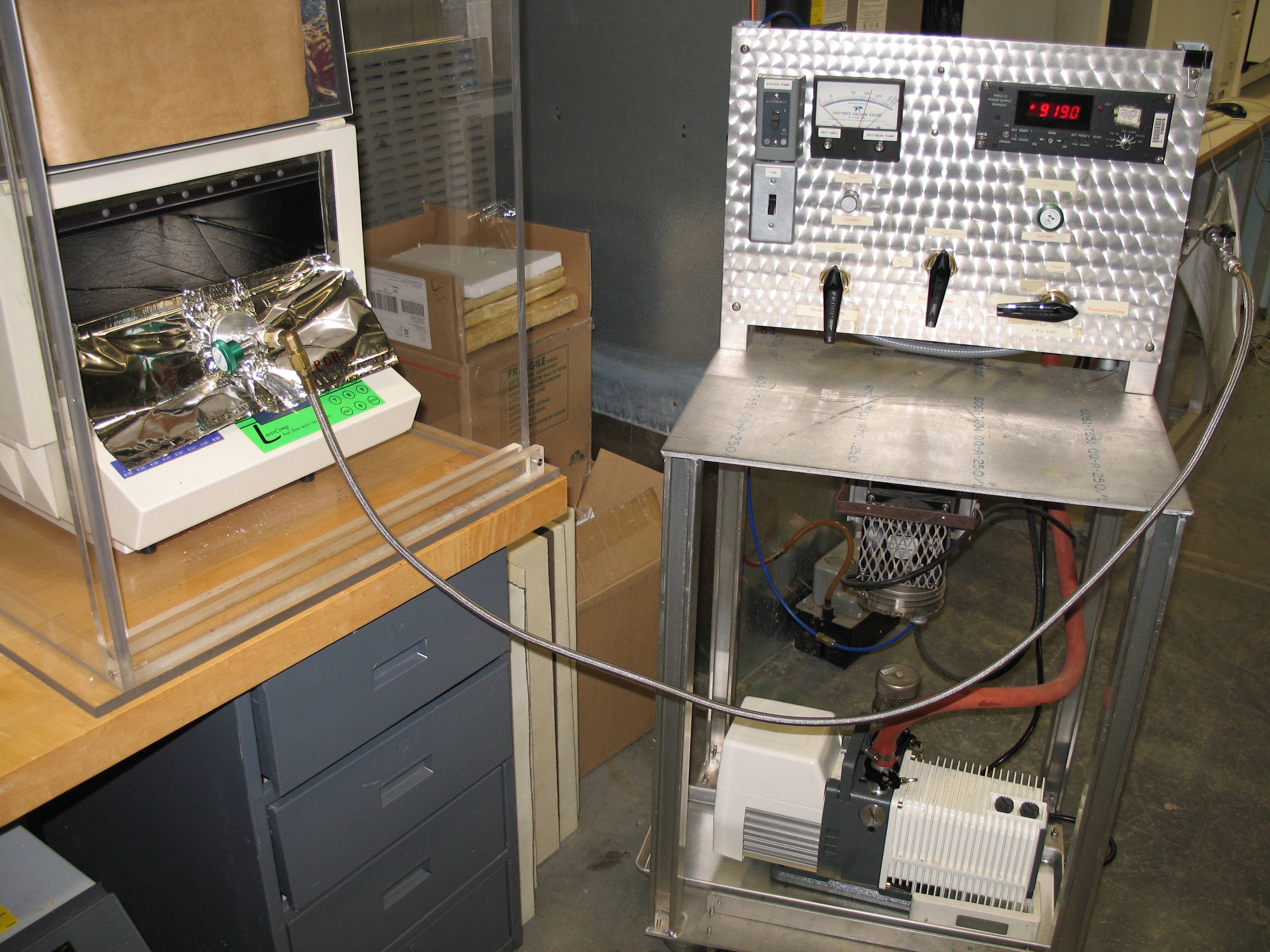
Working with Firestone Building Products and NanoPore, the ORNL researchers are testing modified atmosphere insulation (MAI). The technology is a cousin of the vacuum insulated panel (VIP), where extremely high insulation values are achieved by sucking all the air out of panels and sealing them tightly (see Vacuum Insulation Panels Push the Envelope to R-30 per Inch). In MAI, the porous silica core is instead filled with steam, which, as it cools and condenses, leaves a vacuum. The manufacturing process is simplified in that panels don’t need to be sealed under very low pressure. That could reduce costs by 40%. Initial models suggest an added cost of $0.15 per ft2 compared to conventional insulation.

Adding R-20 insulation to the walls of new homes and U.S. existing homes built before 2010 would have an annual primary energy-saving potential of 769 trillion Btus, according to the project’s impact study. Given the opportunity for savings in existing buildings, one of the first prototypes encapsulates the MAI core using conventional polyisocyanurate insulation so that it can be a drop-in replacement for conventional polyiso boards, according to ORNL.   

For more information:

Oak Ridge National Laboratory

http://energy.gov/sites

Published December 31, 1969

(2015, April 6). A New, Cost-Effective Take on Vacuum Insulation. Retrieved from https://www.buildinggreen.com/departments/newsbrief

Add new comment

To post a comment, you need to register for a BuildingGreen Basic membership (free) or login to your existing profile.

Carbon and Financial Payback Mismatched in Retrofits

News Brief

Carbon and Financial Payback Mismatched in Retrofits

Lighting, windows, or the chiller? Choosing a retrofit package is all the more tricky when dollar and carbon ROI are at odds.

Financial payback is a big deciding factor in choosing retrofit strategies, but the choices suggested by those calculations are not always the best in terms of reducing life-cycle carbon emissions, say researchers.
In a paper presented at avniR, a French conference focused on life-cycle assessment (LCA), researchers Seongwon Seo and Greg Foliente compare three different retrofit options for a conventional medium-sized office building in Australia. The authors point out that retrofits that reduce the most carbon while in use might have big embodied carbon impacts that are hard to compensate for.

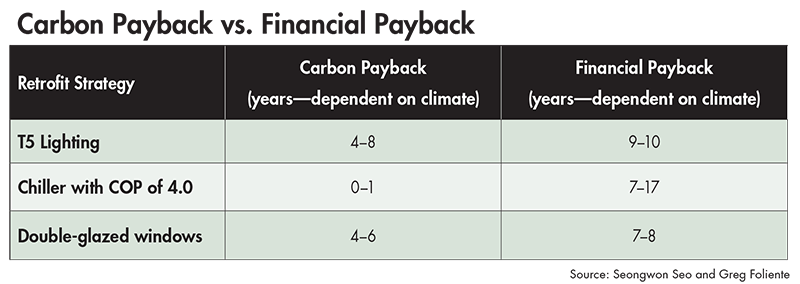
According to the analysis, replacing single-glazed windows with double glazing reduces operational carbon emissions almost twice as much per year as upgrading the building’s chiller; however, manufacturing, maintaining, and disposing of those windows costs 2,539 lb. CO2 equivalent per ft2 of building area over a 50-year lifespan, compared to 71 lb. CO2 equivalent per ft2 for the chiller—less than 3% of the life-cycle emissions of the window replacements.

The chiller’s lowered embodied carbon means it would take less than a year for it to pay back its carbon debt, while the window replacement might take four to six years. A lighting retrofit had a similar four- to eight-year carbon payback in this analysis.

Despite carbon benefits, the chiller retrofit also got short shrift as measured by financial payback. It would take up to 17 years for energy cost savings to offset the cost of the chiller, but only eight for the windows and between nine and ten years for the lighting, the researchers found.

Although all three retrofits will have paid back their embodied carbon by the time an owner financially breaks even, an owner looking for the shortest financial return would likely bypass the retrofit that would reduce carbon emissions the most.  

Published December 31, 1969

(2015, April 6). Carbon and Financial Payback Mismatched in Retrofits . Retrieved from https://www.buildinggreen.com/departments/newsbrief

Add new comment

To post a comment, you need to register for a BuildingGreen Basic membership (free) or login to your existing profile.

Anti-Aging Research Applied to Glass and Concrete

News Brief

Anti-Aging Research Applied to Glass and Concrete

Researchers unlock the secret of eternal youth for glass and cement by studying optimal pressure during manufacturing.

Concrete that won’t crack? Glass that won’t warp? We might be closer to both, thanks to new research that identifies the ideal pressure at which to manufacture these materials so that they won’t change shape over time or through temperature changes.
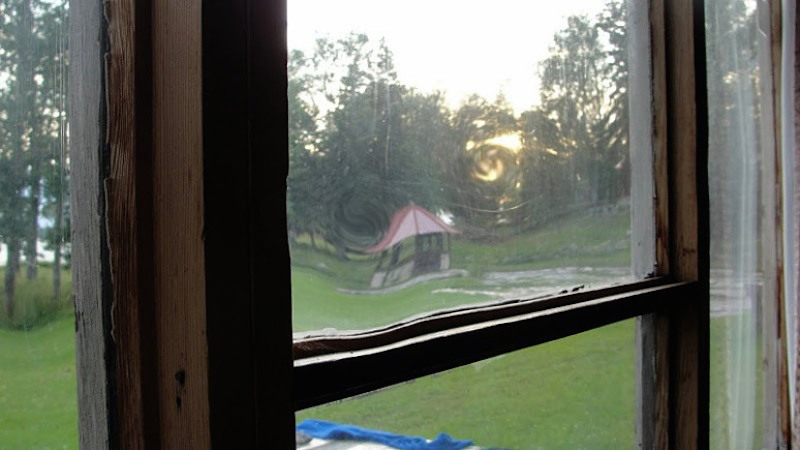
Certain conditions improve the angles at which molecular bonds occur, making glass and concrete stronger, explained Mathieu Bauchy, one of the authors of the study in a press release—just like the angles of steel trusses, such as those in the Eiffel tower, make a structure stand tall. These stronger bonds effectively drive “thermal reversibility,” in these materials, or the ability to recover volume and enthalpy after a heating and cooling cycle. “If you use the right pressure and the right composition of the material [in manufacturing], you can design reversible glasses that show little or no aging over time,” says Bauchy.

Now that Bauchy and co-author Matthieu Micoulaut have identified these optimal conditions, we might see more durable display screens, windows, and cement. And that could mean emitting less carbon dioxide to fix crumbling bridges and buildings in the future (see Reducing Environmental Impacts of Cement and Concrete) and avoiding embodied carbon to replace windows (see Twenty-Year Payback for Embodied Carbon of Triple-Glazed Windows). 

Published December 31, 1969

(2015, March 17). Anti-Aging Research Applied to Glass and Concrete. Retrieved from https://www.buildinggreen.com/departments/newsbrief

Add new comment

To post a comment, you need to register for a BuildingGreen Basic membership (free) or login to your existing profile.

New Guide Helps Avoid Pitfalls in Ground-Source Heat Pump Design

News Brief

New Guide Helps Avoid Pitfalls in Ground-Source Heat Pump Design

Overly complex loop designs and controls limit the commercial applicability of ground-source heat pumps. A new guide shows a better way.

ASHRAE published a guide on non-residential ground-source heat pumps in 1997, but demand for the technology—along with improper design and installation of these systems—has continued, prompting the organization to release an updated version that also covers commercial-scale systems.

“There is a widely held view that anything bearing the name ‘geothermal,’ ‘ground source,’ or ‘earth energy’ will produce the desired high efficiency and low operating cost,” according to Steve Kavanaugh, author of the guide along with Kevin Rafferty (to test those assumptions, see Ground-Source Heat Pumps: Are They Green?). “As a result, poorly designed systems are often installed, and building owners’ expectations are unmet.” Inefficient pumping, high-cost ground-loop designs, inadequate outside-air provisions, and unnecessarily complex control schemes are some of the most common problems.

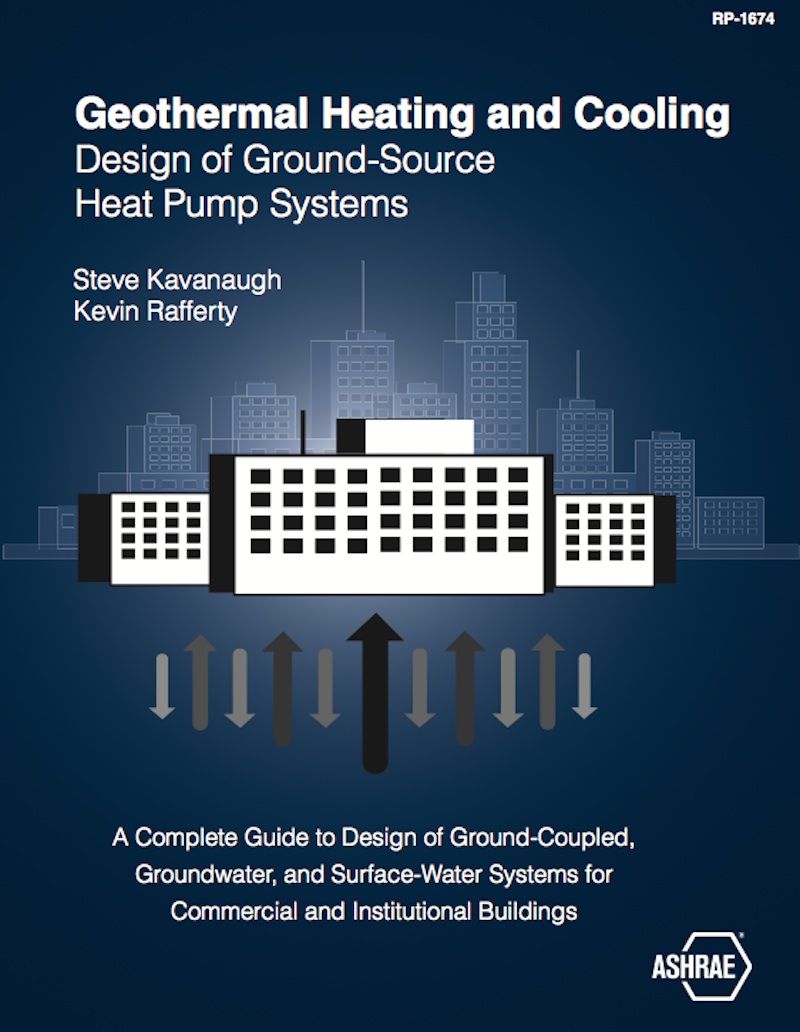
Geothermal Heating and Cooling: Design of Ground-Source Heat Pump Systems” updates the guidance to include information on site characterization and the latest equipment and piping.

As demand for ground-source heat pumps continues to grow—the market for commercial buildings is expected to grow nearly 5% faster than the climate-control market as a whole, according to a study by Frost and Sullivan—this guide could help smart design and installation of these systems keep pace.

Published December 31, 1969

(2015, March 17). New Guide Helps Avoid Pitfalls in Ground-Source Heat Pump Design. Retrieved from https://www.buildinggreen.com/departments/newsbrief

Add new comment

To post a comment, you need to register for a BuildingGreen Basic membership (free) or login to your existing profile.

Natural Stormwater Treatment Saves Salmons’ Lives

News Brief

Natural Stormwater Treatment Saves Salmons’ Lives

A new study shows biofiltration systems save the lives of salmon and the insects they prey on. How’s that for a stormwater quality metric?

Scientists spend a lot of time measuring markers of stormwater quality, and yet we often don’t know exactly how pollution levels in runoff affect fish and invertebrates. So one group of scientists, led by J.K. McIntyre of Washington State University, decided to skip right to the point in quantifying how effective biofiltration systems are at protecting aquatic ecosystems.
The researchers placed a number of juvenile salmon and two of their prey species (daphniids and mayflies) into untreated stormwater from a four-lane highway; then they placed another group into the same water once it had been treated in a biofiltration system. For the salmon and their invertebrate prey, it was a matter of life and death.

Unsurprisingly, the untreated runoff killed a great number of the three species (among the daphniid survivors, all had impaired reproduction). However, a biofiltration system—even one without plants—completely eliminated the acute toxicity of the highway runoff and avoided the reproductive problems in the daphniids.

Of course, aquatic animals aren’t usually exposed to pure highway runoff. The polluted water is usually expelled through the sewer into waterways, where it’s diluted with cleaner water (see Cleaning Up Stormwater: Understanding Pollutant Removal from Runoff).

Even so, the authors explain, the “first flush” of a storm can contain contaminant concentrations 20 times higher than average concentrations for an entire storm. It’s the average concentrations that are conventionally used in toxicity studies, so biofiltration systems are likely to be highly underappreciated. Given the drastic differences in how aquatic organisms responded to pre- and post-filtered runoff water, the authors argue that future effectiveness studies should analyze impacts at peak contaminant concentrations.

To learn more about natural stormwater treatment, read Stormwater Biofiltration That’s Also Smaller and Cheaper.

Published December 31, 1969

(2015, March 3). Natural Stormwater Treatment Saves Salmons’ Lives. Retrieved from https://www.buildinggreen.com/departments/newsbrief

Add new comment

To post a comment, you need to register for a BuildingGreen Basic membership (free) or login to your existing profile.

UN: Manufacturers Turn Blind Eye to Hazardous Chemicals At Their Peril

News Brief

UN: Manufacturers Turn Blind Eye to Hazardous Chemicals At Their Peril

Knowing the chemical ingredients in a product’s supply chain just makes good business sense, according to a United Nations report.  

Companies that know more about the chemicals in their products and in their supply chains avoid big financial losses and are better able to stay ahead of market demands, finds a report from the United Nations Environment Programme (UNEP).
The report warns of some of the potential consequences for companies that don’t take it upon themselves to identify hazardous chemicals in their products. In one horror story from 2009, tens of thousands of consumers stopped buying—and thousands of stores stopped selling—Johnson & Johnson’s baby products after formaldehyde was found in some of them. In China, the company’s market share dropped by almost 10%. And SIGG USA, a water bottle manufacturer, was forced to file for bankruptcy in 2011 with $13 million in liabilities after it failed to disclose levels of Bisphenol A (BPA) in its product.

Mark Rossi, Ph.D., co-director of Clean Production Action, which helped to prepare the report, said such examples are just the beginning of the potential “costs of not knowing.” Companies that survive must then reformulate the product in a crisis environment and recover from a supply-chain disruption.

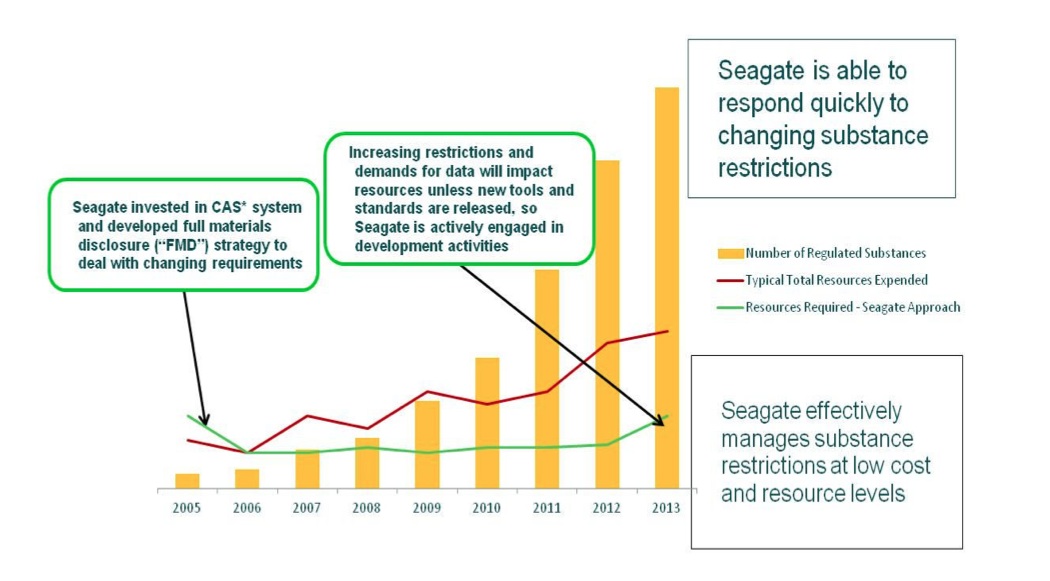
In contrast, companies that proactively identify and manage the chemicals in their products may spend more money up front but are then better positioned to handle shifting regulatory changes or market demands. The report gives the example of Seagate Technology, a hard-drive manufacturer that created an internal system for collecting ingredient information from its suppliers. Now, whenever a new chemical of concern emerges, Seagate doesn’t have to vet every supplier one at a time; instead, it simply checks its database.

“The most immediate benefit [of identifying supply-chain ingredients] will be being out ahead of regulatory requirements,” says Rossi, “but the process also gives a company a leg up on beginning to eliminate chemicals of concern.”

Published December 31, 1969

(2015, March 3). UN: Manufacturers Turn Blind Eye to Hazardous Chemicals At Their Peril. Retrieved from https://www.buildinggreen.com/departments/newsbrief

Add new comment

To post a comment, you need to register for a BuildingGreen Basic membership (free) or login to your existing profile.

Fannie Mae Offers Lower Interest Rates to Green Multifamily

News Brief

Fannie Mae Offers Lower Interest Rates to Green Multifamily

Multifamily building developers and owners now have a greater financial incentive to pursue green certifications: they’ll be rewarded by Fannie Mae.

Fannie Mae, the leading provider of multifamily financing, has announced that it will offer owners of certified green buildings a significantly lower interest rate on their loans. The lower rate applies to a multifamily building’s refinance, acquisition, or supplemental mortgage, so it encourages existing buildings as well as new construction to become certified under any of the program’s recognized certifications. These include LEED, Energy Star, Enterprise Green Communities Criteria, and Green Globes.

The lower interest rate consists of a reduction of 10 basis points, which would cut a market interest rate of 4% to 3.9%. On a $10 million loan amortized over 30 years, for example, an owner would save $95,000 in interest payments in the first ten years, according to a U.S. Green Building Council press release.

Fannie Mae is relying on evidence that lower energy, water, and maintenance bills in certified buildings leave more disposable income for loan recipients. Jeffery Hayward, executive vice president for Fannie Mae multifamily, said, “We clearly see the value in the triple bottom line of certified green buildings: financial benefits of lower operating costs for owners and tenants, social benefits of better-quality housing for renters, and environmental benefits for everyone.”

These reduced-rate loans will also be securitized as Green Bonds, flagging them as socially responsible investments. 

For more information, see Fannie Mae's Multifamily Green Financing website

Published December 31, 1969

(2015, February 20). Fannie Mae Offers Lower Interest Rates to Green Multifamily. Retrieved from https://www.buildinggreen.com/departments/newsbrief

Add new comment

To post a comment, you need to register for a BuildingGreen Basic membership (free) or login to your existing profile.

GreenCircle Will Label Products Eligible for LEED v4

News Brief

GreenCircle Will Label Products Eligible for LEED v4

Does that declaration meet LEED v4 credit requirements? Soon, you can just look for the logo to find out.

A new certification will make it easier for project teams to locate products eligible for a LEED v4 credit that addresses ingredient disclosure and hazard screening (Building Product Disclosure and Optimization—Material Ingredients).

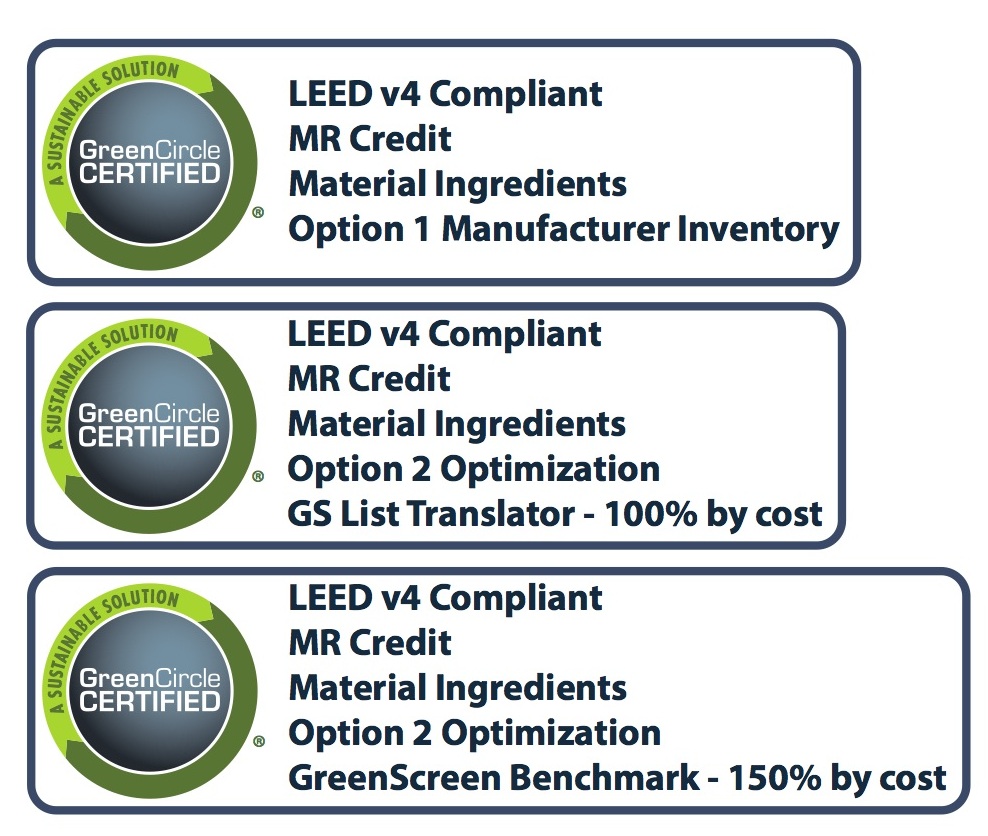
Developed by Clean Production Action (creators of the GreenScreen methodology) and approved by the U.S. Green Building Council (USGBC), the certification program will allow manufacturers to label product literature as “LEED v4 Compliant.” Third parties will review documents such as manufacturer ingredient inventories and GreenScreen assessments to ensure they adhere to LEED v4 standards. GreenCircle is the first third-party certifier participating in the program.

If embraced by manufacturers, the program could reduce the need for project teams to make judgment calls about whether these complex disclosure and screening tools meet the rating system’s credit requirements.

The program has launched, and about 30 manufacturers have already expressed interest in pursuing the label, though none has had documents certified yet, according to Annie Bevan of GreenCircle. But project teams should be able to locate certified products on the GreenCircle website and in other databases by mid-2015, she says.

Published December 31, 1969

(2015, February 20). GreenCircle Will Label Products Eligible for LEED v4. Retrieved from https://www.buildinggreen.com/departments/newsbrief

Add new comment

To post a comment, you need to register for a BuildingGreen Basic membership (free) or login to your existing profile.

Should Feds Adopt LEED v4? Uncle Sam Wants Your Input

News Brief

Should Feds Adopt LEED v4? Uncle Sam Wants Your Input

GSA is asking for advice on how it should use LEED and keep up with the marketplace.

Following its controversial choice to give equal status to LEED and Green Globes (Feds Put Green Globes on Pedestal with LEED), the U.S. General Services Administration (GSA) has completed a technical review of LEED v4 and is seeking public input on the results. The new review applies the methodology from a 2012 Pacific Northwest National Laboratory evaluation (see Green Globes Tops LEED in Federal Review, but Barely) to the latest version of LEED—necessary, says GSA, because the prior analysis focused on LEED 2009, now out of date.

GSA is requesting not only technical feedback about government use of LEED v4 credits but also procedural suggestions about how government agencies should choose green building rating systems in the future. The agency explains in a Federal Register notice that it would like comments on five questions:

  • Which LEED v4 credits should federal agencies focus on?
  • How can federal agencies participate more productively in rating system development?
  • How can future rating system reviews, which are mandated by law, be more effective?
  • How should these reviews present their findings?
  • How can the reviews be thorough but still keep pace with rating system development?

Comments can be provided online or by fax, mail, or email. GSA will also host an online public listening session at 1 p.m. Eastern time on March 2, 2015.

For more information:

U.S. General Services Administration

gsa.gov


Published December 31, 1969

(2015, February 18). Should Feds Adopt LEED v4? Uncle Sam Wants Your Input. Retrieved from https://www.buildinggreen.com/departments/newsbrief

Add new comment

To post a comment, you need to register for a BuildingGreen Basic membership (free) or login to your existing profile.