Mothers Who Clean for a Living More Likely to Have Babies with Genital Defects

News Brief

Mothers Who Clean for a Living More Likely to Have Babies with Genital Defects

Health linkages to a variety of chemicals common in buildings, including endocrine disruptors, add to a growing list of concerns.

Sons born to professional cleaners, hairdressers, and lab workers were 68% more likely to develop hypospadias, the condition of having the opening of the urethra on the underside of the penis rather than the tip. The condition can be surgically repaired, but either way, those affected can suffer ongoing urinary and sexual problems.

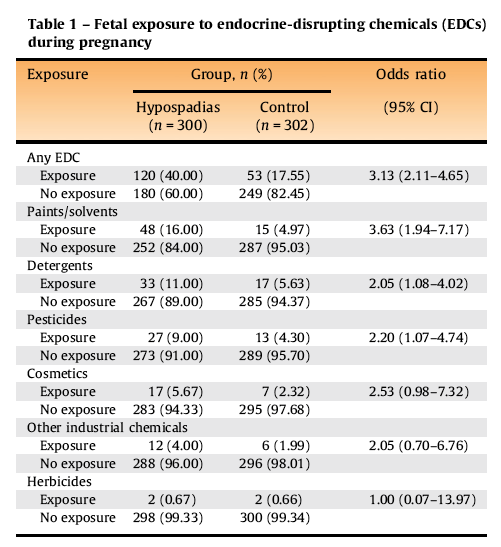
Researchers, with consent from parents, studied children in the South of France where greater incidents of chemical exposure were known to occur. Chemical exposures for both biological parents of 408 hypospadiac children and 302 non-hypospadiac children were studied. The study found that jobs with more frequent chemical exposure for the biological mother were more likely to result in hypospadiac sons.

Fetuses exposed to paints, solvents, or adhesives were the most likely to experience hypospadias. Detergents, pesticides, and cosmetics also showed significant impacts, along with other industrial chemicals, including metals, polycyclic aromatic hydrocarbons (PAHs), and herbicides. Of all the exposures studies, 78% occurred in the first trimester of pregnancy—during genital differentiation.

This is one in several studies that link chemicals that mimic human hormones, also known as endocrine disrupting chemicals, to genital malformation. These chemicals include:

  • bisphenol-A (BPA), found in epoxy flooring and windows, plastic packaging, baby bottles, automobile parts, and medical devices
  • phthalates, prevalent in vinyl flooring, perfume, hair spray, shampoo, and nail polish
  • polycyclic aromatic hydrocarbons, common in asphalt, pesticides, and insecticides
  • alkylphenolic compounds, found in hair products, spermicides, cleaning products, and detergents
  • organic solvents, ingredients in paints, varnishes, glues, and cleaning agents

Genetic predisposition is known to be the biggest factor in hypospadias, but all subjects with a predisposition were ruled out in this study, leaving only those relatively free from genetic bias.

However, researchers say that these chemicals could also exacerbate the risk of malformation with fetuses that have a family history.

Endocrine Disruptors Cost Society Millions, Says Report

Obesogens: A Fatty Issue

Toxic Chemicals Can Be Inherited in Utero

Published December 31, 1969

(2015, July 23). Mothers Who Clean for a Living More Likely to Have Babies with Genital Defects. Retrieved from https://www.buildinggreen.com/departments/newsbrief

Add new comment

To post a comment, you need to register for a BuildingGreen Basic membership (free) or login to your existing profile.

Green Real Estate Trusts Yield Higher Returns

News Brief

Green Real Estate Trusts Yield Higher Returns

A high GRESB score could mark a good real estate or equity investment, according to researchers.

The University of Cambridge is giving out some free investment advice: real estate investment trusts (REITS) with higher sustainability ratings perform better than their peers, when adjusted for risk.
These publicly traded portfolios of large-scale properties typically offer high yields with long-term capital appreciation, but REITS that have pursued energy efficiency and renewable energy systems do the best, according to the recent study, “The Financial Rewards of Sustainability: A Global Performance Study of Real Estate Investment Trusts.”

Using data from the 2014 GRESB survey (a system that scores real estate portfolios based on company-specific sustainability metrics), researchers found that for every 1% increase in GRESB score, return on assets increased by roughly 1.3%, and return on equity increased 3.4%. Researchers expect the higher returns are a combination of better cash flow due to operational savings and reduced risk from the added transparency of conducting the GRESB assessment.

The research also showed that most real estate companies have plenty more room to capitalize on the returns of sustainability improvements: the median GRESB score in 2014 was only 58 out of 100.

More about green real estate investments

Property Giant Ties Cities Investment Prospects to Resilience

GBCI Acquires Sustainable Real Estate Benchmark GRESB

New Index Could Bring New Investors to Green Building

Published December 31, 1969

(2015, June 29). Green Real Estate Trusts Yield Higher Returns. Retrieved from https://www.buildinggreen.com/departments/newsbrief

Add new comment

To post a comment, you need to register for a BuildingGreen Basic membership (free) or login to your existing profile.

Health and Wellness Trending Among Interior Designers

News Brief

Health and Wellness Trending Among Interior Designers

ASID’s Outlook Report ranks health and wellness first and sustainability third in most-influential industry trends.  

Energy efficiency is the new normal, designing for health and wellness is on the uptake curve, and resilient design is poised to make inroads, according to the 2015/2016 Outlook and State-of-the-Industry Report from the American Society of Interior Designers (ASID), which was released at NeoCon 2015.
“The problems interior designers are tasked with solving are far more complex than they’ve ever been before, and design is becoming more interdisciplinary as a result,” concludes the report. But with the industry now fully recovered from the 2008 recession (annual sales now amount to $8.6 billion), designers are positioned well for the challenge.

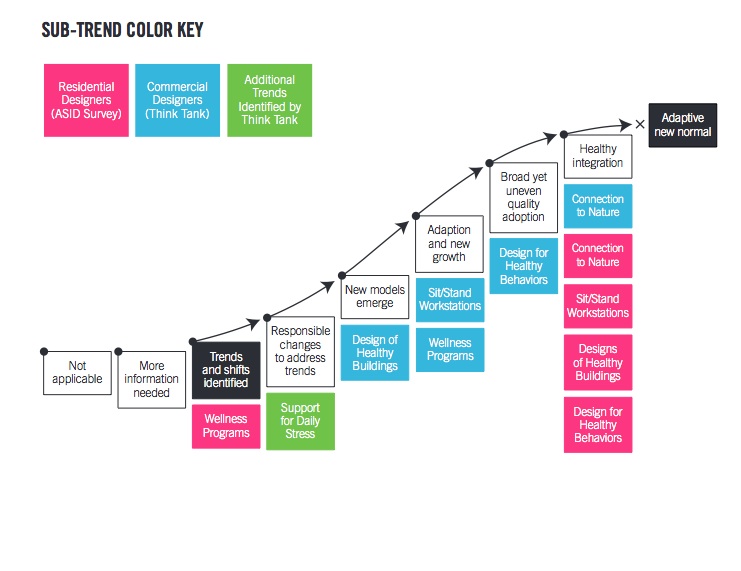
According to a survey of more than 200 practitioners, addressing wellness and sustainability are ranked among the top three trends for the industry. In 2015, 40% of interior design projects included green elements that were either requested by the client or suggested by the designer. Residential designers reported higher adoption of wellness strategies than commercial designers, while commercial designers reported higher adoption of sustainability strategies—though both characterized energy optimization and providing a connection to nature as close to being the “new normal.”

Resilient design was also identified as a significant trend for the industry, including designing for social responsibility and adaptability, but many residential designers reported that more information is needed for adoption to take off.

Read more about top design trends

Resilient Design: 7 Lessons from Early Adopters

Green Design: What’s Love Got to Do with It?

Building for People: Integrating Social Justice into Green Design

Published December 31, 1969

(2015, June 19). Health and Wellness Trending Among Interior Designers. Retrieved from https://www.buildinggreen.com/departments/newsbrief

Add new comment

To post a comment, you need to register for a BuildingGreen Basic membership (free) or login to your existing profile.

Green Label to Highlight Sustainable Building Products in Resource Libraries

News Brief

Green Label to Highlight Sustainable Building Products in Resource Libraries

With its free Mindful Materials label, HKS Architects offers a quick reference for finding green products on library shelves.

Your firm’s resource library might be a go-to source for aesthetic inspiration, but how much of its content is really green? Some firms have sustainability filters for what can make it onto the shelves, but still, connecting samples with green certifications can be a challenge.

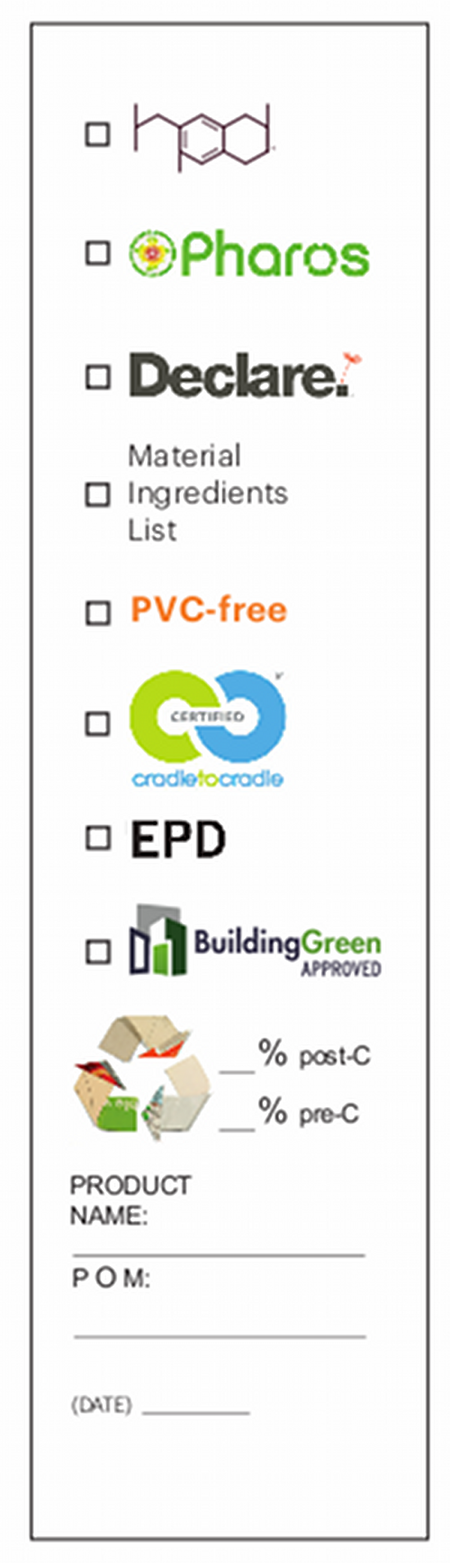
Enter HKS Architects and its new Mindful Materials label. Its simple checkboxes are designed to attach to binders and product samples to indicate when a product meets specific health and environmental targets. Its criteria cover:

  • Health Product Declaration (HPD)
  • Participation in the Pharos product database
  • Declare label
  • Other material ingredient list
  • Absence of PVC
  • Cradle to Cradle certification
  • Environmental product declaration (EPD)
  • BuildingGreen Approved
  • Pre- and post-consumer recycled content
  • Place of manufacturing

HKS is already using the label in several of its own offices, including Dallas, Detroit, Chicago, and Indianapolis.

The firm refers to its labeling system as “a practical means to incorporate transparency information into designers’ everyday work process.” HKS emphasizes that the label puts the relevant information—much of which can help projects qualify for LEED v4 material transparency and optimization credits—“where designers search for it most often: on resource library shelves.” At HKS, this process involves a “labeling champion” to fill out the boxes.

The firm is offering free downloads of its mindful material labels for designers at hksinc.com/mindfulmaterials.

More on building product research and transparency

Take Control of Your Materials: Four Empowering Lessons from Teams That Beat the Red List

Finding Products for LEED v4: A Guide

Product Watchdogs Pledge Standardized Ingredient Reporting Platform

Published December 31, 1969

(2015, June 19). Green Label to Highlight Sustainable Building Products in Resource Libraries. Retrieved from https://www.buildinggreen.com/departments/newsbrief

Add new comment

To post a comment, you need to register for a BuildingGreen Basic membership (free) or login to your existing profile.

Off-Site Construction Can Cut Project Time 73%

News Brief

Off-Site Construction Can Cut Project Time 73%

The pressures of prefabrication encourage an integrative process and on-time project delivery, though transportation and culture remain issues.

Although prefabrication completely changes the traditional construction process, there hasn’t been a lot of hard data on its benefits. A new survey conducted by the National Institute of Building Science (NIBS) indicates that off-site construction can reduce construction time and improve deadline performance enough to cut overall construction phase time by 73.2%.

Participants across multiple disciplines—312 in total, including architects, engineers, contractors, construction managers, subcontractors, and developers—were polled. About 93% responded that they had used off-site components at least somewhat in the past year, and 83% agreed that they plan on using the strategy “more often or the same amount” over the next year.

With all of the positive results, why isn’t prefabricated construction the norm? Although distance between the place of production and the jobsite remains a major issue, the construction and design culture itself was reported as a bigger obstacle. “Late design changes, lack of collaboration, and an adversarial climate for project delivery lead to difficulties in realizing the benefits of off-site construction” reads a survey summary.

Seventy-eight percent of respondents believed that the process required moderate to high degrees of stakeholder investment.

However, participants reported improved cooperation in the process. The survey concluded that “Increased integration and collaboration throughout the delivery process can result in higher quality and reduced changes throughout construction.”

More on prefabricated components and green building

Engineering a Wood Revolution

Unity Homes: Pushing the Boundaries

Project Frog Modular Green Classrooms

For more information:

Organization name: National Institute of Building Science

Website: www.nibs.org

Published December 31, 1969

(2015, June 19). Off-Site Construction Can Cut Project Time 73%. Retrieved from https://www.buildinggreen.com/departments/newsbrief

Add new comment

To post a comment, you need to register for a BuildingGreen Basic membership (free) or login to your existing profile.

Can Bioinspired Innovations Find Economic Footing?

News Brief

Can Bioinspired Innovations Find Economic Footing?

Biophilia and biomimicry captivate the mind and senses, but are they economically viable? A report from Terrapin Bright Green says yes.

Success stories in “bioinspired” products have captivated the imagination: a low-toxicity composite wood binder imitating a compound used by mussels, self-cleaning surfaces that mimic the lotus flower, and more. But can such innovations transcend small-scale tinkering and have a bigger impact? Yes, says Terrapin Bright Green, in a new report produced with support from the New York State Energy and Research Development Authority (NYSERDA).
Bioinspired innovation encompasses both biomimcry (employing ideas from the natural world for human design) and bioutilization (directly using organisms or their materials). Tapping into Nature: The Future of Energy, Innovation, and Business is divided into life-inspired sections that explore topics like carbon, energy conversion and storage, thermoregulation, and fluid dynamics. In each category are bioinspired products across the spectrum from concept to market.

Examples include polymers that sequester carbon (Converge Polyols), a building management system that mimics the communication of bees to reduce energy use during peak demand hours (Swarm Energy Management), and film designed to increase photovoltaic performance (Moth Eye Anti-Reflective Film).

The report estimates that by 2030 the bioinspired sector will account for $425 million of the U.S. gross domestic product and create two million jobs. Terrapin partner Chris Garvin remarked at the report’s release, “We believe that bioinspiration is the next transformative opportunity for companies looking to innovate and organizations looking to transition to a regenerative economy.”

Read more

Tapping into Nature: The Future of Energy, Innovation, and Business

14 Design Patterns: Report Puts Science Behind Biophilia

Green Design: What’s Love Got to Do with It?

Published December 31, 1969

(2015, June 1). Can Bioinspired Innovations Find Economic Footing?. Retrieved from https://www.buildinggreen.com/departments/newsbrief

Add new comment

To post a comment, you need to register for a BuildingGreen Basic membership (free) or login to your existing profile.

Design for Environment Label Now “Safer Choice”

News Brief

Design for Environment Label Now “Safer Choice”

EPA has shifted its labeling of chemically safer products and expanded to include Fragrance-Free in its criteria.

Green cleaning products with ingredients approved by the Design for the Environment (DfE) program will now bear a new label that reads “Safer Choice” rather than “Design for the Environment, U.S. EPA.” The move is designed to make the products as well as the program’s purpose easier for purchasers to identify.
Several standards have shifted as well—including the addition of a “Fragrance-Free” label—based on public comments solicited by the U.S. Environmental Protection Agency (EPA) about its assessment and labeling program. Fragrance chemicals are typically closely guarded trade secrets, and some fragrances have been found to be respiratory sensitizers. Products must be eligible for the Safer Choice label in order to participate and must contain no chemicals intended to scent the product or mask chemical scents in the product.

LEED v4 for existing buildings references EPA’s DfE (now Safer Choice) standards in its credit for Green Cleaning Products and Materials. Green cleaning programs limit ongoing exposure to harsh chemicals, including VOCs, not only for building occupants but also for cleaning and maintenance staff.

Read more

Research Connects Cleaning Jobs with Asthma

Transpare Database Helps Cleaning Professionals Find Cleaner Products

Published December 31, 1969

(2015, June 1). Design for Environment Label Now “Safer Choice”. Retrieved from https://www.buildinggreen.com/departments/newsbrief

Add new comment

To post a comment, you need to register for a BuildingGreen Basic membership (free) or login to your existing profile.

Study Reveals Nuances of Occupant Engagement Strategies

News Brief

Study Reveals Nuances of Occupant Engagement Strategies

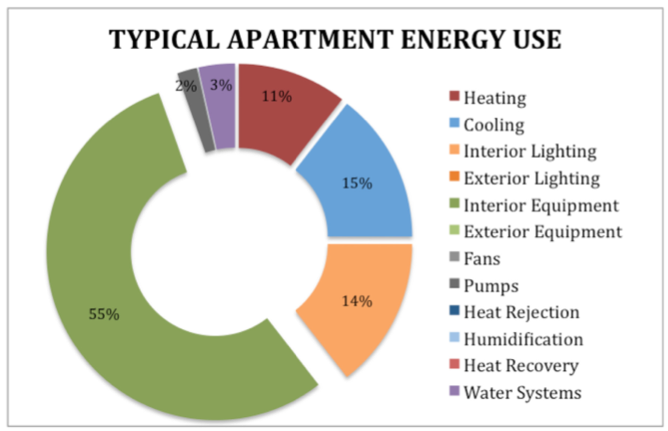
The payback on investing in occupant engagement is hard to pin down, but a program at Denver Housing’s Thomas Connole affordable housing building might help to change that. Though final numbers for reduced energy use aren’t yet in, analysis of an occupant engagement program there to date boasts a participation rate of 35%, and some lessons learned.
The program, led by sustainability consultants YR&G, focused on decreasing energy consumption from lighting, HVAC, and plug loads in the 100 residential units of the building. The team began by studying the social context of the building, which led them to understand that the largely elderly and disabled population was most receptive to in-person communication and printed media. YR&G then held workshops to discuss seasonal strategies, such as optimizing operable windows during the summer and committing to a 74°F (23°C) thermostat setpoint in the winter. They reinforced the same concepts in the building’s monthly newsletter.

Efforts to convince residents to sign pledges were less successful, likely because they may have been construed as a form of monitoring or policing. That’s according to an article by Jenny Carney, principal at YR&G, published recently in the Journal of Green Building. A measure to restrict thermostats to a maximum of 72°F in winter also backfired, as residents circumvented the rule with electric space heaters instead. However, this experience helped the YR&G team recognize that messaging around comfort and health was particularly effective, and they began offering fresh vegetables to those who attended their workshops and windowsill herbs to encourage residents to keep their shades open for daylighting.

More widely applicable is the project’s focus on measurement and verification. The program is continuing through 2015, and energy use will then be compared to the baseline established in 2013–2014 as one measure of success. 

Published December 31, 1969

(2015, May 29). Study Reveals Nuances of Occupant Engagement Strategies. Retrieved from https://www.buildinggreen.com/departments/newsbrief

Add new comment

To post a comment, you need to register for a BuildingGreen Basic membership (free) or login to your existing profile.

New Online Portal for AIA 2030 Eases Burden of Reporting

News Brief

New Online Portal for AIA 2030 Eases Burden of Reporting

You can ditch the reporting spreadsheets. Benchmarking the 2030 Commitment is now streamlined online.

Firms that have signed onto the American Institute of Architects (AIA) 2030 Commitment credit the program with increasing staff awareness of energy-saving targets, expanding the use of energy modeling, and improving the energy efficiency of their designs. However, these committed firms represent just a small fraction of those engaged with the AIA, and even fewer have followed through with their pledge to report their projects’ predicted energy use annually. Only 99 firms submitted data in 2013.

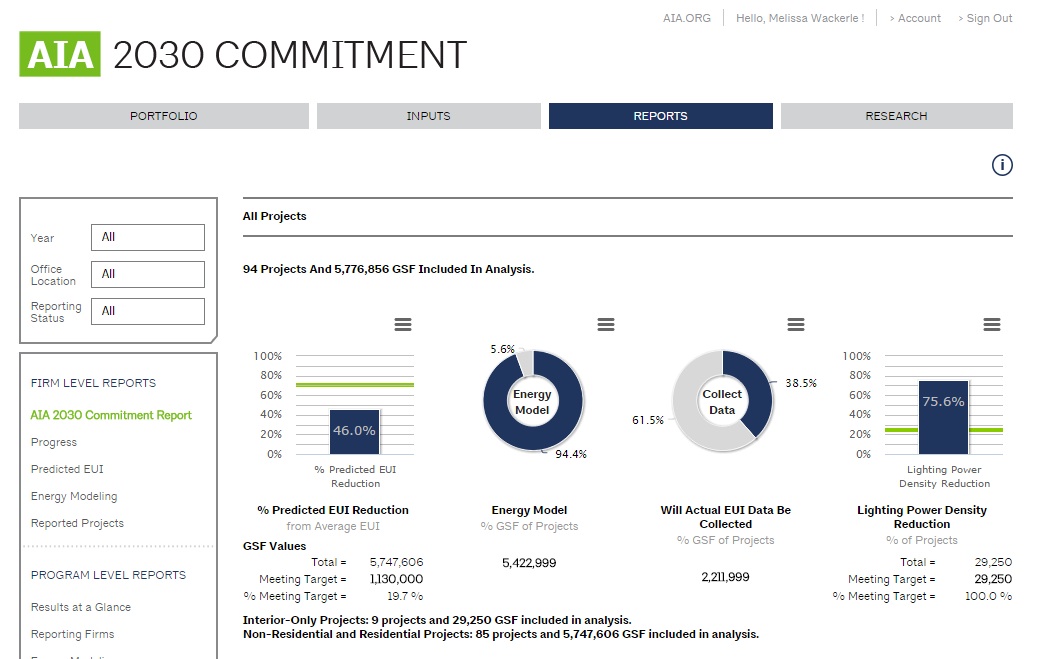
In an effort to increase participation, the AIA has replaced 2030 spreadsheets with the sleek AIA 2030 Design Data Exchange (DDx). This Web-based tool, developed in partnership with the U.S. Department of Energy (DOE), provides a portal to report on projects and see how they stack up against various benchmarks. Behind-the-scenes integration with the Environmental Protection Agency’s TargetFinder tool and its underlying Portfolio Manager database make it easy to compare projects against the industry average. A user can also anonymously research how a modeled project might compare to similar projects in the 2030 Portfolio (the complete list of all projects in the system).

Additionally, the tool’s graphics should make it much easier to track energy performance across an organization over time. According to Melissa DeStout, project architect with Perkins Eastman, the visuals have already helped “open [their] eyes to the different types of projects and results [they] have been producing.” Data that was submitted in 2013 has already been uploaded, and 2014 data is being added now.

Committed firms automatically have full access to the tool, and others can test it for free

Learn More

Energy Modeling: Early and Often

Shoebox Energy Modeling: How to do quick, early simulation

Published December 31, 1969

(2015, May 19). New Online Portal for AIA 2030 Eases Burden of Reporting . Retrieved from https://www.buildinggreen.com/departments/newsbrief

Add new comment

To post a comment, you need to register for a BuildingGreen Basic membership (free) or login to your existing profile.

White Roofs in Cold Climates a Mistake, Says LCA Study

News Brief

White Roofs in Cold Climates a Mistake, Says LCA Study

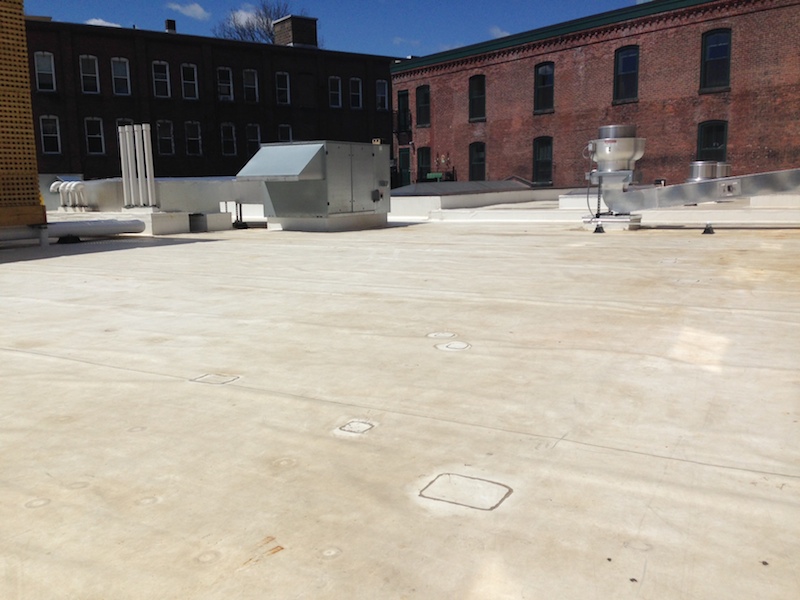
While roofs with solar panels are a plus, researchers suggest white roofs in Canada do more harm than good because of steep heating penalties.

A recent life-cycle comparison between white, vegetated, and solar roofs found white roofs have a negative impact on the environment—at least in cold Canadian climates—while solar roofs provide the greatest environmental benefit.


Taking into account impacts from manufacturing, transporting, and installing materials, as well as toxicity, the study published in The Journal of Industrial Ecology found white roofs had some smaller impacts compared to a conventional gray roof during the use phase. They contained less-toxic ingredients and fewer respiratory toxicants, and contributed less to acidification. However, the heating penalty that white roofs imposed by reflecting solar rays during the winter ultimately increased energy use in the northern locations that were studied, so the benefits didn’t come close to offsetting upstream impacts (for more detail on these issues for other climates, see Are Cool Roofs Green? The Answer’s Not Black and White).

By comparison, extensive vegetated roofs provided net benefit for most impact categories, though surprisingly, the green roofs’ influence on stormwater and air quality were “essentially negligible,” according to the study. Green roofs reduce eco-toxicity by avoiding pollutants like metals and polycyclic aromatic hydrocarbons, which can seep from shingles and tar on a gray roof. However, nitrogen and phosphorus can leach from the growing medium, especially in the first year that it is installed.

Solar roofs clad in photovoltaic panels provided the greatest net benefit over a 50-year lifespan by orders of magnitude one to three greater than either white or vegetated roofs for all impacts studied. The authors note, however, that their results are highly dependent on climate and location. For example, white roofs do save energy in warmer locations, and the insulative benefits of green roofs might be more apparent if applied to buildings that don’t already have as much insulation as Canada’s building code requires.

Read more

Are Cool Roofs Green? The Answer’s Not Black and White

Better Choices in Low-Slope Roofing

Published December 31, 1969

(2015, April 28). White Roofs in Cold Climates a Mistake, Says LCA Study. Retrieved from https://www.buildinggreen.com/departments/newsbrief

Add new comment

To post a comment, you need to register for a BuildingGreen Basic membership (free) or login to your existing profile.