California Questions Whether Low VOCs Make Artificial Turf Safe

News Brief

California Questions Whether Low VOCs Make Artificial Turf Safe

Smell no evil, see no evil: low counts of toxic fumes have been cited to argue turf fields with crumb rubber are safe, but a new bill calls for more study.  

California Senator Jerry Hill is calling for crumb rubber—the ground pieces of old tire that are used for artificial turf fields—to again be put under the microscope amidst concerns that the material emits harmful compounds or acts as a carcinogen.

So far, the few risk evaluations that have been conducted have found crumb rubber to be safe for sport fields and playground surfaces. One oft-referenced 2010 study prepared by California’s Office of Environmental Health Hazard Assessment, while identifying nine different VOCs and fine particulates emanating from samples of four artificial turf fields, determined that the level of exposure via inhalation did not present a health hazard.

But tires also contain other potentially dangerous substances, such as polycyclic aromatic hydrocarbons and heavy metals that might be harmful if they touch people’s skin or get into abrasions—exposure pathways that seem especially likely on sports fields and playgrounds. Tires also contain several known carcinogens, including benzene, butadiene, and arsenic, and the lack of a long-term exposure study has been made more glaring by recent anecdotal reports of high instances of cancer among soccer goalies aired by NBC News.

Referencing concerns that young athletes might increasingly be developing cancer, Hill’s bill calls for a more extensive evaluation of these alternate exposure pathways with a more robust study sample. If it passes, public and private schools and local governments in California would be unable to install new synthetic-turf fields and playground surfaces until the results of the study are published.

Artificial turf is sometimes preferred because it averts the need for the water and fertilizer used for grass fields (see Which Grass is Greener? Comparing Natural and Artificial Turf), but alternatives to crumb rubber exist, including coconut fibers, rice husks, cork, and recycled shoes.

Published December 31, 1969

(2015, February 1). California Questions Whether Low VOCs Make Artificial Turf Safe. Retrieved from https://www.buildinggreen.com/departments/newsbrief

Add new comment

To post a comment, you need to register for a BuildingGreen Basic membership (free) or login to your existing profile.

Ibuprofen Side Effects May Include Stunted Produce, Infertile Otters

News Brief

Ibuprofen Side Effects May Include Stunted Produce, Infertile Otters

From our bodies into wastewater, and back into our water supplies, pharmaceuticals are disrupting biological processes in plants and animals.

All that Advil we take for small aches and pains is adding up in our wastewater, says new research, and it’s affecting wildlife, the plants we eat, and even the water we drink.

Levels of ibuprofen currently found in the environment significantly hamper early root development of lettuce plants, according to research led by the University of Exeter Medical School and Plymouth University in the U.K., and another common anti-inflammatory drug, diclofenac, affects the growth of radish roots. Our food is exposed to these drugs in the largest doses when sewage sludge is used as fertilizer or when wastewater is used for irrigation, but even when wastewater is treated, antibacterial drugs and anti-inflammatory drugs typically have low rates of removal.

That means these pharmaceuticals build up in our waterways, and otters, for one, may be suffering as a result. A separate report commissioned by the environmental advocacy organization CHEM Trust finds the fur of wild otters inhabiting rivers in the U.K. is routinely contaminated with ibuprofen and diclofenac, which have acted as endocrine disruptors in lab studies and may be to blame for the otters’ reproductive abnormalities. 

CHEM Trust says that people should be concerned about pharmaceuticals too, given that up to 30 drugs have been detected in tap water in the U.S. Though the drugs are usually present at very low levels, researchers are uncertain about how these drugs interact with each other and what their long-term effects on human health may be. Improved sewage treatment plants may be part of the solution, according to CHEM Trust, but the risk might also be added rationale for composting toilets, which tend to give microbes more of a chance to break down pharmaceuticals; veterinary antibiotics and certain human drugs like Probenecid have been shown to degrade most effectively after being exposed to aerobic composting.

Published December 31, 1969

(2015, January 25). Ibuprofen Side Effects May Include Stunted Produce, Infertile Otters. Retrieved from https://www.buildinggreen.com/departments/newsbrief

Add new comment

To post a comment, you need to register for a BuildingGreen Basic membership (free) or login to your existing profile.

Healthcare Giants Boycott Furniture Containing Flame Retardants

News Brief

Healthcare Giants Boycott Furniture Containing Flame Retardants

Sixteen major buyers, including tech firms, retailers, and U.S. cities, have pledged to purchase furniture containing no chemical flame retardants.

Facebook, Kaiser Permanente, and Autodesk are among major buyers that have pledged to purchase furniture that contains no chemical flame retardants. HDR Architecture and Perkins+Will have also signed the pledge.

Initiated by the Center for Environmental Health (CEH), the purchasers’ pledge currently represents $520 million in annual furniture purchases. The announcement follows on the heels of a similar pledge among large healthcare networks in four U.S states.

Avoiding flame retardants in certain furniture types is now feasible because of changes to California law, which formerly required the use of chemical flame retardants in upholstered furniture, effectively forcing the standards onto furniture manufacturers nationwide (see Flame Retardant Rules Result of Deception, Says Investigation).

The updated regulations require a different testing method and can now be met without use of toxic additives that were once ubiquitous.

HDR has also worked with CEH to publish a list of furniture suppliers that have totally eliminated flame retardants from their products as well as those that offer some products without these chemicals. According to the list, those that have eliminated flame retardants are:

  • Andreu World
  • Arcadia Contract
  • Bretford
  • David Edward Company
  • Global/GLOBALcare
  • Humanscale
  • Izzy+
  • Neutral Posture
  • OFS Brands
  • Teknion
  • Wieland

Though not listed by HDR, Ekla also makes commercial contract furniture containing no chemical flame retardants. Manufacturers that have removed the chemicals from certain product lines are Haworth, Herman Miller, Leland International/Freshcoast, and Martin Brattrud.

“Manufacturers of course can continue to use flame retardants if they choose,” notes Jean Hansen, sustainable interiors manager at HDR, “but many have said they are excited to move away from flame retardant use.”

Published December 31, 1969

(2015, January 8). Healthcare Giants Boycott Furniture Containing Flame Retardants. Retrieved from https://www.buildinggreen.com/departments/newsbrief

Add new comment

To post a comment, you need to register for a BuildingGreen Basic membership (free) or login to your existing profile.

Colleges Making Progress—and Money—on Their Carbon Commitments

News Brief

Colleges Making Progress—and Money—on Their Carbon Commitments

Schools that have signed the Presidents’ Climate Commitment have had some success but still need to cut emissions in half by 2031.

Progress is being made at the 675 colleges and universities that have signed the American College & University Presidents’ Climate Commitment since its launch in 2007, according to an update from the organization. The pledge sets interim reduction targets to cut gross greenhouse gas emissions 14.4 million metric tons by 2031.

Cumulative reductions to date total 1.9 million metric tons of C02-equivalent, according to inventory reports from 520 institutions, with top runners reducing their emissions on average by 19%. However, even with that progress, signatories will have to collectively reduce their total emissions from today’s rate by 51% if they are to meet their goal.

Of the schools that have submitted a formal progress statement, 66% reported that their emissions cap has saved them money, and it is clear that sustainability is influencing other aspects of their institutions as well. 15,527 faculty members pursue sustainability research at 198 of the signatory schools, and 86 schools consider sustainability such a core knowledge area that they have included it in their general education requirements.

For more information:

ACUPCC Progress Summary

Published December 31, 1969

(2015, January 5). Colleges Making Progress—and Money—on Their Carbon Commitments. Retrieved from https://www.buildinggreen.com/departments/newsbrief

Add new comment

To post a comment, you need to register for a BuildingGreen Basic membership (free) or login to your existing profile.

Endocrine Disruptors Cost Society Millions, Says Report

News Brief

Endocrine Disruptors Cost Society Millions, Says Report

Europe could be losing 1,300 million euros a year dealing with male reproductive illnesses caused by endocrine disruptors. And that’s just the tip of the iceberg.

Chemicals ubiquitous in consumer products that interfere with human hormones are costing millions of dollars in direct and intangible health costs, according to an economic analysis—and that’s just based on estimates of the havoc they wreak on the male reproductive system.

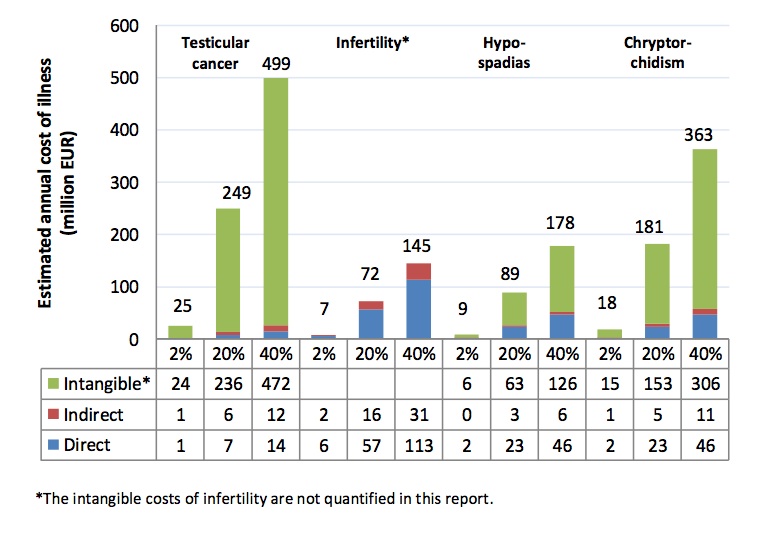
A report funded by the Nordic Council of Ministers estimates that endocrine disruptors cost Nordic countries (Denmark, Finland, Iceland, Norway and Sweden) 36 million per year of exposure, assuming that they cause 20% of incidents of certain illnesses in the male reproductive system: testicular cancer, the birth defects hypospadias and cryptorchidism, and infertility due to low semen quality. If present costs caused by past exposure are included, that number jumps to 77 million. These amounts build up through hospital bills, lost wages, and intangible costs, such as loss of life-years or pain and suffering (intangible costs were not calculated for infertility).

Extrapolated to the whole EU, the price could amount to nearly 1,267 million per year, including present spending to mitigate past exposure. But that number is small, researchers say, considering that research suggests these chemicals may have other health impacts, too, such as hormone disruptions in females and metabolic disorders like obesity and diabetes (see Obesogens: A Fatty Issue).

The report recommends that the EU pass legislation to screen substances for endocrine-disrupting properties and to minimize exposure to substances that are identified. The U.S. Environmental Protection Agency has been screening certain chemicals for their effects on the endocrine system since 2009, but many of these substances—like bisphenol-A (BPA), polybrominated diphenyl ethers (PBDEs), and certain phthalates—are still not regulated, even after coming close to being listed as chemicals of concern.

Published December 31, 1969

(2015, January 5). Endocrine Disruptors Cost Society Millions, Says Report. Retrieved from https://www.buildinggreen.com/departments/newsbrief

Add new comment

To post a comment, you need to register for a BuildingGreen Basic membership (free) or login to your existing profile.

IgCC Opens Compliance Pathway Based on Actual Energy Use

News Brief

IgCC Opens Compliance Pathway Based on Actual Energy Use

An outcome-based approach assures that buildings actually achieve energy targets, while relieving technical pressures on code departments.

The 2015 International Green Construction Code (IgCC) will have a compliance option based on an outcome-based approach, officials announced recently.

Previously, building energy codes relied on two main pathways to demonstrate compliance: prescriptive measures, where individual building components met the code-defined parameters, or performance projections based on modeled energy consumption. But once people occupy a building, they often act differently than the code setters and energy modelers assumed.

The new pathway will require a building to meet baseline requirements in the International Energy Conservation Code (IECC), and the owner will be issued a temporary certificate of occupancy. Within three years, the owner must provide the jurisdiction with 12 months of energy use data showing the building meets code targets—and only then will the code official issue the final certificate of occupancy.

Jim Edelson, director of codes and policy at the New Buildings Institute, which advocated for the revisions, stated in a press release, “The adoption of the outcome-based pathway presents a sea change in the way building codes can be met. Cities can now effectively drive better policies in their building sector, design teams gain flexibility to innovate, and building code officials have a streamlined process for validating that a building is operating to code.”

A major benefit of the new pathway is that it could relieve some of the pressure on resource-strapped code departments that are tasked with interpreting sophisticated building models and enforcing a myriad of code requirements. Instead, they essentially have to just check the energy bill. (Design teams should still use energy modeling—early and often—to iteratively move projects to higher levels of performance.)

Published December 31, 1969

(2015, January 4). IgCC Opens Compliance Pathway Based on Actual Energy Use. Retrieved from https://www.buildinggreen.com/departments/newsbrief

Add new comment

To post a comment, you need to register for a BuildingGreen Basic membership (free) or login to your existing profile.

Water Scarcity Means Higher ROI for Water Retrofits

News Brief

Water Scarcity Means Higher ROI for Water Retrofits

Market pricing doesn't predict when water will become scarce. A new tool calculates realistic payback scenarios for efficiency projects based on local conditions.

The price isn’t always right, at least when it comes to water: for a variety of reasons, water is priced at a premium in relatively wet locations ($3.42 per m3 in Amsterdam) and cheaply in dry ones ($0.28 m3 in desert-like Mumbai). Mispricing has the potential to misguide the market, incentivizing businesses to locate water-intensive facilities in precisely the wrong places.

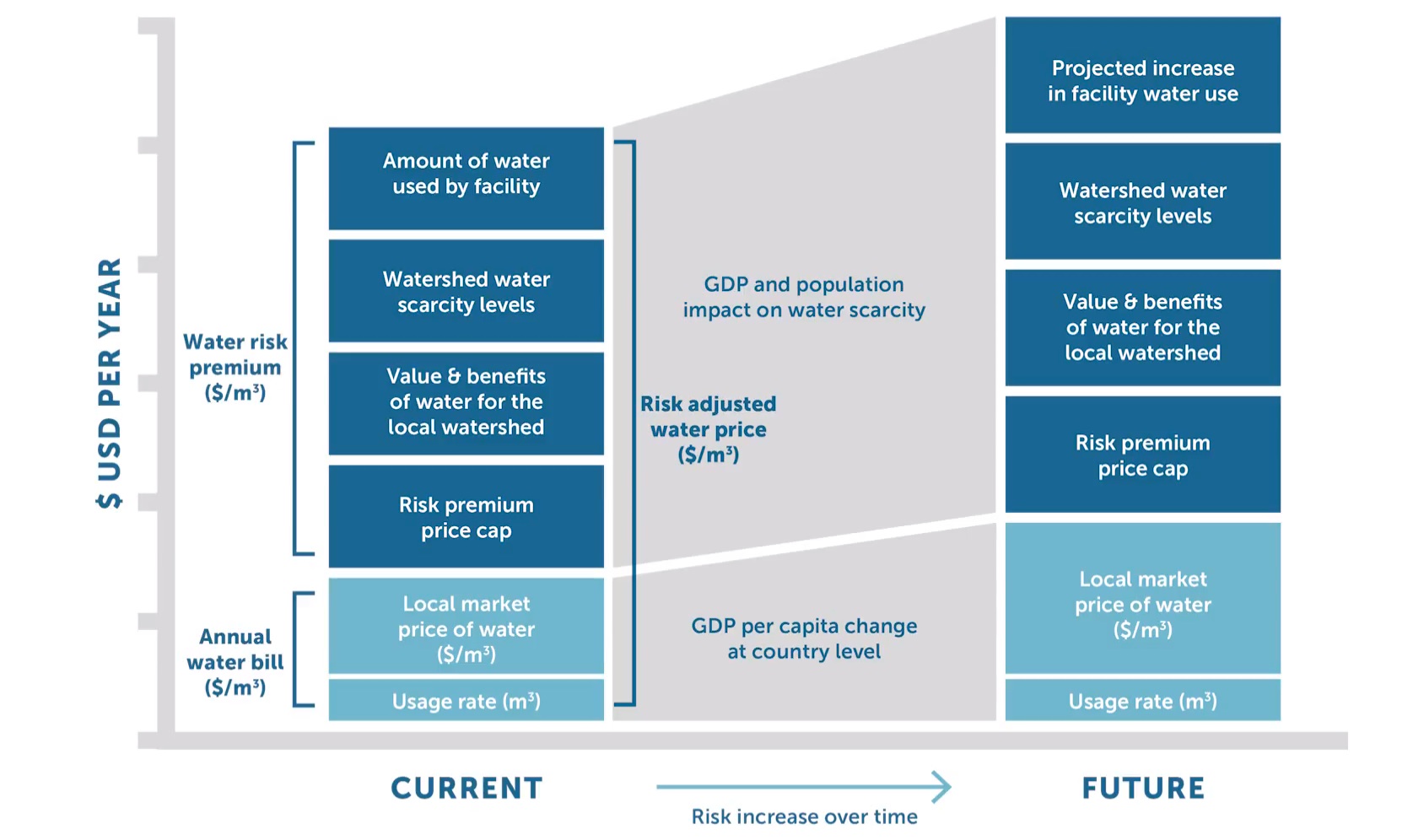
The Water Risk Monetizer, developed by Ecolab and Trucost, now helps calculate a risk premium using local factors that affect water supply—such as groundwater recharge, waste assimilation, wildlife habitat, and recreational activities—and weighed alongside a country’s purchasing power, population growth, and gross domestic product forecast. The groups hope that this information will help businesses avoid areas where current or projected water insecurity could threaten operations and bottom lines.

But the tool is also a useful resource to make the case for water projects or programs that—due to the undervaluation of water—register deceptively low rates of return. Water scarcity could result in surprise hikes in operating costs, stranded assets, and lower investor confidence, which, once accounted for, make water-efficiency retrofits much more cost effective.  For a beverage plant in Dallas, Texas, the tool calculates a risk-adjusted rate of $6.33 per m3—more than triple the going market rate of $1.85 per m3.

The tool addresses only how the price of incoming water purchased by a facility may be affected by scarcity, regulatory risk, and reputational risk—not the costs and risks associated with the condition of the water leaving the facility. However, the granularity down to the local water-basin level and automatic translation into monetized values distinguish this tool from other resources, such as the World Resource Institute’s Aqueduct Tool and the World Wildlife Fund’s Water Risk Filter, according to the creators.

Published December 31, 1969

(2014, December 23). Water Scarcity Means Higher ROI for Water Retrofits. Retrieved from https://www.buildinggreen.com/departments/newsbrief

Add new comment

To post a comment, you need to register for a BuildingGreen Basic membership (free) or login to your existing profile.

Industry-Average Impacts of Concrete Revealed in EPD

News Brief

Industry-Average Impacts of Concrete Revealed in EPD

The industry-wide EPD for concrete shows impacts by U.S. region and meets LEED v4 requirements for a new material credit.

The National Ready-Mix Concrete Association has released an environmental product declaration (EPD) showing average cradle-to-gate impacts of a variety of concrete mixes nationwide and by region. The document makes it easier for project teams to assess the environmental impact of one of the most common building materials and also paves the way for individual manufacturers to release product-specific EPDs for comparison with the industry average—a step incentivized under a new Materials and Resources credit in LEED version 4.

The EPD covers 48 ready-mix concrete products that are used in residential, commercial, and public construction. The products range from a compressive strength of 2,500 pounds per square inch (psi) through 8,000 psi and contain different mix components, including fly ash, slag cement, natural and crushed aggregates, admixtures, and batch water.

A user can see, for example, that the average global warming potential per cubic meter for concrete within the range of 2501 to 3000 psi with limited or no fly ash or slag content is 337 kg of CO2-equivalent, while concrete with the same compressive strength containing 30% to 39% fly ash has a significantly lower impact—265 kgCO2. (For more background, see Reducing Environmental Impacts of Cement and Concrete).  

The EPD does not take into account environmental consequences from transportation to the construction site, onsite processes and components, or end-of-life disposal. However, since more than 85% of North American concrete plants use trucks that mix concrete after they are loaded at the project site, a portion of the trucks’ energy use is factored into the manufacturing impact calculations.

Published December 31, 1969

(2014, December 23). Industry-Average Impacts of Concrete Revealed in EPD. Retrieved from https://www.buildinggreen.com/departments/newsbrief

Add new comment

To post a comment, you need to register for a BuildingGreen Basic membership (free) or login to your existing profile.

Greenwash Getting Easier to Spot, But Still Confusing

News Brief

Greenwash Getting Easier to Spot, But Still Confusing

A survey shows consumers generally find value in third-party product certifications but can be confused by less credible claims if not provided enough context. 

A recent study commissioned by UL Environment, “Under the Lens: Claiming Green,” examines which types of green claims—third-party validated, legitimate but not independently verified, or just plain greenwash—today’s consumers buy into.

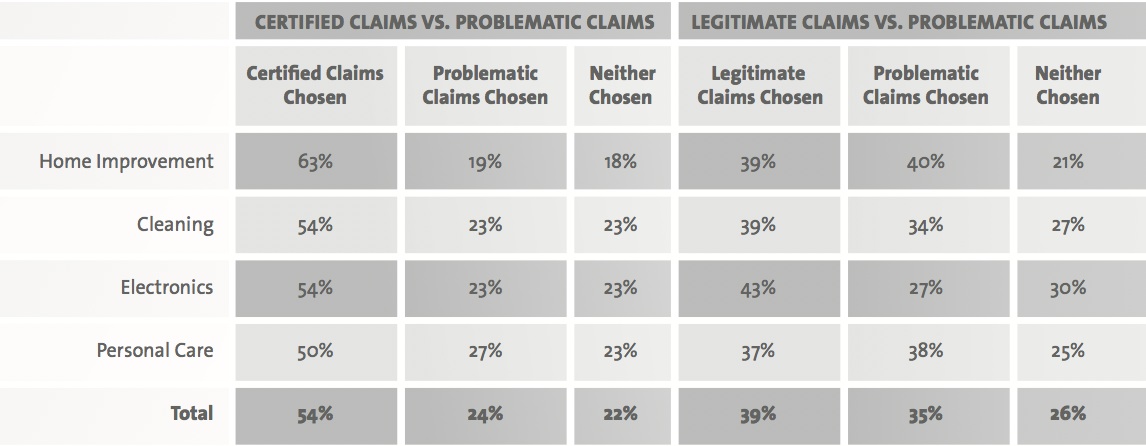
The picture shows that people largely get it: given the choice between a product with a green claim that has been certified by a third party and one with a problematic claim (defined as not meeting the standards set by the U.S. Federal Trade Commission), problematic claims were preferred only 22% of the time.  Consumers were less able to distinguish, however, between legitimate claims and problematic claims, and in the category of building products, one problematic claim—a manufacturer-created label promoting a “clean air formula”—beat out third-party certifications in rankings of importance and reliability.

Some legitimate and certified claims prompted a negative response if they used technical language or used logos with only the certification body’s name, which respondents found confusing, according to the report. A label advertising a VOC limit of 50g/L, for example, was ranked among building products as the most misleading or confusing and the most likely to negatively affect perception of the brand, with respondents citing that they did not know what VOCs (volatile organic compounds) were.

In contrast, certifications that verify low VOCs, like the Carpet & Rug Institute’s Green Label Plus and the UL Greenguard label, were among the top seven most trusted claims in the home improvement category. This suggests that certifications bring context that tell consumers VOCs are an important issue, according to the report.

UL Environment, one of the largest certifiers of green claims and the provider of the Greenguard certification, commissioned the report, but the survey was conducted by the Shelton Group, and, with a survey sample of more than 1,000 respondents, the authors say they have a confidence level of 95%.


Published December 31, 1969

(2014, December 19). Greenwash Getting Easier to Spot, But Still Confusing. Retrieved from https://www.buildinggreen.com/departments/newsbrief

Add new comment

To post a comment, you need to register for a BuildingGreen Basic membership (free) or login to your existing profile.

14 Design Patterns: Report Puts Science Behind Biophilia

News Brief

14 Design Patterns: Report Puts Science Behind Biophilia

Designers are given specific guidance on how to interpret and utilize the “14 Patterns of Biophilic Design” in a new report.

In another step toward solidifying our understanding of biophilia—our innate love of nature—Terrapin Bright Green contextualizes its much-heralded 14 Patterns of Biophilic Design in a free report available to the public. Prompted by an effort to help Google promote wellness in its workspaces, the 14 patterns pin down a language to discuss and differentiate the many ways design firms might inspire a connection to nature. Although the patterns have been public for some time, Terrapin’s report compiles the science behind each category and offers metrics, strategies, and design considerations for practitioners eager to put the concepts to the test.

For example, the first biophilic pattern, “visual access to nature,” becomes much more defined with the report’s instruction to “prioritize biodiversity over acreage, area, or quantity” and to “support a visual connection that can be experienced for at least 5 to 20 minutes per day.” A table near the beginning of the report shows this pattern is backed by rigorous empirical data and references studies demonstrating that this strategy helps to reduce stress, increase cognitive performance, and positively impact mood.

Even for patterns that some might find hard to grasp, like “risk and peril,” the report lists design features that achieve the desired effect: in this case, if you’re thinking double-height atriums, transparent floor planes, or life-size photographs of spiders or snakes, you are on the right track.

The full report can be downloaded from the Terrapin Bright Green webpage.

Published December 31, 1969

(2014, December 1). 14 Design Patterns: Report Puts Science Behind Biophilia. Retrieved from https://www.buildinggreen.com/departments/newsbrief

Add new comment

To post a comment, you need to register for a BuildingGreen Basic membership (free) or login to your existing profile.