Cities Disrupt Bird Migration, Report Finds

News Brief

Cities Disrupt Bird Migration, Report Finds

Research from University of Oldenburg biologists suggests that electromagnetic noise throws off birds’ internal compasses.

Electronics and AM radio signals might disrupt the internal magnetic compasses of migratory birds, suggests a study published in Nature. According to the magazine, decades of experimentation have shown that migratory birds orient themselves using an internal compass guided by Earth’s magnetic field. Cites, researchers conclude, have significant effects on bird migration patterns due to electromagnetic fields emitted by radio towers.

Henrik Mouritsen, biologist at the University of Oldenburg, Germany, and co-author of the report featured in Nature, says that European robins are especially sensitive to magnetic imbalance. According to Mouritsen, robins located in large cities crowded with electromagnetic noise (unlike robins at rural sites) could not orient themselves in their proper migratory directions.

“If birds can’t use one of their most significant compasses when they are in towns, what effect will that have on survival?” Mouritsen asked in an interview with the magazine.  

 In an effort to point to a solution, Mouritsen electrically grounded shelters designed to attract migratory birds to cut out electromagnetic noise in the range from 50 kHz to 5 MHz—a range that includes AM and shortwave radio transmissions but not the lower-frequency emissions from electrical grid or higher-frequency FM radio, television, or cell phone transmissions. He then covered the shelters in aluminum plates, reducing the intensity of noise by about two orders of magnitude. Under those conditions, birds were able to orient themselves, the report concluded. The actual biophysical mechanism within birds that is sensitive to electromagnetic noise remains unclear.

For more information:

Naturenature.com

Published December 31, 1969

(2014, June 19). Cities Disrupt Bird Migration, Report Finds. Retrieved from https://www.buildinggreen.com/departments/newsbrief

Add new comment

To post a comment, you need to register for a BuildingGreen Basic membership (free) or login to your existing profile.

Budding Purchasing Standard Includes Transparency in Principles

News Brief

Budding Purchasing Standard Includes Transparency in Principles

The Sustainable Purchasing Leadership Council announces guiding principles and purchasing categories for its upcoming rating system.

The Sustainable Purchasing Leadership Council (SPLC), which plans to develop a rating system similar to LEED for sustainable purchasing and procurement policies, has taken one step closer to launch by releasing a set of guiding principles. The principles are meant to give companies an idea of what leadership in procurement would encompass and to help early adopters start performing self-assessments, according to SPLC. Once the rating system is fully developed, an organization will demonstrate leadership through:

  • Understanding the relevant environmental, social, and economic impacts of its purchasing
  • Taking responsibility for those impacts by committing to an action plan
  • Delivering on that commitment through tangible results
  • Actively promoting internal and external innovation that advances a positive future
  • Soliciting and disclosing information in a transparent manner to support marketplace innovation

Christina Macken, director of programs for SPLC, told EBN the organization is seeking to fill a critical missing link between design, construction, and operations. “LEED has done a great job of accelerating market adoption [of sustainable products], and we have seen materials improve, but it sometimes falls short in ensuring those practices continue into operations. We are trying to keep that connection to sustainability going.”

SPLC also recently announced a set of purchasing categories that the standard will target, including: professional services, electricity, transportation and fuels, food, chemically intensive products, wood and agrifiber products, construction and renovation, and information technology services and hardware.

For more information:

Sustainable Purchasing Leadership Council

http://www.purchasingcouncil.org/

Published December 31, 1969

(2014, June 19). Budding Purchasing Standard Includes Transparency in Principles. Retrieved from https://www.buildinggreen.com/departments/newsbrief

Add new comment

To post a comment, you need to register for a BuildingGreen Basic membership (free) or login to your existing profile.

Parking Garages Get Their Own Sustainability Certification

News Brief

Parking Garages Get Their Own Sustainability Certification

A new standard for greener parking incentivizes site, energy, and resilience measures.

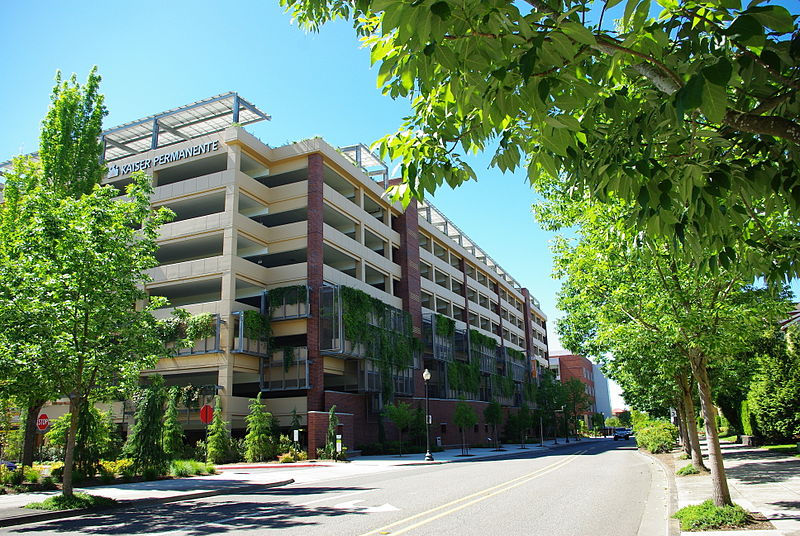
The Green Parking Council (GPC), an affiliate of the International Parking Institute, recently launched the Green Garage Certification Program. The program, according to GPC, is the parking industry’s equivalent of LEED certification—a rating system for sustainable parking facility design.

The idea of a green parking garage might strike some as an oxymoron, but GPC says that its standard differentiates facilities, and since LEED specifically excludes standalone garages, the niche is open. “Green Garage Certification applies a holistic approach to garage performance and sustainability,” said GPC executive director Paul Wessel. Each facility will be evaluated based on its achievement on a menu of standards developed by experts from a range of related fields, according to Wessel.

GPC will evaluate garages based on categories such as energy efficiency, energy resilience, access to mass transit and other alternative transportation options, stormwater management, and cleaning practices. Metrics for parking facility evaluation are broken down into a point-based system, and GPC will offer three levels of certification­—bronze, silver, and gold—based on scoring. GPC also announced the release of a 195-page book, Green Garage Certification Standard, defining performance measures and documentation requirements for certification. 

For more information:

Green Parking Council

greenparkingcouncil.

Published December 31, 1969

(2014, June 18). Parking Garages Get Their Own Sustainability Certification . Retrieved from https://www.buildinggreen.com/departments/newsbrief

Add new comment

To post a comment, you need to register for a BuildingGreen Basic membership (free) or login to your existing profile.

Five Projects Receive Net-Zero-Energy Certification

News Brief

Five Projects Receive Net-Zero-Energy Certification

New projects certified through International Living Future Institute suggest growing interest in verification of low-energy claims.

Five projects have achieved Net Zero Energy Building Certification recently through the International Living Future Institute (ILFI). ILFI offers the certification as a pared-down, more energy-focused version of its broader and extremely rigorous Living Building Challenge­­. The structures—two residences, a government office, and a pair of educational facilities—were certified in May 2014 after 12 months of post-occupancy performance data proved that each building’s annual energy use was equal to or less than its energy production.

One residence, the Zero Energy House in Auckland, New Zealand, began as a personal project by owners Jo Woods and Shay Brazier in 2010. Energy efficiency was achieved through passive design, insulating above code, and using only energy-efficient lighting and appliances, among other measures.

Despite its name, achieving Net Zero Energy Building Certification goes beyond an energy focus. In addition to generating all its own energy on an annual basis, any structure considered for certification must meet requirements related to place, health, equity, and beauty. Buildings achieving certification can’t do so at the expense of neighboring buildings; they must be attractive, inspiring, and promote the use of renewable energy. (See Net-Zero Certification Spins Off from Living Building Challenge for the full criteria.)

The American Samoa Environmental Protection Agency office (AS-EPA), another recently certified project, includes a 56 kW photovoltaic system mounted on top of its roof and carport. In 12 months, AS-EPA generated 69,477 kWh, while only using 67,672 kWh, according to ILFI.

Other projects to receive Net Zero Building Certification include the Center for Sustainable Landscapes at Phipps Conservancy & Botanical Gardens in Pittsburgh, the Zero Cottage in San Francisco, and the Hood River Middle School Music and Science Building in Hood River, Oregon.


For more information:

Living Building Challenge

living-future.org/lbc

Published December 31, 1969

(2014, June 18). Five Projects Receive Net-Zero-Energy Certification . Retrieved from https://www.buildinggreen.com/departments/newsbrief

Add new comment

To post a comment, you need to register for a BuildingGreen Basic membership (free) or login to your existing profile.

Two Phthalate-Free PVC Plasticizers Stand Out in New Report

News Brief

Two Phthalate-Free PVC Plasticizers Stand Out in New Report

A Healthy Building Network report reviews alternatives to standard plasticizers found in flexible PVC products and assesses their potential impact.

The Healthy Building Network (HBN) has released a research brief, Phthalate-free Plasticizers in PVC, that describes six alternatives to phthalate plasticizers. Phthalates are semi-volatile organic compounds used in PVC building products to provide flexibility and other performance characteristics (see The PVC Debate: A Fresh Look). They are known endocrine disruptors linked to a number of negative environmental and human health impacts and can leach out of vinyl flooring, wallcoverings, and other products. While phthalates are being replaced in some building products, the report aims to help design professionals evaluate whether the alternatives are truly any better.

HBN used European REACH reports, GreenScreen chemical hazard assessments, U.S. Environmental Protection Agency data, and other sources as the basis for its report, comparing the manufacturing impacts, potential human health effects, and ecotoxicity of these non-phthalate plasticizers against diisononyl phthalate (DINP), a common phthalate used in building products such as PVC carpet backing. HBN reviewed phthalate-free plasticizers for their safety and compiled the research into a table that includes links to products, raw materials and ingredients, carcinogenicity, and other metrics. Two biobased plasticizers—Grindsted Soft-n-Safe (found in Tarkett IQ Naturals and UpoFloor Hovi Quartz and Podium Naturale flooring) and Polysorb ID 37 (found in Gerflor Mipolam Symbioz vinyl flooring)—stood out as having the fewest environmental and health impacts, according to HBN.

To better understand the impact of plasticizers and PVC in general, HBN also dedicates a large portion of the report to describing vinyl’s life cycle and toxicity and points out that there are gaps in knowledge pertaining to these new chemicals.

Published December 31, 1969

(2014, June 18). Two Phthalate-Free PVC Plasticizers Stand Out in New Report. Retrieved from https://www.buildinggreen.com/departments/newsbrief

Add new comment

To post a comment, you need to register for a BuildingGreen Basic membership (free) or login to your existing profile.

Young Residents, New Businesses Flock to Old Neighborhoods

News Brief

Young Residents, New Businesses Flock to Old Neighborhoods

Research from Preservation Green Lab suggests that age-diverse buildings contribute more to vital, livable communities.

Neighborhoods with a mix of older, smaller buildings give rise to more diverse populations and more new businesses than those made up of newer, larger structures, according to a study released by the Preservation Green Lab, the sustainability arm of the National Trust for Historic Preservation.

The study, Older, Smaller, Better: Measuring How the Character of Buildings and Blocks Influences Urban Vitality, was conducted in three cities—Washington, Seattle, and San Francisco. The report found that, compared with neighborhoods made up of newer, larger structures, blocks of smaller buildings of mixed vintage are more vibrant, diverse, and economically successful.

In order to measure the relationship between urban vitality and key characteristics of buildings and blocks, the researchers overlaid a 200 m x 200 m  grid over the maps of each city. All metrics—which included building age and size as well as economic, cultural, and social vitality—were normalized for city size and development density across cities through use of these grids.

Older, Smaller, Better found that blocks and districts with a mix of old and new buildings hosted more businesses launched in 2012 than did areas with larger, newer buildings; they were also home to more new businesses per commercial square foot. There was one area where age-diverse neighborhoods lagged: while they were more likely to house new, emerging, and local businesses, larger multi-floor office blocks housed more businesses overall.

Across cities, the average age of residents of smaller, mixed-vintage buildings was also considerably lower than that of residents in districts that built big, new, and large. Young people, more than other age groups, preferred old buildings. In Seattle and San Francisco, blocks of older, smaller buildings also had a significantly higher proportion of women-owned and minority-owned businesses.

The report also found that older and more age-diverse districts had significantly higher Walk Score, Bike Score and Transit Score metrics, leading in turn to more street life and economic activity.


For more information:

National Trust for Historic Preservation

preservationnation.org

Published December 31, 1969

(2014, June 6). Young Residents, New Businesses Flock to Old Neighborhoods. Retrieved from https://www.buildinggreen.com/departments/newsbrief

Add new comment

To post a comment, you need to register for a BuildingGreen Basic membership (free) or login to your existing profile.

Code Becoming Friendlier to Kitchen Heat Recovery

News Brief

Code Becoming Friendlier to Kitchen Heat Recovery

Building codes restrict the use of many heat-recovery technologies from commercial kitchens due to fire risk, but recent code updates should make it easier to specify Halton’s Heat Recovery Unit.

Even though ASHRAE 90.1 requires heat recovery for exhaust exceeding 5,000 cubic feet per minute (cfm), commercial kitchen ventilation is exempt from these requirements due to fire risk from accumulated grease. International Mechanical Code (IMC) 514 also prohibited heat and energy recovery in commercial kitchens, but the International Code Council is getting set to change that with an amendment to the 2015 version of IMC section 514.

Commercial kitchens are among the most energy-intensive commercial spaces—with high-volume ventilation systems that operate constantly for long shifts to remove heat and fumes from open flames, ovens, deep fryers, and other equipment. Capturing the staggering amount of lost energy to heat make-up air and domestic hot water could be valuable if the fire hazard can be managed.

Jeff Martin, the developer of Halton’s Heat Recovery Unit (a 2010 BuildingGreen Top 10 product; see Recovering Heat from Commercial Kitchen Exhaust), argues that his closed-loop system, which removes grease from the exhaust before it can become a problem, should not fall under the same code rules as standard energy-recovery ventilation. Officials agreed, and IMC section 514 will allow use of the company’s system when the amendments become official sometime before 2015.

Published December 31, 1969

(2014, June 1). Code Becoming Friendlier to Kitchen Heat Recovery . Retrieved from https://www.buildinggreen.com/departments/newsbrief

Add new comment

To post a comment, you need to register for a BuildingGreen Basic membership (free) or login to your existing profile.

Researchers Link Miscarriage Risk to BPA Exposure

News Brief

Researchers Link Miscarriage Risk to BPA Exposure

A new study adds evidence that bisphenol-A may affect human reproduction.

In a recent study conducted at a Stanford University fertility clinic, women with high levels of bisphenol-A (BPA) in their blood had an 83% greater risk of miscarriage than women with the lowest levels. Although further research is needed to tell whether the correlation extends beyond those already at high risk for reproductive issues, the study’s authors say women suffering from recurrent miscarriages “would best be advised to reduce BPA exposure because it has the potential to adversely affect fetal development.”
The findings of the study, which was published in the journal Fertility and Sterility, were based on blood tests administered to 115 women early in their pregnancies. The women were divided into four groups based on their BPA levels; the group with the highest levels had an 83% higher risk of miscarriage than the group with the lowest levels, and those in the second and third groups had an increased risk of 30% and 58%.

In a prepared statement, Kathryn St. John, a spokesperson for the American Chemistry Council, argued that one or two blood-level readings are too few to draw conclusions because BPA levels can go up or down based on exposure. “This study has the same flaw as other studies that attempt to measure BPA in blood at a single point in time and statistically associate that limited data with a health effect—in this case, miscarriage.”

Although other studies have also suggested that BPA poses health risks as an endocrine disruptor (see Fears Grow with Polycarbonate Chemical Bisphenol-A), a U.S. Food and Drug Administration study released earlier this year found BPA did not affect the health of rats fed low doses—though that study was criticized because BPA was also discovered in rats that were in the control group.

Published December 31, 1969

(2014, June 1). Researchers Link Miscarriage Risk to BPA Exposure. Retrieved from https://www.buildinggreen.com/departments/newsbrief

Add new comment

To post a comment, you need to register for a BuildingGreen Basic membership (free) or login to your existing profile.

U.S. Maps Untapped Hydropower Potential

News Brief

U.S. Maps Untapped Hydropower Potential

The U.S. could double its hydropower production, according to a recent DOE study.   

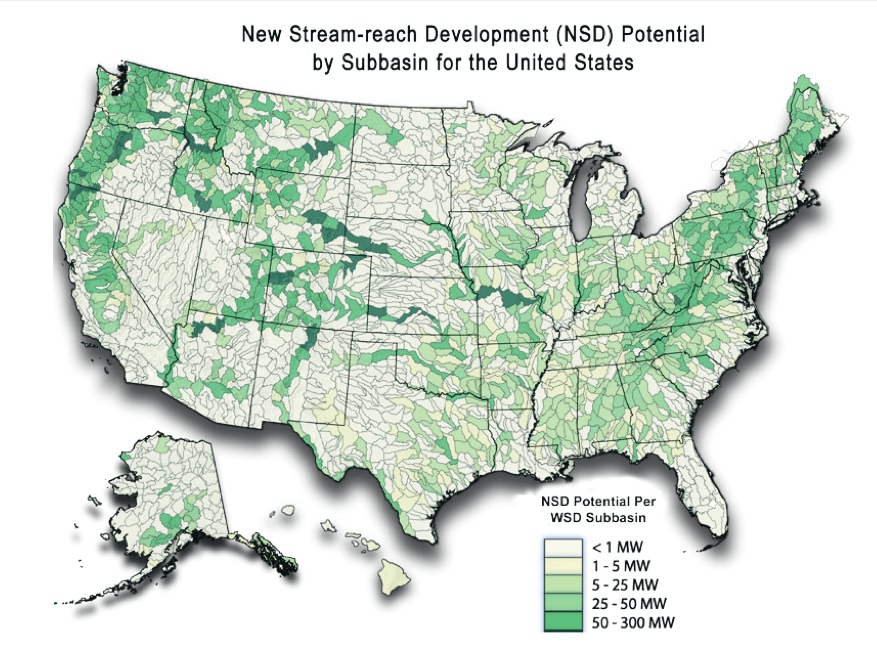
All of the nation’s rivers and streams have now been evaluated for their hydropower potential as a part of the New Stream-reach Development Resource Assessment (NSD). This data, released by the U.S. Department of Energy, is meant to help developers identify areas of high generating capability and avoid those with environmental conflicts.


Untapped hydropower capacity totals 65 gigawatts in the U.S. if you discount federally protected areas like the Grand Canyon, according to the assessment. Colorado, Idaho, Montana, Oregon, and Washington have the highest potential, each with at least 3,300 megawatts of untapped potential. Although a DOE statement says the assessment “demonstrates one of the ways the United States can further diversify its energy portfolio” and advertises that a full build-out could nearly double hydropower’s 7% share of total U.S. electricity production, the study emphasizes the importance of the environmental attributes compiled alongside the energy-density data. In theory, this stream-specific information, which includes critical habitat, landscape disturbance, and water quality, will help energy developers avoid ecologically sensitive areas.

Datasets by region can be downloaded from the National Hydropower Asset Assessment Program website.

Published December 31, 1969

(2014, June 1). U.S. Maps Untapped Hydropower Potential . Retrieved from https://www.buildinggreen.com/departments/newsbrief

Add new comment

To post a comment, you need to register for a BuildingGreen Basic membership (free) or login to your existing profile.

County-Wide Energy Reporting Law Passed in Maryland

News Brief

County-Wide Energy Reporting Law Passed in Maryland

In a first for the U.S., Montgomery County in Maryland has enacted a mandatory benchmarking law with third-party data verification.

Montgomery County, Maryland, recently became the first county in the U.S. to require energy benchmarking for large nonresidential buildings. Following in the footsteps of nine major cities, the county’s new law makes annual energy tracking and disclosure mandatory for both public and private commercial buildings (for background, see Energy Reporting: It’s the Law).      

The law takes effect in stages, with County-owned buildings facing a reporting deadline of June 1, 2015, and all privately owned nonresidential buildings over 50,000 ft2 reporting by December 2017. The results will then be made available to the public. In other states, similar benchmarking laws have successfully encouraged building owners to invest in efficiency measures (see NYC Buildings Gain Three Energy Star Points in Year Two). Hoping to spur this kind of investment, the county also instituted a commercial PACE program, which allows energy investments to be paid back along with tax bills for the property.

The energy tracking can be performed using the U.S. Environmental Protection Agency’s free Portfolio Manager tool, but a licensed professional must also verify the data for the first submission and every three years thereafter. Montgomery County is only the second jurisdiction to require this verification provision, behind Chicago—signaling that “these jurisdictions are taking data quality seriously,” according to Amanda Hurley of the Institute for Market Transformation.

Published December 31, 1969

(2014, June 1). County-Wide Energy Reporting Law Passed in Maryland. Retrieved from https://www.buildinggreen.com/departments/newsbrief

Add new comment

To post a comment, you need to register for a BuildingGreen Basic membership (free) or login to your existing profile.