Group Seeks to Bring DC Power to Homes

News Brief

Group Seeks to Bring DC Power to Homes

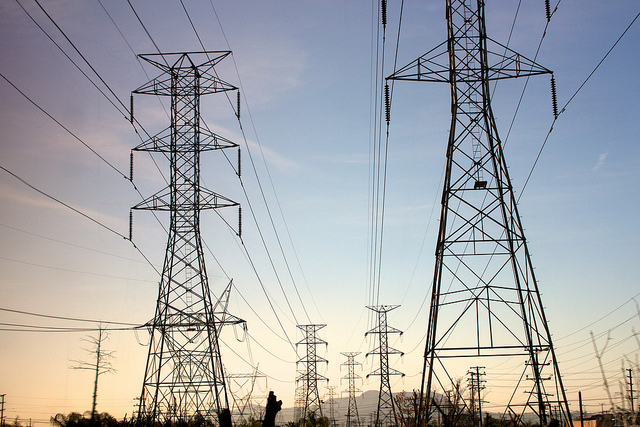
EMerge Alliance has expanded its efforts to advance direct-current (DC) power distribution by launching a new initiative to develop a residential standard.

The EMerge Alliance is in the beginning stages of creating a direct-current power standard to help homeowners save energy.

EMerge Alliance has expanded its efforts to advance direct-current (DC) power distribution by launching a new initiative to develop a residential standard.

As the solar market expands and more electronics fill our homes, utilizing DC power could bring increased energy savings and grid independence. Solar panels charge consumer electronics, appliances, LEDs, and electric vehicles more efficiently if they don’t have to convert to AC power. “We have seen the sustainability, flexibility, and reliability advantages that DC power provides to commercial building spaces,” says EMerge Alliance chairman Brian Patterson, “and it’s time to extend these benefits to homes and small businesses.”

The group hopes to develop a residential DC power standard—as it has done for data centers—by creating guidelines for how to integrate DC with existing AC systems.

For more information:

EMerge Alliance

emergealliance.org/


Published December 31, 1969

(2013, December 30). Group Seeks to Bring DC Power to Homes. Retrieved from https://www.buildinggreen.com/departments/newsbrief

Add new comment

To post a comment, you need to register for a BuildingGreen Basic membership (free) or login to your existing profile.

ASHRAE Drafts Energy Standard for Data Centers

News Brief

ASHRAE Drafts Energy Standard for Data Centers

Standard 90.4P for data centers will be performance-based and won’t require any modeling tools.

Data centers have been running into roadblocks attempting to prove compliance to ASHRAE’s general energy standard, so ASHRAE is responding by developing Standard 90.4P—a separate standard for data centers that does not require modeling tools.

Until now, data centers had been included in ASHRAE Standard 90.1-2013, the energy standard for most buildings (aside from low-rise residential). However, demonstrating compliance with the energy costs budget section was difficult, according to ASHRAE, because current industry modeling tools cannot accurately model data centers’ complex HVAC and power distribution designs. In addition, changing IT technology and emerging cooling strategies have repeatedly transformed data center design, causing some to view the prescriptive measures in 90.1 as inflexible.

The new standard will have performance approaches for heating, ventilation, and air conditioning, and power distribution based on a measure of power usage effectiveness (PUE), which can be determined by using a set of formulas. Interior lighting allowance is calculated using the building area. Prescriptive measures in Standard 90.1 still apply to the building envelope and water heating systems, but a mechanical trade-off option is available for the building envelope. Overall, compliance with the standard will be based on predictive calculations and is not meant to require modeling tools.

Standard 90.4P will be open for public review until December 30, 2013.

Published December 31, 1969

(2013, December 30). ASHRAE Drafts Energy Standard for Data Centers. Retrieved from https://www.buildinggreen.com/departments/newsbrief

Add new comment

To post a comment, you need to register for a BuildingGreen Basic membership (free) or login to your existing profile.

PVC Particles Make Marine Worms Lose Their Appetite

News Brief

PVC Particles Make Marine Worms Lose Their Appetite

A study suggests plastic debris in the sea slows the rate at which lugworms can process sediment, which could affect marine diversity.

A study published in the journal Current Biology found that microscopic pieces of plastic litter prevalent in the ocean can slow digestion in an important species of marine worms.

Researchers exposed Arenicola marina worms, commonly known as lugworms, to microscopic unplasticized PVC (uPVC) at concentrations known to exist in oceanic contamination hotspots. Those that were exposed to sediment with 5% uPVC by weight took 1.5 times longer to expel waste, reduced their feeding activity by approximately 25%, and had up to 50% less energy reserves compared to a control group. The researchers assert that the prolonged digestion times “imply that microplastics, which are of low nutritional value, are being retained and subjected to extensive digestion, at an energetic cost.”

These aren’t just a group of constipated sea worms. At a density of 85 individuals per m2—typical of a tidal-flat habitat—lugworms are estimated to process 400 cm3 of sediment annually. In a place where lugworms are a keystone species, like Wadden Sea, an intertidal zone in the North Sea, reduced feeding activity to the degree observed in the study would result in 130 m3 less sediment reworked and oxygenated per year, a process crucial to maintaining marine diversity.

The researchers call for policymakers to reconsider how PVC, polystyrene, polyurethane, and polycarbonate debris is classified in terms of hazard.

Published December 31, 1969

(2013, December 30). PVC Particles Make Marine Worms Lose Their Appetite. Retrieved from https://www.buildinggreen.com/departments/newsbrief

Add new comment

To post a comment, you need to register for a BuildingGreen Basic membership (free) or login to your existing profile.

Toxic Chemicals Can Be Inherited in Utero

News Brief

Toxic Chemicals Can Be Inherited in Utero

Researchers are finding even if toxic chemicals don’t persist, their effects on DNA function might—for up to five generations.

A growing body of research from Washington State University finds that exposing rats to toxic substances predisposes their offspring even five generations later to serious diseases. But the substances studied are not mutagens, which affect DNA directly; rather, the research shows the inherited effects are due to simple methyl molecules passed on during pregnancy.

Michael Skinner, Ph.D., and his research team have been exposing rats to chemicals, including Bisphenol-A (BPA), pesticides like vinclozolin and methoxychlor, and industrial chemicals such as dioxin. Again and again, diseases associated with each chemical surfaced in rats that were four and five generations down the line from the subject exposed.

The researchers credit this “transgenerational” inheritance not to mutated genes but rather to altered methyl groups that change the ability of a gene to function. The methyl groups are passed on in utero when they latch onto DNA in a fetus’s germ-line cells, which eventually become its eggs or sperm.

The implications for toxicology are significant. The studies concretely link environmental exposure to predisposing animals for diseases such as cancer, infertility, and obesity that are often purely attributed to genetics. Exposure levels in humans, especially during pregnancy, may have to be re-evaluated. The findings also suggest that current chemical risk assessments may be missing part of the picture by accounting only for first-generation effects.

Published December 31, 1969

(2013, December 30). Toxic Chemicals Can Be Inherited in Utero. Retrieved from https://www.buildinggreen.com/departments/newsbrief

Add new comment

To post a comment, you need to register for a BuildingGreen Basic membership (free) or login to your existing profile.

West-Facing Solar Panels Take Heat off Grid in Summer

News Brief

West-Facing Solar Panels Take Heat off Grid in Summer

Flying in the face of convention, new research suggests pointing solar panels west may be more effective—at least during summer in Texas.

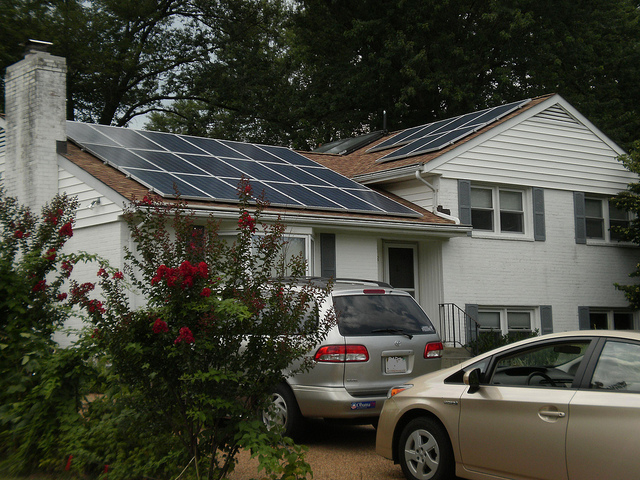
A recent study conducted by the Pecan Street Research Institute found that installing west-facing photovoltaic (PV) panels at a trial site in Texas generated more energy and more effectively reduced peak demand over the summer than south-facing panels.

The report acknowledges that south-facing solar will produce more total energy over the course of a year, but during Texas’s long summer days, results show west-facing systems generated 4% more electricity per day than comparable south-facing systems.

In addition, west-facing systems better met peak demand by harnessing the sun’s afternoon rays when cooling loads were high; west-facing systems generated 49% more electricity during peak demand hours than south-facing systems. This allowed more energy to be utilized onsite instead of sold back to the grid. Homes with west-facing systems utilized 75% (18.78 kWh) of their PV-generated electricity, while 58% (13.43 kWh) was utilized in homes with south-facing systems.

The study did not look at solar panels installed to track the sun across the sky, which are less common on homes that have roof space but small yards. Also, the decreasing cost of panels means that simply adding more panels is typically more cost-effective than roof-mounted systems, due to the cost of tracking equipment. In fact, 13 of the 50 homes studied had both south- and west-facing panels.

The grid-stabilizing benefits may give utilities more rationale to offer rebates to customers with west-facing systems, but research to analyze whether these benefits outweigh increased pressure on the grid during other seasons is still in development.

For more information:

Pecan Street Research Institute

pecanstreet.org

Published December 31, 1969

(2013, December 30). West-Facing Solar Panels Take Heat off Grid in Summer. Retrieved from https://www.buildinggreen.com/departments/newsbrief

Add new comment

To post a comment, you need to register for a BuildingGreen Basic membership (free) or login to your existing profile.

Solar Homes Slapped with Fee by Arizona Utility

News Brief

Solar Homes Slapped with Fee by Arizona Utility

The usage fee for grid-tied residential solar systems has both utilities and environmental groups watching the impact on installations.
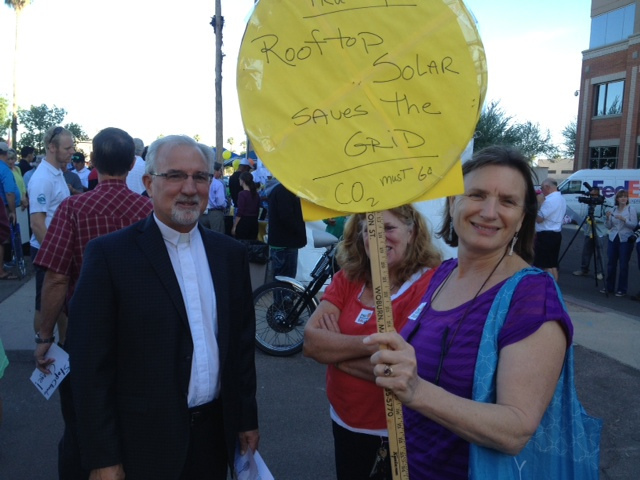
In what could become a trend, an Arizona utility will soon begin charging a monthly fee to homeowners with net-metered solar systems—solar photovoltaic systems that feed electricity back into the grid.

Arizona’s largest utility, the Arizona Public Service Co., will charge a $0.70 per kilowatt fee to homeowners with solar systems installed or contracted after December 31, 2013. A homeowner with a typical 7-kilowatt solar system will pay $4.90 a month.

The fee was authorized in November 2013 by the Arizona Corporation Commission, which found that costs of maintaining the grid for net-metered solar systems were unfairly being shifted to homeowners without panels. Nearly 1,000 protesters attended the hearing, arguing that homeowners installing solar have reduced demand on the grid and that penalizing them isn’t fair.

Now, more utilities are poised to follow suit; California has already approved leveraging fees up to $10 a month, and the American Legislative Exchange Council (ALEC), an organization known for drafting legislative templates used to enact conservative state and federal policies, plans to push for more of the same type of enabling legislation. John Eick, the legislative analyst for ALEC's energy, environment, and agriculture program told The Guardian, “As it stands now, those direct-generation customers are essentially free riders on the system. They are not paying for the infrastructure they are using.”

Other organizations warn the push is less about grid maintenance costs and more about trying to cripple the growth of renewable energy. The Sierra Club cites the fact that Arizona Public had first requested a much larger fee—$50 or more a monththat would have effectively eliminated the financial incentive to install solar panels.

Published December 31, 1969

(2013, December 30). Solar Homes Slapped with Fee by Arizona Utility. Retrieved from https://www.buildinggreen.com/departments/newsbrief

Add new comment

To post a comment, you need to register for a BuildingGreen Basic membership (free) or login to your existing profile.

Feds to Raise Renewable Energy Use and Install More Meters

News Brief

Feds to Raise Renewable Energy Use and Install More Meters

Behind Obama’s executive order to nearly triple renewables used by federal agencies also lie new requirements for energy metering and disclosure.

A recent executive order issued by President Obama directs every federal agency to source 20% of its electricity from renewable energy by 2020 and institute new energy-metering and reporting practices.

The target currently in place instructs government agencies to source 7.5% of their electricity from renewable sources, but the new order aims to nearly triple that share within the next seven years. Agencies are held to the 20% goal to the extent that measures are “economically feasible and technically practicable,” according to a White House memorandum; however, installing renewable energy onsite and retaining renewable energy certificates is recommended over purchasing certificates.

In addition to the boost for renewables, the order also holds significance for energy-management practices. Federal agencies are directed to install energy and water meters on their buildings and to enter monthly performance data into the U.S. Environmental Protection Agency’s Energy Star Portfolio Manager. Annual benchmarks must be disclosed to the public through the Department of Energy’s tracking website, and participation in demand-response programs must be considered.

These measures drew praise from Rick Fedrizzi, president of the U.S. Green Building Council, who commended Obama for “insisting on integrating smarter energy-management best practices across the federal government” and “accelerating innovative energy-efficiency initiatives.”

Published December 31, 1969

(2013, December 30). Feds to Raise Renewable Energy Use and Install More Meters. Retrieved from https://www.buildinggreen.com/departments/newsbrief

Add new comment

To post a comment, you need to register for a BuildingGreen Basic membership (free) or login to your existing profile.

Plumbing and Pipe-Fitting Union Welcomes Green Training

News Brief

Plumbing and Pipe-Fitting Union Welcomes Green Training

Labor unions are beginning to seek sustainability education for a “competitive edge,” and Urban Green Council is happy to comply.

New York’s Urban Green Council has joined forces with a national labor union to provide training in sustainable practices to thousands of plumbers, pipe fitters, sprinkler fitters, and HVAC technicians.

Members of the United Association of Journeymen and Apprentices of the Plumbing and Pipe Fitting Industry (UA) will receive Urban Green Council’s Green Professional Building Skills Training (GPRO) program, which includes material on technologies such as condensing boilers, solar thermal systems, and onsite graywater and blackwater recycling systems. “We’re seeing how sustainability is rapidly becoming a necessity in all types of buildings” said William Hite, president of UA. “GPRO training will give our members a competitive edge as our trade evolves.”

The trainings should also bring environmental benefits since systems designed for efficiency only perform well if they are installed correctly and maintained. In fact, if enough contractors, trades, operators, and service workers onsite have GPRO certificates, a building project can earn a LEED pilot credit.

According to Urban Green Council, GPRO will soon be made available to other building trade unions through the Building Trades Academy of AFL-CIO.

Published December 31, 1969

(2013, December 30). Plumbing and Pipe-Fitting Union Welcomes Green Training. Retrieved from https://www.buildinggreen.com/departments/newsbrief

Add new comment

To post a comment, you need to register for a BuildingGreen Basic membership (free) or login to your existing profile.

Paseo Verde in Philly First to Achieve LEED-ND Platinum

News Brief

Paseo Verde in Philly First to Achieve LEED-ND Platinum

Maximizing mixed use and transportation connections helped this Philadelphia project score the most points since LEED for Neighborhood Development’s creation.

A transit-oriented complex in Philadelphia for low- and moderate- income residents has become the country’s first neighborhood certified LEED Platinum.

The Asociación Puertorriqueños en Marcha (APM), a Latino community development organization, and Jonathan Rose Companies, one of the developers behind New York’s Via Verde, collaborated to create Paseo Verde—a mixed-use neighborhood with 120 rental units and 30,000 ft2 of ground-floor retail and community space.

The $31.3 million complex qualified for a low-interest loan through a state initiative called EnergyWorks, according to GreenSource Magazine, by reducing projected energy use 27% compared to a similar baseline project. In addition to high-performance appliances, each apartment has an individually metered gas-fired heating and cooling unit that can be controlled by the tenant. The projected annual purchased energy use is 40 kBtu/ft2.

Paseo Verde scored a high 24 out of 27 for smart location and linkages, an important credit category in LEED for Neighborhood Development (LEED-ND) 2009; the community is located directly adjacent to the fourth-busiest train stop in Philadelphia, providing easy access to the city center; bicycle storage and a car-share program are also available to tenants. Other services, such as a fitness center, technology center, and medical clinic, are located onsite.

For more information:

Paseo Verde

paseoverdeapts.com


Published December 31, 1969

(2013, December 30). Paseo Verde in Philly First to Achieve LEED-ND Platinum. Retrieved from https://www.buildinggreen.com/departments/newsbrief

Add new comment

To post a comment, you need to register for a BuildingGreen Basic membership (free) or login to your existing profile.

Utility Fined for Eagle Deaths Linked to Wind Turbines

News Brief

Utility Fined for Eagle Deaths Linked to Wind Turbines

A $1 million fine against Duke Energy reveals that none of the wind utilities have a federal permit to cover protected-bird fatalities.

For the first time, a wind energy facility has been prosecuted for killing protected birds. Having reached a settlement agreement, Duke Energy Renewables is to pay $1 million in fines for 14 golden eagles and 149 other protected birds killed between 2009 and 2013 by two of its wind farms outside Casper, Wyoming.


Although research shows that household and feral cats are far more culpable for harming bird populations, wind turbines are especially hazardous for eagles—many of which are federally protected—because eagles do not look up as they hunt their prey on the ground. Under the Migratory Bird Treaty Act, companies are required to have a federal permit to kill protected birds, but as of yet, no wind energy facilities have obtained a permit, according to the Associated Press—and, until now, no wind facility had been prosecuted.

The court found that Duke Energy failed to build its wind turbines in a way that would prevent avian deaths. The penalty follows other successful litigation against companies that have been fined for environmental harm—BP was fined $100 million after the 2010 Gulf of Mexico oil spill, and PacifiCorp paid more than $10.5 million in 2009 for electrocuting 232 eagles along power lines—but it may be precedent-setting relative to wind energy. The U.S. Fish and Wildlife Service is now investigating 18 other bird-death cases involving wind turbines, and more have been referred to the Department of Justice.

Once a wind facility is constructed, it is difficult to minimize bird fatalities short of closing down. For now, Duke Energy has committed to installing radar technology and employing field biologists who will pause the turbines when eagles are in the vicinity.

Published December 31, 1969

(2013, December 30). Utility Fined for Eagle Deaths Linked to Wind Turbines. Retrieved from https://www.buildinggreen.com/departments/newsbrief

Add new comment

To post a comment, you need to register for a BuildingGreen Basic membership (free) or login to your existing profile.