At a recent conference, I was in the uncomfortable position of listening from the front row while a speaker criticized the
Guideline Specifications that we publish as part of our
GreenSpec Directory. While acknowledging that they include a lot of useful information, the speaker pointed out example after example of passages that do not conform to good specification practices. When I protested, during the question and answer period, that we publish them as guidelines and not as actual specs, he responded: “If it walks like a duck, and talks like a duck….”
I got the point. If we publish something that looks like specs
and that designers are likely to copy when writing their project specs, we should make sure that it works as specification language. We are now working with the author of that material, Larry Strain, AIA, to revise and restructure it for the next print edition of
GreenSpec and for distribution as part of the online version. In the process, we’ve learned something about how specs are supposed to work and about issues specific to green specifications. Here are some highlights.
Good Specification Basics
According to the Construction Specifications Institute (CSI)
Manual of Practice, “Specifications define the qualitative requirements for products, materials, and workmanship upon which the contract is based.” Project specifications include specifications of products and materials—by name and/or by description of their attributes and functions—as well as instructions for all of the processes deemed necessary to construct the building as intended. For homes and other very small projects, specifications are often written right on the drawings. These might include a schedule of doors and windows; the type, grade, and color of the roofing material; and the like. For larger projects, the specs are provided as a separate part of the contract documents. The drawings and the specs are cross-referenced, with the basic principle that spatial relationships and dimensions belong in the drawings, while descriptions of products and processes belong in the specifications.
In North America, specifications are typically organized according to the 16-division structure of CSI’s MasterFormat™, which was last updated in 1995. MasterFormat provides a proposed breakdown of sections within each of the 16 divisions. A separate document, called SectionFormat™, describes how information is to be organized within each section.
“To be effective, a green spec must first be a good spec,” says Chris Dixon, a specifications writer with Mithun Architects + Designers + Planners in Seattle. He notes that specifications are part of the contract between owner and builder, and as a contract they should only include language that represents enforceable requirements. Dixon recommends the
CSI Manual of Practice as an essential reference for spec writers.
Simple, direct statements telling the contractor what to do are preferred over indirect formulations: Use “build the partition” rather than “the partition shall be built,” suggests Donald Baerman, author of the outstanding article “Construction Specifications” in
Time-Saver Standards for Architectural Design Data.
Green Agenda
Green projects are rife with stories in which contractors or subcontractors inadvertently undermined the goals of a project by defaulting to their usual procedures instead of the intended green alternatives. All it takes is for one installer to miss the low-VOC requirement in the spec and use some solvent-based adhesive to cause the project’s indoor air quality to suffer, at least during initial occupancy.
While some users have suggested modifying CSI’s SectionFormat™ three-part structure by adding a Part 4 on environmental considerations, the general consensus is to weave green issues into the existing structure. It is often appropriate to add environmental language to many articles in each of the three parts of a technical section (see sidebar).
It can be tempting to highlight this information using boldface text or some other means, but doing so “suggests that the rest is not as important,” notes spec writer Stephen Andros of G&E Environmental. Instead, Andros says, “We are careful about the way that we put specs together so it is not buried. We don’t put it in the middle of a huge paragraph.”
Quite a bit of green information applies not just to one or two specific sections but to material throughout the specifications. Repeating this information many times not only consumes a lot of time and paper, but “if you have to make a change, it is hard to catch it everywhere,” notes consultant Sigi Koko. Many spec writers have appropriated “Section 01350 – Special Procedures” from CSI’s MasterFormat™ and use it for “Environmental Procedures.” One example, “Section 01351 – Environmental Procedures,” is included in Appendix C of
Green Building Materials.
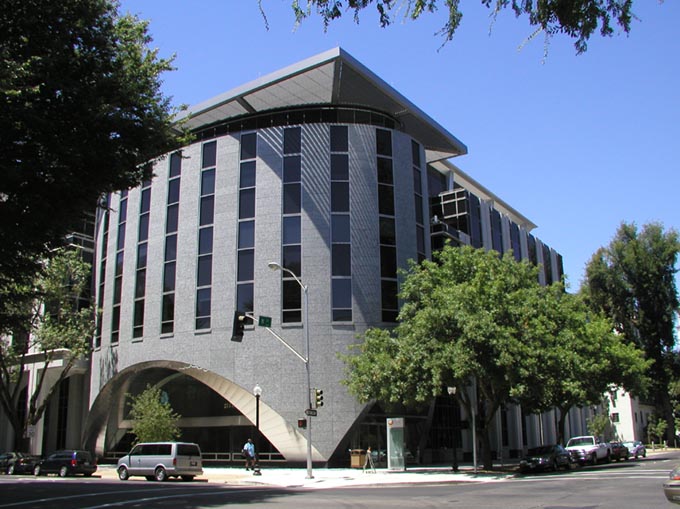 A set of reference specifications for energy efficiency developed by Eley Associates and others for the California Energy Commission includes a more comprehensive “Section 01350 - Special Environmental Requirements” that is now being used for all major construction by the State of California. This section includes a detailed protocol, developed by Hal Levin of the Building Ecology Research Group in Santa Cruz, California and Anthony Bernheim of SMWM Architects in San Francisco, for testing interior finish materials and modeling the concentrations of chemicals that are expected in the space. This product screening protocol “raises the bar on indoor air quality in important ways,” reports Tom Lent of the Berkeley, California-based Healthy Building Network. Others caution, however, that its requirements are extensive and should not be included without careful consideration of how they will be interpreted by potential bidders and implemented by contractors.
This model section includes guidelines for IAQ management during construction, but these are not as comprehensive as the product screening protocol. Also included are very general guidelines addressing other aspects of energy and resource efficiency, but these are written more for the contractor’s general information than as explicit instructions.
Covering the green guidelines only once, in Division 1, makes things easier for the spec writer. On the other hand, if important information is not included within each section, subcontractors might not see it because they sometimes receive copies of only those sections relevant to their work rather than the entire spec. HOK tends to include the relevant information with each section, according to Koko, with a few notable exceptions, including a comprehensive listing of materials for which the company has established minimum recycled-content levels and/or maximum VOC levels. “We can edit that one list at the beginning of the spec when necessary,” reports Koko, “and refer to the list from each appropriate section.”
California’s Section 01350 and many other general sections on environmental requirements include a fair amount of language about the green goals of the project and how the contractor is expected to support those goals. Since this information is not tied to specific activities the contractor must perform, it does not conform to the “enforceability” guideline for good specifications. “Language including terms like ‘goals, recommendations, vision’ is not enforceable and should not be part of the contract documents,” says Dixon. “If you put stuff like that in the qualifications of bidders, instructions to bidders—outside of the contract docs—that’s a more appropriate place.”
Not all spec writers agree on this matter, however. Ross Spiegel, current president of CSI and coauthor of
Green Building Materials, reports that on a recent LEED™-registered project for the State of Connecticut, he added an article to his Section 01110 – Summary of Work, explaining the owner’s intent that the project be LEED-certified and outlining the environmental goals. “I think that is a very important thing to do,” says Spiegel, adding: “It’s not an enforcement type of provision but more an education type of provision, as well as a broad-brush statement, so the contractor gets the flavor of what we are trying to do.”
Regardless of whether the green agenda is described within the specifications or separately, extra steps are needed to ensure that everyone working on the project is aware of those goals and their implications for the materials and methods used. “I put it on the agenda for the pre-bid conference,” reports Spiegel. “We will repeat that exercise at the pre-construction conference once all the subs are identified and are getting ready for the submittal process,” he adds. Dixon also suggests that the spec can require pre-installation conferences as “an appropriate place to get the green information across.”
Contractors also need clear guidance on when and how they can propose product substitutions, and what criteria will be used to evaluate those substitutions. The logistics of substitution requests depend on the nature of the project—especially whether it is a public-sector or private project—and the format used in the specifications. In any case, the Division 1 section that describes the logistics of substitution requests (Section 01630, per MasterFormat) should mention that green considerations will affect decisions, and require documentation of green attributes for any proposed substitutions. Throughout the spec, the technical sections must be explicit about the green attributes that products in each section must have if those attributes are to be used as a basis for evaluating potential substitutes.
Preexisting master specifications have to be reviewed, not only to incorporate green products but also to weed out references to environmentally problematic practices that might be avoidable. It may be possible, for example, to specify bait systems for pests rather than extensive soil treatments.
Rating System Requirements
Rating systems such as the U.S. Green Building Council’s LEED™ have specific requirements that affect both construction processes (such as indoor air quality management during construction and commissioning) and documentation of products and systems used. Collecting the required documents after a building is completed can be a challenge, but if the documentation requirements are included in the specification, contractors can usually integrate the specific demands into their existing administrative processes.
Many of these requirements are new to contractors and therefore must be presented clearly and thoroughly in the spec. Andros recommends adding a new section on LEED in Division 1 within the 01350 group of “Environmental Requirements.” His section 01355 “Special Procedures – LEED™ Certification” includes an overview describing LEED and lists of prerequisites and credits the designers intend to achieve, along with references to the various technical sections with specific information on achieving those credits. This section also includes, in article 1.06, “Submittals,” a list of paperwork the contractor will have to supply for the LEED application.
In the case of LEED 2.0, it is necessary to provide documentation of the costs of all materials (not including labor or mechanical and electrical equipment) and invoices or other proof-of-purchase for any materials that contribute to credits such as recycled content or certified wood. LEED 2.1 (currently in draft form) is supposed to significantly reduce these documentation requirements (see
EBN
Vol. 11, No. 6), but it may still be necessary to collect the documents for verification in case a credit is audited.
Many early users of LEED, who had to figure out the requirements and write the specifications from scratch, realize that it must be possible to help future users and possibly capitalize on their effort by sharing their work. HOK, Inc. is negotiating with the U.S. Green Building Council about funding the creation of a “comprehensive spec for integrating LEED requirements into any standard spec, along with a user manual,” according to Koko, who helped develop HOK’s green specifications. Koko expects this resource to be distributed with other support materials in the “Welcome Packet” that goes to teams that have registered projects in preparation for submitting a LEED application, or on HOK’s Web site.
ARCOM, producer of the most widely used master specifications system, MasterSpec™, is also working to accommodate LEED. ARCOM’s Eugene “Buz” Groshong has developed a list of sections potentially affected by LEED requirements and is working on incorporating those requirements as the sections are updated.
EBN reviewed a draft for a comprehensive “Section 01524 - Construction Waste Management,” and certified wood requirements are already included in many Division 6 sections. Because of MasterSpec’s “edit by deletion” approach, the requirement for Forest Stewardship Council-certified wood appears in those sections by default, and it is up to the person editing the specs to remove that requirement if it doesn’t apply.
Fitting Green Technologies into the Structure
No classification system is perfect, and there will always be components and systems that do not fit neatly into any one CSI Division or Section. Green technologies include many examples of hard-to-classify systems, such as building-integrated photovoltaics—should they be specified as part of the building envelope (Division 7) or solar and wind energy equipment (Division 13) or electrical (Division 16)?—and constructed wetlands for wastewater treatment—Sitework (Division 2) or Plumbing (Division 15)?
There is no single correct answer to these questions. Dixon suggests referring to CSI’s
Manual of Practice for guidance and then making a choice. Creating new specific sections is fine, as long as they are consistent with the MasterFormat structure. If a multifunctional component is delivered as a complete unit, it should be described in a single section; otherwise, it is appropriate to specify each component in its own section, with cross-references to any related sections.
Construction waste management is not mentioned in the current MasterFormat. It could fit any number of places in Division 1, including the 01100 sections, 01700 sections, or, as MasterSpec is doing, in the 01500 area as Section 01524. Section 01810 is designated for building commissioning, but some people prefer to include that or “commissioning” in Division 15, as it primarily affects mechanical systems. It is not uncommon to see commissioning specified in a special “Division 17,” but “it doesn’t belong there,” in Spiegel’s opinion. The telecommunications industry has also been laying claim to Division 17 as a place for voice and data wiring.
Some of these conflicts should be resolved when the next iteration of MasterFormat is adopted in 2004. Major changes are in the works, and the transition is likely to be disruptive and confusing, but the new format has many advantages, especially for the application of MasterFormat to infrastructure projects. The new format eliminates Divisions 15 and 16 entirely, and leaves numbers 17 through 20 unused. Whole new groups of divisions are created in the 20s, 30s, and 40s, with ample room left for inserting additional divisions in the future. These new divisions include sections on site work (currently in Division 2), mechanical, electrical, fluid treatment, power generation, and telecommunications, among others. At recent presentations of these revisions, “most comments were from spec writing members [of CSI] who don’t want anything to change,” reports Spiegel; but, he adds, the Institute is committed to moving ahead with the new version.
 Faced with new and unexpected requirements in a specification, bidders frequently react by padding their bids, coming up with high figures to cover the unforeseen. “What we’ve found over the years is that if there is any kind of complication in the specification or even in a drawing, subcontractors will just throw a high number at it,” says Arthur Klipfel, a partner with Oaktree Green Development. This response is especially common in a busy market, when contractors are not hungry for work. To keep bids in line, architects and specifiers need to do all they can to demystify any special requirements.
“The biggest issue is the contractor and making sure that the contractor understands what his additional responsibilities are,” says green building consultant Sigi Koko. When possible, it is better to specify exactly what should be done in simple terms rather than just referencing an outside standard. For example, when they first learned about requirements to follow the Sheet Metal and Air Conditioning Contractors’ National Association (SMACNA) guidelines for the Puget Sound Environmental Learning Center, they were concerned about what might be involved, says Rafn Construction’s Ann Schuessler. When the contractor got the specifics, however, it proved to be “no big deal.”
Contractors are also likely to be discouraged if the specified products are hard to find. “I always call everyone who is listed and make sure that the product is still available,” says Koko. Any unusual requirements for preparation or installation of green products should also be spelled out clearly. When the owner is unconvinced about the value of a particular product or system, or the impact it will have on price is unclear, it can be specified as an alternate. Bidders are expected to price out both the base spec and the alternate, and state in their bids the cost difference should the owner select the alternate. This can be a great resource for determining the feasibility of certain options, but they must be elements that are not integral to the design so that the choice of an alternate does not affect too many other systems. Also, if too many alternates are specified, it can make the bidder’s job onerous and reduce the number of qualified bidders.
Pre-bid conferences are also a good way to communicate with bidders about any unfamiliar requirements and address concerns about unknown costs. “The spec alone doesn’t do the job,” reports Eric Kolderup of Eley Associates. “There is a lot of education required to get reasonable bids on the spec.” If contractors don’t understand the requirements well enough to bid effectively, it is unlikely that they can fulfill the requirements effectively either.
Klipfel has tried the contractor education approach, with limited success: “Originally we tried to get the general contractor very committed,” he says. “The theory is that the contractor will go out and educate the subs, or maybe the subs will come to the meeting and will learn about it. On larger projects, that’s not going to happen. The whole bidding process tends to be very rushed.”
As a result, Oaktree has developed a different approach, which Klipfel calls “bait and teach.” “We now try to minimize any fancy details and/or green details and make the spec as vanilla as we can,” Klipfel says. “Then when we come to the buy-out stage—when we are awarding subcontracts—we say, ‘by the way, we have this additional thing we want you to do’ and we negotiate a fair price for the added work.”
Not everyone agrees with this approach, however. “If you try to do a spec without the green stuff, you have demonstrated that it is not integral to the project,” says Koko. Perhaps the best solution to this dilemma is patience. As more green projects are built, contractors will become more experienced, and the requirements or alternative technologies will no longer be so unfamiliar.
Who Should Write the Spec?
While it may be acceptable to include specifications on the drawings or in an informal binder for homes and other very small projects, the liability for large projects is much greater, and a good project manual, with a legal framework and specifications, is important. “A lot of people are out there foraging for stuff, trying to figure out how to make their specs green, without even a basic idea about what contract documents are. It’s dangerous,” says Dixon. For example, he notes, many people do not understand that “Division 1 is an expansion and elaboration on the General Conditions. You can’t write a Division 1 without knowing what is in the General Conditions.”
Both for legal reasons and for clarity of communication, a trained spec writer is an important resource. Ideally, “spec writers should be included early in the process for feedback on products and systems and interactions,” suggests consultant Barbara Batshalom of the Green Roundtable. If the spec writer is not well versed in green issues, however, it is likely that parts of the green agenda will be compromised. “Architects must take more ownership of their specs,” says Batshalom. Sigi Koko agrees: “You need someone who understands how specs work and how they get written, but you also need someone who is familiar enough with sustainable design issues.” This expertise is especially important if the spec writer will also be reviewing requests for substitutions.
“There may be professional liability issues associated with specifying requirements for MSDS submittals,” cautions Dru Meadows of theGreenTeam, Inc. in Tulsa, Oklahoma. Along with many other spec writers, she cautions that few architects are qualified to review material safety data sheets (MSDS) for products and therefore should avoid requesting them as submittals or with requests-for-substitutions. “It is even more problematic now that LEED submittals require MSDS,” Meadows notes. She recommends writing explicitly that the MSDS is being required as a submittal for LEED documentation, rather than as part of a general request for information.
Dixon points out that limitations on the information that must be reported on MSDS include anything proprietary or comprising less than one percent of the product. He suggests that if an owner is interested in having products reviewed at that level, he or she should hire a certified industrial hygienist to review MSDS and make recommendations. Spiegel concurs: “The information [on MSDS] is somewhat helpful, but many architects shy away from taking that information because they feel that it is more troublesome in terms of liability than it is helpful.” He goes on to say, “MSDS don’t help to determine the overall greenness of a product. Meadows has been leading an effort in ASTM International to create a reporting format that is both more useful than MSDS and more appropriate for architects” (see
EBN
Vol. 10, No. 11, p. 4).
Help Is on the Way
A number of resources that provide guidance and sample language for green specifications are listed below. Several initiatives should result in additional resources. These include:
•The “LEED-Spec” initiative from the U.S. Green Building Council and HOK was mentioned above. As that evolves, it should help with the inclusion of LEED requirements in a specification.
•A CSI Task Team led by Dru Meadows, with Ross Spiegel as CSI Board Liaison, is establishing a section format with environmental articles, paragraphs, and text.
As these and other resources become available and the green building industry matures, writing the spec for a green project should, eventually, become more about documenting decisions and less about inventing new tools and procedures.
– Nadav Malin
For more information:
Construction Specifications Institute
800/689-2900
www.csinet.orgMasterFormat ‘04 Expansion draft:
www.csinet.org/technic/mfrevision.htmGreen Building Materials: A Guide to Product Selection and Specification by Ross Spiegel and Dru Meadows (John Wiley & Sons, 1999)
“Construction Specifications” by Donald Baerman, in
Time-Saver Standards for Architectural Design Data, 7th edition (McGraw-Hill, 1997)
Reference Specifications for Energy and Resource Efficiency, California Energy Commission
www.eley.com/specs/Collaborative for High Performance Schools
www.chps.netGreenSpec Product Directory with Guideline Specifications (BuildingGreen, Inc., 2001)

 Before 1997, the intersection at 25th Avenue and N.E. 127th Street in Seattle had a problem. Over the previous three years, at least a dozen collisions had occurred there, and speeding was an increasing problem. Concerned residents contacted the Seattle Department of Transportation, whose engineers suggested the installation of a mini traffic circle as a means of slowing vehicles and improving safety.
 Like many communities, our town of Brattleboro was faced with a huge problem in its existing high school complex. The sprawling, dilapidated, 230,000 ft2 (21,000 m2) school for 1,600 students—actually a high school, middle school, and career education center all in one—was built in five stages between 1951 and 1991. It is a health hazard, the roofs leak, mechanical systems are failing, classrooms are overcrowded, and the heat distribution is so inadequate that you see open windows in some parts of the building even on the coldest winter days, while elsewhere students keep their coats on to stay warm. So bad are the air quality and crowding problems that the school was threatened with a loss of its accreditation a year ago.
 According to

