The internationally sanctioned phaseout of chlorofluorocarbons (CFCs) is causing an unprecedented pace of change and innovation in the refrigeration industry. The old standby refrigerants no longer make the grade. These ozone-depleting chemicals are now well on their way to being contained—1995 global production of CFCs was down 76% from its 1988 peak, according to the Worldwatch Institute. Yet a problem that is potentially even more troublesome—global warming—looms ever larger on the horizon. Most refrigerants are themselves greenhouse gases, and they are used in refrigeration and cooling systems that are huge electricity consumers—associated with a whopping 23% of all electrical generation capacity in U.S., according to Lawrence Berkeley National Laboratory’s Center for Building Science.
Refrigerants escaping from older air conditioners and chillers are still harming the ozone layer. Replacing older equipment will not only eliminate a use of the most damaging chemicals, but it will also greatly reduce refrigerant leakage and improve operating efficiency. With the leaks under control, energy efficiency emerges as a key environmental benefit of replacing equipment—and it may be enough to finance the upgrade.
How Refrigerants Work
Mechanical cooling—the technology used in the vast majority of refrigeration and air conditioning equipment—is based on two principles:
1. A refrigerant can be changed from liquid to gas or gas to liquid (phase change) by altering either its temperature or its pressure.
2. Vaporizing a refrigerant (phase change from liquid to gas) absorbs far more energy than marginally raising the temperature within one phase. Condensing the refrigerant from gas to liquid
releases the same amount of energy.
These two principles are the basis for the vapor compression cycle on which mechanical cooling is based. In a residential air conditioner, for example, a refrigerant is used that vaporizes at slightly below room temperature. This refrigerant arrives in liquid form, under pressure, at the space or air chamber that is to be cooled. The pressure is reduced, and the liquid vaporizes inside a heat exchanger, absorbing heat from the surrounding air in the process. The refrigerant, now in gas form, moves on to a condenser, where it is compressed using electrical power. As its pressure increases, it condenses back into a liquid, releasing the heat it had previously absorbed. This heat is vented to the outside, and liquid refrigerant is now available to repeat the cycle.
A refrigerant must have a boiling point that is within the proper range for the application, though this point can be varied somewhat by changing the pressure in the evaporator. All common refrigerants are gases at atmospheric pressure and room temperature. In early vapor-compression refrigeration systems, naturally occurring gases such as sulfur dioxide or ammonia were used. Sulfur dioxide is highly toxic and was not used for long, while ammonia, though it is also somewhat toxic, continues to be used in some applications. Hydrocarbons such as propane and butane also began to be used, in spite of their flammability.
To address these concerns, in 1930 a team led by Thomas Midgely, Jr. at the DuPont Company combined chlorine, fluorine, and carbon to produce a new generation of nontoxic synthetic refrigerants that were sold under the tradename Freon. These chlorofluorocarbons (CFCs) were very stable, performed nearly as well as the natural refrigerants they replaced, and were inexpensive to mass-produce. They quickly became ubiquitous, not only as refrigerants, but anywhere it was useful to have a liquid under pressure change quickly to a gas when released. Thus, they were widely used in aerosol sprays, cleaning of electronic circuits, and as blowing agents for plastic foam insulation.
Relying on CFCs, the air conditioning industry expanded rapidly after World War II. CFCs were so safe and inexpensive that there was little effort to prevent their release into the atmosphere. Small leaks in refrigeration systems were not considered a problem—the system was simply “topped off” periodically with more refrigerant. The refrigerant charge was typically vented during maintenance, then replaced with new stock. No one thought twice about the gradual accumulation of these synthetic gases in the atmosphere.
All that began to change in 1974, when scientists realized that if chlorine atoms were reaching the stratosphere, 12 to 15 miles (20–25 km) above the earth’s surface, they could wreak havoc on the sparse layer of ozone molecules that filters out much of the sun’s harmful ultraviolet (UV) rays. Chlorine atoms didn’t have a way to reach the stratosphere until the creation of CFCs, because other chlorine-containing molecules are not stable enough to survive the journey. Once CFCs reach the stratosphere, UV rays are strong enough to break even them apart, releasing destructive chlorine ions, and the highly water-soluble chlorine washes out of the atmosphere in rainfall.
All this was an interesting scientific theory, but it failed to get much attention until 1985, when scientists discovered an alarming “hole” in the ozone layer over Antarctica. All of a sudden, these arcane theories became a worldwide environmental concern leading, in 1987, to an unprecedented international treaty that called for a freeze and gradual phase-out of the production and use of CFCs and other ozone-depleting substances. The Montreal Protocol on Substances that Deplete the Ozone Layer required a radical and uncharacteristically rapid shift for the refrigeration industry, and for other industries that relied on CFCs.
As scientific evidence of the extent of the problem continued to mount, and as manufacturers demonstrated that alternatives were feasible, the Montreal Protocol was amended several times, mandating even quicker phase-out of ozone-depleting chemicals.
By January 1, 1996, the production of CFCs and most other “Class I” ozone-depleting substances was banned in the U.S. and other industrialized countries. Refrigeration systems using these chemicals must rely on existing stockpiles and on fluids reclaimed from other machines.
Global warming
A second and potentially more significant atmospheric problem, that of global warming, also affects most refrigerants. According to most researchers, by slowing the escape of heat from the earth’s surface into space, the accumulation of
greenhouse gases is gradually increasing surface temperatures. Refrigerants contribute to global warming in two ways. First, most refrigerants are greenhouse gases that will contribute directly to global warming if they escape into the atmosphere. On a per-pound basis, both CFCs and some of the new refrigerants being developed to replace them are hundreds or even thousands of times more powerful greenhouse gases than carbon dioxide (CO2). Second, because they are one component of refrigeration systems that consume electricity, refrigerants contribute indirectly to global warming. Much of that elec-tricity is generated by burning coal, oil, and natural gas—a process that produces vast quantities of CO2, the most significant single greenhouse gas.
This combination of direct and indirect contributions to global warming has led scientists at Oak Ridge
National Laboratory to develop the concept of Total Equivalent Warming Impact (TEWI). A refrigerant’s TEWI is calculated by combining its potency as a greenhouse gas with its theoretical efficiency (its ability to transfer heat under standard conditions). It is important to note, however, that many other factors also affect efficiency of refrigeration systems.
In the scramble to come up with replacements for CFCs, the initial focus was on
hydrochlorofluorocarbons, or HCFCs, some of which were already in use. By adding one or more hydrogen atoms, the molecules are made less stable, so most break down before they can reach the stratosphere. HCFCs still cause some ozone depletion, however (4% to 11% of the damage caused by CFC-11 and CFC-12), so they, too, are slated to be phased out eventually. The current phase-out schedule of these “Class II ozone-depleting substances” ranges from 2003 to 2030 depending on the compound, with an acceleration of that schedule possible, based on the outcome of a September 1997 meeting in Montreal. Some HCFCs are significant greenhouse gases, so their accumulation in the atmosphere is also problematic from that perspective.
HFCs
The other major category of CFC-replacements being used and developed is a group of compounds known as hydrofluorocarbons (HFCs). Because HFCs contain no chlorine, they pose no threat to the ozone layer. Some HFCs are still significant greenhouse gases, however. The U.S. air conditioning and refrigeration industries are looking to HFCs as the next generation of refrigerants, to replace the HCFCs now in widespread use. They are already used in most new household refrigerators, and some companies, most notably Carrier, have begun introducing HFC-based air conditioning equipment.
In addition to their contribution to global warming, HFCs in the atmosphere break down into trifluoro-acetic acid (TFA), among other compounds. There is some concern that TFA could accumulate through the hydrologic cycle to the point of toxicity to wildlife in wetlands. Research is just beginning on this potential problem. These environmental concerns have led some Northern European governments to consider HFCs as only an interim solution, like HCFCs. For a longer-term solution, many are going back to some of the natural refrigerants that were used in the past.
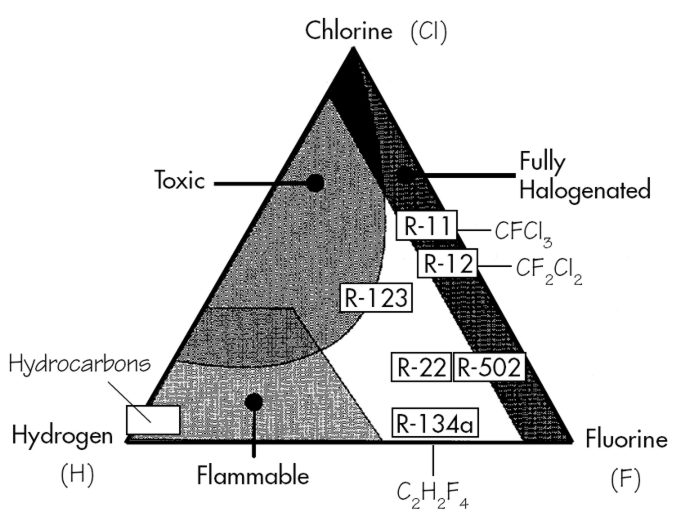
Ammonia is a respiratory irritant at low concentrations and could explode at high concentrations. Nevertheless, this longtime refrigerant has advantages, especially in industrial settings. Hydrocarbons such as propane and isobutane are inherently flammable and therefore potentially dangerous.
Both ammonia and hydrocarbons perform very well as refrigerants, however.
The theoretical efficiency of ammonia exceeds that of all synthesized compounds, including CFCs. While propane has a slightly lower theoretical efficiency than the best synthesized refrigerants, equipment using propane can be up to 10% more efficient than comparable conventional systems. Due to this high efficiency, and the fact that ammonia and hydrocarbons pose no ozone-depletion or global warming threat, they have generated significant interest in some countries. In Germany and Scandinavia, where refrigerators are smaller and have fewer electrical gadgets than in the U.S., hydrocarbons are commonly used in refrigerators. They are also gaining acceptance in residential air conditioners and smaller commercial systems, while ammonia is used in larger systems. In the U.S., both the Clean Air Act and most building codes prohibit hydrocarbon refrigerants in homes, according to Len Swatkowski, an engineer with the Association of Home Appliance Manufacturers. The electrical resistance heating used for automatic surface defrost in nearly all American refrigerators is particularly hazardous with hydrocarbon refrigerants.
Use of hydrocarbons is expanding in the U.K. where the British company Calor Gas has had some success promoting propane, isobutane, and various combinations of the two in small air conditioning systems. Appropriate mixes of these hydrocarbons can be used as direct drop-in replacements for CFC-11 or CFC-12 in existing equipment. Another advantage of hydrocarbon refrigerants is that 60% less fluid is required by weight, compared with HCFC or HFC systems. Safety features, such as automatic shut-off in case of a leak and shielding of electrical controls, may need to be added.
In the U.S., in addition to industrial uses, ammonia is also used occasionally as the primary refrigerant in public settings such as supermarkets, but in such cases it never circulates into the retail space. Instead, a secondary heat transfer fluid, such as propylene glycol, is used. This additional system of heat exchangers reduces the energy efficiency of the system, however, negating much of the benefit of using ammonia. Propane is also used in some settings with a secondary heat exchanger and is gaining popularity in direct use as well.
Eliminating leaks solves much of the problem
Along with implementing the internationally mandated phase-out, the U.S. EPA has taken measures to prevent the release of CFCs and other refrigerants into the atmosphere. Intentional release of refrigerants during servicing or replacement of equipment is strictly forbidden, and measures must be taken to prevent accidental releases.
Industry has responded with equipment that helps prevent releases. For example, air must periodically be purged from most centrifugal chillers, and some refrigerant typically escapes during this process. In the past, it was not uncommon for a 500- ton (1750 kW) chiller to lose 100 lbs. (45 kg) of refrigerant per year in purging, according to Eugene Smithart, Director of Environmental Affairs for The Trane Company. Current equipment has reduced that loss to less than 3⁄4 ounce per year (21 g/yr).
In relation to global warming, as the frequency of leakage and other releases to the atmosphere decreases, the operating efficiency of refrigeration and air conditioning systems becomes relatively more significant. The theoretical efficiency of CFC refrigerants is somewhat higher than their replacements, leading to an ironic situation. Engineer William Rittelmann of Burt Hill Kosar Rit-telmann Associates suggests that, in terms of large commercial systems, leaks are now so rare that the elimination of CFCs may have been unwise. “If we had tightened those systems down across the board,” Rittelmann told
EBN, “we could have stayed with CFCs and gotten better performance.” Rittelmann also points out, however, that in the changeover from CFCs a great number of older, inefficient chillers are being replaced with new systems that are much better, in spite of their use of refrigerants with slightly lower theoretical efficiencies.
In the wake of the CFC phase-out, there is a broad range of refrigerant options to choose from. Refrigerant producers and equipment manufacturers have to balance many issues when developing and selecting refrigerants, including long-term availability, heat-transfer efficiency, possible toxicity, operating pressure, and lubricant requirements.
Interim and long-term replacements
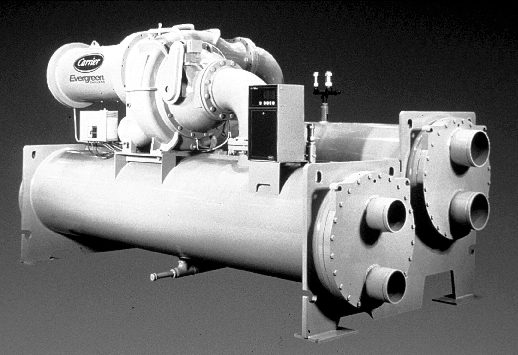
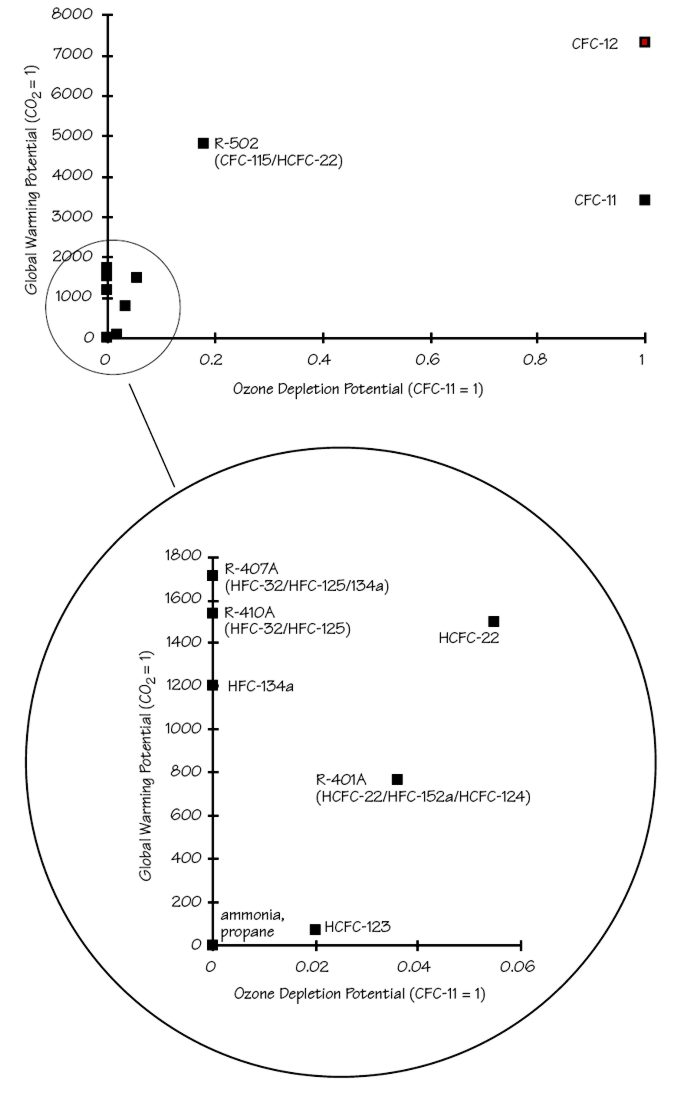
Although HCFCs are slated for phase-out between 2010 and 2030 (only the blowing agent HCFC-141b is to be phased out in 2003), they are currently the most common refrigerants. The HCFC R-22 is the most popular option for new chillers. At ambient and higher temperatures R-22 operates at significantly higher pressures than R-11 and R-12 (the CFCs that are no longer produced), so it cannot be used to replace those refrigerants in existing equipment, except in cold applications such as industrial refrigeration. Another HCFC, R-123, is the most widely used replacement for R-11 because it operates at similar (low) pressure. In addition to its status as an interim option, R-123 is plagued by toxicity concerns, which are accelerating the search for alternatives.
HFCs have the advantage of not containing chlorine, so they have zero ozone-depleting potential and thus are not slated for phase-out.
The most common HFC currently in use is R-134a, which has replaced CFCs in automobile air conditioning and home refrigerators, and is gaining acceptance for use in residential air conditioner and some commercial chiller applications. The main drawback of R-134a is that is has a lower heat-transfer capacity, so more fluid and larger compressors are required to deliver the same cooling capacity. This drives up the equipment cost.
To improve performance and/or reduce potential hazards, most equipment manufacturers are now looking to refrigerant blends consisting of various combinations of HCFC or HFC compounds. Although some blends were in use even before the CFC phase-out, the search for better replacements has led to a proliferation of blended options. Blends of HCFCs, including various versions of R-401 and R-402, are interim alternatives. HFC-blends are considered longer-term solutions.
Use of many blended refrigerants is complicated by the fact that they are
zeotropic, meaning that the different components have different boiling points. Thus, if a system were to develop a leak while one of the components is a gas and others are liquid, more of the gas would escape, changing the composition of the fluid. A technician replacing the leaked fluid would need sophisticated testing equipment to know if the composition had changed. In addition, recharging a system with a zeotropic blend must happen under pressure, so the blend is in its liquid state.
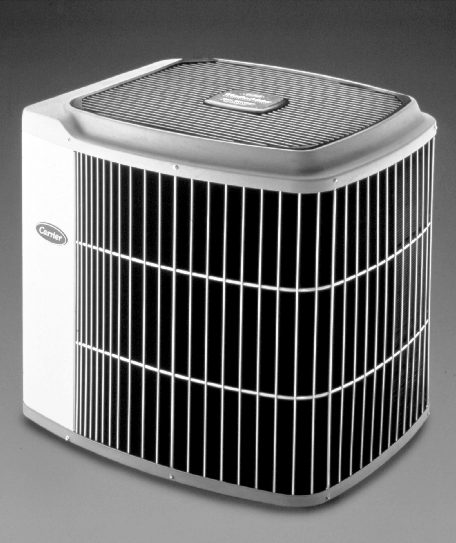
The R-410a used in Carrier’s new Weathermaker 38TXA residential air conditioner operates at significantly higher pressure than previous refrigerants, so it requires heavier pipes and stronger fittings.
Engineer and refrigerant expert David Wylie reports that for commercial chillers as well, “410a is becoming one of the more interesting refrigerants.” “It had been considered too high-pressure,” he adds, “but now it looks like manufacturers are developing equipment that can use it.” Wylie reports that there was a similar concern with the transition from R-12 to R-22. R-22 was originally considered too high-pressure a refrigerant, but now it is widely used.
Although R-410a is a zeotropic blend, the difference in the boiling points of its components is quite small, so it is only marginally affected by the complications of using such blends. Fred Keller, director of residential engineering at Carrier, points to the fact that R-410a has a higher heat-transfer capacity than most refrigerants, allowing for smaller compressors and heat-exchangers. From an overall material consumption perspective, Keller suggests that “R-410a will enable manufacturers to build products with less material in them.” The operating efficiency of R-410a is comparable to most alternatives. Carrier’s new unit has a seasonal energy efficiency ratio (SEER) of 13, which is well above the industry average of 10.5, but far lower than the most efficient units available. Even though R-410a is much more expensive than R-22, the new unit is priced “to be competitive with other 13-SEER offerings using R-22,” according to Keller.
Riding the glide
In the future, zeotropic blends may offer higher efficiencies than are currently available using any pure fluid. This potential exists because the different components boil under different conditions, so there is a temperature range when the fluid is part liquid and part gas. This range is called the
glide of a refrigerant, and by designing the heat exchanger to take advantage of the glide, higher efficiencies are possible than with fluids that change all at once. This potential has been demonstrated in laboratories, but exploiting it is considered too complicated to be practical in the U.S. market. In Europe, where energy costs are higher, systems designed to take advantage of the glide in R-407a and in some hydrocarbon blends are currently being developed.
In addition to refrigerants, chillers have special, high-quality oils to provide lubrication for the compressor. Compatibility between refrigerants and these lubricants is yet another complication. Initially, it was considered a liability if a refrigerant would not work with existing mineral-oil lubricants, but that perspective may be changing. “Some of the properties of the synthetic oils actually help us,” reports Jim Parsnow, Carrier’s director of environmental systems marketing. In particular, synthetic oils have better viscosities, he says.
Options for Existing Cooling Systems
Owners and operators of buildings with existing cooling systems using CFCs have a number of options:
1. The entire system can be replaced with a new system, using either HCFCs (which will require replacement in the future), or other, non-ozone-depleting refrigerants;
2. The system can be retained and an appropriate drop-in replacement used instead of the CFC refrigerant.
3. The existing system can continue to be supported, as long as any leaks are within legal limits (15% of the charge annually), and the appropriate CFCs can be affordably procured to keep it running.
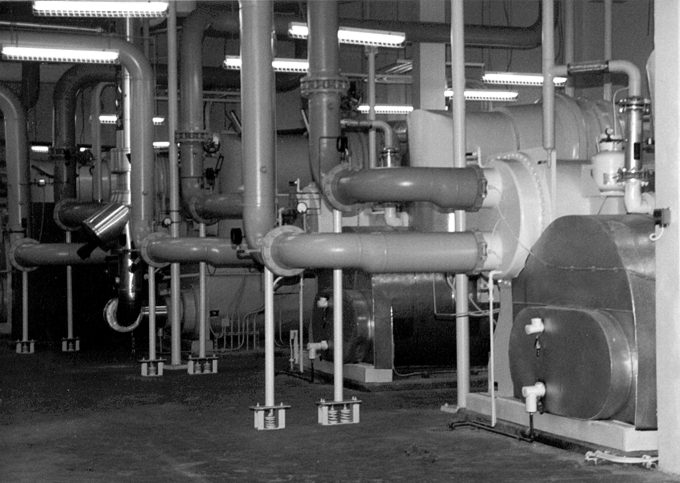
Due to gradual improvements in chiller and air conditioner efficiencies over the past few decades, any system more than 20 years old should generally be considered ripe for replacement. For large chillers, even if the entire replacement cost must be financed at market rates, the dollar savings from the increased operating efficiency will more than offset that cost, according to engineer William Rittelmann.
What to replace it with is a more complicated decision. Given the low leakage rates of new chillers, HCFC-based systems should not necessarily be ruled out if they offer improved operating efficiency.
Trane’s Eugene Smithart claims that their EarthWise™ CenTraVac system loses less than 0.5% of its charge annually. This low leakage rate is possible in part due to the very low pressure at which this R-123-based chiller operates.
If, on the other hand, the safety concerns surrounding the use of natural refrigerants such as ammonia and propane can be addressed adequately for these to be used directly, they may well be preferred choices, first because they are highly efficient, and second because they pose little or no threat to the atmosphere if they escape. Using such refrigerants with secondary cooling loops, however, will generally compromise their efficiency far beyond the point where any advantage in terms of atmospheric pollution can be justified.
The most popular option is likely to increasingly become the use of an HFC blend, because they don’t have the safety concerns of ammonia and hydrocarbons, nor the impending phase-out of HCFCs. HFCs do still have high-global warming potential, however, so they are not entirely benign if they should escape. Restrictions or taxes on the production and use of greenhouse gases, including HFCs, are possible down-the-road if evidence for global warming increases. Although they have been thoroughly studied, HFCs are still newly developed compounds, and problems may yet emerge. When compared with such hypothetical risks, however, the known hazard of CO2 emissions from energy use is most important, and operating efficiency remains the top priority.
Replacing the refrigerant
Systems that are less than 20 years old may be operating efficiently enough that it is hard to justify their replacement, yet current and future shortages of CFCs are looming. In such cases the first priority should be to do any maintenance and repairs that are necessary to minimize leakage. If even such measures cannot significantly reduce leakage, both environmental and economic concerns would suggest replacing the refrigerant with a less harmful and cheaper alternative. (This is one instance where the combination of the production ban and high excise taxes is working to bring environmental and financial incentives into alignment.) HCFCs are the most likely replacements in such systems. All feasible measures should still be taken to prevent their release into the atmosphere and to optimize operating efficiency.
For newer systems that are operating efficiently and have negligible leakage, continued operation using CFCs may be feasible. Operators of such systems should be aware, however, that in spite of unprecedented international cooperation and quick action, CFC levels in the atmosphere are still on the increase, and the ozone layer continues to decline. These conditions are expected to begin reversing in the next few years, but it is imperative that all measures be taken to prevent unnecessary releases of CFCs. Although they may be expensive, CFCs should continue to be available from existing stockpiles and from reclaimed or recycled (purified) sources. Some CFCs are also being smuggled illegally into the country, so care should be taken to deal only with reputable sources.
Choices for New Systems
Given the small amounts of refrigerant that are likely to escape from new cooling systems, reducing energy use for cooling should be far and away the top environmental priority. The actual refrigerant used is only a minor factor in this effort. First, all reasonable measures should be taken to reduce the cooling load. These include selecting glazing and exterior surfaces to reduce unwanted solar gain, providing shading, using efficient lighting and mechanical systems, and much more (see “Keeping the Heat Out” in
EBN
Vol. 3, No. 3 for details). In dry climates such measures may eliminate the demand for mechanical cooling entirely—the preferred solution, both environmentally and economically.
When the entire cooling load cannot be avoided, all available options for meeting that load should be considered. Top priority should be given to passive and low-energy solutions such as night-flushing and evaporative coolers. Only when these solutions have been exhausted should conventional mechanical cooling systems be considered.
Within the realm of mechanical cooling, non-electrical systems, such as gas absorption chillers, may offer financial advantages due to the low cost of natural gas, but they tend to be much less efficient than electrical compressor-based systems. With conventional mechanical systems, many factors contribute to the overall system efficiency, including fan and pump efficiencies, optimal distribution, moisture removal capacity, and advanced controls. Chillers rarely operate at their peak capacity, so their operating efficiency under part-load conditions is an important factor to evaluate as well.
Within the matrix of all these factors, the primary consideration in selecting a refrigerant should be its compatibility with the optimal cooling system. As described above, natural refrigerants may be an attractive option if they can be used in direct systems. Otherwise, if HCFC blends offer significant performance advantages, they may be worth using in spite of their eventual phase-out. Meanwhile, the performance of HFC-blends, especially in new, high-pressure systems, is making them look increasing feasible.
Conclusion
When the ozone scare was just upon us, avoiding refrigerants containing chlorine was generally considered a top priority in environmental circles. The significant advances of recent years in containing refrigerants, especially in new cooling equipment, has changed the equation somewhat. The balance is further altered by the unprecedented international cooperation in eliminating CFCs, and the emergence of the possibly more troublesome accumulation of CO2 and other greenhouse gases as a global threat. Thus, ozone-depleting HCFCs that would be highly undesirable in applications where they can readily escape into the atmosphere may be an acceptable option if their use is necessary to optimize energy efficiency.
Similarly, the direct contribution of HFCs to global warming is mitigated by their containment within refrigeration systems. Making these systems as efficient as possible will reduce fossil-fuel-related greenhouse gas emissions, and the whole refrigerant changeover has become a valuable opportunity to upgrade chillers and air conditioners across-the- board. By far the most desirable option, however, is to design buildings from the start to eliminate or minimize the need for mechanical cooling.
– Nadav Malin
Resources for more information:
New Refrigerants for Air Conditioning and Refrigeration Systems by David Wylie, P.E. and James W. Davenport offers a good introduction to the field and a comprehensive overview of the options. It was published in 1996 by The Fair-mont Press and is distributed by Prentice Hall, Inc.
Commercial Space Cooling and Air Handling Technology Atlas from E Source, Inc. is an excellent overview of strate-gies for optimizing cooling systems in commercial buildings. This atlas is available as part of a (quite pricey) membership in the E Source information service:
E Source, Inc.
1033 Walnut Street
Boulder, CO 80302-5114
303/440-8500, 303/440-8502 (fax)
esource@esource.com (e-mail)
www.esource.com
(1997, February 1). The Refrigerant Revolution: Cooling Buildings ... But Warming the Earth?. Retrieved from https://www.buildinggreen.com/departments/feature

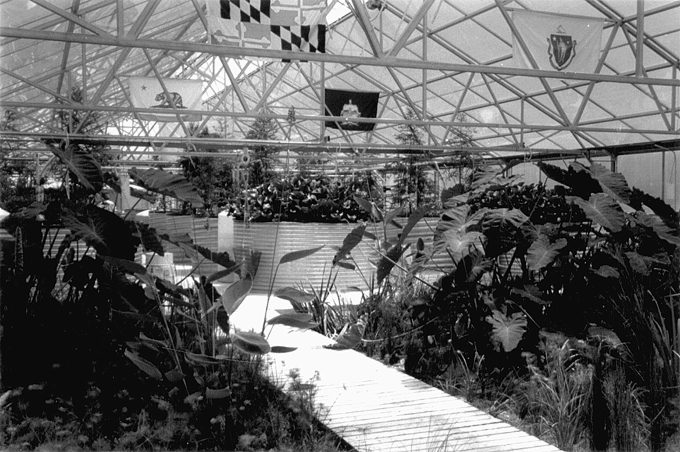 Since the late 1980s about two dozen ecological wastewater treatment plants have been built, ranging from small systems serving individual schools, to medium-sized municipal systems serving several thousand households, to waste treatment plants for industries designed to treat specialized waste-water flows.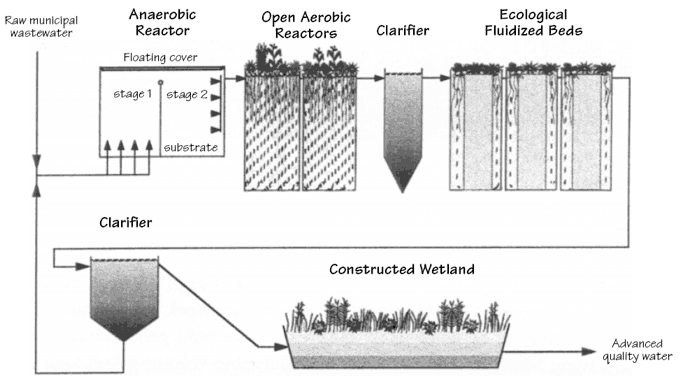
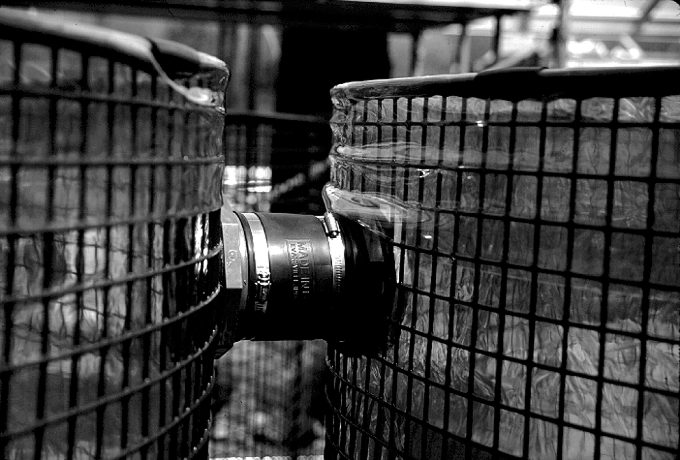 Clear or translucent plastic tanks are the hallmark (and most significant patent) of the Solar Aquatics plants designed by EEA—Todd calls it “using light in three dimensions.” In part to avoid patent conflicts, plants designed by LTI have larger