UPDATE: This keystone article was updated in 2010 to reflect changes in the industry.It is rarely possible to do everything we would like to reduce the environmental impact of building projects. It takes time to research alternative design and construction systems; new materials may not have proven track records; higher costs may be an impediment; or clients simply might not be interested. Therefore, it makes sense to figure out where our efforts will do the most good. Where should we focus most of our attention in designing and building structures that will have minimum impact on the environment?
Some designers and builders who emphasize sustainability have picked out just one aspect of green design—often it’s recycled-content building materials—and hold that up as their flag. Material selection is one of the most visible green building strategies and often the easiest to point to—but it is usually not the most important. Deciding which measures are most important is no simple task. Here we take a look at some of the factors to consider and suggest a listing of priorities in green design. This sort of list can never be considered final—we look forward to an ongoing discussion of priorities that we might all learn from.
Finding a basis for establishing priorities
Several related factors should be considered in making objective decisions about where our investments of time and money will do the most good in reducing environmental impact.
First, we need an understanding of what the most significant environmental risks are. These may be global in nature, or more specific to your particular region or site. Prioritizing these risks is difficult because often they occur in unrelated fields, with no way to make direct comparisons. Which is worse, the release of toxic waste, destruction of an endangered species’ habitat, or stratospheric ozone depletion? Interestingly, scientists often come up with very different priority rankings than the general public on these issues (see sidebar).
The second critical factor is an understanding of how our buildings contribute to these risks, and how significantly the measures we adopt can help the situation. We may decide, for example, that ozone depletion, a global problem, is more important than the survival of a particular bird species. But if a building project we’re working on could eliminate the last remaining habitat of that species—a major contribution to its demise—that’s probably a higher priority than reducing our use of HCFCs, which are contributing incrementally to ozone layer damage.
The third factor has to do with the specific opportunities presented by each individual project. On some projects one can dramatically affect a building’s performance in one particular area with very little investment, while addressing other impacts might prove very expensive and only minimally effective. Energy performance, for example, can sometimes be improved by simply adjusting a building’s orientation, while using a recycled-content floor tile might increase cost significantly for relatively little gain.
Finally, we have to consider the available resources and agenda of the client. There are often measures that can be taken at no additional cost—some may even save money—to reduce environmental impacts. Implementing such measures should be a “no-brainer.” Other measures might increase the first cost of a building, but save money over time. How far we can go with such measures, in length of payback and size of initial investment, depends a great deal on the resources and willingness of the client. In some cases a third party can be found to finance such measures, and share in their savings. There are also measures that are important environmentally but don’t offer the building owner any direct financial reward. Pursuing these strategies depends on the client’s good will, environmental commitment, and interest in some of the less tangible benefits that may result, such as good public relations.
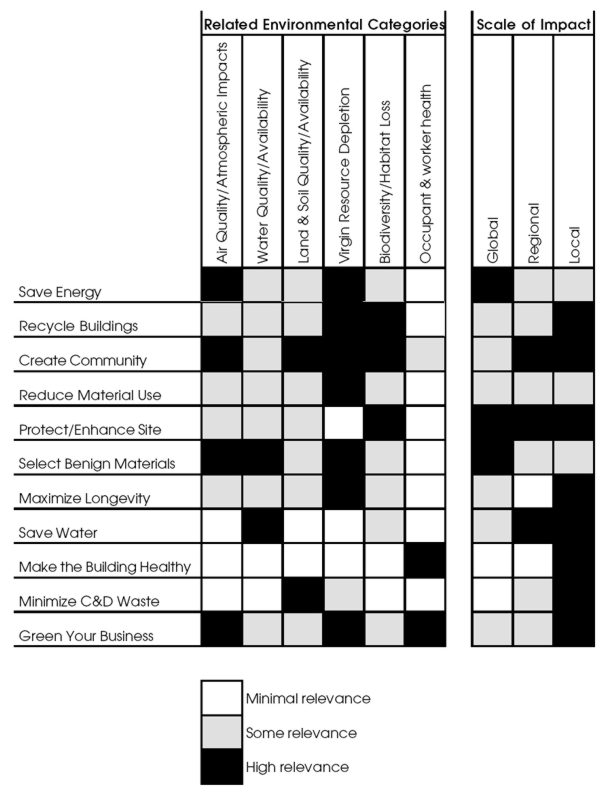
Given all these factors to consider, deciding which environmental goals to pursue on a given project might seem overwhelming. To provide a more concrete starting point, we’ve come up with a list—EBN’s priority ranking of measures to reduce the environmental impact of buildings. Clearly the order is arguable, and for specific projects and climatic regions a different order will apply. All the measures listed below are important, and one should definitely implement any that are feasible within the constraints of a particular project.
EBN’s Priority List for Sustainable Building
This list—a builder’s dozen—reflects our sense of where you might look to get the most bang for your buck.
#1. Save Energy—Design and build energy-efficient buildings.
The ongoing energy use of a building is probably the single greatest environmental impact of a building, so designing buildings for low energy use should be our number one priority. Decisions made during the design and construction of a building will go on affecting the environmental performance of that building for decades to come—perhaps even centuries—through energy consumption. An integrated design approach can often take advantage of energy savings that become feasible when the interaction between separate building elements, such as windows, lighting, and mechanical systems, are considered.
Sample strategies:•In buildings with skin-dominated energy loads, incorporate high levels of insulation and high-performance windows, and make buildings as airtight as possible.
•Minimize cooling loads through careful building design, glazing selection, lighting design, and landscaping.
•Utilize renewable energy resources to meet energy demand.
•Install energy-efficient mechanical equipment, lighting, and appliances.
Cost implications: Likely to increase first cost, but significant savings in operating cost can often be achieved. Reduced heating and cooling loads may also reduce first cost of HVAC equipment, helping justify the expense.
#2. Recycle Buildings—Utilize existing buildings and infrastructure instead of developing open space.
Existing buildings often contain a wealth of material and cultural resources, and contribute to a sense of place. In some cases the workmanship and quality of materials that has gone into them is almost impossible to replicate today, making the restoration all the more valuable.
Sample strategies:•Do not ignore priority #1, above. When restoring or renovating buildings, maximize energy efficiency.
•Handle any hazardous materials appropriately (lead paint, asbestos, etc.).
Cost implications: Usually—but not always—less expensive than building new. These projects can be difficult to budget.
#3. Create Community—Design communities to reduce dependence on the automobile and to foster a sense of community.
To reduce environmental impacts, we must address transportation. Even the most energy-efficient, state-of-the-art passive solar house will carry a big environmental burden if its occupants have to get in a car each morning and commute 20 miles to work. Since the 1940s, zoning and land-use planning have, in general, been impediments to, rather than supporters of, responsible transportation patterns. Effective land-use planning can also help to foster strong communities.
Sample strategies:•Design communities that provide access to public transit, pedestrian corridors, and bicycle paths.
•Work to change zoning to permit mixed-use development so homeowners can walk to the store or to work.
•Incorporate home offices into houses to permit “telecommuting.”
•Site buildings to enhance the public space around them and maximize pedestrian access.
Cost implications: Smaller and shorter roads, services lines and storm sewers should reduce costs. Obtaining zoning variances can be time-consuming.
#4. Reduce Material Use—Optimize design to make use of smaller spaces and utilize materials efficiently.
Smaller is better relative to the environment, and no matter what the materials, using less is almost always preferable—as long as the durability or structural integrity of a building is not compromised. Reducing the surface area of a building will reduce energy consumption. Reducing waste both helps the environment and reduces cost.
Sample strategies:•Reduce the overall building footprint and use the space more efficiently.
•Simplify the building geometry to save energy and materials.
•Design building dimensions to optimize material use and reduce cut-off waste. For example, design buildings on a 2’ or 4’ (600 mm or 1,200 mm) module. With light-frame construction, use 24”-on-center framing and headers sized to each opening.
Cost implications: Some additional design time may be needed, but overall, this strategy should save money, particularly with larger projects and multiple-building developments. Increasingly, we need to consider not only the cost of buying materials, but also the cost of disposing of what’s left over—by reducing waste we save both ways. A 4x10 (1,200 mm by 3,000 mm) sheet of
5⁄8” (15 mm) drywall, for example, which costs about $8 to buy, now costs more than $4 to landfill in some areas!
#5. Protect and Enhance the Site—Preserve or restore local ecosystems and biodiversity.
In fragile ecosystems or ecologically significant environments, such as old-growth forests or remnant stands of native prairie, this might be the highest priority.
Sample strategies:•Protect wetlands and other ecologically important areas on a parcel of land to be developed—on some sites you should reevaluate whether development should be carried out.
•On land that has been ecologically damaged, work to reintroduce native species.
•Protect trees and topsoil during construction.
•Avoid pesticide use—provide construction detailing that minimizes the need for pesticide treatments.
•With on-site wastewater systems, provide responsible treatment to minimize groundwater pollution—there are several innovative new wastewater treatment systems that do a better job at nutrient removal than conventional septic systems.
Cost implications: Some of these measures cost less than standard practice, others cost more. Maintenance costs with natural landscaping are often much less than for conventional practice.
Most—but not all—of the environmental impacts associated with building materials have already occurred by the time the materials are installed. Raw materials have been extracted from the ground or harvested from forests; pollutants have been emitted during manufacture; and energy has been invested throughout production. Some materials, such as those containing ozone-depleting HCFCs and VOCs, continue emitting pollutants during use. And some materials have significant environmental impacts associated with disposal.
Sample strategies:
•Avoid materials that generate a lot of pollution (VOCs, HCFCs, etc.) during manufacture or use.
•Specify materials with low embodied energy (the energy used in resource extraction, manufacturing, and shipping).
•Specify materials produced from waste or recycled materials.
•Specify materials salvaged from other uses.
•Avoid materials that unduly deplete limited natural resources, such as old-growth timber.
•Avoid materials made from toxic or hazardous constituents (benzene, arsenic, etc.).
Cost implications: Some resource-efficient products are available at no extra charge; others may cost more. Installation may differ from standard practice, raising labor cost if installer is unfamiliar with a product.
#7. Maximize Longevity—Design for durability and adaptability
The longer a building lasts, the longer the period of time over which the environmental impacts from building it can be amortized. Designing and building a structure that will last a long time necessitates addressing how that building can be modified to satisfy changing needs.
Sample strategies:
•Specify durable materials—this is usually even more important than selecting low-embodied-energy materials.
•Assemble the materials to prevent premature decay.
•Design for easy maintenance and replacement of less durable components.
•Design for adaptability—particularly with commercial buildings.
•Allocate an appropriate percentage of building funds for ongoing maintenance and improvements.
•Consider aesthetics during design, and whether a particular style is likely to remain popular—the idea of “timeless architecture.”
Cost implications: Though not necessarily more expensive in all cases, building for durability usually does require a larger initial investment. Preventative maintenance also requires ongoing investment, though it is generally cheaper over the long term than repairs due to insufficient maintenance.
#8. Save Water—Design buildings and landscapes that are water-efficient.
This is largely a regional issue. In some parts of the country, reducing water use is much higher on the priority list.
Sample strategies:•Install water-efficient plumbing fixtures and appliances.
•Collect and use rainwater.
•Provide low-water-use landscaping (xeriscaping).
•Separate and use graywater for landscape irrigation where codes permit.
•Provide for groundwater recharge through effective stormwater infiltration designs.
Cost implications: Most of these measures will add to the cost of a project. Some savings in lower water and sewage bills and longevity of on-site septic systems can offset the additional costs. Designs that promote stormwater infiltration are usually less expensive than storm sewers.
#9. Make the Building Healthy—Provide a safe and comfortable indoor environment.
Though some people tend to separate the indoor environment from the outdoor environment, the two are integrally related, and the health of the building occupants should be ensured in any “sustainable” building. With many clients, this is the issue that first generates interest in broader concerns of environmentally sustainable building.
Sample strategies:•Design air distribution systems for easy cleaning and maintenance.
•Avoid mechanical equipment that could introduce combustion gases into the building.
•Avoid materials with high rates of VOC offgassing such as standard particleboard, some carpets and adhesives, and certain paints.
•Control moisture to minimize mold and mildew.
•Introduce daylight to as many spaces as possible.
•Provide for continuous ventilation in all occupied buildings—in cold climates, heat-recovery ventilation will reduce the energy penalty of ventilation.
•Give occupants some control of their environment with features like operable windows, task lighting, and temperature controls.
Cost implications: Most of these measures will increase construction costs, but they often are easily justified based on the increased health, well-being, and productivity of building occupants. Failure to pursue these measures can lead to expensive “sick-building” lawsuits.
#10. Minimize C&D Waste—Return, reuse, and recycle job-site waste and practice environmentalism in your business.
For more and more materials, sorting and recycling job-site waste is paying off economically, and it can certainly generate a good public image.
Sample strategies:•Sort construction and demolition waste for recycling.
•Donate reusable materials to nonprofit or other community groups where they can be used to build or improve housing stock.
Cost implications: Additional labor to sort and recycle waste is often offset by the savings in disposal costs, though these vary by region. Sorted material can sometimes be sold for a profit.
#11. Green Up Your Business—Minimize the environmental impact of your own business practices, and spread the word
In addition to creating buildings with low environmental impact, you should practice environmentalism in your own business, thus serving as a model for other design or construction firms.
Sample strategies:•Purchase fuel-efficient company vehicles and promote use of public transportation and carpooling by employees.
•Use recycled paper in your office and recycle wastes generated in your office.
•Use the design process to educate clients, colleague, subcontractors, and the general public about the environmental impacts of buildings and how they can be mitigated.
Cost implications: Carpooling and public transportation can save money for employees, while reducing the number of parking spaces the business must provide. Recycled paper, for most applications, is only slightly more expensive than virgin.
Final Thoughts
In deciding which measures to pursue on specific projects, consider the relative benefits of the different measures. You might begin by customizing the list for your region. In an arid climate, for example, water conservation would go near the top, while in a city prone to smog inversions, transportation alternatives might be the most important. Then refer to your list as you consider each project, and identify the areas where you can do the most for the environment.
Pick the low-hanging fruit first, and go after the tougher issues as time and resources allow. Return to buildings you’ve completed to see which systems are working and which aren’t, and how occupants have modified your work to fit their needs. When possible, use your buildings to strengthen the link between occupants and the global environment through education and direct interaction. Finally, if you are incorporating environmental features into your work, take advantage of that fact in your marketing efforts.
We hope that this ranking will serve to inspire others who regularly think about environmental impacts of building to offer their opinions. Like most lists and categories, this list serves a purpose but also carries the risk of compartmentalizing the design and construction process. Often the most significant opportunities for benefiting the environment come from a careful integration of the design, taking advantage of synergies between building elements. The most elegant design solutions—those that reduce complexity while solving multiple problems—won’t be found by considering each item on this list in isolation. In the next few issues of
EBN we hope to include letters from readers on this important question: Where should we focus our greatest effort in reducing the environmental impact of our buildings? Let us know your thoughts.
Stormwater management provides an excellent example of how, by making the most environmentally responsible choices, you can often save money as well.
Stormwater is defined as precipitation that does not soak into the ground or evaporate, but flows along the surface of the ground as runoff. As land is developed, stormwater becomes a bigger and bigger concern.
A number of aspects of development contribute to the increase in stormwater: destruction of natural vegetation, land clearing, filling of natural wetlands, changing surface topography of land, and building impervious surfaces such as rooftops, driveways, and roads.
This article introduces the issue of stormwater management and presents strategies for reducing the quantity of runoff and for dealing with runoff in a manner that minimizes environmental impact. Even though many building projects do not come under strict stormwater regulations, the information in this article applies to virtually all new construction: small projects as well as large. Stormwater management provides an excellent example of how, by making the most environmentally responsible choices, you can often save money as well.
Problems Caused by Stormwater
Without proper management, stormwater can cause erosion, flooding, and pollution of surface waters. As development increases, both the quantity of precipitation that runs off the land and the rate of discharge increase. These two principles are illustrated in Figure 2, below. Flooding in the Midwest in 1993 was exacerbated by development (see
EBN Vol. 2, No. 5). Quantities of sediment removed from disturbed land by storms can be staggering. A single one-inch storm event in Tennessee’s Reelfoot Lake Watershed deposits more than 100,000 tons of sediment in the lake, according to a recent publication from the U.S. Environmental Protection Agency. This sediment is often fertile topsoil—a critical and, unfortunately, threatened agricultural resource.
Along with sediment, pollutants carried by stormwater include road salts, fertilizers and pesticides from lawns and agricultural lands, nutrients and bacteria from pet and livestock wastes, and a wide range of pollutants from automobiles (heavy metals, particulates, fuels, and lubricating oils). These are considered “non-point-source” pollutants because they are delivered to a body of water from dispersed and uncontrolled sites instead of from a specific entry point, such as a pipe (“point-source” pollution). How we reduce and manage stormwater runoff has a tremendous effect on pollutant loading of streams, rivers, and lakes.
Another very important issue is that stormwater runoff reduces groundwater recharge. Throughout much of the United States, underground aquifers are being depleted more quickly than they are being recharged. Delivering as much rainfall as possible directly to these aquifers should be an important land management goal.
Stormwater Management Practices
Many states and municipalities have stormwater management regulations to limit peak discharge rates, erosion, sedimentation, and pollutant loading from stormwater runoff. These regulations vary widely in the types of projects they apply to and in their specific requirements. Builders and developers should check with state environmental protection agencies and applicable local commissions to find out exactly what laws and regulations apply to their projects. But do not stop there. Remember, those laws and regulations are minimums. Even if specialized stormwater management practices are not required as part of the permitting process (with small residential building projects, for example), it still makes a great deal of sense from an environmental standpoint to manage stormwater properly.
As defined by the Northeastern Illinois Planning Commission, a good stormwater management practice should “mimic, as closely as possible, the runoff process of the site in its natural state.” This entails preserving natural storage, infiltration, and filtering functions, and it leads to the following primary objectives of stormwater management:
•To minimize water quality degradation;
•To minimize downstream erosion, flooding, and habitat loss;
•To maintain natural river and stream flows;
•To maintain natural groundwater and aquifer levels;
•To provide opportunities for multiple use of drainage and storage facilities; and
•To provide for economical, safe, aesthetic, and socially acceptable drainage in new developments.
Somewhat surprisingly, environmentally responsible management of stormwater does not have to cost a lot. In fact, the recommendations included in this article are often much less expensive than conventional modern stormwater management practices. Conventional practice has typically been to get rainfall off the land as quickly and efficiently as possible—using, for example, culverts, rip-rap-lined channels, and stormwater sewers. Large detention ponds are often required to store runoff on-site and slowly release it so as not to increase surface water peak flows downstream. If, instead, we design our projects to minimize the quantity of runoff and then provide for natural infiltration into the ground, tremendous savings can be achieved.
In a planned Hartford, Connecticut shopping mall expansion, for example, by specifying pervious grass paving in an overflow parking area at a cost of $500,000, the developer will completely avoid having to build a detention pond that was projected to cost more than $1,000,000. Because conventional asphalt paving would cost almost as much as the grass paving, the total savings are nearly a million dollars—plus, there were savings in the permitting process because the grass paving was more acceptable to neighbors and environmental officials.
In the 240-unit Village Homes project in Davis, California, built in 1981, developer Michael Corbett saved an estimated $800 per lot by substituting a surface drainage and infiltration system for a conventional storm sewer system. Corbett had difficulty convincing the public works department that the innovative approach would work, and had to post a ten-year performance bond to ensure that the system would work as designed. A few years after completion of the project, a 50-year storm hit the Davis area. Storm drainage systems throughout the area failed, and stormwater from some neighboring subdivisions even overflowed onto the Village Homes development, which handled all the extra water just fine. “Not only did it work,” said Corbett, “it worked better than the city system.” After the storm, the city gave Corbett his money back.
In large development projects, the savings that can be achieved by appropriate stormwater management can be used to offset the extra costs of other environmental building practices that are more expensive than conventional practice. Thus, environmentally sensitive stormwater management can, in effect, subsidize other environmental measures, keeping the whole project budget within the range of conventional construction.
Specific Recommendations
Although stormwater management is usually considered a specialized civil engineering field, strategies to deal with stormwater runoff are really interdisciplinary. They should be incorporated into decision making at many steps along the design process and should be considered by almost all architects, designers, designer-builders, and landscapers. For any large development project, appropriate professionals should be hired to come up with a comprehensive and appropriate stormwater management plan. The developer, builder, or project architect can play a vital role in determining what type of stormwater management plan is developed in two ways: first by careful selection of the team to develop such a plan; and second, by carefully directing that team’s work. Look for a landscape architectural and/or engineering firm that understands and appreciates the environmental benefits of reducing and properly managing stormwater. Ask to see examples of past work and look specifically for practices described below.
The following recommendations for environmentally responsible stormwater management are a starting point only. For more in-depth information and recommendations on stormwater management, consult one of the publications listed at the end of this article.
The best way to deal with stormwater runoff is to reduce the amount you have to deal with. This may seem pretty obvious but, remarkably, it is often overlooked by builders and developers who opt instead for complex engineering solutions. Reducing the volume of stormwater runoff can significantly reduce the costs of measures for managing it.
1.Minimize impact area in a development.Many aspects of development—paving, building structures, and compacting soil, for example—reduce the permeability of the ground. Try to minimize the creation of impervious surfaces and leave as much land on a site undisturbed, preserving existing landforms, topography, and vegetation (i.e., design with nature). The acceptable density of development should be limited by the ability of the land to absorb the rainwater that falls on it. .
2.Minimize directly connected impervious areas.Avoid situations in which one impervious surface drains onto another impervious surface, as these magnify stormwater runoff problems. A paved sidewalk, for example, should not drain onto a paved street. Try to separate impervious surfaces with areas of turf, other vegetation, or gravel. .
3.Do not install gutters unless rainwater is collected for use.
Gutters on roofs concentrate rainwater and often make special measures for its management necessary.
As an alternative, consider no gutters with gravel-filled “Dutch drains” at the base of the wall, or special gutters that disperse the water outward away from the building. Eliminating gutters is only realistic for one-story or at most two-story buildings. If gutters are installed and the downspouts drain onto vegetated ground or into infiltration trenches, install as many downspouts as possible to distribute flow.
4.Reduce paved area through cluster development and narrower streets.By clustering buildings and preserving larger areas of open space, the surface area of roads and sidewalks can be significantly reduced. Narrower streets will generate less stormwater runoff. In a development, it often makes sense to keep streets narrow and provide off-street parking on pervious surfaces.
5.Install porous paving where appropriate.Conventional asphalt or concrete pavement is fairly impervious to moisture. Even unpaved gravel roads and parking areas have low permeability. Porous asphalt and concrete paving systems are available that permit rainwater to percolate through into a gravel drainage layer. These systems are relatively uncommon and work best in low-traffic parking lots and driveways. Most existing applications are in non-freezing climates. The biggest problem with porous pavement is clogging from sediment and dirt that can accumulate on the surface. Regular vacuum sweeping and special measures to keep mud off are required.
In addition to continuous porous paving materials, a number of different
modular concrete or plastic grid pavers are on the market. The grids are filled with gravel or with soil and grass. The pavers prevent the gravel or soil from being compressed so that the permeability is maintained and grass roots are not damaged. Porous grid pavers planted with grass are only suitable for low-traffic areas. GrassPave™, a modular porous grid paver made of recycled HDPE plastic, was reviewed in EBN
6.Where possible, eliminate curbs along driveways and streets.Eliminate curbs and provide direct transitions to grass so that most rainwater will be directly absorbed. With curbs, stormwater becomes more concentrated (see related recommendations 21 and 22).
7.Plant trees, shrubs, and groundcovers to encourage infiltration.Vegetation enhances the ability of soil to absorb rainfall. Existing vegetation should be protected and, where necessary, new vegetation planted. In general, woodlands with dense underbrush provide higher permeability than turf, but there are many variables involved, including soil characteristics, the roughness of the ground surface, and the specific plant species.
Keep Pollutants Out of Stormwater.
Many of the environmental impacts from stormwater runoff come from pollutants being carried into surface waters. An important strategy for reducing the environmental impact of stormwater runoff, therefore, is to keep pollutants out of the stormwater. Most strategies for pollution source control, such as minimizing road salt, sweeping streets regularly, and implementing animal waste ordinances, relate more to management practices than design and construction. But a few pollution-avoidance strategies can be influenced through building design, siting, and construction.
8.Design and lay out communities to reduce reliance on cars.Many pollutants that are carried into surface waters by stormwater come from automobiles: particulates from exhaust, dripping oil pans, leaking radiators, zinc oxide from tires, heavy metals in lubricating oils and brake linings, etc. Any strategies that reduce dependence on automobiles, therefore, can have a major impact on reducing pollutant runoff. Provide access to public transit. Design communities to provide pedestrian access to basic services (corner store, restaurants, etc.). Incorporate walkways and bicycle paths into master plans. Design houses to facilitate home office use (telecommuting).
9.Provide greens where people can exercise pets.Pet excrement is often the largest single source of bacteria and nutrient pollution in urban stormwater runoff. In high-density developments, provide plenty of green areas where people can walk their dogs to keep pet excrement away from sidewalks and other impervious surfaces. In high-density developments, institute ordinances requiring owners to collect their pets’ excrement.
10.Incorporate low-maintenance landscaping.Avoid landscaping strategies that rely on frequent fertilizer, pesticide, and herbicide applications (see EBN
11.Design and lay out streets to facilitate easy cleaning.Studies show that regular street cleaning can be moderately successful at keeping certain pollutants, such as heavy metals, out of stormwater. To facilitate regular cleaning, provide for off-street parking in new developments (this complements recommendation 4, above).
12.Control high-pollution commercial and industrial sites.Gas stations, railroad yards, freight-loading areas, and high-use parking lots can be very significant sources of pollution runoff. Specialized measures for runoff collection and pretreatment may be required or desirable in these situations, particularly if fuel or chemical spills are likely. Oil/water separators, for example, may be appropriate in some situations.
13.Label storm drains to discourage dumping of hazardous wastes into them .Many homeowners are not aware that storm sewers flow directly into rivers or other surface waters. Very significant toxic pollutant loading can result from unaware homeowners dumping used motor oil, antifreeze, or other hazardous wastes into stormwater sewers. Illegal dumping can be discouraged through informative signs that warn of pollution and health hazards associated with the practice.
Managing Stormwater Runoff at Construction Sites
Because of disruption to vegetation and the ground surface, construction sites require special practices to minimize stormwater runoff, erosion, and pollutant discharge into streams and rivers.
14.Work only with reputable excavation contractors.It is not unusual for heavy equipment (bulldozers, excavators, backhoes), to leak hydraulic fluid, engine oil, and fuel, particularly if that equipment is not properly maintained. A gallon of leaked hydraulic fluid or diesel fuel will contaminate a large volume of soil and result in polluted runoff for a long period of time. Avoid the temptation simply to choose the low bidder for excavation work. Try to establish a long-term working relationship with one or more excavation contractors who have proved to be responsible.
15.Minimize the impact area during construction.With large projects, try to work in phases, disturbing only those sites where building is occurring. This may increase excavation costs somewhat by requiring that equipment be brought in more times, but it can significantly reduce erosion.
16.Avoid soil compaction.Compacted soils are less able to absorb water and thus lead to increased stormwater runoff. On the job site, limit all vehicular traffic to designated areas, restrict parking of construction vehicles on-site, and try to work out arrangements for particularly heavy vehicles (concrete trucks, cranes, etc.) to back in or out of the job site so that space for turning around is not required. If porous pavement is planned for the driveway, that area should be left undisturbed during construction so that the subsoil is not compressed, and an alternate access road should be used for construction vehicles.
17.Stabilize disturbed areas as soon as possible.Try to regrade and plant disturbed areas as soon as possible after excavation work to reduce erosion. When finish grading cannot be done quickly, piled soil and disturbed areas should be protected with straw, filter fabric, or temporary seeding.
18.Minimize slope modifications.Carry out site design and landscaping to keep slope gradient and length to a minimum. Try to leave steeper slopes undisturbed. If significant grading is required on steep slopes, consider terracing to minimize erosion.
19.Construct temporary erosion barriers.Check dams, straw bale barriers, filter fences, swales, and other measures should be used to capture sediment in the runoff from construction sites. See resources for design specifics.
All too often, stormwater systems are designed only to collect and move stormwater off-site via municipal stormwater sewers. Whenever possible, stormwater should be stored and/or absorbed
on-site. This will keep it from adding to erosion and flooding problems downstream and provide for careful treatment of the water. In large development projects, specific measures for stormwater collection, storage, and treatment are generally required as part of the permitting process. In most cases, it makes sense to incorporate several of these permanent stormwater management features, which are usually called best management practices (BMPs). Not all BMPs are suitable to all sites. To ensure proper functioning of BMPs, careful construction and maintenance are required. The lack of good maintenance has been a widespread problem with stormwater management practices.
20.Rooftop water catchment systemsA rooftop rainwater catchment system can significantly reduce stormwater runoff. Collected rainwater can be used for landscape irrigation, thus reducing the use of potable water. Depending on design storm calculations and usage of collected water, overflow will be required for the storage reservoir. Measures may be required to keep mosquitoes and other insects out. See EBN
Vol. 2, No. 4 for a construction detail of a rooftop water catchment system.
21.Vegetated filter strips Vegetated strips along impervious paved surfaces provide for some infiltration of runoff, sediment filtering, and some pollutant removal. Curbs should be avoided, and the paved surface should be even with the vegetated filter strip. The filter strips should slope downhill away from the paved surface. Grass should be planted if these strips are to be used as part of the stormwater conveyance system. If not, any groundcover can be used, although the groundcover should be dense enough to keep overland flow from channelizing and eroding rivulets in the soil.
22.Vegetated swales for stormwater conveyanceWhere possible, use open vegetated “biofiltration” swales to carry stormwater rather than channeling stormwater into pipes or culverts. The use of these swales (planted with grass) provides some infiltration, slows the flow of water, and removes pollutants to some extent. Along roads and other paved surfaces, vegetated filter strips should separate the paved surface from the swale to filter out sediment. Because swales are open, they permit easy tracking of pollutant discharged upstream, should pollutants appear.
23.Check dams in vegetated swales24.Infiltration basinsInfiltration basins are broad, flat, vegetated depressions where stormwater can infiltrate into the ground and recharge the groundwater. As the water percolates through the soil, soil bacteria and the soil itself remove pollutants. A well-designed infiltration basin can serve other uses, but uses that would result in significant soil compaction should be avoided.
25.Infiltration trenchesInfiltration trenches are like infiltration basins, but most of the infiltration occurs below-ground. Some infiltration trenches have exposed gravel or crushed stone at the surface; others are seeded with grass (less visually obtrusive) and include provision for water to enter through another means. Filter fabric is important with most infiltration trenches to prevent clogging. Observation wells are often installed to permit monitoring of water level. Roof downspouts can empty into specialized below-grade infiltration trenches that extend away from the building (these are often called drywells). As mentioned previously, however, a preferable solution is to collect rainwater from roofs and use it for landscape irrigation.
26.Dry detention pondsDry detention ponds are a common feature of stormwater management systems. They temporarily hold stormwater during periods of heavy rainfall to prevent flooding downstream. Stormwater is channeled into the pond, and an outlet structure provides for gradual release of the water during and after the storm event. Most detention ponds are designed to dry out completely between storm events. Because of the short water-retention time, dry detention ponds are not very effective at removing pollutants. Extended detention ponds that hold water for longer periods of time are generally better because more sediment can settle out and because downstream flooding will be reduced during and right after storms.
27.Retention pondsRetention ponds (sometimes called wet detention ponds) are similar to dry detention ponds, but they are designed to hold water all the time, with the water level rising during storms. The most effective retention ponds include shallow areas where wetland plants flourish and help remove pollutants. Retention ponds should be shallow enough that wind keeps the water mixed and aerobic throughout the pond; otherwise the bottom may become anoxic and result in nutrient release from the sediment, which could add to nutrient runoff in the next storm. Sediment settles out of the stormwater runoff in retention ponds, thus reducing downstream deposition; for that reason they occasionally may have to be dredged. A well-designed retention pond can serve recreational uses and boost property values. Retention ponds are generally not as appropriate in arid regions because of evaporation.
28.Constructed wetlandsLike the shallow edges of retention ponds, constructed wetlands function extremely well at nutrient and other pollutant removal, and they can be an excellent stormwater BMP in wetter parts of the country. In fact, they work so well that they are increasingly used for sewage treatment (see EBN
29.Filtration systemsFiltration systems are sometimes used in stormwater management. The primary function is to remove sediment, but they also remove some pollutants that adhere to sediment particles. Sand filters are most common. Sand filters used for stormwater filtration must be carefully built and properly maintained to continue functioning properly. Some promising research is currently being done on organic material filters, such as composted and screened leaves collected through municipal leaf collection programs. Pollutant removal is likely to be much greater from such systems. A compost stormwater filter (CSF™) developed by CSF Treatment Systems, Inc. of Portland, Oregon has been shown to remove over 85% of oil and grease, 82% of heavy metals, and 40-77% of phosphorus, according to the company.
Summing Up
Stormwater management is one of those specialty fields that tend to intimidate builders, developers, and architects. Indeed, stormwater engineering requires complex soil and topography mapping, analysis of storm intensity, and calculations of stormwater runoff in various situations. But while the details of stormwater management are complex, the general concepts are relatively simple.
A common misconception about stormwater management is that it’s only a concern with large developments. It is true that complex detention pond systems only come into play with large developments, but many aspects of responsible stormwater management apply to any new construction project. In fact, it is the small projects that do not require stormwater management plans as part of the permitting process where your own decision to address the issue is often most important from an environmental standpoint—because otherwise nothing would be done.
This article should be considered a starting point only. If possible, get hold of one of the publications listed below and delve further into this important issue. Doing so will not only be good for the environment, it can be good for your bottom line.
– Alex Wilson
For more information:
Stormwater Management: A Guide for Floridians. Florida Department of Environmental Regulation, (72 pages). Available from Stormwater/Nonpoint Source Management, 2600 Blair Stone Road, Tallahassee, FL 32399-2400
Design and Construction of Urban Stormwater Management Systems (Manual of Practice No. 77) jointly published by the American Society of Civil Engineers and the Water Environment Federation, 1992 (724 pages). Available from ASCE, 345 East 74th Street, New York, NY 10017, or from the Water Environment Federation, 601 Wythe St., Alexandria, VA 22314; 703/684-2400. Pricing: $45 for members; $60 nonmembers. Quite technical manual with primary focus on more conventional engineering practices. Chapter 12, “Stormwater Management Practices for Water Quality Enhancement,” is particularly good.
Virginia Erosion and Sediment Control Handbook, Third Edition, Virginia Department of Conservation and Recreation, 1992 (783 pages). Available from Department of Conservation and Recreation, Division of Soil and Water Conservation, 203 Governor Street, Suite 206, Richmond, VA 23219; 804/786-2064; $23 postpaid. The most thorough manual we’ve seen on job-site erosion control, including excellent information on erosion-control plantings. Less emphasis on pollutant removal from stormwater.
Water Resources Protection Technology: A Handbook of Measures to Protect Water Resources in Land Management, by J. Toby Tourbier and Richard Westmacott, Urban Land Institute, 1981 (178 pages). Available from ULI, 625 Indiana Avenue, NW, Washington, DC 20004; 202/624-7000; $39.95 postpaid (nonmember price). Somewhat dated, but very useful publication. Presented as a series of practical fact sheets, each one covering a specific measure (or measures) to protect water resources when carrying out development projects. For example, porous asphalt paving is one measure described under the category “Delay or Infiltration of Runoff at Source.”
Best Management Practice Guidebook for Urban Development, Northeastern Illinois Planning Commission, July 1992 (60 pages). Available from Northeastern Illinois Planning Commission, 222 S. Riverside Plaza, Suite 1800, Chicago, IL 60606; 312/454-0400; 312/454-0411 (fax). Cost: $6. Excellent non-technical introduction to stormwater management, erosion control, and other issues relating to urban development. Emphasis on environmentally responsible practices as opposed to more conventional engineering solutions.
Stormwater Management Manual for the Puget Sound Basin, Washington State Department of Ecology, 1992 (approx. 800 pages). Available from the Washington State Department of Ecology, P.O. Box 47600, Olympia, WA 98504; 206/407-6400. Cost: approx. $30 plus UPS shipping (recipient invoiced). The most complete and useful publication on stormwater management we reviewed. Excellent coverage of environmentally responsible practices to remove pollutants through biofiltration. If you purchase only one manual on stormwater management, this should be it.
Stormwater Management: A Guide for Floridians, Florida Department of Environmental Regulation, undated (72 pages). Available from Stormwater/Nonpoint Source Management, Florida D.E.R., 2600 Stone Road, Tallahassee, FL 32399-2400. Non-technical overview of stormwater management. Clearly illustrated.
Information on compost stormwater filters: CSF Treatment Systems, Inc., P.O. Box 19390, Portland, OR 97280; 503/644-8220; 503/526-0775 (fax)


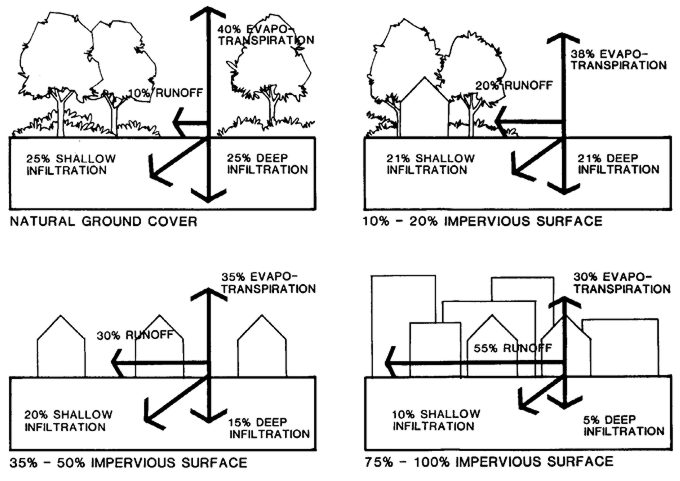 Stormwater is defined as precipitation that does not soak into the ground or evaporate, but flows along the surface of the ground as runoff. As land is developed, stormwater becomes a bigger and bigger concern.
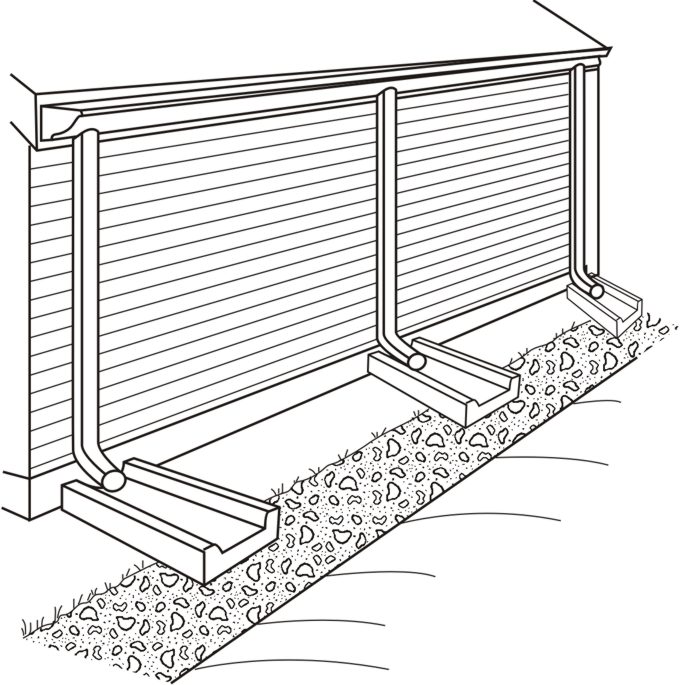 Gutters on roofs concentrate rainwater and often make special measures for its management necessary.
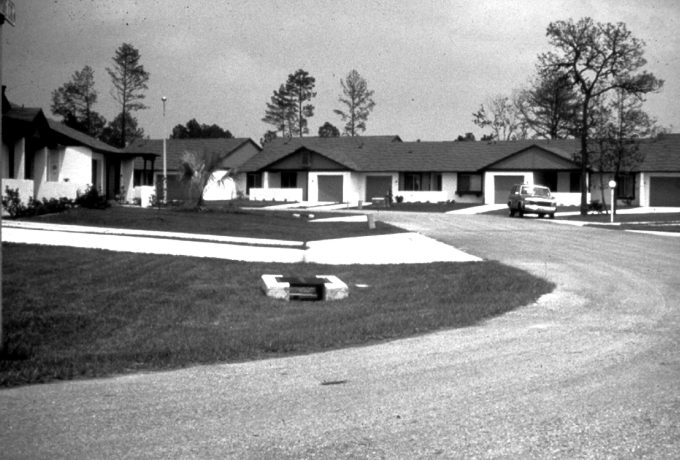 6.Where possible, eliminate curbs along driveways and streets.Eliminate curbs and provide direct transitions to grass so that most rainwater will be directly absorbed. With curbs, stormwater becomes more concentrated (see related recommendations 21 and 22).
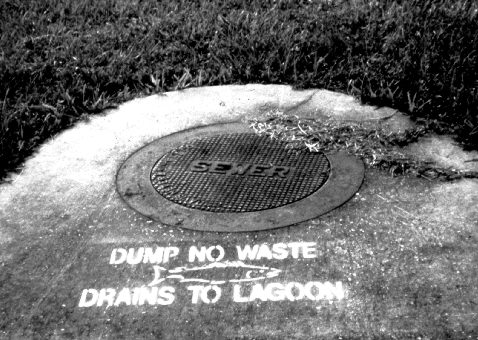 13.Label storm drains to discourage dumping of hazardous wastes into them .Many homeowners are not aware that storm sewers flow directly into rivers or other surface waters. Very significant toxic pollutant loading can result from unaware homeowners dumping used motor oil, antifreeze, or other hazardous wastes into stormwater sewers. Illegal dumping can be discouraged through informative signs that warn of pollution and health hazards associated with the practice.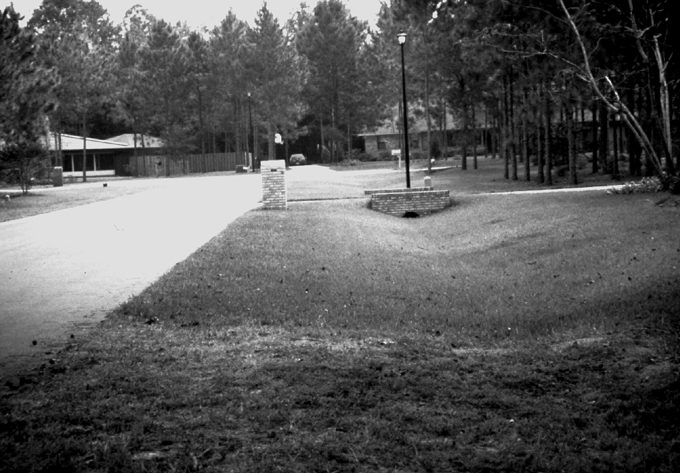
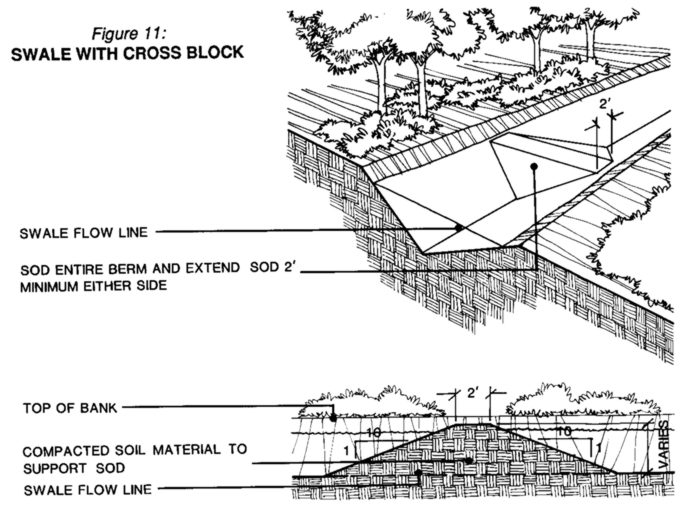 22.Vegetated swales for stormwater conveyanceWhere possible, use open vegetated “biofiltration” swales to carry stormwater rather than channeling stormwater into pipes or culverts. The use of these swales (planted with grass) provides some infiltration, slows the flow of water, and removes pollutants to some extent. Along roads and other paved surfaces, vegetated filter strips should separate the paved surface from the swale to filter out sediment. Because swales are open, they permit easy tracking of pollutant discharged upstream, should pollutants appear.
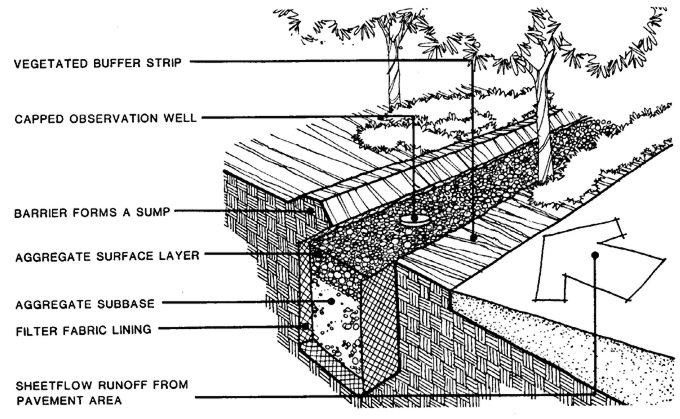 25.Infiltration trenchesInfiltration trenches are like infiltration basins, but most of the infiltration occurs below-ground. Some infiltration trenches have exposed gravel or crushed stone at the surface; others are seeded with grass (less visually obtrusive) and include provision for water to enter through another means. Filter fabric is important with most infiltration trenches to prevent clogging. Observation wells are often installed to permit monitoring of water level. Roof downspouts can empty into specialized below-grade infiltration trenches that extend away from the building (these are often called drywells). As mentioned previously, however, a preferable solution is to collect rainwater from roofs and use it for landscape irrigation.
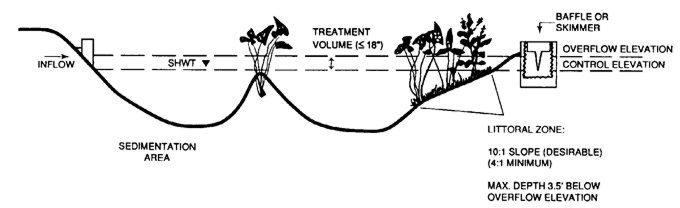 27.Retention pondsRetention ponds (sometimes called wet detention ponds) are similar to dry detention ponds, but they are designed to hold water all the time, with the water level rising during storms. The most effective retention ponds include shallow areas where wetland plants flourish and help remove pollutants. Retention ponds should be shallow enough that wind keeps the water mixed and aerobic throughout the pond; otherwise the bottom may become anoxic and result in nutrient release from the sediment, which could add to nutrient runoff in the next storm. Sediment settles out of the stormwater runoff in retention ponds, thus reducing downstream deposition; for that reason they occasionally may have to be dredged. A well-designed retention pond can serve recreational uses and boost property values. Retention ponds are generally not as appropriate in arid regions because of evaporation.

