By Paula MeltonIt’s been five years since our super-sized housing market collided with the iceberg of reality and began its long descent, eventually pulling the global economy into the frigid depths along with it. The magnitude and origins of this collapse are making the recovery a slow one—and uniquely painful for those working in building design and construction.
“It’s been a rocky three years for architecture firms,” said Kermit Baker, Ph.D., Hon. AIA. Baker, chief economist at The American Institute of Architects, told
EBN that the profession had lost “close to 37% of employees” and that architecture billings, a leading indicator of growth in the construction industry, have been anemic for years and appear to be on a second downward trend after a very slight uptick at the beginning of 2011.
“The residential side is dismal,” he said, attributing this to overbuilding during the housing boom; and even on the commercial side “we still have excess inventory out there.” Baker has watched the construction industry struggle through a few recessions, but none this bad. “I think we’d have to go back to the ’30s to find anything that was obviously worse,” he said, adding that a recovery would normally take 18 months rather than five years or more.
The housing bubble that helped build up the industry after the recession in the 1990s led directly to the current crisis. That unprecedented level of development turns out to be unsustainable, both economically and environmentally, and it may not return in the U.S. in our lifetimes. Design and construction firms—particularly the smaller and leaner ones—live with these realities every day, and not all of them are sticking around to find out what happens next.
Not everyone is leaving the industry, though. Many are revising their expectations, altering their scope of service, and even making radical changes to their business models in order to stay afloat in an economy that is now commonly understood to be the “new normal.” Some are taking advantage of the slightly more stable green building market (see
EBN’s January 2009 recession coverage, “Finding the Green Lining: Surviving and Thriving in an Economic Downturn”) and also thinking of the bigger picture as they adapt, hoping to find a way to grow that will be economically and environmentally sustainable in the long run.
We asked our readers to share their most successful strategies with us; we dug deeply into their responses and are passing our ten favorites along to you.
Measuring Energy Use in Buildings: Do Our Metrics Really Add Up?
How much energy our buildings use matters a great deal, but figuring out how to measure that use and compare it from building to building is tricky. Here's a guide to key metrics and how to use them.
Re-Framing Sustainability: Green Structural Engineering
Want to design the greenest building possible? Get a handle on the best structural options available to you, and invite a creative structural engineer to join your team.
The array of water-, dirt-, and mold-repellent chemicals added to carpeting and fabrics is dizzying. Which are causes for concern, and how can we minimize exposure?
We ask a lot from windows: energy efficiency, aesthetics, durability, affordability, and more. Which window frame materials and low-e glazing options balance these choices best? This article explores all the options and decodes the performance labels we see when buying windows.
A Green Building Wish List: Policies, Trends, and Products for 2011 and Beyond
Guaranteed energy performance of homes. Rapidly renewable materials that don't compete with food production. These are just a couple of the new developments we explore that would help the building industry clean up its act.
This issue marks the beginning of our 20th year of publishing Environmental Building News. For two decades we’ve been reporting on happenings, trends, technologies, and products in green building. With this issue, we’re doing something different: reporting on what we’d like to see—not what’s here, but what should be here.
Some of these ideas may not be practical, possible, or politically tenable, but our hope is that even the farthest-out ideas will be food for thought. We want to see the green building movement continue its forward trajectory, and doing so requires setting some targets and thinking differently.
We would love to hear your thoughts. Use the discussion forum in the online version of this article to share your thoughts on policies, trends, or products that you’d like to see—or share thoughts on why some of our ideas don’t make sense. What would you like to see us writing about down-the-road as success stories and lessons learned?
Policies and Trends to Increase Adoption of Green Building
What will it take to move the adoption of green building to a whole new level? Here are some possible answers.
Put a price on carbon
The vast majority of scientists today accept the reality that human activities are causing global climate change, and they urge rapid action to shift away from carbon-dioxide-spewing fossil fuels. One of the best ways to do this, as a libertarian friend of mine regularly argues, is to tax carbon and then get out of the way and let market forces push the transition to renewable energy sources. Some of the same ends can probably be achieved with a cap-and-trade system, but a carbon tax of some sort would be simpler to implement and more direct in its effect.
We’d like to see two different carbon taxes instituted: the first tax would be added to fossil fuels sold to utility companies for power generation. This would influence decision-making by those companies as they plan future power plants; consumers don’t have much say over what electricity they buy, so this tax would be borne at the fuel supply side rather than electricity delivery. The second tax would be on liquid and gaseous fossil fuels used for heating and vehicles. This would be charged to end-users (consumers), because that’s who makes decisions about those purchases and potential alternatives.
In both cases, we would suggest instituting these taxes gradually over 5–10 years to lessen the impact on consumers and electricity ratepayers, but we believe the taxes should be high enough to bring about change in purchasing habits—both by individuals and companies. These taxes could be revenue-neutral (offset by corresponding rebates of some sort), they could be used to fund programs that will help ease the transition to higher efficiency and renewables (loan programs, rebates, tax credits, etc.), or they could be used to reduce the federal deficit. Rebates or investment in energy conservation programs could offset the impact of these taxes on lower-income individuals.
Tie mortgage inception fees to green building rating scores
Use the established mechanism of mortgage inception fees (points) to incentivize green building. Here’s how it might work: A standard 1% point would be added as a closing fee by federally backed mortgage companies. With no green building rating score, a borrower would pay the full point; if the building achieves the highest green building rating score—which would hopefully include a net-zero-energy requirement—the added fee would drop to zero. Intermediate levels of green performance would result in an inception fee between 0% and 1%. The money collected through the higher fee could either fund a loan program for deep-energy retrofits or go into the general fund—deficit reduction, anyone?
Base residential energy codes and energy incentives on total energy consumption rather than energy intensity
Here’s an idea out of left field. At least with single-family homes, what if energy codes and incentives were tied not to HERS Index (Home Energy Rating System) scores or metrics of energy intensity (energy consumption per square foot per year), but rather on the simpler metric of total predicted energy consumption? We would be concerned with Btus per year instead of Btus per square foot per year. Such a change would reward small houses. A residential energy code that established a maximum annual energy consumption (heating, cooling, lighting, plug loads) of 50 million Btus or 15,000 kWh would be far easier to achieve for a really small house than a big house.
This wouldn’t prevent you from building a huge house, but you’d have to jump through more hoops to dramatically reduce its energy consumption. Those wanting a really big house should be able to afford the additional costs to achieve the target energy use ceiling, while a lower-income family could meet the target easily in a smaller house with relatively modest energy features.
Establish tiered building permit fees based on energy performance or green building rating scores
Smaller municipalities often have very few leverage points to influence building practices; this could be one. Here’s how it could work: the baseline building permit fee would be increased as much as tenfold, and then that fee would be discounted based on the building’s projected energy performance or its rating through a green building certification program. For a net-zero-energy or Platinum-rated building, that permit fee could drop to zero or a level that just pays for paperwork. Portland, Oregon’s feebate system (see “Portland to Introduce Green Building Feebates,” EBNFeb. 2009) was going to do this for buildings over 20,000 ft2, but it hasn’t taken effect. We’d like to see such programs, covering all building types, implemented widely.
Guarantee the performance and durability of homes
As our understanding of building science improves and we gain better tools for tracking energy and water consumption in ways that can influence homeowner behavior, we should be able to guarantee energy performance, water consumption, and durability of homes. While there are a few performance guarantees in place, such as that of Artistic Homes and Masco’s Environments for Living program, we’d like to see many more homebuilders step up to the plate and stand behind the products they are delivering.
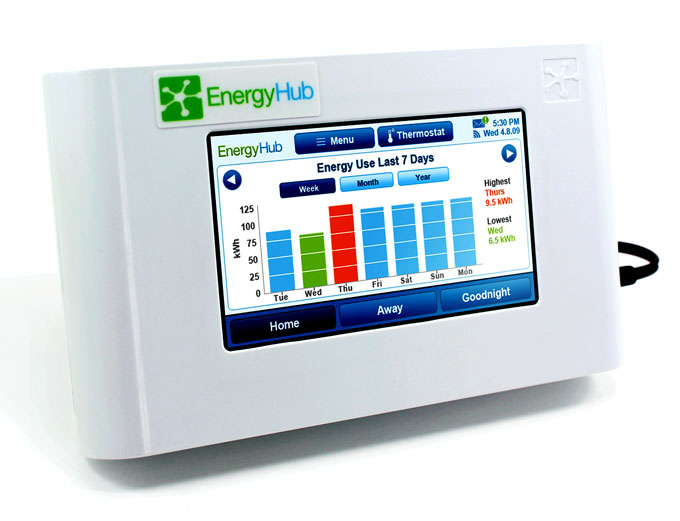
Just as cell phones today include features that allow manufacturers to figure out whether you dropped your phone into a toilet before it “mysteriously” stopped working, we may need to incorporate diagnostic tools into homes under warranty so that builders can detect whether operational errors or extreme usage patterns—rather than defects in design or construction—led to unexpectedly high energy bills, very high water consumption, or other problems, such as decay in wall systems. Dashboard energy monitoring systems in such homes could be used as data acquisition systems, with data going to the homebuilder so that claims could be understood.
A durability guarantee would probably be implemented as a “maintenance guarantee.” In a sense, such a guarantee could be a paradigm shift in which homebuilders think of their homes not as final sales, but rather an ongoing stream of support and services—much as a car dealer tries to keep customers as ongoing users of their service departments.
The same sort of thing can be done with commercial buildings through energy performance contracts—remuneration of designers, builders, or energy service contractors based on actual measured energy performance. This approach is most common with energy retrofits to existing buildings.
Figure out the financing
Access to capital remains one of the biggest impediments to green building—particularly when it comes to remodeling of existing buildings. With Property Assessed Clean Energy (PACE) financing, we thought a solution had been found, but that has (so far at least) run into a brick wall due to concerns by Fannie Mae and Freddie Mac, which control the secondary mortgage market (see “Mortgage Policies Threaten PACE Programs,” EBN Aug. 2010). There are other options, including on-bill financing that allows homeowners (and companies) to repay the cost of energy improvements through utility bills; this approach is being used successfully in California, Connecticut, Portland, Oregon, and other places. We’d like to see such programs—or other innovative financing options—become available everywhere and, thus, open up new opportunities to expand the penetration of energy retrofits.
Get resilience, adaptation to climate change, and passive survivability into the discussion
Even with the most optimistic scenarios of our response to greenhouse gas emissions and climate change, the strong likelihood is that the Earth’s climate will change dramatically within the lifespan of the buildings we are designing and building today. Standard practice needs to change so that we’re creating buildings that will work well in the climate of the mid- and late-twenty-first century. We need to build in resilience, for example, creating buildings that will maintain livable conditions in the event of extended power outages, interruptions in heating fuel, and shortages of water (see “Passive Survivability: A New Design Criterion for Buildings,” EBN May 2006).
We’d like to see building codes changed to specifically mandate this sort of resilience as a life-safety issue. And we’d like to see such issues become a part of the foundation of design that is taught in architecture schools.
Get the insurance industry engaged
For the past ten years the insurance industry has been tentatively dipping its collective toe into the green building world. Fireman’s Fund, among others, has adopted a number of programs to advance green building—based on the expectation that green, durable, low-energy buildings present a lower insurance risk. We’d like to see far greater involvement by the insurance industry in a wide range of green building initiatives and activities.
Insurance companies should be leading the charge for resilient design and passive survivability, for example, not only because resilient buildings will result in smaller payouts in the aftermath of natural disasters, but also because insurance companies often invest directly in real estate so they are affected by declines in property values that result from damage. Healthy, green buildings should result in fewer cases of asthma and other ailments, which should be attracting the attention of health insurance companies. Why aren’t these companies leading the charge?
Wish List for Doing a Better Job With Green Building
We’d like to see more people doing green building, but within the movement, we need to do a better job of defining and delivering sustainable buildings.
Incorporate science into green design through increased research and evidence-based design
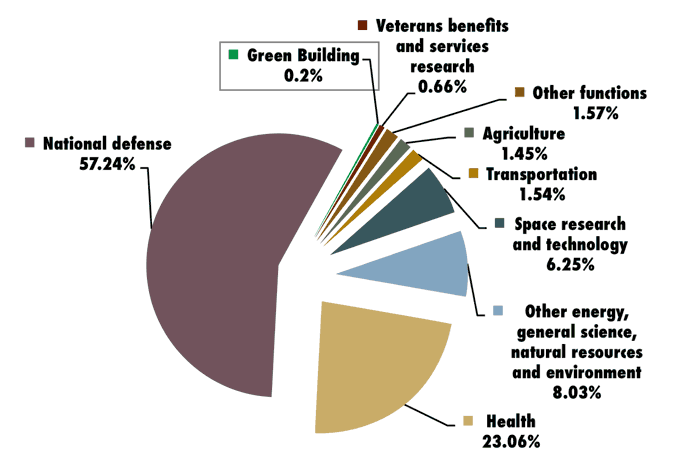
The building industry devotes far less money to research than almost any other sector of the economy. We’d like to see the implementation of a robust research agenda that supports green building, and out of that we’d like to see greater attention paid to evidence-based design, in which data informs design. Evidence-based design is most widely used today in healthcare—evaluating the effects of design features on patient and staff well-being, speed of recovery from illness, and stress reduction, for example—but it can (and should) extend to other building types.
Federal, state, and provincial budgets relating to research on building energy use, building science, and building materials should be increased significantly, but we should also come up with incentives that will encourage companies to invest in research—through investment tax credits and other mechanisms. In the interest of expanding the reach of private-sector research, perhaps a two-tiered incentive structure could be developed in which incentives are greater when companies publicly share the results of that research.
Measure, measure, measure
We will most effectively improve what we carefully measure. We would like to see comprehensive performance measurement become standard practice with both commercial and residential buildings. Simple, easy-to-use data collection systems with convenient Web interfaces should be used to track both energy and water consumption. Reporting of actual, measured performance should become standard practice—and required—at the point of sale of any building (as is the case in California and Seattle), and annual reporting of performance should become standard practice for all public buildings, including schools and government buildings. Reporting of energy performance should be required for all green building certification programs; for new buildings this requirement should focus on providing data collection equipment to facilitate performance measurement, including submetering of both energy and water consumption.
Develop and rely on robust metrics for transportation energy intensity
Walk Score is a tremendous tool for gauging the walkability—and now transit access—of building locations. Those factors influence what we have called “transportation energy intensity”—a metric of building performance addressing the transportation energy people use in getting to and from a building (see “Driving to Green Buildings: The Transportation Energy Intensity of Buildings,” EBN Sept. 2007). Walk Score mines data in Google Maps to create walkability scores for specific addresses.
We believe that Walk Score can be further strengthened—or another tool developed—to address not only walkability and access to public transit, but also convenience of public transit bicycle accessibility, and other factors that, in total, determine how easily people living or working in that area can reduce their dependence on private automobiles. We should use such a tool in LEED and other green building rating systems to achieve credits relating to location and transportation.
Develop a rigorous certification program for building science professionals
Buildings today are complex—and getting more complex all the time. Understanding all the interactions that occur with building systems and components, especially relating to moisture dynamics and durability, takes a great deal of knowledge and experience. We’d like to see a rigorous certification program developed for those in the building science field. Recipients of that certification would have a mix of building envelope and mechanical systems expertise; they would have an understanding both of building design and construction practices; they would have a working knowledge of materials science; they would understand building diagnostics.
This wouldn’t be the sort of certification that one could easily achieve by reading a study guide; it would require a mix of classroom learning, field work, and on-the-ground experience. The goal would be credentials that would convey the skill-set and experience needed to responsibly advise on issues related to building science—whether projects are in design, construction, or operation. A certified building scientist would become a key employee at larger residential construction companies and a key design team member for any commercial building project.
Reward companies that fully disclose product ingredients
Federal food labeling laws mandate honest reporting of ingredients in foods we purchase. We’d like to see a similar law or an effective and widely adopted voluntary program for building products—and other manufactured goods—so that buyers can make more-informed purchasing decisions. This is a key component of environmental performance declarations (EPDs). SC Johnson, manufacturer of Pledge, Glade, Raid, and other consumer products, announced in a high-profile advertising campaign launched in late 2010 that it would divulge the complete ingredients of all of the company’s products. This proves that it can be done.
Beyond disclosure, we’d like to see chemical suppliers and product manufacturers start vouching that their ingredients are benign, with test data to back it up. What we’re looking for here is a way out of the cycle in which a known hazard is simply replaced by a less well-known related chemical that is ultimately found to be just as hazardous. Green chemistry and current efforts to reform the U.S. Toxic Substances Control Act are an encouraging step in that direction.
Provide a product’s life-cycle and hazard-assessment data as standard accounting procedure
While this has been on our wish list for years without being realized, it is no less important today, and progress is being made. EPDs provide standardized environmental information, frequently in the form of brochures that include a product description, manufacturing data, performance characteristics, end-of-life data, and toxicity factors at different stages of the life cycle. We’d like to see this information finally standardized at a level of detail that allows for meaningful apples-to-apples product comparison and ultimately the aggregation of such data into assembly and building-level reporting on embodied impact. Yes, we know it sounds farfetched, given the lack of transparency, but there was a time when rigorous financial accounting seemed equally farfetched.
Consider corporate responsibility in addition to product attributes
Most listings of green building products, those in our own GreenSpec Directory included, consider the environmental and health attributes of products but not the broader corporate practices of the companies that make those products. We’d like to see that change, with corporate responsibility taken into account as a component of product evaluations. Does the company pay a living wage? Are employees treated fairly? Is the company frequently fined for pollution regulation infractions? Is it tracking its own environmental performance and that of its suppliers—and working to improve that performance? Third-party certifications of corporate responsibility that are now appearing will greatly aid such an effort (see “New Company-Wide Certifications for Manufacturers,” EBN Sept. 2010).
Products We’d Like to See
With the amount of attention we pay to new green building products entering the market, sometimes we can’t help but think about products we’re not seeing but want to.
Foamed ceramic insulation
We’d like to see a lightweight, 100% inorganic, expanded insulating bead that could be formed into rigid boardstock insulation. Such a product would look much like expanded polystyrene, but its composition and properties would be far different—perhaps a foamed silica or foamed ceramic. It would be nonflammable without toxic flame retardants, zero-VOC, decay-resistant (offering no source of nutrition for decay organisms), UV-resistant, impervious or at least resistant to termites and carpenter ants, and impervious to moisture. Oh, and we’d like this material to insulate to R-4 per inch and offer compressive strength comparable to that of extruded polystyrene.
Inorganic insulated concrete form (ICF)
There is at least one inorganic ICF on the market (Faswall), but that doesn’t offer nearly as high an R-value as standard expanded polystyrene ICFs. We’d like to see an ICF made from something like Foamglas (R-3.4 per inch), high-density rigid mineral wool (R-4 per inch), or perhaps that foamed-ceramic boardstock insulation described above. Such a product would be fireproof without flame retardants, termite-resistant, impervious to UV radiation, strong with a reasonably high compressive strength, compatible with concrete and cementitious stuccos, and moisture-resistant or impervious to moisture. And don’t forget, affordable!
Low-carbon concrete without trace heavy metals
A lot of people have looked toward lime-based products as alternatives to portland cement. But the calcining process, which emits carbon dioxide chemically in the conversion of limestone into lime, is pretty similar whether lime or portland cement are being made (though it takes more energy to produce portland cement). Substituting fly ash for a portion of the portland cement in concrete mixes is a common—and often good—strategy for reducing the embodied carbon of concrete. But mercury and other heavy metals are found in the fly ash produced at some coal-fired power plants, and those metals in the resultant concrete are a concern to some (see “Reducing Environmental Impacts of Cement and Concrete,” EBN Sept. 2010).
We’d like to see standardized testing of fly ash and limits established for heavy metals and other hazardous constituents. And we’d like to see continued research into alternative concrete binders that result in reduced CO2 emissions and are free of heavy metals. Magnesium oxide cement binders are one promising approach, but we suspect that there are others, perhaps well-matched with industrial waste streams in the U.S.
Cementitious materials that sequester carbon dioxide in their production
Twenty years ago I heard a fascinating presentation by architect and professor Wolf Hilbertz about his vision of manufacturing structural building materials in the ocean, using photovoltaic (PV) power and sequestering carbon dioxide in the process. Here’s how Hilbertz’s system would work: floating PV arrays generate electric current, which flows through steel frameworks of re-bar and mesh that are submerged in seawater. The electrically charged metal would pull calcium and magnesium ions along with dissolved CO2 out of the seawater in a mineral accretion process to create an artificial limestone that is not too different from corals that are created by living organisms. The structures produced in this way could be pulled out of the water and used as foundations or other structural building elements.
The work of Prof. Hilbertz, who died in 2007, has been continued by his colleague Thomas Goreau, Ph.D., the president of Biorock ( www.biorock.net), which is working on commercialization of this process for creating artificial coral reefs in Bali. We’d like to see this sort of biomimicry used to create building materials, as Hilbertz originally envisioned.
Rapidly renewable building materials derived from non-food crops
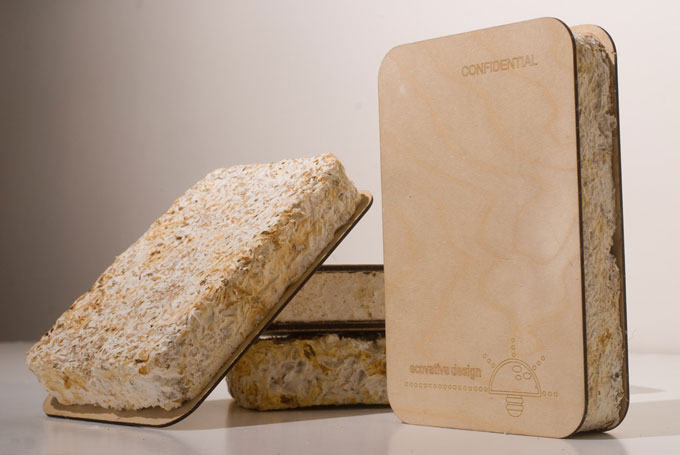
Too many of our “rapidly renewable” materials—for example, products made from polylactic acid (PLA) plastic, spray polyurethane foam with a soy component, and corn-based ethanol—are derived from genetically modified soybeans, corn, and other food crops that rely on extensive use of herbicides, insecticides, chemical fertilizers, and irrigation, and whose production results in soil erosion. We’d like to see building products derived from waste agricultural products, sustainably grown and harvested perennials, and other biobased materials that do not compete with food crops. We believe that there is tremendous potential for innovation in this area, and we may see some remarkable products emerge. One example of this potential is Greensulate insulation, a fungus-based rigid insulation material being developed by Ecovative Design ( www.ecovativedesign.com). We think there could be many others, along with far more sustainable liquid fuels than corn-based ethanol.
Insulated, low-e storm windows
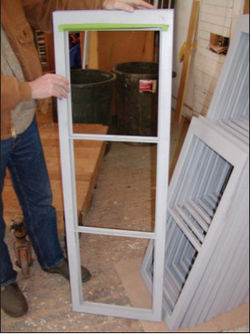
We’ve long kept our eyes out for a durable, high-performance, double-glazed storm window. There are tens of millions of existing homes in northern climates that could benefit from window replacement. With double-glazed, low-e storm windows added on the outside of existing single-glazed or non-low-e double-glazed prime windows, one could get comparable performance to triple-glazed, low-e windows without removing existing windows or modifying interior trim. Such storm windows would protect the prime windows from the elements, which can be particularly important with historic windows.
Our wish list for these storm windows includes highly durable fiberglass frames. We believe that double-track windows with a fixed upper sash and an operable screen—rather than triple-track—make the most sense because of the weight and air-tightness benefits. Good weatherstripping is very important. Overall thickness of double-glazed storm windows could be minimized by using krypton gas-fill instead of argon or air (the optimal glass spacing with krypton gas-fill is about ¼", vs. ½" to 5/8" with argon or air), though that would push the cost up. Thicker-than-normal storm windows wouldn’t work with all situations, but if the exterior trim is being modified as part of a deep-energy retrofit, accommodation could easily be made for such storm windows. Did we mention that we’d like these storm windows to be mass-produced and relatively affordable?
An integrated, high-performance building-envelope system
It has taken a long time for the building industry to recognize that building assemblies need to work as systems—to properly manage moisture, control heat flow, etc.—and that the climate is a factor in the optimal building envelope configuration. This has occurred to some extent with commercial wall systems (for example, Centria’s Invelope insulation and rainscreen system) but not as much in the residential sector. We would like to see manufacturers introduce high-performance building assembly product packages that work together as integrated systems. These systems should probably vary by climate, but they should all provide superb moisture management, durability, and energy performance, allowing manufacturers or builders to provide warranties on both operating energy use and durability.
Self-commissioning controls
Commercial building controls have become increasingly complex and difficult to manage, even as technology improvements have expanded capabilities many-fold. Some suggest that these controls have become too smart. Perhaps they should become simpler, but how about going the other direction and making them smart enough to “commission themselves”? Can a next generation of lighting and HVAC controls troubleshoot themselves, perhaps built on a “fuzzy logic” platform? Worth a try!
Widely available and affordable halogen-free wiring
Efforts to create PVC-free or halogen-free buildings for health and environmental reasons almost always fail—usually because PVC or fluoropolymer insulation and sheathing on wire and cable is ubiquitous and cheap. We know of only a few halogen-free electric wiring alternatives—including Electec’s EZ-Wiring, which we recognized as a 2010 BuildingGreen Top-10 Product—and this is a metal-sheathed system (quite different from standard Romex-type cable). A non-metal-sheathed, halogen-free product may be a tall order, given the fire-resistance properties required of wiring and cabling. We may need some fundamental research into non-halogen flame retardants—and new products will have to go through extensive testing. But we can still wish!
A better packaged graywater system
Using wastewater from showers, laundry, and lavatory sinks to irrigate outdoor plantings makes a great deal of sense. We’d like to see a simple, low-maintenance, affordable, durable system that makes this practical for homes and businesses alike. Such a system would probably include a tank, easy-to-clean filters of some sort (one of the big challenges with graywater is the cleaning and maintenance of filters), dosing pump controlled by float switch and timer (graywater should not sit in a tank too long), and passive bypass if the pump stops working or the filters get clogged. We’d like to see this produced by a company that will be around for a long time and has the capacity to support such a product.
Final Thoughts
Wishing for innovation is easy. The challenge is making it happen. BuildingGreen will return to many of these ideas—and lots of others—in the months and years ahead to report on efforts to achieve this sort of innovation. We believe that there are many creative solutions to the challenges we are facing, and we believe that the green building industry is uniquely positioned to deliver.
What's New in Multi-Attribute Environmental Certifications
The industry is increasingly recognizing the need for a more comprehensive review of green products. We don't have perfect programs yet, but we scrutinize the most prominent programs out there and highlight how they're useful.
USGBC is accepting comments on what will become LEED in 2012—EBN walks you through key changes as they appear in the current draft.
The U.S. Green Building Council (USGBC) has released a draft of the next version of the LEED rating systems, and has opened the first public comment period for that draft. The comment period will run from Nov. 8, 2010, to Dec. 31, 2010. According to USGBC’s website, a second public comment period is expected in mid-2011, and the rating system itself is expected to be released in November 2012. Although it had been dubbed “LEED 2012” informally during development, after the current “LEED 2009” system, the new version of the rating system is officially unnamed.
USGBC released the draft to EBN just before the public comment period was to open. Our analysis of what’s (mostly) the same, what’s different, and what’s totally new follows. We focused our analysis on the LEED for New Construction (LEED-NC) rating system, but readers should see the rating system draft for all the rating systems, including details on LEED-NC that we didn’t have space to discuss.
If you think we missed anything important, or if you have comments on the draft that you would like to share with USGBC, you are welcome to join the moderated forum on EBN’s sister website, LEEDuser. Relevant comments from that forum will be submitted to USGBC.
The New LEED draft
While LEED 2009 has 49 credits and 9 prerequisites, the new LEED draft has 49 credits and 15 prerequisites. They are organized into 10 credit categories—up from 7 for LEED 2009. Structurally, the biggest changes are:
• The rating system begins with a new “Integrated Process” category;
• a new Location and Transportation category collects location-related credits from LEED-NC with others from LEED for Neighborhood Developments; and
• at the end of the rating system, a new “Performance” category includes the commissioning credits (moved from Energy and Atmosphere) along with a handful of new measurement and reporting prerequisites and credits.
The new LT category consists mostly of credits from the old Sustainable Sites category that aren’t so much about the site itself as they are about where it’s located. It also includes a few new credits pulled from LEED for Neighborhood Development (LEED-ND).
What’s (Mostly) the Same
The Site Selection credit has a somewhat expanded scope. Sites with “unique soils” as well as sites not served by municipal water and wastewater systems would be forbidden. A new option would give additional credit for projects choosing “high-priority redevelopment areas” such as a brownfield or one of several zones designated by federal agencies for redevelopment. (The LEED for Commercial Interiors Site Selection credit is vastly simplified and narrowed: only projects in LEED-certified buildings can earn points.)
The “community connectivity” credit from LEED 2009 has slightly different requirements in the new draft, and a new name: Development Density and Community Access. For both credit options, the basic intent wouldn’t change under the new draft, but the way you get there (via documentation requirements) does. For example “diverse uses” replace “basic services.” Instead of being required to use “previously developed” sites, projects would have to be in “infill” locations—a significant change.
The Low-Emitting and Fuel-Efficient Vehicles credit has been tightened up. Perhaps out of recognition that too many such facilities were going unused, there is no longer credit available for providing fueling stations, and it’s not enough to provide preferred parking. Instead, vehicles must be provided to occupants.
The new Parking Reduction credit replaces the old SSc4 “Parking Capacity” credit. The requirement to meet but not exceed local zoning requirements remains, but that’s not all. To earn points, projects would also have to reduce capacity over a “base ratio” given in the Institute of Transportation Engineers’ Parking Planning Handbook. The requirements are tougher for transit-served projects.
What’s New
To all of those people who have complained that LEED gives points for bike racks: be careful what you wish for. A Bicycle Storage prerequisite means that all projects would have to have bike racks (and as a prerequisite, no points would be awarded), although the requirement is for 2.5% of occupants, not 5% as in the credit. A new requirement would prevent double-counting of bike racks with other projects.
The old credit for bicycle storage and changing rooms has been recast and renamed as Bicycle Network, Storage, and Changing Rooms. The “network” part is key—no more points for a bike rack in a location where it’s irrelevant; that’s measured in your choice of three ways. The storage and shower requirements have been altered; for example, the number of showers required is slightly increased.
A new credit for Reduced Automobile Dependence would replace the old Sustainable Sites (SS) credit for public transportation access. The credit is also completely rewritten. The “transit-served location” roughly encompasses the LEED 2009 version of this credit, but with requirements that appear to be more inclusive. A new “metropolitan planning organization” option would offer credit for project in areas with low vehicle-miles-traveled (VMT).
Walkable Streets is a new credit for LEED-NC, but will be familiar to projects using LEED for Neighborhood Development. The requirements are too detailed to summarize here.
The draft simplifies the wording of the Construction Activity Pollution Prevention prerequisite.
To earn the Brownfield Redevelopment credit, projects would not only develop a contaminated site, they would also have to clean it up. While this would not likely represent a change for projects pursuing this credit, it is an important clarification.
Gone from Site Development—Protect or Restore Habitat are the restrictive site disturbance parameters included in previous rating systems. Replacing them would be a requirement to protect 40% of greenfield portions of the site from development, a requirement to restore 30% of previously developed portions with native vegetation, and a requirement to restore the soils of all vegetated areas. If those requirements didn’t work for a project, it could choose to donate off-site land equal to 60% of the previously developed area to a land trust for permanent preservation.
The draft takes what had been three cases for Site Development—Open Space and rolls them into one. Projects must provide outdoor space equal to 30% of the total site area, including building footprint—stricter than LEED 2009’s comparable Case 3. A minimum of 25% of the outdoor space must have ground or overhead vegetation.
The two stormwater credits from LEED 2009 have been rolled into one credit, Rainwater Management, with requirements citing the principles of Low Impact Development (LID). Describing the object of this credit as “rainwater”—a resource—instead of “stormwater”—a management problem—is a subtle but important reorientation.
The draft for the Heat Island Reduction credit combines roof and non-roof measures into one credit with requirements that are roughly the same as in LEED 2009.
The overall intent behind the Light Pollution Reduction credit doesn’t appear to have been changed, but the requirements have been completely overhauled. USGBC appears to be trying to maintain the rigor of the current credit requirements while attempting a new calculation method, one that is simpler and requires calculations for fewer locations.
The 20% water reduction baseline required by Minimum Fitting and Fixture Water Use Reduction is unchanged from the LEED 2009 water use reduction prerequisite.
Similarly, the Additional Fixture and Fitting Water Use Reduction credit is renamed, but key requirements such as point thresholds are not changed.
What’s Different
Additional Landscape Water Use Reduction is renamed (from “Water Efficient Landscaping”) and its calculation method overhauled. Like the new prerequisite (see below), it only applies to projects with more than 1,000 ft2 of exterior vegetated space, and is based on the WaterSense Water Budget Tool.
Sustainable Wastewater Management is renamed (from “Innovative Wastewater Technologies”), and also has some key changes. Option 1, to reduce water use for sewage conveyance by 50%, is simply reworded. Option 2, which previously focused on treatment of 50% of wastewater onsite, is now focused on reusing 25% of wastewater. Option 3 is a wholly new requirement, although projects pursuing Option 2 under LEED 2009 are probably at least part of the way to meeting it. It requires resource recovery and reuse for 25% of the baseline nitrogen or organic carbon loading from building occupants.
In the new Landscape Water Use Reduction prerequisite, all projects with over 1,000 ft2 of exterior vegetated space will be required to reduce water use 30% below a baseline established by the WaterSense Water Budget Tool.
Another new prerequisite, Appliance and Process Water Use Reduction, sets minimum performance requirements for some appliances (clothes washers, residential dishwashers, and pre-rinse spray valves) as well as some processes (heat rejection and cooling, water temperature tempering, and flow-through vacuum generators).
Additional Appliance and Process Water Use Reduction builds on the new prerequisite, with projects able to accumulate points for water efficiency in clothes washers, kitchen equipment, lab equipment, vehicle-washing equipment, and municipal steam systems.
A new credit, Cooling Tower Makeup Water, calls for a set of measures to conserve water used for cooling tower makeup while controlling microbes, corrosion, and scale in the condenser water system.
On-Site Renewable Energy is largely unchanged, but point thresholds are more aggressive.
The Refrigerant Management credit is largely unchanged, with some apparently minor wording changes.
Green Power has some minor wording changes, but also more aggressive requirements, notably a minimum contract length of five years.
What’s Different
The refrigerant management prerequisites for all rating systems have been eliminated. This change reflects industry-wide advancement in ozone-safe refrigerants in buildings.
The big change in Minimum Energy Performance for LEED-NC is how energy savings would be calculated under Option 1: Whole Building Energy Simulation. It is notoriously difficult to identify a single effective energy-use metric for benchmarking high-performing buildings. Energy cost is used in LEED 2009, but the draft calls for a combination of energy cost and source Energy Use Intensity (EUI). This approach may help to balance the arbitrary signals that either approach alone might send. The same 10% improvement over a baseline is maintained in the new draft, but it references ASHRAE 90.1-2010, which is estimated to be about 25% more stringent than the 2007 version referenced by LEED 2009.
The Optimize Energy Performance credit has the same key change to its metrics as the prerequisite. Points start at a 13% reduction (up from 12%) and go up much more aggressively than in LEED 2009, topping out at 70% (instead of 48%). Other new details focus on requiring project teams to use the energy modeling process to influence design—rather than using models only to check compliance after the fact. Teams would have to establish an energy performance target no later than the schematic design phase, and, for the simulation option, use the energy modeling process to inform their design. Projects would have to analyze a minimum of nine efficiency measures during the design process and account for the results in design decision-making.
Demand Response is a new credit, with two main options: incorporate the capability to participate in a demand-response program through a local utility, or implement electrical load-shifting measures, such as ice storage, that permanently transfer regulated electricity demand from daytime hours to off-peak hours. Either measure would contribute to reductions in peak demand for utility power, avoiding the typically high emissions during those periods. The benefits of load-shifting are usually captured in electricity costs, but not in source EUI metrics, so this credit would help offset the reduced emphasis on cost in the new Optimize Energy Performance credit.
The Storage and Collection of Recyclables prerequisite has changes clarifying the location of the recycling area, but the requirements don’t represent a big change.
Building Reuse remains similar to the LEED 2009 version. The requirement that the reused portion of the building had to represent a certain ratio of the total project is removed, making more projects eligible. The point thresholds are also easier.
The wording for Materials Reuse is changed, but the basic idea isn’t much different. One significant addition would be to allow the use of reclaimed wood, even if it is not certified. The credit refers to wood products “from secondary manufacturers; felled, diseased, or dead trees from urban or suburban areas; orchard trees that are un-productive and cut for replacement; and wood recovered from landfills or water bodies.” The addition of water bodies is likely to require additional caveats, given recent adopted regulations in Florida and elsewhere banning the harvest of submerged logs from rivers due to concerns about ecosystem damage.
Changes to the Regional Materials credit clarify the wording but would not represent major changes.
What’s Different
Construction and Demolition Waste Management is similar to the old construction waste management credit. However, the new credit recognizes that projects involving demolition often have a leg up on projects without demolition, and would give them a higher threshold to achieve. Also, Alternative Daily Cover (ADC) would not qualify as diverted debris.
Structural materials like steel and concrete often contain recycled content, and have helped make the recycled content credit fairly easy in previous versions of LEED. Structural materials can now only contribute to the prerequisite (see below), while the credit is focused on Recycled Content for Non-Structural Materials. Other than that change, the requirements are mostly the same, although there is a new second option for projects meeting the recycled content requirement and using at least 5% of materials from manufacturers with a closed-loop product recycling and take-back program.
At first glance, it appears that LEED 2009’s “rapidly renewable” credit has simply been redefined as Biobased Materials (Nonstructural). All materials qualifying as rapidly renewable under LEED 2009 would qualify here as biobased. However, under the definition of “biobased” established by the U.S. Department of Agriculture in the 2002 Farm Bill—the definition referenced by this draft—forestry products and other products that aren’t as “rapidly” renewable also qualify. Nonstructural wood materials would now get credit here—even if they weren’t certified by the Forestry Stewardship Council (FSC) or another program. However, products that are certified by any program accepted by LEED’s “Standard of Standards” (under development) would get extra credit here.
The Certified Wood credit is being revised under a different USGBC process and is not being included in the first public comment draft.
Recycled Content now merits a prerequisite (also a credit—see above). The threshold for recycled content is set at 10% of the materials budget, and post-consumer and pre-consumer content are valued equally.
Construction and Demolition Waste Management Planning is another new MR prerequisite. Projects would have to develop and implement a Construction Waste Management Plan. There would be no minimum threshold for implementation.
A new Whole Building Reuse credit caters to historic preservation. It gives credit to projects that not only maintain at least 75% of the total building, but that reuse a historic building in a historically appropriate way, or that reuse an abandoned or blighted building.
Minimum IAQ Performance still references minimum ASHRAE-62.1 requirements, along with new requirements to protect residential units from common IAQ hazards, such as unvented combustion appliances.
The Increased Ventilation credit also includes what appear to be only minor changes.
Environmental Tobacco Smoke Control sees a fine-tuning of requirements rather than any major change (such as absolute prevention of smoking). Non-smoking requirements extend to outdoor spaces used for business purposes, like patio seating.
The requirements for Outdoor Air Delivery Monitoring have minor changes. More options are provided for buildings using natural ventilation, including an option to comply by signaling an alarm when an opening that should be open is closed during occupied hours.
The requirements for Construction IAQ Management Plan—Before Occupancy are largely unchanged.
There are no big changes to Indoor Chemical and Pollutant Source Control; the July 2010 addenda provided the most significant changes to this credit since the original LEED 2009 release, for example, changing the filtration requirement.
The Thermal Comfort credit doesn’t get a big overhaul. Requirements for warehouses and distribution centers are incorporated into the credit language.
What’s Different
Requirements for a Construction IAQ Management Plan during construction are largely unchanged, but have become a prerequisite instead of a credit.
Low-Emitting Interiors is a new credit that consolidates what had been the sprawling Low-Emitting Materials credits. The credit thresholds don’t change a whole lot, but their organization does: the building interior is organized into five systems: flooring, ceilings, walls, thermal and acoustic insulation, and furniture (which must be included if it is in the scope of the project, regardless of rating system). Projects would accumulate points by complying with the requirements of one or more systems.
The new Lighting credit covers the old “Controllability of Lighting” credit without much change, but adds new requirements for lighting quality. Projects would have a choice of 5 out of 12 quality measures, which would include color rendering index (CRI) requirements and automated glare control in daylit spaces.
The Daylight credit gets a big overhaul, with two new calculation options that are different from the previous calculation option. The measurement option is rewritten, and the prescriptive and combination options are eliminated.
The views credit has become, in effect, a biophilia credit. Now called Quality Views, it stipulates that a view can’t be of a brick wall. Specifically, the view has to include “objects at least 50 feet outside the vision glazing, objects lit with daylight that are exposed to direct sunlight or display wind movement, and natural elements (e.g. sky, vegetation, water, people, animals, or other random movement).”
An Acoustic Performance credit was previously only available to Schools projects, although it was a good choice for an Innovation credit for NC. Now, it’s open to NC projects, with performance-based requirements.
Performance
The whole Performance section is new, although not all the credits are.
Fundamental Commissioning and Verification has been moved here from the EA section. The detailed requirements have numerous changes—for example, roofing assemblies must now be commissioned.
Enhanced Commissioning builds on Fundamental Commissioning, and again, the detailed requirements have many changes. New options add performance tiers and the possibility for more points.
Advanced Energy Metering partly replaces the seldom-pursued LEED 2009 measurement and verification (M&V) credit (see below for the other part). There are prescriptive and performance-based paths; both revolve around installing permanent meters for whole-building energy sources. The meters would have to record data at least hourly, transmit data remotely, and be integrated with a data storage and management system.
What’s New
Water Metering and Reporting is a new prerequisite under which all water conveyed to the project—regardless of source—must be metered. A list of nine specific uses would have to be submetered, in most cases only if the projected consumption of those uses is large enough. The “reporting” requirement is implicit in the intent of the prerequisite, which is to provide information to building managers.
Advanced Water Metering and Reporting builds on the similar prerequisite, but adds a requirement that meters and submeters be able to report data remotely, and be part of a management system that tracks performance and generates alerts for leaks or operational anomalies.
Another new prerequisite is Building-Level Metering, with the intent to “meter, track and share building-level resource use to encourage energy management and support LEED program evaluation.” Among other things, this prerequisite inserts directly into the rating system what has in LEED 2009 been a requirement found in the Minimum Program Requirements: that projects share energy data with USGBC for at least five years.
The intent of Reconcile Design and Actual Energy Performance is to “provide for the ongoing accountability of building energy consumption over time.” In essence, this builds on the “verification” part of the LEED 2009 measurement and verification credit. An M&V plan would be required—as it is in LEED 2009—but the M&V provider would also have to “prepare and submit a final report to the project design team and the building owner that describes the M&V program and its outcomes,” including actual energy use compared to the projected use defined by the Optimize Energy Performance credit (EAc1).
Occupant Experience Survey replaces and greatly expands upon the LEED 2009 Thermal Comfort—Verification credit. Not only thermal comfort is surveyed as in LEED 2009, but also air quality, lighting quality, acoustics, building cleanliness and maintenance, ergonomics, and opportunities for improvement. All topics are covered by USGBC-provided questions, and results are reported to USGBC. The survey must be delivered at least twice.
The Innovation credit isn’t significantly changed. The revisions represent wording changes to consolidate the BD&C (which had been called “Innovation in Design”) and EBOM (“Innovation in Operations”) versions. The Pilot Credit Library option, which was recently added to LEED 2009 as an addendum, is not included, perhaps representing the intent to phase out use of the Pilot Credit Library by the time the next LEED rating system is finalized.
The LEED AP credit has been moved to the new Integrated Process section.
Integrated Process
The entire Integrated Process category is new, as is the first IP credit, which has the same name as the section. The actual credit language wasn’t included in the draft EBN reviewed (it is “pending”), but it’s a good bet that it will be the same or similar to the language being used in for the “Integrative Project Planning & Design” pilot credit, which is also in the LEED for Healthcare draft. This credit gives teams an opportunity to be rewarded for doing things like holding charrettes, having a certain number of team meetings, and conducting a thorough site assessment.
The revised LEED Accredited Professional credit is sure to draw comments from some of the tens of thousands of “legacy” LEED APs who have so far opted not to obtain a specialty under the overhauled LEED credentialed professional program launched in 2009. A relevant specialty is required in the new language—a change from LEED 2009. Individuals holding the LEED Green Associate credential may find that it becomes useful: two team members in total must have LEED AP (“any specialty”) or LEED GA credentials.
Regional Priority
The draft includes some minor wording changes to the Regional Priority credit, but the overall intent and requirements are the same.
All LEED stakeholders are encouraged to review the public comment draft on USGBC’s website for more detail on potential changes to LEED-NC and to the other LEED rating systems. Comments can be submitted there or on LEEDuser’s moderated forum.

 It’s been five years since our super-sized housing market collided with the iceberg of reality and began its long descent, eventually pulling the global economy into the frigid depths along with it. The magnitude and origins of this collapse are making the recovery a slow one—and uniquely painful for those working in building design and construction.