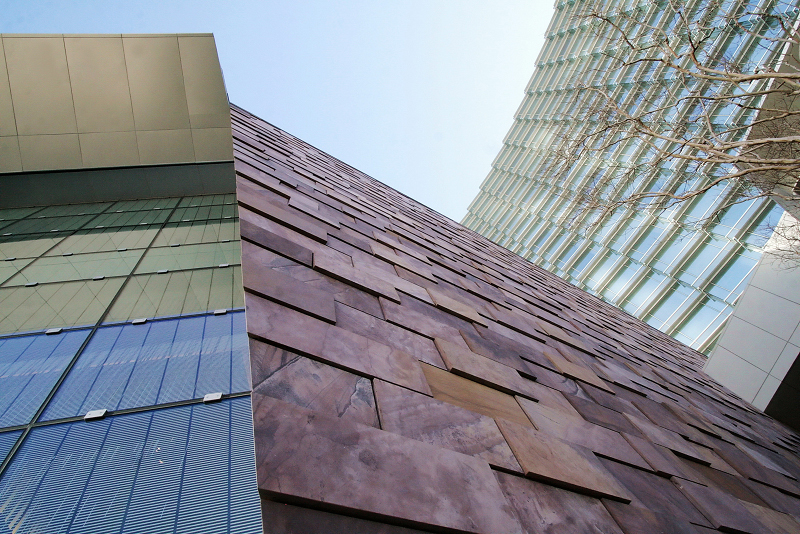
Stone was one of our first building materials. It has been used to construct everything from humble dwellings to our most iconic structures. As a building material, stone requires virtually no manufacturing and is so durable that stone structures built thousands of years ago are still used today—characteristics few contemporary “green” products can equal. Yet stone has been largely overlooked by the green building movement, while ephemeral products made of recycled plastic often carry green labels. Granted, stone has some significant environmental impacts, but they may not be as big as you think, and the stone industry has undertaken noteworthy sustainability efforts. This ancient building material may be more relevant than ever in today’s green building industry.
Dimension stone—stone that has been tooled, as opposed to crushed stone or aggregate—can be used as flooring, exterior cladding, solid surfaces, and walls as well as for landscaping and many other applications. Of the estimated 1.88 million tons (1.71 million metric tons) of dimension stone produced in the U.S. in 2011, 808,400 tons (735,000 metric tons) were used by the building industry, according the U.S. Geological Survey (for comparison, 95.6 millions tons of raw steel were produced in 2011, with 19.1 millions tons used in construction). Imports from Brazil, China, India, Italy, and other countries provide roughly half of the total U.S. supply, according to industry sources.
The data on stone are just estimates, however, mostly based on voluntary feedback from the industry or pulled from U.S. Occupational Safety and Health Administration records and other sources.
The truth is, the stone industry does not track data well, mostly because stone is surprisingly hard to track. Other manufactured building products have their chemical makeup and their production and sales data monitored and aggregated by manufacturers and trade associations and then used to get them certified “green” as a way of marketing to the green building community. Many stone quarries, on the other hand, are old-school mom-and-pop operations that have been quarrying for decades with almost no marketing and little trade-group representation. And tracking some stones’ path to market can be nearly impossible since both imported and domestic stone are often sent across the globe like a commodity to be cut and processed elsewhere. With a lack of baseline data, the stone industry has not been able to provide clear metrics and third-party documentation that are the basis for standards and green certifications used by competing industries.
Perceptions of Stone
Stone has all the attributes of a green product. It requires almost no chemicals to produce or maintain, it emits no VOCs or hazardous airborne pollutants, and it is water-resistant and durable. It is also an attractive material that will outlive most structures built today, and it can be salvaged from one building to be reused or repurposed in another. Stone cladding is used on new buildings to match original historic structures, and in the right application or climate—such as in areas with large temperature fluctuations—stone can be used as thermal mass for space heating and cooling. Some stone even has good solar reflectance. So why do so few people think about it as a sustainable material?
Stone vs. engineered products
“I think we have done a disservice to stone,” says Jason F. McLennan, CEO of the International Living Future Institute. Stone is as elemental a building material as we have, McLennan says. In its simplest form, stone is cut from the Earth, tooled, and installed. That’s it. “There is no ‘perfect’ material, but stone is as close to perfect as we can get,” he said. Many new green materials or products, on the other hand, are manufactured, often using petrochemicals and components transported around the globe. “There are a whole host of issues with these products, and we sometimes overlook products like stone that are staring us in the face,” continues McLennan. “Recycled content has become this banner for sustainability, but recycled plastic petroleum? That’s not green,” he argues.
Performance and biophilia
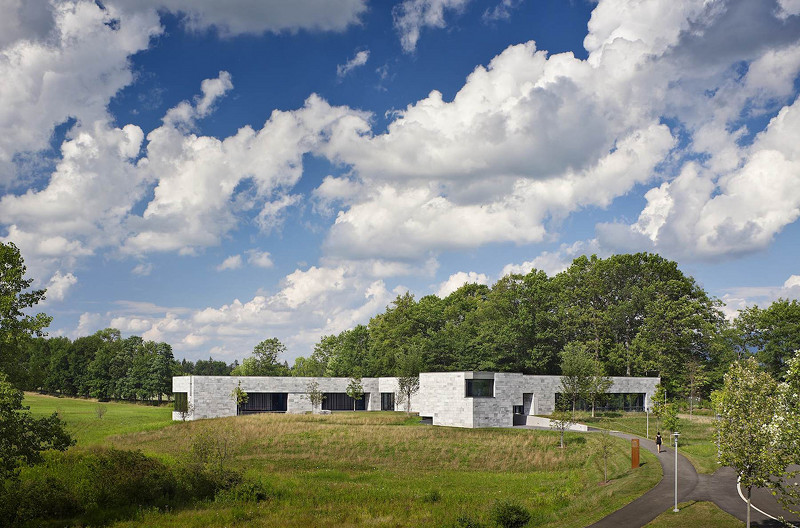
McLennan contends that we have a universal attraction to buildings made from natural materials like stone, wood, and straw (see “Biophilia in Practice: Buildings that Connect People with Nature”). “There is a part of us that understands that these are the building blocks of nature. This is how we build. This is how we have always built,” he exclaimed.
This connection between aesthetics and durability is important to high-performance buildings as well, whose lifespans are often intended to be 50 to 75 years or more. Stephanie Vierra, president of Vierra Design & Education Services, is a sustainability consultant to the Natural Stone Council (NSC) and is also the technical editor of the National Institute of Building Science’s Whole Building Design Guide. The Italians, she says—whose famed stone quarries have been producing materials for regional structures for thousands of years—understand that buildings are intended to last forever and should be flexible and beautiful. “If you are working on a building with a 50-, 70-, or 100-year life cycle and are going to try and install a new product that claims it is green but hasn’t even been tested in the marketplace for five years, how are you going to guarantee you are going to meet that life cycle?” she asks. “I try to help people understand that stone is part of a broader set of systems so that everything is performing to the same level.”
Stone Types and Uses
The primary types of dimension stone sold today are granite, limestone, marble, slate, and sandstone—but there are many others, including basalt, soapstone, and quartzite.
Granite
Granite is an igneous rock formed when liquid magma cools slowly under pressure deep below the earth’s crust. True granite contains quartz, alkali feldspar, plagioclase feldspar, mica, and other minerals, but other igneous rock and some metamorphic rock (those transformed by heat and pressure), such as gneiss, are also sold as granite. True granite has densely packed mineral grains (hence the name granite) that give it a mottled, but uniform, appearance.
Granite is used for interior surfaces, such as countertops and walls, as well as exterior cladding, flooring, landscaping, and pavers. Because of the varying amounts of quartz and other minerals, granite may have a different density, porosity, strength, and hardness, depending on the stone. True granite has a light-gray-to-pink color, but commercial granite can be found in nearly any color, ranging from somewhat uniform grays and blacks to mottled brown, black, and white combinations. All granite is very hard, with a rating of 6 or 7 on the Mohs scale, but in general, those with more quartz are a lighter color and more porous, and those that are darker are more dense. It is also very strong, with compressive strength of 19,000 pounds per square inch (psi).
Limestone
Limestone is a sedimentary rock created primarily by the decay of ancient organisms that accumulated on seabeds and lakebeds and were compacted under pressure (or “lithified”) over time. Limestone is 50% calcium carbonate (CaCO3), with other forms of calcium, magnesium, silica (which gives limestone much of its hardness), and other minerals making up the remainder. Travertine, another type of limestone, is formed aboveground when CaCO3 precipitates out of mineral springs, particularly near hot springs.
Limestone is used for interior surfaces, exterior cladding, flooring, landscaping, and pavers. Limestone has a uniform, non-crystalline structure but is vulnerable to acids, so when exposed to acid rain, the edges of limestone details can get rounded over time. There are three grades of limestone, Type 1 (low density), Type II (medium density), and Type III (high density). These typically come in white, beige, gray, pink, and other colors, based on mineral content. At 3 or 4 on the Mohs hardness scale, limestone is generally too soft to be polished, and its compressive strength is less than granite's at only 8,000 psi.
Marble
Marble is a metamorphic rock formed when limestone, dolomite, and similar sedimentary rocks are exposed to heat and pressure over time. Unlike limestone, marble has veins caused by minerals crystalized during its formation and contains small fissures.
Similar to limestone, marble is used for interior surfaces, exterior cladding, flooring, and landscaping. It typically comes in white, pink, red, and gold and is a soft stone, similar to limestone, at about 3 or 4 on the Mohs scale; compressive strength is also similar, at 7,500 psi. And marble is also vulnerable to acids, so common kitchen spills can easily damage and stain the surface unless sealed.
Sandstone
Sandstone is a sedimentary rock created when sand, primarily grains of quartz and feldspar, is compacted under pressure. Calcium carbonate, silica, and iron oxide between the grains bond them together like cement. Sandstones that undergo additional heat and pressure become quartzitic sandstone and over time become the metamorphic rock quartzite.
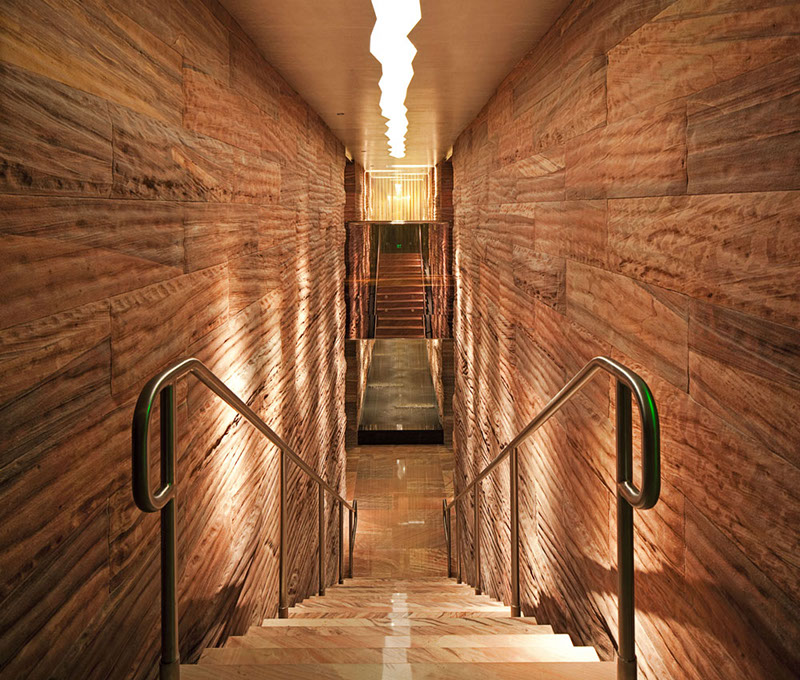
It is used for interior surfaces, exterior cladding, paving, and landscaping. As with other stone, mineral content dictates the color of sandstone, but most are beige, brown, gray, light pink, or red. Sandstone is very hard, at 6 or 7 on the Mohs scale (depending on mineral composition), and has compressive strengths ranging from a low of 4,000 psi for common sandstone to 20,000 psi for quartzite.
Slate
Slate is a metamorphic rock formed from layers of clays or volcanic ash transformed by years of heat and pressure. Made up of quartz, aluminum, chlorite magnetite, and other minerals, slate has a dense, layered nature that allows it to break along planes to create thin, durable slabs.
Slate is commonly used for countertops and other interior surfaces as well as for exterior cladding, flooring, landscaping, roofing, and pavers. Slate can be combinations and shades of gray, black, red, purple, or green, and both performance and aesthetics can vary greatly between products. Slate is hard, at about 6 on the Mohs scale, and is naturally resistant to chemicals and stains.
Stone, from Quarry to Site
Each type of stone is extracted differently depending on the local stone characteristics and quarry type, but there are some similarities between operations.
Quarrying
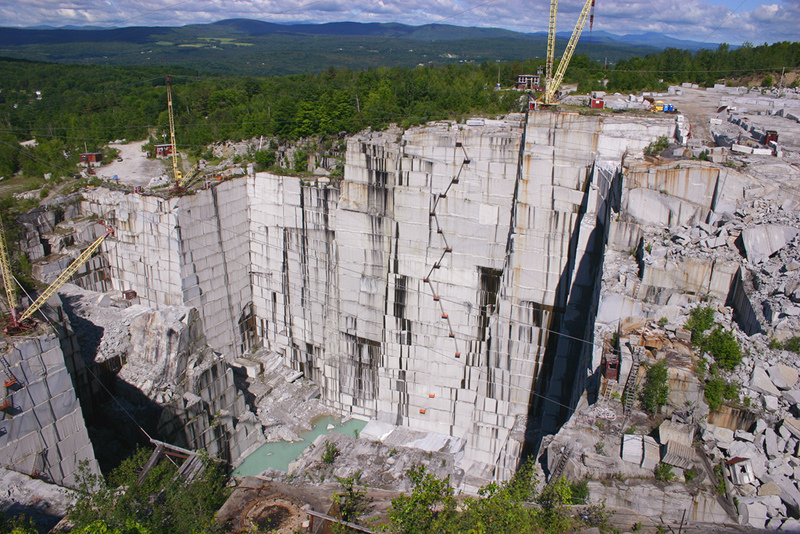
Most quarries are open-pit, but there are also underground quarries and shelf quarries that access stone through a hillside or ledge. According to the Natural Stone Council, to access stone in open-pit quarries, the upper layers of earth and vegetation are removed, along with poor-quality stone. This “overburden” is stored onsite for use in later reclamation. The stone is then carefully assessed and removed in “benches,” or large rectangular blocks extending 20 feet or more and 8 to 12 feet per side. The stone is drilled along the outer dimensions of the benches; diamond wire saws, hydraulic splitters, or small explosive charges are used to loosen the stone before removal by heavy equipment. (In slate quarries, large sections are broken off to make best use of the layers of stone.)
The stone is then inspected and stored onsite before being transported for further processing. Scrap stone can be crushed for aggregate, landscaping, and other uses, or can be stored for later quarry reclamation. In general, slate quarrying produces more waste than other stone types.
Processing
After removal, the stone blocks are often treated like commodities. They can be processed locally near the quarry or shipped as far away as Italy or China. Shaping the stone requires two or more steps: in the primary processing, the blocks are cut into thinner slabs using a variety of saw types, some of which require water to protect the blades or wires from overheating and the stone from damage. For products that require a rougher surface, this first cut may be all that is required, but most products undergo a second processing that involves finishing to a desired look (anything from polishing to antiquing or “distressing”) and cutting to specific dimensions.
Some products, particularly travertine and marble used indoors, may have an acrylic filler applied during this step, and some granite manufacturers use epoxy to fill small pores and cracks to reduce the possibility of staining and improve strength. Thermal treatments that apply flame to granite surfaces are also used in applications where a rough, slip-resistant finish is desired.
Transportation to site
Stones from different quarries have unique looks, so for designers and architects searching for a specific stone color or type, purchasing locally can be very difficult. The route stone takes from processing to site can vary from a few miles—if purchased from a local quarry that has processing facilities—to thousands of miles, if the stone is imported from Brazil or another country and sent to Italy or China for processing before being sent to the U.S. Even stone quarried in the U.S. is regularly sent oversees for processing and then sent back to the U.S., an obviously wasteful practice dictated by lower overseas labor costs.
Potential Environmental Concerns
Education is the key to convincing people that stone is sustainable, but some myths about the industry persist: namely, that quarrying equals mining, all granite poses a radioactive health risk, and transportation energy required to get the heavy stone to the jobsite is a deal-breaker.
Quarrying is not mining
Many people don’t distinguish between quarrying and mining. Jack Geibig—former director at the Center for Clean Products at the University of Tennessee and current president of Ecoform, a company that specializes in life-cycle analysis (LCA) and other environmental metrics—shared that perception, but after visiting more than 20 quarries throughout the U.S. during a study sponsored by the Natural Stone Council (NSC), he came away convinced the impacts are very different.
“In mining,” says Geibig, “you are taking elements from deep in the earth and concentrating them at the surface.” A lot more material is taken out of mines than out of quarries (it takes about 143 pounds of rock to produce one pound of copper, at current rates) there is much more waste, the process is more energy-intensive, and tailings and runoff frequently contain toxic byproducts that contaminate air and local ground water.
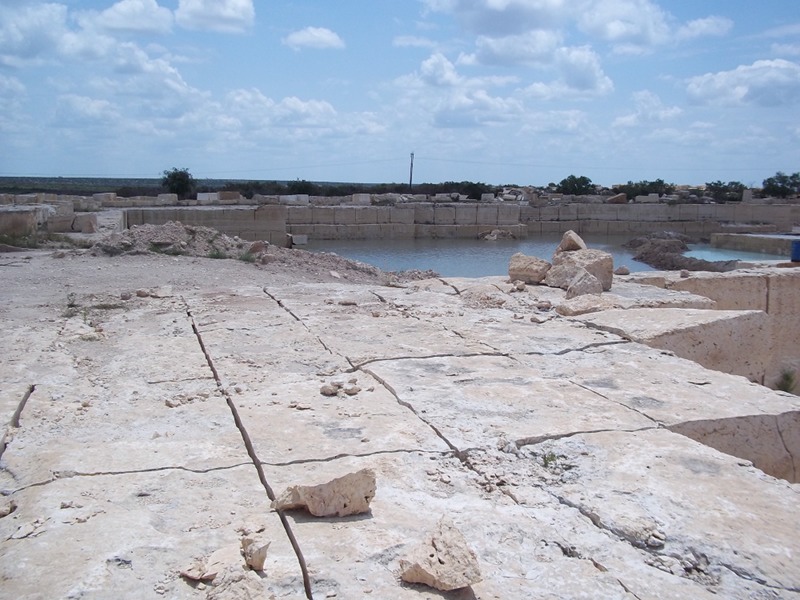
With most quarries, the rock is at the surface in large concentrations, and the main environmental problems come from noise, occasional runoff of solids, and scrap piles at the surface. These issues are manageable, however, with good practices, and at the end of a quarry’s production (which could be hundreds of years), most can be repurposed, filled in using waste from production to create useable land or, in some cases, made into lakes. As a consultant, Jason F. McLennan toured several quarries run by Cold Spring Granite and concluded, “If you compare them to an even modest forestry operation, the habitat impacts are a fraction of what they are with logging and milling wood.” He acknowledged that there are poorly run facilities in every industry, but he claims the amount of site disturbance and soil and habitat loss from forestry operations far exceeds that of quarrying.
Is that countertop radioactive?
In 2008, The New York Times ran an article, “What’s Lurking in Your Countertop?” that reported on granite countertops emitting radon—a colorless, odorless, carcinogenic radioactive gas—into suburban homes. While the article reported that the vast majority of granite countertops are safe, the scare gained traction on the Internet, and granite’s link to radon was cemented. Peer-reviewed, independent studies conclude that radon does not pose a significant risk in the vast majority of granite or slate countertops, but granite is a natural material, and just as your home may sit atop a radon hotspot or your concrete could potentially contain radioactive aggregate, it is possible that a select product may emit radon as well. Even then, however, a “hot” countertop is very unlikely to pose a risk based on normal household ventilation rates, according to other studies.
Still, no level of a carcinogen is safe, so finding a way to put this issue to rest is in the industry’s best interest. Some companies, such as Cold Spring Granite and Las Vegas Rock, are doing their own testing now—but it would be nearly impossible to test all granite due to costs and the difficulties of tracking today’s stone through the market.
Hauling stone
Transporting stone from quarry to jobsite does have a negative environmental impact. Heavy equipment and trucks are usually required to move the massive blocks, which can weigh 20 tons or more, from the quarry all the way through processing. A study of embodied carbon and natural stone done by the Scottish Institute of Sustainable Technology (SISTech) along with Heriot-Watt University in Edinburgh shows that transportation is a significant contributor of embodied carbon in stone and confirms that the further the stone travels, the greater the impact.
With any material, impacts of extraction can be averaged out over the service life. Here, stone has an advantage: its durability means that those transportation impacts may not be quite as significant if considered over a 100-plus-year lifespan. On the other hand, if stone is treated like just another disposable product, with that granite countertop winding up in the dumpster when the kitchen is next remodeled, the extraction impacts loom larger. In any case, minimizing the distance the stone takes from quarry to jobsite will improve its carbon footprint: buy regionally if possible.
Impact of sealants
Cracks and voids in marble or travertine are sometimes filled with acrylics, and those in granites are sometimes filled with epoxies. This is done to improve the appearance, reduce places where dirt and mold can accumulate, or give the stone additional strength, which can reduce breakage and allow for thinner, lighter products. Acrylics are considered safe, and even epoxy resins are approved for food contact by the U.S. Food and Drug Administration. Most of the resins are removed during processing but, with epoxies, workers could be exposed to the endocrine disruptor bisphenol-A (BPA).
Stone used on exteriors is rarely treated, but those used for countertops and other interior applications are often sealed to prevent staining. These sealants often contain a number of problematic chemicals, including volatile solvents, which penetrate the small pores better than waterborne products, and perfluorochemicals (PFCs), which are used to repel water and stains and have become a staple of the stone industry. PFCs are extremely hydrophobic, but they also remain in the environment indefinitely and have unknown long-term impacts on organisms and the environment. When possible, opt to leave your stone untreated. A little patina never hurt anyone.
Industry Initiatives
The stone industry in the U.S. has not done a good job explaining stone’s environmental footprint or dispelling myths about the industry. Part of the reason for this was that no umbrella group existed to promote the sustainability of the different types of dimension stone prior to 2003 and the formation of the Natural Stone Council. Instead, numerous smaller groups—like the Marble Institute of America, Indiana Limestone Institute of America, and the National Slate Association, to name few—competed with each other to best represent their members, and sustainability marketing was not high on most agendas.
According to Brenda Edwards, owner and general manager of TexaStone Quarries, when the group first met, it was the first time all of the competing stone organizations had been in the same room. The industry realized it needed to better communicate its sustainability message; it reached out to the Center for Clean Products at the University of Tennessee and its team, then headed by Geibig. The stone industry “hadn’t thought much about sustainability because the product was natural,” said Geibig. But with no data on stone’s impact on the environment, the industry decided to commission life-cycle inventories (LCI) of granite, limestone, marble, sandstone, and slate. Some of this data was published in 2008 and can be downloaded from NSC’s website.
The LCI data has limitations. It is focused primarily on quarrying and processing and uses a small sample of self-reported data from surveys. The LCI was not intended to compare different stones against each other, but subsequently it has been used to create a life-cycle assessment (LCA) that compared granite and limestone claddings with other cladding types, including brick and mortar, precast concrete, and aluminum. The building modeled in the LCA was steel-framed with an interior wall, structural wall, exterior sheathing, insulation, drainage plane, an air cavity, and the cladding. The appropriate anchoring system for each cladding was included in the LCA, but the installation was not. The results indicate that granite cladding had the least detrimental environmental profile, followed by limestone and brick (a virtual tie), and then aluminum.
The SISTech study published in 2010 used an “LCA-based approach” to measure and compare the embodied carbon of sandstone, granite, slate, and marble with a host of other building materials. Using its own data and those pulled from the University of Bath’s Inventory of Carbon and Energy (ICE), it showed sandstone, granite, and marble to have lower embodied carbon than brick, timber, and steel, but slate fared slightly worse than other stones (due to waste from quarrying and processing), with more embodied carbon than concrete or brick but less than steel.
Despite the attraction to comparing and contrasting different building materials, it may not be a good idea to jump to conclusions from a small batch of studies. The results of these two studies are based on relatively small and incomplete sample sizes, and the methodologies do not follow ISO 14040/14044 LCA protocols. One can see trends in the data that can be useful, however, such as confirmation of slate’s use of additional processing energy.
The life-cycle inventory generated by NSC is valuable since it continues to establish baseline data that can be used to track and improve stone’s environmental footprint. And perhaps more importantly, the work has led to the development of best practices for the industry, which also laid the groundwork for a third-party green certification system for quarries and processors.
Improving the footprint of stone
The stone industry is employing new quarrying and production methods that improve the efficiency of stone production and lower its environmental impact. In the quarry, cutting with diamond wire saws reduces waste and minimizes dust; in the shop, CNC (computer numerical control) machining maximizes production and minimizes waste; and on buildings, thinner, lighter products are being used that replace larger, less resource-efficient slabs.
There is still a lot of work to do, of course, since not all stone quarries and processors are using the latest technologies or methods. To help the industry understand and implement sustainability objectives the NSC developed “best practices” for the industry, which can be particularly useful for those with minimal knowledge of green building. Each section provides detailed recommendations, but some of the highlights are listed below.
Water Consumption, Treatment, & Reuse: Reseed the quarry site with native grasses to help prevent erosion, reduce airborne dust, and provide wildlife habitat; treat and reuse wastewater onsite.
Site Maintenance & Quarry Closure: Reduce fuel consumption by minimizing idling of heavy equipment; conserve as much local vegetation as possible to reduce erosion; and plan for quarry closure, including use of creative end-of-life options such as creation of parks.
Solid Waste Management: upgrade to newer equipment that minimizes dust and waste; sell the scrap or reuse it for onsite landscaping; recycle oil and other waste produced by the operation.
Transportation: Use rail instead of trucks when possible; minimize the distance the stone travels for processing.
Pending standards… Coming soon
These best-practice recommendations help provide a framework for the industry’s developing standard, currently titled NSC 373: Sustainability Assessment for Natural Dimension Stone. Still in draft form, the standard when released will establish a rating system for quarries and stone processors using third-party-verified metrics for:
- water
- transportation
- site management
- land reclamation
- adaptive reuse
- corporate governance
- energy
- waste and byproducts management
- safer chemical and materials management
- human health and safety
NSC 373 is similar to other multi-attribute NSF standards that exist for carpeting and resilient flooring and will have Silver, Gold, and Platinum certification levels. “Once the standard is in the marketplace, it has the potential to really transform the industry,” says Vierra.
One of the most challenging sections of the new standard is—no surprise— transportation. “Stone is very difficult to track,” says Geibig, “so we are working to develop a chain-of-custody arrangement much like wood has.” The sustainability standard applies to both domestic and imported stone and will certify operations along the supply chain, such as quarries and processors. Anyone who buys or sells stone without changing its characteristics, such as distributors, would have to maintain chain-of-custody documentation that shows where it came from and where it got shipped to, Geibig explains. “We want to make sure the stone is handled in the most environmentally responsible method possible, and we want whoever is making the purchasing decisions to be informed about the stones they are purchasing.”

The standard’s chain-of-custody requirement would eventually help reduce transportation energy and its associated environmental costs—and would differentiate products in a crowded market—but it could also help guarantee that workers are treated fairly. Currently, stone is sent overseas for processing because it is often less expensive to ship a 20-ton chunk of granite overseas and back than it is to have it processed in the U.S. 200 miles away, and labor costs are the main reason for this. Cheap labor often means poor working conditions; stone processing can put workers at risk, going against the principles of sustainability.
Adoption of a standard like this could also help the industry keep pace with LEED requirements. LEED version 4 (LEED v4), currently under development by the U.S. Green Building Council (USGBC), recognizes building materials that use “leadership extraction practices,” such as Forest Stewardship Council certification for forest products. Subject to USGBC approval, stone products certified under a credible sustainability standard could contribute to a LEED credit. The draft standard would also for the first time allow untreated natural products like stone to count automatically toward indoor-air-quality credits without independent lab testing. These steps are likely to open up more conversations about stone’s place in green buildings.
Edwards is piloting the standard at her TexaStone Quarries, a limestone quarry that fabricates and ships stone internationally and throughout the U.S. “The standard is still in process,” she says. “There are quite a few comments, and it is back in revision, so it will probably be the first part of the summer before it comes back for a vote again.” She agrees that the transportation section needs to be revised, and there are sections open for interpretation that still need editing, but she feels having so much consensus on the standard at this stage is a huge step forward for the industry.
Some quarries are already innovating
Some quarries are looking forward to the new standard but are moving ahead now with their own green initiatives. Cold Spring Granite, an industry leader in sustainability with a variety of stone quarries and processing facilities across the U.S., recycles all of its industrial water, quarries stone on demand, uses diamond saws instead of explosives to minimize waste, and is updating to more energy-efficient equipment. The company also participates in Declare, the International Living Future Institute’s platform for ingredient disclosure.
Las Vegas Rock didn’t wait for an industry standard to have its stone certified Silver under Cradle to Cradle. Las Vegas Rock quarries meta-quartzite, a unique stone comprised of pure, glass-grade silica bonded by quartz. “Our stone has the aesthetics of a sandstone but the hardness of a quartz,” according to Justin Lindblad, the company’s vice president of business development. Lindblad said the company uses no resins during finishing and creates zero waste from production. Fines are collected and sold to concrete companies or glass manufacturers; larger pieces are crushed and sold for landscaping; and all water is filtered and recycled back through its facilities. The company’s quarry operations also minimize impact on the land. “If the quarry has native vegetation, we have a company called Native Resources come and relocate the plants,” he says, “but we really don’t disrupt a lot of area.”
Getting Closer to Perfect?
The stone industry is slowly accepting its need to engage with the green building community, but there is still a lot of work to do. Old habits are hard to break, but Edwards is encouraged by the changes she has seen in the industry in just the last year. Colleagues and competitors who were skeptical of the new standard and green building in general and were reluctant to participate have now seen the draft and are actively engaged with the process. This engagement should continue to improve stone’s environmental footprint. There is no perfect building material, as McLennan says, but stone is getting closer.
For more information:
Natural Stone Council