Alternative Water Sources: Supply-Side Solutions for Green Buildings
Water efficiency should be a top priority for our buildings. At the same time, finding alternative sources of water is also important for sustainability and passive survivability. Several sources of water can be harvested at the building level as well as through municipal-scale wastewater treatment and desalination.
The severe 2007 drought throughout the southeast U.S. was a wake-up call. This drought taught us that even areas of the country we have long assumed to have plenty of water are not immune from water shortages, and it showed us how woefully inadequately prepared we were—and still are— to respond to severe drought.
Changing precipitation patterns, including increased drought in some parts of the country, are predicted with global climate change. Yet even without the wild card of climate change, unsustainable groundwater extractions for burgeoning populations in the western U.S. and throughout the world have become front-page news.
While using water more efficiently should remain the top priority, we also need to take a look at alternative sources of water, including those we can harvest at the building level. Providing alternative water supplies in buildings can also help achieve resilience—maintaining livable conditions when electricity, heating fuel, or municipal water are lost for extended periods of time. This article examines the spectrum of unconventional water sources that can be used in and around buildings.
Potable versus Nonpotable Uses
In identifying alternative sources of water, the first consideration is what those sources will be used for. Potable water, which we can use for drinking, cooking, and bathing, among other uses, must meet a high level of purity and safety. Nonpotable water is less pure but, when handled properly, it can be fine for landscape irrigation, makeup water for cooling towers, and toilet flushing. Many alternative water sources are best suited to nonpotable uses, though some can be made potable with additional treatment.
If we can provide separate plumbing in and around buildings for potable and nonpotable water, it opens up significant new options for water supply. Installing separate supply piping for landscape irrigation and cooling-tower makeup water is fairly easy, while installing separate nonpotable supply plumbing for toilet flushing, which requires dual piping throughout a building, is more difficult.
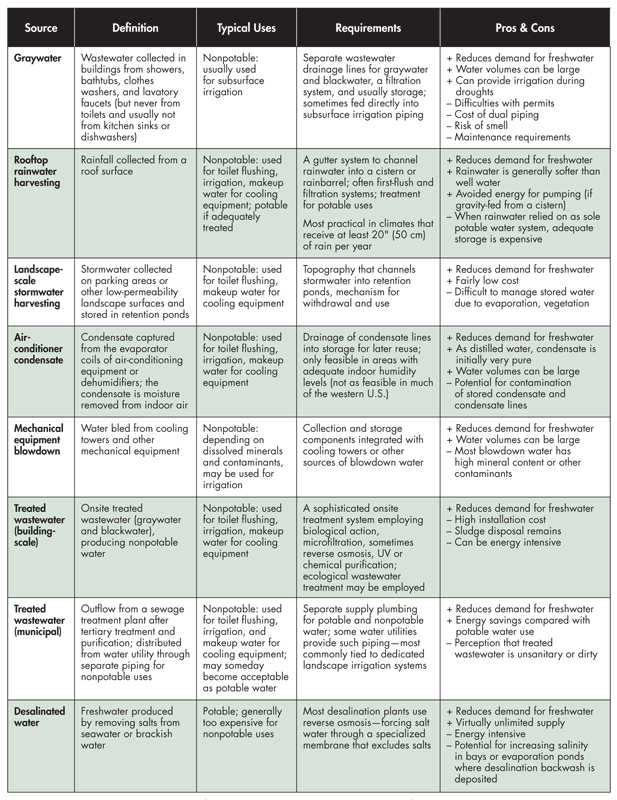
Described in this article and summarized in the table are the most prevalent alternative water sources for use in and around buildings. Scale of delivery can dictate what solutions to focus on. Graywater, for example, is typically dealt with only on an individual-building scale. With rainwater collection or air-conditioner condensate, it may be possible to aggregate water from several roofs in a university or office campus and use common storage, improving the economic viability of such systems. Using reclaimed water (treated wastewater) and desalination water is usually viable only when a municipality supplies that water.
Graywater Collection and Reuse
As the term is most commonly used, graywater refers to wastewater from clothes washers, showers, bathtubs, and lavatory faucets—and not water from toilets, kitchen sinks, and dishwashers. Graywater is collected with separate drain lines (requiring a building to be dual-plumbed for graywater and other wastewater drainage), filtered to remove large particles, and stored until use for landscape irrigation—usually below ground.
Because graywater generally contains organic matter (such as hair, textile fibers, and skin cells), it should not be stored for long. Bacteria in the water quickly break down this organic matter, using up dissolved oxygen in the process (chemists refer to organic matter in water as biochemical oxygen demand or BOD). Once the oxygen is depleted, different bacteria take over and the decomposition becomes anaerobic, which can produce smelly methane and hydrogen sulfide gas. For this reason, most graywater systems quickly deliver water to irrigation piping. If a system stores graywater, it is usually to allow just enough to build up that it can be discharged in larger doses that fill the irrigation pipes and provide even distribution.
Water conservation expert John Koeller, P.E., predicts that graywater will be “the next major breakthrough” in the field of water savings. He expects to see significant developments of both whole-building systems and units that are tied directly to lavatory sinks or clothes washers.
Several whole-building graywater systems are available. These systems necessitate reconfiguring drainage piping, so are less expensive when installed in new construction than when retrofit for existing buildings.
In addition to these whole-house or whole-building graywater systems, there are products that capture wastewater from an individual lavatory sink or clothes washer. Some can store it in an under-counter tank to flush an adjacent toilet.
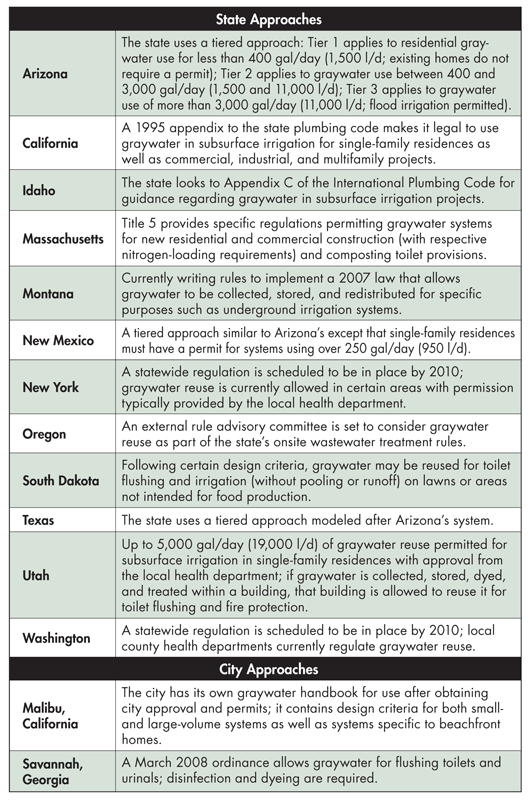
The biggest challenges facing graywater today are regulatory. Most states do not permit separate collection and use of graywater, though severe droughts have helped to ease those restrictions in some regions. California, Arizona, New Mexico, Nevada, Utah, Texas, and Montana all have statewide regulations permitting graywater use, though in some cases local regulations can supersede statewide rules. These regulations primarily address use of graywater for landscape irrigation, and they have important differences. California permits only subsurface irrigation, for example, and vegetable crops are specifically excluded in most states that allow the use of graywater. Arizona’s law is tiered, with different standards and levels of review required depending on the daily flow. Some localities have adopted regulation that allows graywater to be used, but only for toilet flushing—and only after it has been filtered, disinfected, and dyed blue or green to distinguish it from potable water. Key aspects of a sampling of the country’s graywater regulations are described in the table above.
Rainwater Harvesting
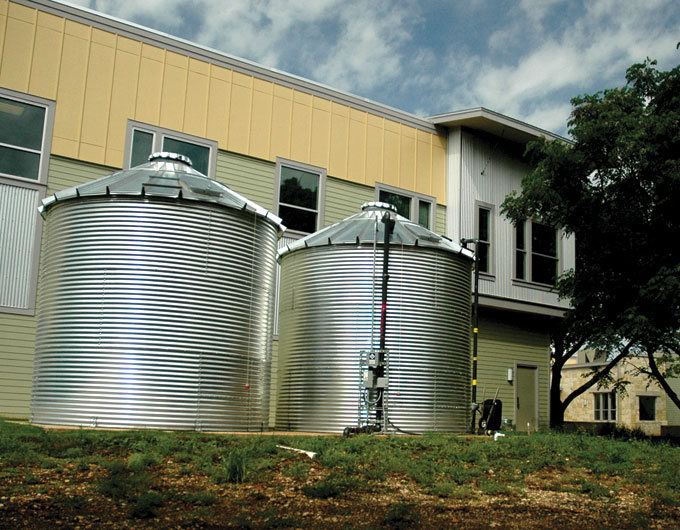
A few places in North America rely almost totally on harvested rainwater. In the town of Volcano, Hawaii, near Hilo, the rock is so porous that wells would have to be thousands of feet deep to reach freshwater. It’s far less expensive to simply capture and store the abundant rainfall. The vast majority of homes and businesses there rely on harvested rainwater for all of their water needs—potable and nonpotable—storing the collected water in large, covered, above-ground cisterns (usually swimming pools adapted for this purpose).
Rainwater harvesting is also common as a sole residential water source on the island of St. John in the Caribbean, and it is fairly widely used in parts of Texas, Kentucky, Ohio, and the Pacific Northwest—especially in locations where the groundwater is brackish, very hard, or in limited supply. “There are pockets around the country,” says Hari Krishna, Ph.D., of the Texas Water Development Board in Austin and founder of the American Rainwater Catchment Systems Association. Less sophisticated rain-barrel systems for irrigating gardens and lawns are common in the Pacific Northwest and seen occasionally in the rest of the country. Krishna estimates that there are about 10,000 rainwater-harvesting systems in Texas, including about 1,000 that serve as the sole water source for a home.
Rain barrels are very simple—most often a covered container connected to the downspout beneath the eaves of a house, with an overflow and a spigot attached to a hose. Whole-house and commercial rainwater-harvesting systems are significantly more involved (see EBNVol. 6, No. 5).
Components include:
a smooth roof surface that neither leaches chemicals into the water nor traps organic matter that could contaminate harvested water;
a first-flush system to divert the first rain that falls during a storm, carrying off accumulated particulate matter;
a coarse filter to keep out leaves and other detritus;
a cistern large enough to serve expected water needs (almost always the most expensive component); and
for potable water systems, a treatment system to purify at least the water used for drinking and cooking.
According to Krishna, ultraviolet (UV) light is the most common treatment for potable rainwater systems. With proper first-flush systems, filtration, and UV treatment, Krishna says chemical treatment should be unnecessary, especially since rainwater starts out so clean (assuming there are no severe local sources of air pollution). “Rainwater is one of the purest sources of water that exists in the world,” he says, noting that rainwater’s low mineral content makes water softening unnecessary (see EBNVol. 15, No. 4, for more on water treatment).
Most rainwater harvesting systems are made up of components that were intended for other purposes, but that may be changing. Several Australian companies, including BlueScope Water, are entering the North American market. BlueScope and its companion company, Pioneer Tanks, offer rectangular storage tanks that fit into walls or under the floor. With harvested rainwater proving increasingly attractive for cooling-tower makeup water in commercial buildings and for landscape irrigation, we can expect to see specialized components designed for commercial buildings as well. “The market is growing,” Krishna told EBN. While some experts suggest that a minimum of 20"–24" (500–600 mm) of rainfall is required annually for harvested rainwater to serve whole-house needs, Krishna says that in areas in Texas receiving as little as 15" (380 mm) of rainfall per year, there are homes that have relied on 100% rainwater for years.
Landscape-Scale Stormwater Harvesting
Stormwater is nearly always managed in the landscape surrounding a building, and it is commonly channeled into retention ponds. Occasionally, such retention ponds are designed so that water from them can be pumped out for nonpotable uses in and around a building. At the Heifer International headquarters building in Little Rock, Arkansas, completed in 2006, stormwater from parking areas is captured in a large retention pond, from which water is drawn off for landscape irrigation and an innovative cooling system for parts of the 94,000-ft2 (8,700-m2), five-story building.
Cooling systems rely on evaporator coils through which refrigerant fluid changes from liquid to vapor, cooling the coils in the process. Air blowing past the coils cools off as it goes by, and moisture from the air condenses on the coils. Condensate drains carry away the water, usually into the sewer. Instead of wasting it, more and more buildings, especially in parts of the country with hot, humid summers, are capturing that condensate for reuse.
In large commercial buildings, condensate recovery often produces enough water to supply all of the landscape irrigation needs or a significant portion of makeup water for cooling towers. In San Antonio, Texas, with its high temperatures and high humidity, condensate recovery is an easy choice. “When you take the humidity out of the air, that condensate water is a huge volume in a large building,” says Karen Guz, director of the Conservation Department for the San Antonio Water System. In the ASHRAE Journal, Guz reported that the San Antonio Public Library is producing a gallon of condensate per minute, or over 1,400 gallons (5,300 l) per day, which is used for irrigation. The downtown Rivercenter Mall produces 250 gallons (950 l) of condensate per day, which is used to replenish cooling-tower losses—this condensate recovery system paid for itself in less than six months, according to Guz.
If condensate is being used only for cooling-tower makeup, the condensate can often be fed directly into the cooling tower without storage—because condensate produced in a building will never exceed the evaporative losses from the cooling tower. This can reduce costs significantly, according to Guz. Using condensate as a source of irrigation water is more expensive, as it requires storage and a system to pressurize the water.
In San Antonio, it is becoming more common to combine rainwater harvesting and condensate recovery for use in irrigation—the city refers to this as rainwater plus. “The combination is great,” Guz told BuildingGreen. “Our rainfall patterns are so erratic that a rainwater system by itself must have an enormous, expensive tank in order to go through the long periods we can go without rain.” Because the production of condensate is fairly steady, and increases as the weather gets hotter, smaller storage tanks are sufficient.
Air-conditioning condensate recovery is most practical in climates with high cooling-season humidity. Along with the obvious places like Houston, San Antonio, Atlanta, and Miami, it also makes sense in cities like Philadelphia, Chicago, and New York, which experience high humidity that coincides with the greatest cooling loads. Condensate recovery is especially attractive in facilities like shopping centers, where there is a high degree of air exchange.
The quantity of condensate water produced depends on the temperature and humidity conditions (both outdoors and indoors) and the amount of cooling being provided. Guz has developed a rule of thumb for large buildings in the summer months of 0.1 to 0.3 gallons (0.4–1.1 l) of condensate per ton of air conditioning for every hour that the cooling system operates. In the San Antonio climate during peak summertime months, this translates into roughly 0.5–0.6 gallons per hour for every 1,000 ft2 of cooled area (20–24 l/hr per 1,000 m2).
While air-conditioner condensate is inherently pure—it is essentially distilled water—there is potential for contamination, especially if it sits in a warm environment. For this reason, chlorine is usually used to treat condensate. San Antonio hasn’t experienced problems with the moderate chlorine concentrations in its irrigation water, according to Guz, but chlorine could harm some plants.
Cooling-Tower Blowdown
A lot of water is lost from cooling towers through evaporation and drift losses. Water is also intentionally drawn off—a process referred to as blow- down—because minerals and other contaminants become more concentrated as a result of evaporation. Typically, the blowdown water is drained into sewer lines, but it can be collected and reused for applications where the salinity or mineral content is acceptable.
Water conservation expert Bill Hoffman, P.E., of Austin, Texas, suggests that if blowdown water is being reused, the “cycles of concentration” (a measure of how concentrated the minerals become due to evaporation) shouldn’t exceed two or three. The building housing the San Antonio Water System, however, has been using blowdown water for eight years, according to Guz, and “during the past two years the cooling-tower operations have been documented at no less than four cycles of concentration with no ill effects on the plants (though there may be additional dilution from groundwater that is also captured in French drains).”
It is also possible to treat the water in cooling towers to remove minerals—for example by chemical precipitation or by using reverse osmosis (see discussion of desalination below)—but this is costly and rarely practiced.
While air-conditioner condensate is inherently pure (at least when first produced), that is not the case with blowdown water. Along with concentrating minerals, cooling towers also concentrate bacteria and other contaminants, including Legionnella (a bacteria that causes potentially fatal Legionnaires’ disease). If blowdown water is used for irrigation, treatment is essential.
Building-Scale Treated Wastewater
While it is relativley uncommon, an increasing number of large buildings are treating their wastewater onsite and producing nonpotable water for landscape irrigation and toilet flushing. The Solaire in New York City was one of the first examples of this approach. An advanced, multistep, biological treatment and micro-filtration process treats 100% of the wastewater produced in the 28-story, 293-unit, LEED Gold apartment building. The treated wastewater is used for all the toilets in the building, the building’s cooling tower, and all landscape irrigation requirements, including 5,000 gallons per day (19,000 l/d) for an adjacent part. Potable water use in the Solaire was reduced by 50%.
Similarly, the Audubon Center at Debs Park in Los Angeles treats 100% of its wastewater onsite—and, in fact, has no connection to the municipal sewer. This treatment system consists of a hybrid anaerobic/aerobic treatment and filtration process and a peracetic acid and UV advanced oxidation disinfection process. This treated wastewater will be used for toilet flushing. Overall, this building has achieved a 70% reduction in potable water use.
Ecological wastewater treatment provides another option for more comprehensive onsite treatment of both graywater and blackwater.
Municipal-Scale Treated Wastewater
The first U.S. municipality to distribute treated wastewater through separate piping was Grand Canyon Village, Arizona, beginning in 1926. Freshwater had to be trucked in, so wastewater was too valuable to discard. The town’s small system reclaimed and treated wastewater for use in landscape irrigation and toilet flushing. Similarly, in 1942, Sparrows Point, Maryland (near Baltimore), built a 4.5-mile (7.2-km) pipeline to supply treated wastewater to the Bethlehem Steel factory for process use and cooling.
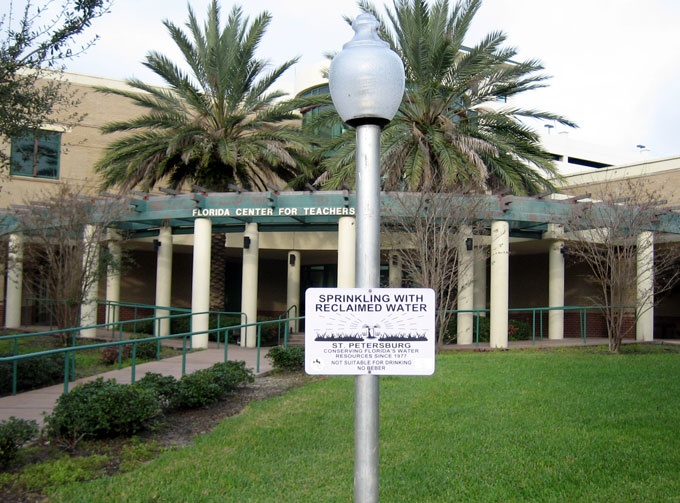
The first large-scale, municipal reclaimed water system began operation in 1977 in St. Petersburg, Florida. By 2008, the city was delivering 21 million gallons (80 million l) per day to 4 cemeteries, 7 golf courses, 64 schools, 92 parks and recreation facilities, 339 businesses, 135 multifamily housing projects, and 10,200 single-family homes. This reclaimed water, supplied by 299 miles (481 km) of pipe, is used primarily for landscape irrigation, though some commercial customers use the water for industrial processes and cooling towers. The city uses about two-thirds of all available treated effluent each year, according to Patricia Anderson, the water resources director for the City of St. Petersburg.
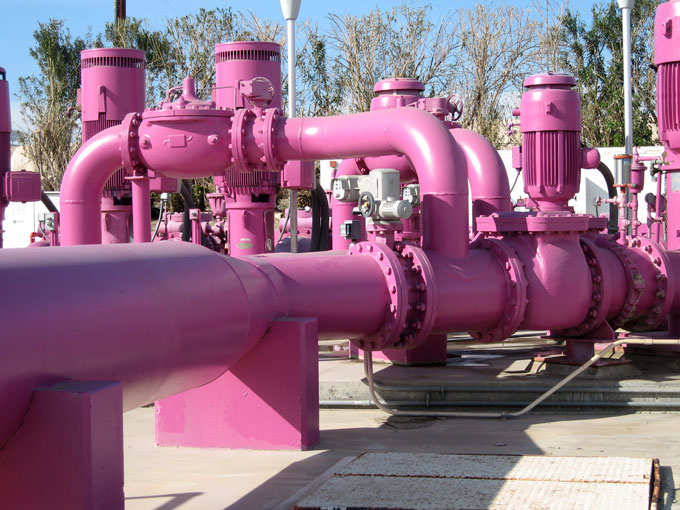
Irrigation remains the largest use of reclaimed water in the U.S., according to James Crook, Ph.D., P.E., a water reuse expert in Boston. The earliest systems provided mostly agricultural water, but urban irrigation for parks, playgrounds, and lawns has been growing rapidly. Cooling is the next major use—for power plants, industrial processes, and makeup water for cooling towers. Use for toilet and urinal flushing in commercial buildings is less common but quickly gaining popularity, especially in the green building community. In many places where reclaimed water is used, its piping is painted purple to distinguish it as nonpotable.
Some regions of California now mandate that commercial buildings be dual-plumbed so that they can use reclaimed water (referred to as “recycled water” in California) for toilet and urinal flushing. In the Irvine Ranch Water District south of Los Angeles, for example, all buildings seven stories or taller are required to include dual plumbing for reclaimed water use.
With reclaimed water use, the question often comes up as to whether this water can be deemed suitable for potable uses—so-called “direct potable water reuse” or pipe-to-pipe reuse. Some experts think that cities in the U.S. will eventually accept direct potable water reuse, though public resistance is strong. Denver and San Diego have studied the idea, according to Crook, but an effort to permit potable reuse in San Diego was defeated several years ago. Crook believes that we won’t get direct potable water reuse until water-quality monitoring improves to the point that safety problems can be identified almost immediately.
But some suggest that direct potable water reuse isn’t that different from what we’re doing today. “Proponents say, ‘Hey, we’re doing it now,’” says Crook. Many of our rivers are dotted with cities and towns, each with drinking water intakes and sewage treatment plant outlets along the river. The Colorado River, which provides drinking water for San Diego, Los Angeles, Phoenix, Las Vegas, and many other municipalities, has more than 450 wastewater discharge permits along its course. The U.S. Environmental Protection Agency (EPA) refers to this as “surface water augmentation for indirect potable reuse.”
Indirect potable water reuse can also occur through aquifer storage. A large indirect potable water reuse system is used in Orange County, California. Each day 70 million gallons (260 million l) of highly treated wastewater are injected into an underground aquifer, from which drinking water is withdrawn for 2.3 million Californians in 20 cities. In EPA parlance, this is “groundwater recharge for indirect potable reuse,” and, because there is dilution as well as physical separation of wastewater delivery and drinking-water withdraw, it is more acceptable to the public than direct potable water reuse.
Of concern with either direct or indirect potable water reuse is the prevalence of pharmaceutical and illicit drugs in the wastewater. Studies have shown that wastewater treatment plants do not effectively remove these pollutants, so they would be found in reused water. This is indeed a concern with potable water reuse, but it is also a concern with conventional public water supplies—from both surface water and groundwater sources. Pharmaceuticals are entering our aquifers as well as our rivers, creating a problem with no simple solutions.
Desalination is the process of removing salts (and other impurities) from seawater or brackish water. Ninety-seven percent of the world’s water is saline, so tapping this resource as a freshwater source has long been attractive. While there are a few systems in the world that use seawater directly for toilet flushing and certain other nonpotable uses (see sidebar), the highly corrosive nature of seawater makes this impractical; desalination is required for widespread use of seawater.
Interest in desalination emerged at least as far back as the 1700s. As secretary of state, Thomas Jefferson considered a plan in 1790 to install desalination systems on ships, and a British patent was issued in 1852 for a desalination device. The first desalination plant on land was built on the island of Curaçao in the Netherlands Antilles in 1928. Saudi Arabia built its first plant in 1938.
Worldwide desalination capacity gradually grew from almost nothing in 1960 to about 9.5 billion gallons (36 million m3) per day in 2005, according to the Pacific Institute, a California-based think-tank focused on water issues. Half of this capacity was in the Middle East, where inexpensive energy makes the process more feasible; the U.S. is also one of the largest users of desalination.
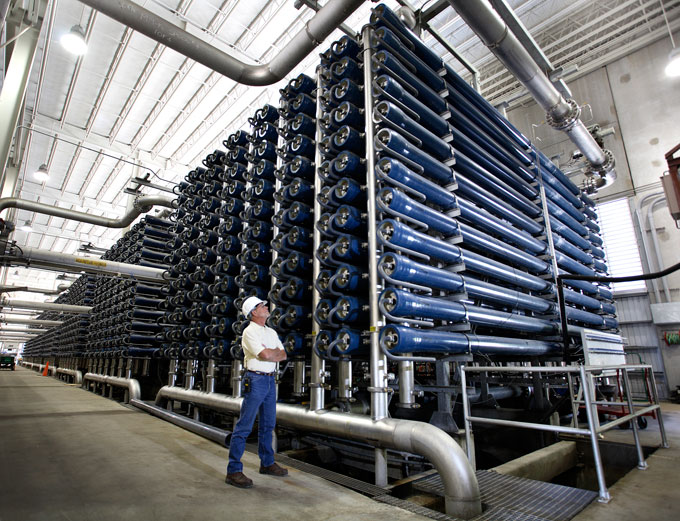
While early desalination plants relied on evaporation and condensation, most plants rely on reverse osmosis (RO), a less energy-intensive technology using selective membranes. One of the largest desalination plants in the U.S.—run by Tampa Bay Water, Florida’s largest wholesale water supplier—produces about 25 million gallons (95 million l) per day using an RO system.
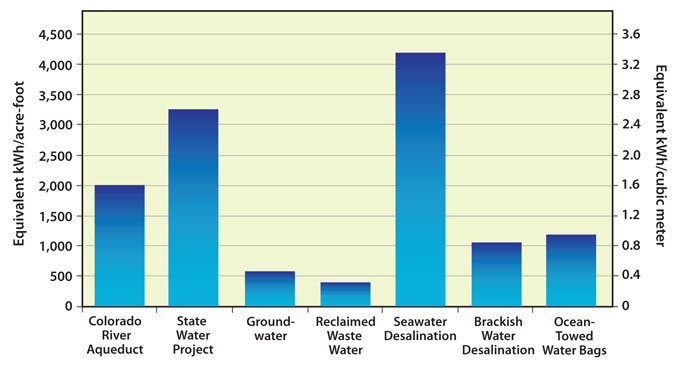
From an energy and environmental standpoint, desalination has a number of drawbacks. First, it is energy intensive, even where RO technology is used instead of evaporation. Current best practices with RO require about 12 kWh per 1,000 gallons (3.2 kWh/1,000 liters); with this energy intensity, between a third and a half of the total cost of desalination goes to energy. The figure below shows the relative energy intensities of various freshwater sources in San Diego, California. The high energy intensity of desalination in San Diego is comparable to that of Tampa Bay’s plant, which uses approximately 4,476 kWh/acre-foot (3.629 kWh/m3).
Second, along with producing freshwater, desalination also produces brine with about twice the salinity of the source water. The concentrated brine also often contains elevated levels of constituents found in seawater, such as manganese, lead, and iodine, as well as chemicals from urban and agricultural runoff. When brackish groundwater is desalinated, the resultant brine is usually deposited into evaporation ponds, reinjected into the ground through deep wells, or piped to the ocean.
When seawater is desalinated, the brine is usually piped some distance out to sea, though it may be mixed with treated wastewater or power-plant cooling water first. If it is not diluted first, the desalination brine is more dense than seawater, so it sinks, creating plumes of higher-salinity seawater on the ocean bottom—where sea life is concentrated. Few studies have been conducted to determine the risk of brine discharge into the ocean, and potential risks are significant.
Desalination is also well suited to solar-thermal power plants, according to a study by the German Aerospace Center, “Aqua-CSP: Concentrating Solar Power for Seawater Desalination.” In response to the heavy environmental impacts of conventional desalination systems, the researchers analyzed the use of concentrating solar power (CSP) to support desalination measures in urban centers throughout the Middle East and North Africa. They determined that implementing large-scale CSP desalination systems in those areas would not only avoid some environmental impacts from conventional desalination methods but would also become cost-competitive with desalination plants fueled by nonrenewable energy sources.
A few places in the world use seawater directly for toilet flushing. One is the city of Avalon, California, a small municipality of 3,500 on the island of Catalina, off the coast near Los Angeles. Avalon’s municipal plumbing code requires that all st...
Future water shortages in the U.S. and internationally will necessitate reducing demand and increasing supply. The starting point, almost always, should be water conservation, but using unconventional supplies should not be overlooked. This article has introduced some of the options.
Relative to green building, the most exciting alternative sources are those that can be harvested onsite: especially rooftop rainwater, graywater, and air-conditioner condensate. Beyond these site-specific options are municipal water sources, including treated wastewater and desalinated water. Using these sources appropriately and continuing to maximize water conservation opportunities will help us stave off the water shortages looming on the horizon.
(2008, April 29). Alternative Water Sources: Supply-Side Solutions for Green Buildings. Retrieved from https://www.buildinggreen.com/departments/feature
No place is more emblematic of water shortage than Las Vegas. The metropolitan area receives about four inches (100 mm) of rainfall per year and has doubled in population just since 2000 (to 1.9 million). It is 90% dependent on Lake Mead—a half-full (half-empty?) lake whose level has dropped more than 100 feet (30 m) since 1990.
But Las Vegas is not alone in grappling with water shortages. From the uncharacteristically thirsty Atlanta in 2007 to the Pacific Northwest, water shortages are expected to become more and more common in the coming decades. A 2003 report by the U.S. General Accounting Office reported that 36 states are likely to experience water shortages by 2013.
This article looks at strategies for reducing water use in and around buildings, addressing both residential and commercial water uses. This is by no means comprehensive coverage of these products and technologies but should provide an idea of the opportunities available to us.
Water Use In and Around Buildings
According to the U.S. Geological Survey, the United States uses about 400 billion gallons (1.5 trillion l) of water per day. Of this, the vast majority is used for thermoelectric power generation (48%) and irrigation on farms (34%). Water use in and around buildings, from both public water supplies and well water, accounts for about 47 billion gallons (180 billion l) per day, or 12% of U.S. water use.
The chart to the right conveys how water is used in buildings and their surrounding landscapes. In commercial buildings, the water use for different functions varies significantly depending on building type. Office buildings and hospitals, for example, have very high water use for mechanical systems, while hotels use more water for laundry and kitchens.
Residential indoor water use is dominated by toilets, clothes washers, showers, faucets, and (significantly) leaks, according to a 1999 report from the American Water Works Association Research Foundation. Residential water use from landscape irrigation is highly variable by climate and season.
The following sections address the major uses of water in and around buildings and the major opportunities for improved water efficiency. Each section provides a summary of the product or technology area along with information on recent developments and possible future trends. We start with plumbing fixtures.
High-efficiency toilets
Context: The Energy Policy Act of 1992 (EPAct92) mandated a maximum of 1.6 gallons of water per flush (gpf; 6 liters per flush, or lpf) for most toilets beginning in 1994 (and for flushometer-valve toilets beginning in 1997). Despite initial problems, performance has improved dramatically in the past ten years. Desire for even better efficiency now fuels demand for toilets that use at least 20% less water than standard 1.6-gpf models; these are termed high-efficiency toilets (HETs).
State of the art: High-efficiency toilets today are available with gravity-flush, pressure-assist, and flushometer–valve mechanisms. Pressure-assist toilets, which compress air at the top of the refill tank to increase the flush velocity, use as little as 0.8 gpf (3 lpf) and typically achieve excellent performance. Flushometer-valve toilets, which use direct water pressure without a tank, are common in commercial buildings. Dual-flush toilets, pioneered by Caroma in Australia, now dominate Australia and much of Europe. Introduced into North America by Caroma in 1999, most dual-flush toilets use 1.6 gpf for solids and 0.8 to 1.1 gpf (3–4 lpf) for liquids and paper. Caroma recently introduced a model with a full flush of 1.28 gpf (4.8 lpf) and a reduced flush of 0.8 gpf.
In 2006, the U.S. Environmental Protection Agency (EPA) introduced WaterSense, a voluntary program designed to promote the market for water-efficient products and services. Approximately 130 HETs have been certified to bear the WaterSense label. To carry the WaterSense label, HETs must be independently tested using the Maximum Performance (MaP) testing protocol that measures the ability of toilets to remove standardized test media (see
On the horizon: HETs may become standard nationwide. California has passed legislation that will mandate that all new toilets sold or installed in the state after 2014 be HETs (see
EBN
Vol. 16, No. 11). According to Barbara Higgins, executive director of the Plumbing Manufacturers Institute, the plumbing industry is lobbying to make this requirement the new federal standard—with a clearly defined schedule that gives manufacturers time to modify their products.
Composting and other ultra-low-
water-use toilets
Context: Composting toilets have been around since the 1970s but maintain just a tiny market share in North America. These toilets use no potable water (or almost none) and produce organic mulch for nonfood plantings. The need for extreme water conservation can also be satisfied by other ultra-low-flush toilets, including those relying on centralized vacuum systems and air pressure from compressors—technologies that were developed primarily for specialized uses such as airplanes, boats, and recreational vehicles.
State of the art: While no major manufacturers are known to be developing composting toilets, several smaller companies have gradually improved the technology. Most installations are in recreational settings without running water, though they sometimes appear in urban green buildings. Other types of toilets that use considerably less than a gallon of water per flush include air-pressure toilets made by Microphor that use as little as a quart (one liter) per flush as well as vacuum toilet systems made by Evac that are finding use in prisons, military bases, and other large applications.
On the horizon:
With gravity-flush, pressure-assist, and flushometer toilets improving so dramatically in both performance and water conservation, composting toilets and other ultra-low-flush toilets are unlikely to capture much market share, except in unusual situations.
Context: The maximum flush volume for urinals in the U.S. is one gallon (4 l), and most urinals today use the full gallon. This profligate waste led to the introduction of waterless urinals in the 1990s, first by the Waterless Company and then followed by at least a half-dozen other companies. In a sizeable office or institutional building, a waterless urinal can save as much as 40,000 gallons (150,000 l) per year. However, most waterless urinals rely on regular replacement of a vegetable-oil-based fluid and a disposable cartridge to maintain performance of the sanitary trap. Keeping waterless urinals clean and preventing the deposition of uric salts in the drain line have proven to be problematic.
State of the art:Waterless urinals are gaining acceptance in many parts of the country and, if properly installed and maintained, should prove satisfactory. Two companies, Caroma in Australia and Ecotech Water in the U.S., have introduced waterless urinals that rely on a rubberized membrane that lets liquid through and then curls up to provide a mechanical seal between uses. That seal allows rinse-water to be poured through the urinal periodically for cleaning without washing away expensive sealant fluid. The track record is very short, however, and, according to John Koeller, P.E., a water conservation specialist and technical advisor to the new Alliance for Water Efficiency, the technology is generally not permitted by code officials, since mechanical seals are not allowed in the U.S. Meanwhile, a new generation of ultra-low-flush urinals is entering the market. These products, available from companies including Zurn Industries, Sloan Valve, and Caroma, use as little as one pint (0.5 l) of water per flush (see
EBN
Vol. 16, No. 11), and the regular flushing is expected to prevent uric salts from accumulating in drain lines.
On the horizon: As the market gains experience with waterless urinals, we can expect to see installation and operation guidelines that improve performance and user satisfaction. Meanwhile, ultra-low-flush urinals will likely capture some of the waterless urinal market share. EPA plans to offer a WaterSense label for high-efficiency urinals (HEUs), which are likely to be defined as using 0.5 gpf (2 lpf) or less. (BuildingGreen’s
GreenSpec Directory standard for urinals is currently 0.25 gpf (0.95 lpf). For more on
GreenSpec water-use criteria refer to the relevant section introductions.)
The Ecoblue Cube takes a very different approach to reducing water use in urinals, with a small cube-shaped urinal cake that releases beneficial bacteria. These bacteria line the bowl, trap, and pipes, preventing odors and uric acid deposition (see
EBN
Vol. 17, No. 1). If this product works (so far so good in trials at BuildingGreen and Veritec Consulting), it could significantly reduce water use in urinals of all types by allowing them to be flushed only periodically.
Showerheads
Context: Showerheads, like toilets, are regulated by EPAct92, which established a limit of 2.5 gallons per minute (gpm; 9.5 liters per minute, or lpm) at 80 psi of water pressure. Because showers use hot water, reducing water use also saves energy. Replacing an older showerhead, which may flow at 5 gpm (20 lpm) or more, with a unit that uses 2.0 gpm (8 lpm) or less can pay for itself through reduced water and energy use in just a few months. Some early low-flow showerheads atomized the water into tiny, high-pressure droplets that did not wet the body effectively and quickly cooled off through evaporation. Some showerheads today achieve the federally mandated flow with restrictors that can be easily removed by a plumber or user, allowing the flow to be significantly increased—thus circumventing the regulations. Another way people have circumvented requirements is by installing multiple showerheads and body-wash nozzles in one shower system or by creating rain-like water sculptures that manufacturers claim are not showers at all. Kohler and Delta Faucet, among others, market high-end shower-tower systems that use as much as 20 gpm (80 lpm), which is contributing to a measured rise in water consumption in new homes.
State of the art: The best showerheads today have been designed for water efficiency from the ground up. Some models rely on the Venturi effect to aerate droplets and create the feel of a forceful shower while using relatively little water—as little as 1.5 gpm (5.7 lpm); a challenge here is to keep the aeration from making the droplets too small. Manufacturers using this approach include ETL, Bricor, and Hansgrohe with its 1.6 gpm (6 lpm) Croma EcoAir 1-Jet. Other manufacturers, including Delta Faucet, have gone even further in showerhead redesign, creating a pulsed shower with large droplets (see the review of H2Okinetics technology in
On the horizon: EPA’s WaterSense is working on a standard for showerheads that will likely bring us WaterSense-labeled products by the end of 2009 with a maximum flow of 2.0 gpm (8 lpm), or possibly lower. (The
GreenSpec standard for showerheads is 1.75 gpm [6.6 lpm].) Plumbing manufacturers are developing methods of measuring the wetting performance and heat retention of showerheads, according to Koeller, and EPA could eventually incorporate such performance attributes into WaterSense standards. Look for the multiple-showerhead loophole to be addressed in some way in the next several years. Also, regulations may prevent showerheads from being modified to increase flow above the legal limit.
Faucets
Context: EPAct92 limits the flow rate of residential kitchen and lavatory (bathroom) faucets to 2.5 gpm (9.5 lpm) at 80 psi, or 2.2 gpm (8.3 lpm) at 60 psi—although some faucets today achieve the federally mandated flow with either aerators or flow restrictors that can be removed, allowing the flow to be significantly increased. EPA’s WaterSense has adopted a more aggressive maximum flow rate of 1.5 gpm (5.7 lpm) at 60 psi for residential lavatory faucets; because of the need to fill kitchen pots with water, however, a WaterSense standard for kitchen faucets has not been adopted. In kitchens, flow controllability tends to be a more significant water-saving feature. While sensors that turn on the flow when a user’s hands are properly positioned—most common in commercial buildings but making their way into homes—might seem like a water-saving feature, studies have shown that they often increase water use because they turn on unnecessarily or stay on longer than needed.
State of the art: Simple, inexpensive aerators can adapt any modern kitchen or lavatory faucet into a water-efficient unit—with flow rates as low as 0.5 gpm (2 lpm). The lower the flow rate, however, the longer it takes hot water to reach the user (see demand-controlled hot water circulators, below). A perception of greater flow can be achieved by aerating the water stream or by creating a laminar flow (essentially a hollow cylinder of water that appears to be solid). Significant savings can be achieved with faucets—and especially kitchen faucets—by installing a foot- or knee-operated control so that users can turn the water on and off without using their hands (and while retaining the desired temperature mix). A less expensive option is a simple lever control on the faucet itself that allows the user to temporarily reduce the flow (though usually not turn it all the way off) with a simple flick of the finger.
On the horizon: Once more people experience the convenience and water savings of foot- and knee-operated controls for faucets, these devices are likely to become more common—especially if less expensive models enter the market. We may also see sensor-activated controls that actually save water. Finally, we may see regulations for faucets that prevent them from being modified to increase the flow above the legal limit.
Context: Commercial kitchens use pre-rinse spray valves to rinse dishes before they go into the dishwasher. These units consist of a spray nozzle, a squeeze lever controlling water flow, and a dish-guard bumper. (Note that pre-rinse spray valves are different than spray valves used for filling cooking pots, which have higher flow rates.) Pre-rinse spray valves have flow rates as high as 5 gpm (20 lpm)—with an average of about 3.2 gpm (12 lpm), according to Pacific Gas & Electric’s Food Service Technology Center in San Ramon, California. In a typical commercial kitchen, more water is used rinsing dishes than washing them in dishwashers. The Energy Policy Act of 2005 (EPAct2005) established a maximum legal flow rate of 1.6 gpm (6.0 lpm) for pre-rinse spray valves manufactured after January 1, 2006. Compared with a spray valve using 3.2 gpm, a 1.6 gpm model in a small, quick-serve restaurant will save about 50,000 gallons (190,000 l) of water and $1,000 in energy costs per year.
State of the art: At least three manufacturers produce pre-rinse spray valves that use no more than 1.28 gpm (4.8 lpm; 20% less than the federal maximum) and meet a stringent standard for performance of 21 seconds per plate, based on a standard test procedure. (These criteria for pre-rinse spray valves have been adopted by
GreenSpec.)
On the horizon: EPA had been planning to adopt voluntary Energy Star criteria for pre-rinse spray valves but decided against that after the new federal standard was adopted as part of EPAct2005. With clear performance metrics and demonstrated savings from the replacement of older models, we can expect to see more water conservation programs offering rebates for such replacements.
Demand-Controlled Hot Water Circulators
Context: Waiting for hot water in bathrooms and kitchens wastes a tremendous amount of water nationally. The amount of waste depends on the pipe diameter and the distance between the fixture and the water heater; the flow rate of the end-use fixture may also affect the waste slightly and it significantly affects the wait time for hot water. Continuous-circulation systems, which maintain a loop of circulating hot water, can save water while eliminating the wait for hot water. Such systems are very common in hotels and are becoming more common in homes. The problem with continuous-circulation systems is that they waste tremendous amounts of energy because they turn hot-water pipes into low-temperature radiators—increasing energy use for water heating year-round and for air conditioning in warmer months. Timer-controlled circulators reduce this energy waste by turning off the pump during certain periods of day or night.
State of the art: Demand-controlled hot water circulators can solve these problems. The D’Mand system is marketed by three companies: ACT Metlund, Taco, and Uponor (formerly Wirsbo). With these systems, a user activates a small pump, by either pushing a button or tripping an occupancy sensor, that quickly delivers hot water. Cold water that had been sitting in the hot-water pipes, meanwhile, returns to the water heater instead of running out of the tap. When hot water reaches the fixture, a temperature sensor turns off the pump. (For more detail, see
A less expensive and simpler (though less effective) strategy for reducing water waste while waiting for hot water is to insulate all hot water pipes. With insulation, hot water in the pipes will cool down more slowly, so that the next user may not need to let the water run while waiting for hot water. Pre-slit, closed-cell polyurethane foam pipe insulation, sized to the pipes being insulated, is generally the most convenient option.
On the horizon: “Home-run” systems that deliver water separately to individual fixtures and appliances through cross-linked polyethylene (PEX) tubing sized to the flow-rate requirements can reduce waste and reduce the wait time for hot water. The rising popularity of PEX has brought greater use of such home-run systems, and it’s likely that demand-controlled hot water circulators will become much more common.
Appliances
A number of residential and commercial appliances are addressed below, providing a sampling of savings that can be achieved.
Context: Vertical-axis (top-loading) clothes washers require two to three times more water than horizontal-axis (H-axis) washers because the former almost fully submerge laundry, while H-axis washers dip laundry in and out of the wash water as the inner drum rotates. Because most people wash with hot water, the H-axis machines save significant energy. The market share of H-axis washers has been increasing rapidly: from 9% of sales in 2001 to 29% in 2006, according to the Association of Home Appliance Manufacturers.
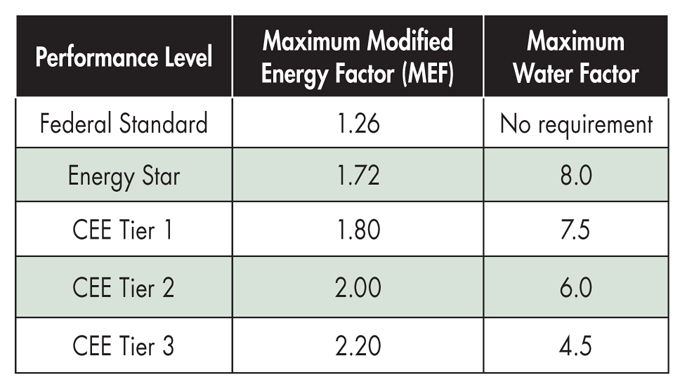
State of the art: Most of today’s water- and energy-efficient clothes washers are H-axis, and all but one of these are front-loading. New federal energy standards for residential clothes washers—top-loading and front-loading—went into effect January 1, 2007, raising from 1.04 to 1.26 the
modified energy factor (MEF), which is the capacity of the washer divided by the sum of the machine’s electrical energy, water heating energy, and energy required to remove remaining water for a wash cycle, expressed in ft3/kWh/cycle. At the same time, EPA increased MEF standards for Energy Star certification (from 1.42 to 1.72) and added a
water factor (WF) maximum of 8.0. The water factor is the number of gallons used for a full wash and rinse cycle per cubic foot of drum capacity. Given average usage, a one-unit reduction in a clothes washer’s water factor (from nine to eight, for example) will save about 1,000 gallons (4,000 l) per year. Meanwhile, the Consortium for Energy Efficiency (CEE), whose standards are often used as a basis for rebates, also increased the performance requirements on January 1, 2007, for its Tier 1, 2, and 3 designations for washers, as shown in the table below.
On the horizon: The recently signed Energy Independence and Security Act of 2007 (see 2007 Energy Bill Promotes High-Performance Buildings) establishes, for the first time, a maximum water factor for clothes washers. The legislation establishes a limit of 9.5 gal/ft
3 (1300 l/m
3), effective January 1, 2011, and sets the stage for further tightening energy- and water-use standards in 2015 and 2018. The average water factor of top-loading, vertical-axis washers today is about 11.5, so this change will hasten the industry transition toward H-axis machines.
Commercial clothes washers
Context: Residential-style H-axis clothes washers have been the norm in laundromats for some time and are addressed by both federal standards and Energy Star. Larger commercial laundry systems, often called washer-extractors, are common in hotels, hospitals, and nursing homes. Although these systems are not addressed by federal standards or Energy Star, they outperform the smaller machines in both energy efficiency and water savings. Washer-extractors are available with capacities of hundreds of pounds and often include an option for water reuse.
State of the art: Prior to 2007, there was no federal standard for residential-style commercial clothes washers, while there was an MEF threshold of 1.42 for Energy Star listing. Effective in 2007, the federal standard of MEF 1.26 and WF 9.5 was adopted, and the Energy Star threshold was tightened to MEF 1.72 and WF 8.0.
On the horizon: Look for continued reductions in water and energy use with residential-style clothes washers as well as advances in onsite water recovery and reuse, which are already common with washer-extractors.
Context: The water and energy use of residential dishwashers have dropped considerably since federal energy performance standards first went into effect in 1994. While standard-sized dishwashers used 11–15 gallons (42–57 l) of water for a full cycle in 1978, today’s models typically use just 3–10 gallons (11–38 l). (By comparison, washing and rinsing an equivalent load of dishes in the kitchen sink, according to John Koeller, uses about 18 gallons (68 l) of water.) More than 60% of the total energy use by dishwashers goes to heat water, so efforts to improve energy efficiency focus on reducing water use. The energy factor for dishwashers is defined as the number of wash cycles per kWh, accounting for both the dishwasher’s electrical energy use and the energy required for heating water.
State of the art: With residential dishwashers, many top-of-the-line models, such as the Bosch 800-series Evolution SHE98 (which BuildingGreen recognized as a 2007 Top-10 Green Building Product—see
EBN
Vol. 16, No. 12), are the most resource-efficient. This product has an energy factor of 1.14, compared with the federal minimum of 0.46 and the Energy Star minimum of 0.65. Among the features used to achieve this water savings are controls that adjust wash conditions, including water use, according to how dirty the dishes are.
On the horizon: One of the technologies being researched is ultrasonic washing, in which high-frequency sound generators create
cavitation bubbles in the dishwasher that surround the dishware. According to a November 2007 U.S. Department of Energy technology assessment, “these bubbles implode upon contact with a surface, effecting a mechanical scrubbing action that removes soil from the dishware.” Sharp introduced a countertop dishwasher for the Japanese market in 2002 that uses a somewhat different ultrasonic process to create a fine mist and hardens water with table salt to help remove protein-based stains. These more radical innovations aside, dishwasher cleaning performance should continue to improve even with continued reductions in water and energy use.
Commercial dishwashers
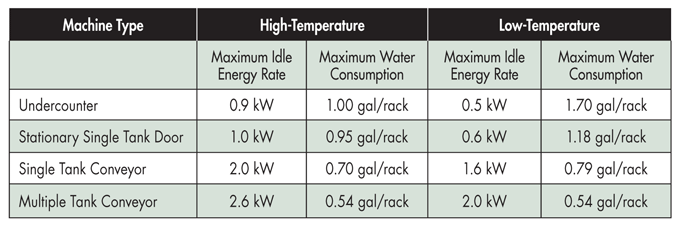
Context: Commercial dishwashers are divided into several categories, based on configuration, means of sterilization, and size. High-temperature models use hot water—typically boosted to about 180°F (82°C)—to sterilize dishes, while lower-temperature models use water at 140°F (60°C) or lower plus chemical additives to sterilize dishes. The smallest undercounter models work like residential dishwashers, except that they operate at higher temperatures and with much shorter wash cycles—as short as 90 seconds. Larger kitchens and institutional cafeterias use warewashers, which pass racks of dishes through multiple tanks on a conveyor belt. Energy Star standards for commercial dishwashers went into effect in October 2007 (see
State of the art: Considerable attention has been paid to commercial dishwashers in recent years. The Energy Star product list includes more than 120 commercial dishwasher models from ten manufacturers. Water consumption for the multiple-tank conveyor systems is as low as 0.28 gallons (1.1 l) per rack. Energy Star limits are shown in the table below.
Many technologies have contributed to the improved water efficiency of commercial dishwashers. Hobart, for example, introduced an Opti-Rinse System in 2004 with spray nozzles that cut water use in half. This technology alone reduced the water use per rack from 1.49 to 0.74 gallons (5.64 to 2.80 l) on certain Hobart products.
On the horizon: With Energy Star standards in place, continued reductions in energy and water use by commercial dishwashers are likely.
Commercial steamers
Context: In commercial food-service establishments, food steamers use significant amounts of water and energy. Steam contains six times the energy of boiling water and quickly heats food when it condenses on its surface, transferring its latent heat to the food. Older steamers inject steam into the cooking cavity at a constant rate from a boiler or steam generator; steam not condensing on the food escapes as a mixture of steam and condensate through a drain line. This escaping steam and hot water directly wastes water and energy, and the need to cool off the condensate (to a maximum of 140°F, or 60°C, according to most codes) with tap water before it enters the sewer line indirectly wastes a great deal more. A 2005 California study found an average flow rate of over 40 gallons (150 l) per hour in these condensate lines. In many restaurants, steamers are turned on in the morning and left on until closing. The study estimated that 250,000 commercial steamers operate nationwide, each consuming about 80,000 gallons (300,000 l) per year.
State of the art: Boilerless, also known as connectionless, steamers do not have condensate drain lines, so do not require cold water flow to cool the condensate. Because most of the steam is retained, they require significantly less heat input. Beginning in August 2003, Energy Star began qualifying commercial steamers that achieve a cooking energy efficiency of at least 50% for electric models and 38% for gas models. Some electric steamers achieve efficiencies as high as 73% with convection fans to improve steam circulation, vacuum pumps to lower the cooking temperature, improved insulation, an efficient standby mode, and advanced controls. In a corporate cafeteria case study in the California study, replacing an older boiler-based steamer with stacked, boilerless steamers cut water use from 479 to 33 gallons (1,810 to 125 l) and energy use from 104 kWh to 29.9 kWh per day, resulting in annual water and energy cost savings of $3,284.
HVAC systems in commercial buildings use a lot of water. The bulk of this water use is by cooling towers, which water conservation specialist Bill Hoffman of Austin, Texas, describes as devices “to get rid of unwanted energy with wanted water.” For every ton-hour (3.5 kWh) of cooling, according to Hoffman, 1.44 gallons (5.45 l) of water are evaporated. “The first and foremost water conservation practice you can follow is energy conservation,” he told
EBN. While general energy-conservation measures are not described here, strategies like energy-efficient lighting and optimized glazing should top any project’s list for reducing water use.
Cooling towers
Context: Cooling towers chill buildings by evaporating water. With a typical cooling tower, warm water from the heat source (such as an air-conditioning system or process equipment) is pumped to the top of a cooling tower and is either sprayed or dripped through fill material called
wet decking. Air blown through the falling water evaporates and chills the water. Water is lost in the cooling tower through three processes:
evaporation through the top of the tower, which amounts to about three gallons per minute (11 l/min) in a 100-ton (350 kW) chiller;
drift losses, or droplets of water (mist) carried out of the tower by the airflow; and
blowdown, the regular removal of water from the bottom of the cooling tower to lower concentrations of dissolved minerals and other contaminants. To compensate for these losses, makeup water is continually added to cooling towers. The higher the acceptable
concentration ratio, or level of dissolved minerals in the blowdown water, the greater the water savings, because less makeup water is needed. For this reason, considerable effort is warranted to reduce the problems caused by high levels of dissolved minerals and contaminants, such as scaling and bacteria-laden biofilms.
State of the art: Various features in cooling towers can reduce the amount of makeup water required. First, both the makeup and blowdown water flows should be metered so that operators can gauge performance and water use. Conductivity controllers should be used to maintain the desired concentration ratio in the cooling-tower water. Overflow alarms should be installed to prevent waste. Finally, efficient drift eliminators should be used to keep drift losses to a minimum. In the proposed Standard 189, the American Society of Heating, Refrigerating, and Air-Conditioning Engineers [ASHRAE] calls for limiting drift loss to 0.001% of the circulated water volume for counter-flow towers and 0.005% for cross-flow towers.
On the horizon: There are a number of water-treatment technologies claimed by their manufacturers to prevent scaling and protect water quality in cooling towers. Some rely on magnets that apparently alter the surface charge of dissolved or suspended particles and prevent deposition; others rely on electrostatic field generation, accomplishing the same result (see
EBN
Vol. 14, No. 4 for a review of one such system, the Dolphin). While such systems have avid believers—and growing sales—the unusual chemistry and physics involved, and a paucity of third-party testing, has produced skepticism. If testing can verify performance claims, such systems offer significant water- (as well as energy- and chemical-) saving potential.
Commercial boilers
Context: Commercial steam boilers and steam distribution systems, especially older systems, are inherently leaky and require large quantities of makeup water. Some old steam-based district heating networks, in fact, are single-pipe systems with no condensate return lines—the condensate simply drains to sewer pipes.
State of the art: At a minimum, older steam systems without condensate return pipes should be retrofitted to recover both water and heat; this measure can reduce operating costs by as much as 50% to 70%, according to Amy Vickers in her
Handbook of Water Use and Conservation. A better solution is to convert steam distribution systems to hot water. Operating at lower pressure, hot water piping is much less prone to leakage, and the lower temperature significantly cuts heat loss from the piping. Other good practices include using well-insulated piping designed for district heat, installing flow meters on blowdown discharge valves and makeup water inlets, and providing automated controls for blowdown discharge and makeup water. Blowdown (boiler bleed-off) should be based on water-quality testing rather than timers.
Context: A lot of process equipment used in industry, laboratory, and healthcare settings generates heat that has to be dissipated. Often, this is done with once-through cooling. A 20-horsepower (15 kW) vacuum pump used around the clock in a small manufacturing plant may use 12 gpm (45 lpm) of water for cooling—more than six million gallons (20 million l) per year.
State of the art: Recirculating cooling systems can save a tremendous quantity of water, compared with once-through systems. Providing a chiller or cooling tower to chill water for process equipment usually results in even greater savings. Alternately, water-cooled equipment can be replaced with air-cooled equipment, coupled with proper ventilation to prevent significant increases in cooling loads.
On the horizon: With some process equipment, newer technology generates less heat. Digital x-ray machines in hospitals, for example, can save thousands of gallons per day, compared with film-based technology; more efficient pumps and motors generate less waste heat, and better engineering can allow waste heat to be captured from heat-generating processes and transferred to a heat-requiring processes, saving energy at both ends.
Outdoor Water Use
This section addresses water use for the landscapes around our buildings. Swimming pools, fountains, and other outdoor water features can also be very significant water users but are not covered in this article; nor is agricultural water use.
Context: Irrigation practices vary widely by region. The American Water Works Association Research Foundation (AWWARF) reports that in dry places, such as Phoenix and Scottsdale, outdoor water use accounts for 59%–67% of total residential water use, while in wetter places, such as Seattle and Tampa, outdoor use accounts for 22%–38%. AWWARF reported outdoor water use in Phoenix at over 440 gallons (1,700 l) per household per day. The vast majority of this outdoor water use is for lawns; nationwide we plant mostly variations of Kentucky bluegrass, which was cultivated from a species native to the British Isles and requires about 40 inches (1 m) of rain per year to prosper.
State of the art: Landscaping with climate-adapted plants, which require little or no irrigation, should be a top priority. Often called xeriscaping, this practice is gradually gaining acceptance, though many municipalities mandate green lawns and prohibit xeriscaping. In some areas, we are seeing growing use of artifical turf, which can save a lot of water but raises lots of other issues (see
On the horizon: In drier and drought-prone regions, we can expect an end to regulations requiring lawns. In their place will be incentives to convert high-water lawn areas to xeriscaping. Xeriscaping and associated products and services should become more common.
Water-efficient irrigation
Context: In drier parts of the country, not only is landscape irrigation common, but standard irrigation practices often waste a significant portion of the water that is used. Evaporation, uneven distribution and pooling, piping leaks, poorly targeted spray nozzles, and irrigation when the water isn’t needed can waste a tremendous amount of water —75% or more.
State of the art: Drip irrigation, soaker hoses, and microspray heads can reduce evaporation, overwatering, and improperly targeted delivery. The greatest savings can often be achieved with newer, more advanced controllers that adjust water delivery according to soil moisture and weather predictions. (The WeatherTRAK irrigation control system, for example, was a BuildingGreen Top-10 Green Building Product for 2006—see
EBN
Vol. 15, No. 12.) Potable water use can be reduced or eliminated by using harvested rainwater, graywater, and treated wastewater for irrigation.
Final Thoughts
There are strong indications that water will become a more limited resource over the coming decades, and it is important for building professionals to pay close attention to these trends and build up the expertise needed to reduce water consumption in and around buildings should supply become further constrained. The good news is that the U.S. has become significantly more water-efficient in the past several decades—showing that a lot can be achieved—and there are still plenty of opportunities for further improvement.
Alternative water sources—and the separation of potable and nonpotable water uses—will also play an important role in satisfying water needs. Look for coverage of this topic in a later issue of
EBN, along with information on the policy side—incentives, fee structures, regulations, and other strategies to encourage wise management of our water resource.
Finally, fairly simple changes in behavior by building occupants can significantly reduce water use. Homeowners can avoid running the water while rinsing dishes or take shorter showers. Commercial building managers can maintain higher temperature set points on evenings and weekends to reduce cooling needs and be more frugal with irrigation. Technology has a huge role to play in saving water, but so do our actions. Educating building occupants about water conservation can make a big difference.

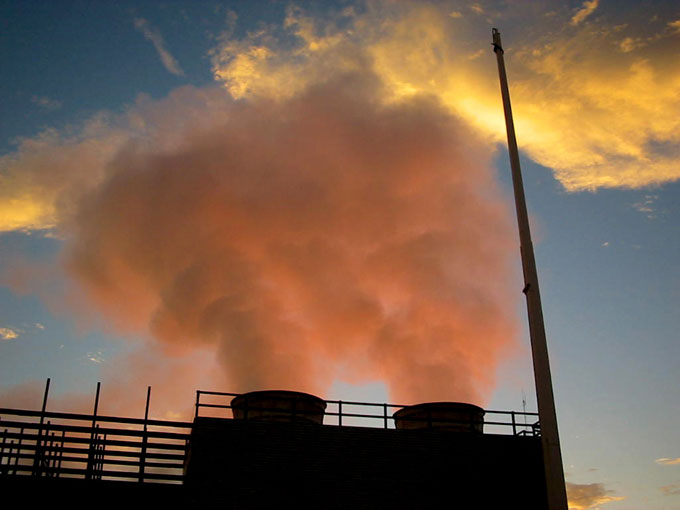 No place is more emblematic of water shortage than Las Vegas. The metropolitan area receives about four inches (100 mm) of rainfall per year and has doubled in population just since 2000 (to 1.9 million). It is 90% dependent on Lake Mead—a half-full (half-empty?) lake whose level has dropped more than 100 feet (30 m) since 1990.
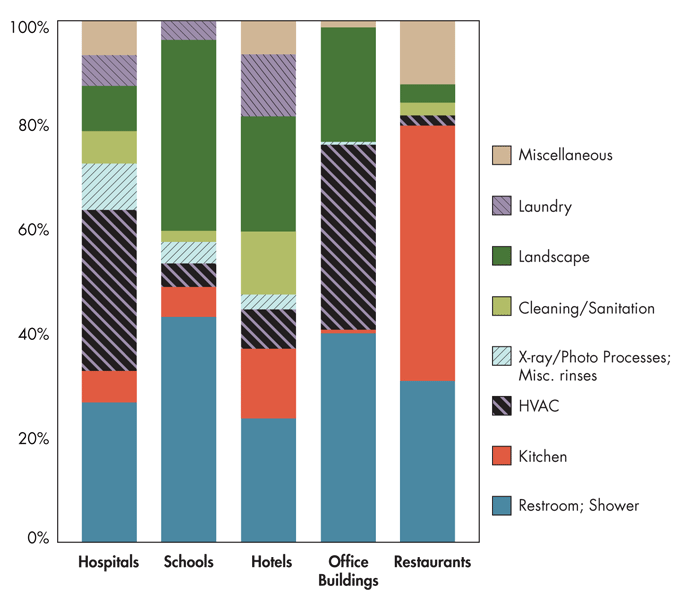 The chart to the right conveys how water is used in buildings and their surrounding landscapes. In commercial buildings, the water use for different functions varies significantly depending on building type. Office buildings and hospitals, for example, have very high water use for mechanical systems, while hotels use more water for laundry and kitchens.
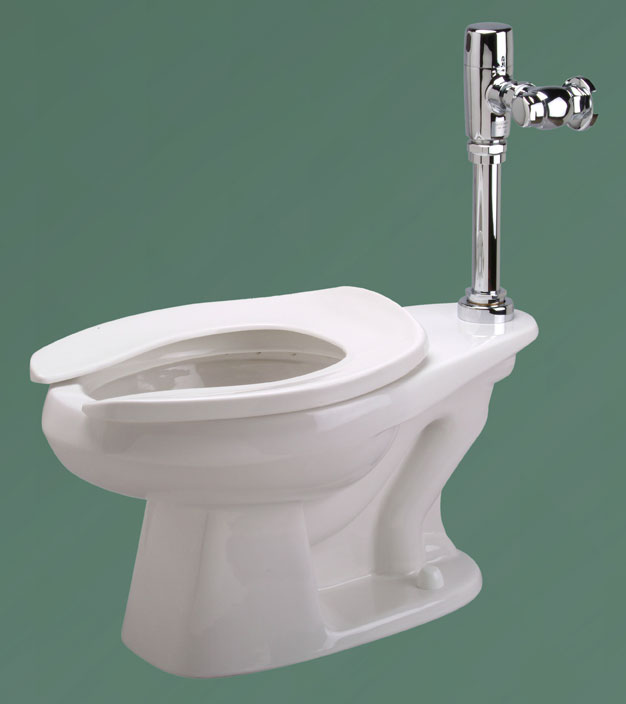 Context: The Energy Policy Act of 1992 (EPAct92) mandated a maximum of 1.6 gallons of water per flush (gpf; 6 liters per flush, or lpf) for most toilets beginning in 1994 (and for flushometer-valve toilets beginning in 1997). Despite initial problems, performance has improved dramatically in the past ten years. Desire for even better efficiency now fuels demand for toilets that use at least 20% less water than standard 1.6-gpf models; these are termed high-efficiency toilets (HETs).
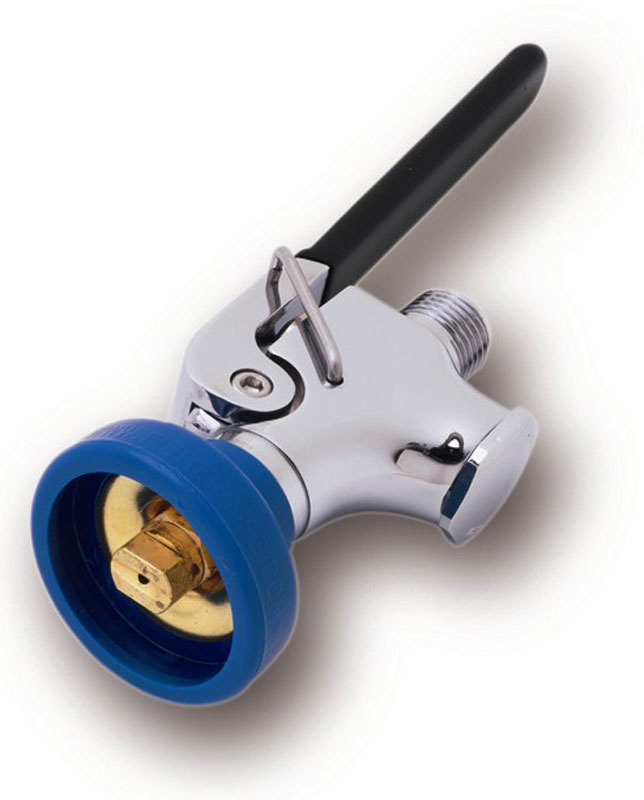 Context: Commercial kitchens use pre-rinse spray valves to rinse dishes before they go into the dishwasher. These units consist of a spray nozzle, a squeeze lever controlling water flow, and a dish-guard bumper. (Note that pre-rinse spray valves are different than spray valves used for filling cooking pots, which have higher flow rates.) Pre-rinse spray valves have flow rates as high as 5 gpm (20 lpm)—with an average of about 3.2 gpm (12 lpm), according to Pacific Gas & Electric’s Food Service Technology Center in San Ramon, California. In a typical commercial kitchen, more water is used rinsing dishes than washing them in dishwashers. The Energy Policy Act of 2005 (EPAct2005) established a maximum legal flow rate of 1.6 gpm (6.0 lpm) for pre-rinse spray valves manufactured after January 1, 2006. Compared with a spray valve using 3.2 gpm, a 1.6 gpm model in a small, quick-serve restaurant will save about 50,000 gallons (190,000 l) of water and $1,000 in energy costs per year.
 Context: Vertical-axis (top-loading) clothes washers require two to three times more water than horizontal-axis (H-axis) washers because the former almost fully submerge laundry, while H-axis washers dip laundry in and out of the wash water as the inner drum rotates. Because most people wash with hot water, the H-axis machines save significant energy. The market share of H-axis washers has been increasing rapidly: from 9% of sales in 2001 to 29% in 2006, according to the Association of Home Appliance Manufacturers.
 Context: Commercial dishwashers are divided into several categories, based on configuration, means of sterilization, and size. High-temperature models use hot water—typically boosted to about 180°F (82°C)—to sterilize dishes, while lower-temperature models use water at 140°F (60°C) or lower plus chemical additives to sterilize dishes. The smallest undercounter models work like residential dishwashers, except that they operate at higher temperatures and with much shorter wash cycles—as short as 90 seconds. Larger kitchens and institutional cafeterias use warewashers, which pass racks of dishes through multiple tanks on a conveyor belt. Energy Star standards for commercial dishwashers went into effect in October 2007 (see
 State of the art: Considerable attention has been paid to commercial dishwashers in recent years. The Energy Star product list includes more than 120 commercial dishwasher models from ten manufacturers. Water consumption for the multiple-tank conveyor systems is as low as 0.28 gallons (1.1 l) per rack. Energy Star limits are shown in the table below.
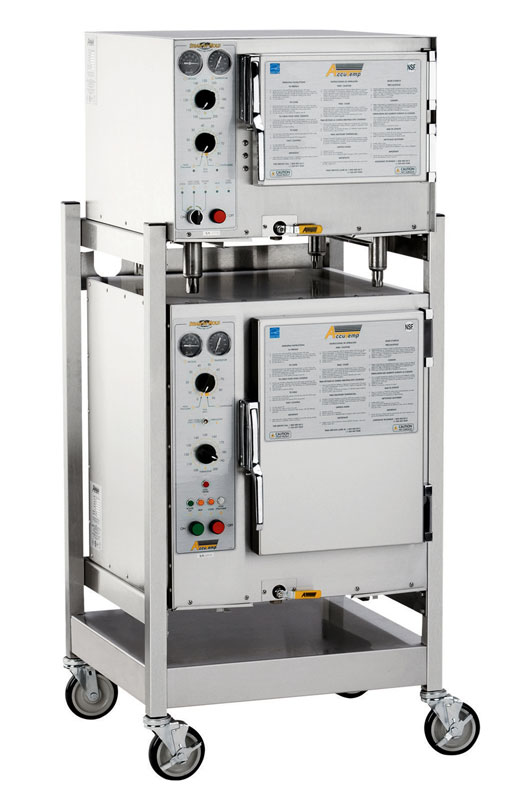 Context: In commercial food-service establishments, food steamers use significant amounts of water and energy. Steam contains six times the energy of boiling water and quickly heats food when it condenses on its surface, transferring its latent heat to the food. Older steamers inject steam into the cooking cavity at a constant rate from a boiler or steam generator; steam not condensing on the food escapes as a mixture of steam and condensate through a drain line. This escaping steam and hot water directly wastes water and energy, and the need to cool off the condensate (to a maximum of 140°F, or 60°C, according to most codes) with tap water before it enters the sewer line indirectly wastes a great deal more. A 2005 California study found an average flow rate of over 40 gallons (150 l) per hour in these condensate lines. In many restaurants, steamers are turned on in the morning and left on until closing. The study estimated that 250,000 commercial steamers operate nationwide, each consuming about 80,000 gallons (300,000 l) per year.
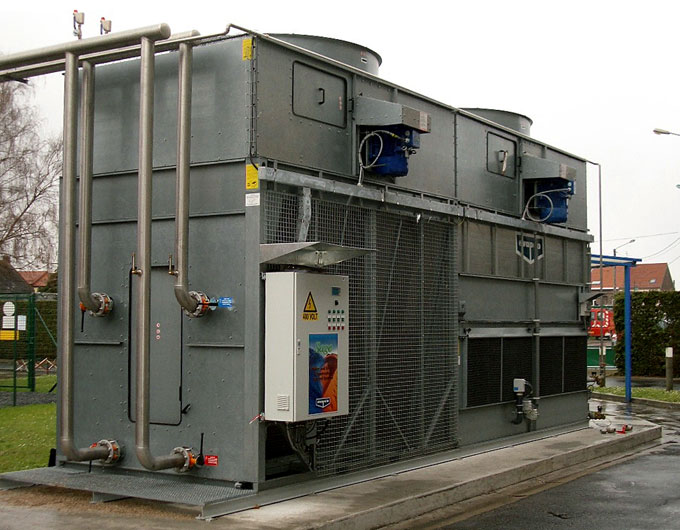 Context: Cooling towers chill buildings by evaporating water. With a typical cooling tower, warm water from the heat source (such as an air-conditioning system or process equipment) is pumped to the top of a cooling tower and is either sprayed or dripped through fill material called
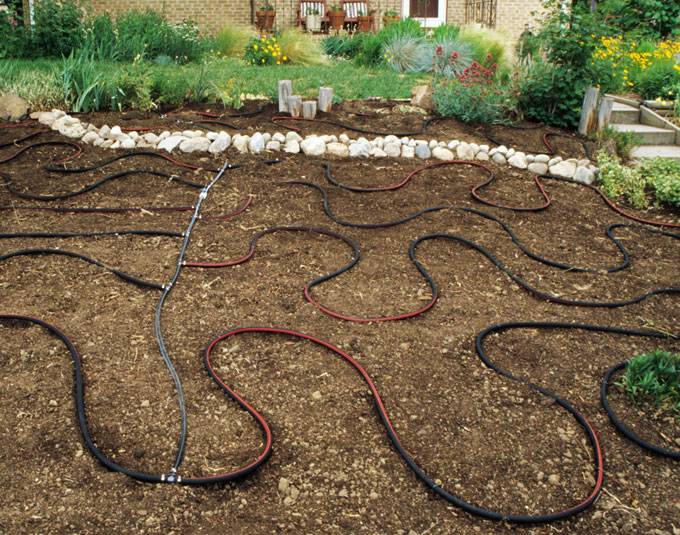 State of the art: Drip irrigation, soaker hoses, and microspray heads can reduce evaporation, overwatering, and improperly targeted delivery. The greatest savings can often be achieved with newer, more advanced controllers that adjust water delivery according to soil moisture and weather predictions. (The WeatherTRAK irrigation control system, for example, was a BuildingGreen Top-10 Green Building Product for 2006—see

