Building Information Modeling and Green Design

Feature

Building Information Modeling and Green Design

In a perfect world, energy simulations and design tools would be so well integrated that each time an architect moved a wall, added a window, or changed a lighting specification, the building’s predicted energy performance would be updated and displayed instantly. With that sort of real-time feedback, designers would quickly become skilled at optimizing the energy performance of their designs, and new buildings would be rapidly approaching carbon neutrality. Along the way, other aspects of a building, such as how well it uses daylight, how procuring its material will affect the planet, and even how much it will cost to build, could be similarly tracked and optimized. And all of this would be done while sharing a design seamlessly across disciplines.

That world has not yet arrived, and the path to it is strewn with obstacles. But in some settings it is becoming tantalizingly close, thanks to the convergence of data-rich, three-dimensional (3D) design tools, ever-faster computers, and accepted protocols for sharing digital information about buildings across platforms. In spite of the significant investment that designers and contractors have to make to adopt building information modeling (BIM), they are flocking to it because it can reduce errors, streamline costs, and improve the performance of a facility in dozens of ways, not least of which is green performance.

A Brief History of Digital Design

In the early 1980s, technologically savvy architecture firms were replacing their drafting tables and pencils with workstations running computer-aided design (CAD) software. By the end of that decade, firms that hadn’t made that transition were in trouble. Through the 1990s, two-dimensional CAD drawings gave way to tools that could create three-dimensional views of a design, and more advanced tools enabled architects to design directly in three dimensions using virtual models. “Working with a model of a building is actually very natural, because it’s what we architects carry around in our heads anyway,” said Mario Guttman, AIA, vice president and CAD director at HOK. Structural engineers working on complex buildings have been among the early adopters of 3D CAD tools, but architects and other engineers now commonly use these tools as well.

Acronym List and GlossaryAEC: Architecture/Engineering/Construction

...

Read More...

Building information modeling (BIM) adds additional “dimensions” onto those 3D CAD models by

attaching information to elements in the virtual building. Early uses of BIM have advanced beyond collision detection to focus on specific functions, such as real-time cost estimating. Autodesk’s Revit, for example, is linked to cost data from RSMeans, so a project’s budget can be tracked as the design evolves. Sophisticated contractors are using tools such as Constructor from Vico Software (recently spun off from Graphisoft) to create cost estimates based on their own cost databases and also to model and optimize construction sequencing.

What is Building Information Modeling?

“BIM is not just software but a methodology of practice,” said Huw Roberts, Bentley Systems’ global marketing director, suggesting that “an architect or engineer would decide to practice BIM and use a bunch of tools to do that.” Adam Rendek, of Anshen + Allen Architects in San Francisco, added, “We are taking advantage of the intelligence that is embedded in the model. That’s what makes BIM different from 3D CAD.”

The move towards BIM is driven in part by large building owners, including the U.S. General Services Administration (GSA), which, as of 2007, accepts delivery of designs for major projects only as interoperable models. Owners like GSA have documented the wastefulness of the conventional paper-based building delivery process and are dictating a more integrated approach. A handful of BIM-related organizations and initiatives joined forces under the umbrella of the National Institute of Building Sciences (NIBS) buildingSMART Alliance and, in February 2007, released the first part of a national BIM standard for industry review.

Autodesk, the 800-pound gorilla in the CAD software jungle, has incrementally added data-linking capabilities to its flagship Architectural Desktop software package. In 2002, the company made a major commitment to BIM with its acquisition of Revit, a database-driven design software package. Autodesk is now actively seeking to migrate its longtime CAD customers into the Revit product line. Currently there are 200,000 licensed Revit users worldwide—doubled from last year, according to Jay Bhatt, vice president for AEC at Autodesk. Other major players in this market include ArchiCAD from Graphisoft (a Hungarian company acquired in 2006 by the German firm Nemetschek), and the Microstation suite of software tools from Bentley Systems. Bhatt estimates that between 5% and 10% of CAD users worldwide use BIM software from one of these companies.

Streamlining Building-Performance Simulations

As the number of designers working in BIM grows, so does the opportunity for using those virtual models to do more than just estimate costs. Working in two-dimensional, basic CAD drawings, “you had to do all this heroic behavior to create an environmentally sensitive design,” noted Bhatt. With the advent of BIM, however, “technology is facilitating a much bigger movement around sustainability in the buildings space,” Bhatt added. Vincent Murray, business development manager in the Boston office of simulation software company IES, agrees: “BIM opens up building-performance modeling to the entire building construction community,” he said.

Energy modelers use specialized software to create a virtual model of a building. They then subject that model to the building’s anticipated weather and usage patterns to predict its heating and cooling loads and energy use. Until now, setting up an energy model took many hours, even for a relatively simple building, so iterations through various design alternatives were slow and expensive. “Now, since the model is available as a given, representing the actual current state of the design, we can shorten this amount of time dramatically,” said Rendek.

Energy feedback during conceptual design

One of the ironies of energy modeling and other simulations used in the design process is that they tend to require a fairly complete model of the building, which means that by the time the modeling is done, the design is fully developed and only minor changes can be entertained. BIM mitigates this problem to some extent because the integrated 3D design model makes it relatively easy to make changes, even late in the process, by eliminating the need to coordinate changes across multiple drawings. But early-stage simulations from preliminary 3D and BIM models offer the greatest potential benefits. Green Building Studio and (soon) SketchUp are optimized for use in those early stages—specifics on each follow.

Green Building Studio. Green Building Studio (GBS) is a pioneer in the field of easy, basic energy simulation from design models. As both a company and a Web-based service of the same name, GBS includes a protocol for translating information from CAD software into the industry-standard DOE-2 energy simulation engine. Because an energy model requires data that isn’t typically defined even in BIM files, much less conventional 3D CAD, GBS fills in the gaps with many default assumptions. “Most of the tools that are moving forward are still engineering tools,” said John Kennedy, president of the company, referring to their intended use for analyses of fully developed designs by trained engineers. He added, “The whole point of this tool is early-stage modeling.”

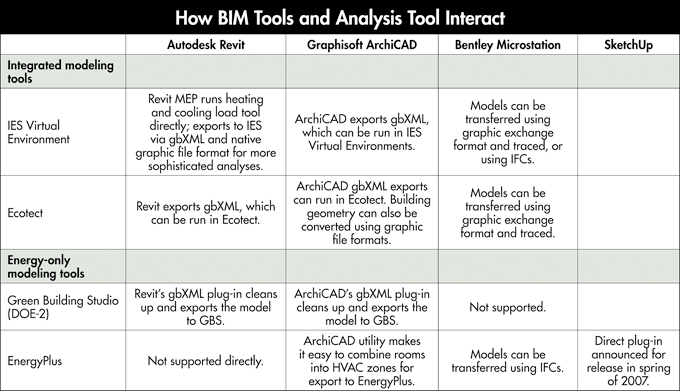
Kennedy has created plug-ins for Autodesk’s Architectural Desktop and ArchiCAD that assist users in defining HVAC zones and validating the BIM model to increase the chances that the energy simulation will provide useful results. This capability is integrated into Revit, so no plug-in is required. The software generates a file in gbXML format (an information exchange protocol developed by GBS) that the software uploads to GBS’s server for analysis. Minutes later, the designer can download the results of the model. GBS allows users five free runs; more runs are available for a nominal fee. GBS recently introduced a “design advisor” service that automatically generates proposed modifications to the design and allows users to experiment with a small number of alternatives. GBS also makes its DOE-2 input file available for download, offering engineers a shortcut for running their own early-stage energy models.

Development of the software was funded largely by the California Energy Commission and Pacific Gas & Electric, but for ongoing support GBS is looking to other sources, including manufacturers that appreciate the potential for highly targeted product placement. On that basis, PPG’s SolarBan 70 glazing is one of the design alternatives from which users can choose. GBS has also developed a tool for Owens Corning that identifies what a building would need to implement to qualify for the Energy Policy Act of 2005 tax credit (see

EBN

Vol. 14, No. 9).

SketchUp and EnergyPlus. While it is a far cry from the full-fledged BIM tools, Google SketchUp offers a 3D modeling interface and the ability to assign characteristics to objects in the design. “A lot of designers prefer SketchUp early on because it’s such a facile tool,” noted Chris Leary, AIA, of KlingStubbins. Most mainstream design tools now have at least some capability to import models from SketchUp and to export simplified models out to it. That capability will soon carry more significance for green projects because by June 2007 the U.S. Department of Energy (DOE) expects to release a SketchUp plug-in for the powerful EnergyPlus modeling engine.

DOE intends for EnergyPlus, which was released in version 2.0 in April 2007, to supersede the venerable DOE-2. While EnergyPlus is widely regarded as a more powerful and flexible simulation engine, its use has been limited by its lack of a user-friendly front end. “I could imagine that SketchUp would be a pretty good interface for making an EnergyPlus model,” said Kevin Pratt, director of research at KieranTimberlake. The plug-in, which will be available for both the free and the full versions of SketchUp, will help users define HVAC zones and assign thermal characteristics to elements in their models. It will then export an EnergyPlus input file for a user to run separately—although, according to Drury Crawley, AIA, Technology Development Manager at the U.S. Department of Energy, future versions of the plug-in should be able to run the simulation entirely within SketchUp.

Tools like SketchUp are especially useful for early design studies. “A smart team working on sustainable design will start looking at energy models before even designing the building,” noted Guttman, adding, “They may do a lot of analysis on preliminary, pre-architectural models.”

Analysis during design development

More detailed energy analyses during design development, or verifying a building’s performance from the construction documents, is the traditional purview of mechanical engineers who specialize in energy modeling. Simply by translating building geometry automatically from a design model, 3D CAD and BIM tools have the potential to dramatically reduce the amount of time and effort required to set up those energy models. As noted above, that translation can be done from Revit and ArchiCAD. A more generic approach, developed by the Industry Alliance for Interoperability, uses a data structure termed Industry Foundation Classes (IFC), although support of the IFC standard has been spotty and the IFC definitions don’t cover all building data exchange requirements. Finally, there are several efforts at direct bilateral connections between BIM tools and performance modeling platforms. The following sections describe how the major BIM software tools support this type of analysis.

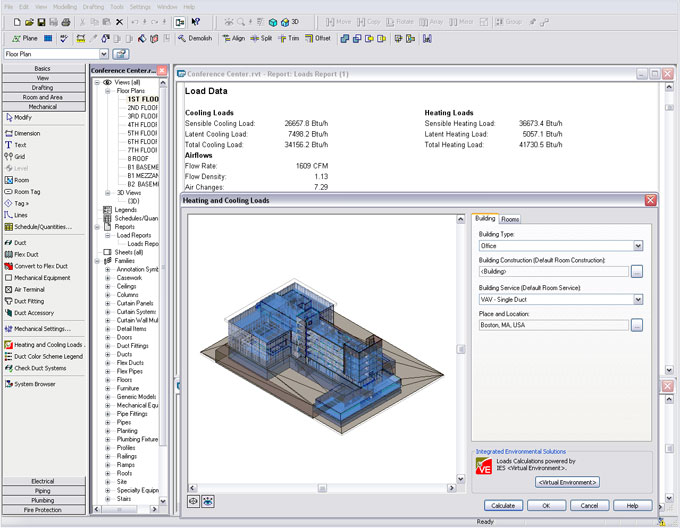
Revit MEP Links to IES. In February 2007, Autodesk and simulation developer IES Limited announced a collaboration linking their tools. This collaboration began bearing fruit in April, when an incremental version upgrade to the mechanical engineers’ Revit product (Revit MEP) gained the ability to calculate heating and cooling loads directly using an IES engine.

IES’s Virtual Environment is an integrated performance modeling package that models energy use, daylighting, computational fluid dynamics (CFD), and other attributes based on a single shared model of the building. Beyond the load calculation tool that is now provided with Revit MEP, users can purchase the Virtual Environment Toolkit, which includes the ability to do more sophisticated analyses. IES also sells individual modules separately that step up the modeling potential even further. The primary modeling engines within IES are collectively called Apache (unrelated to the Web server software). “Apache is being continuously updated by a team of leading experts,” claimed Murray.

KlingStubbins has been an early adopter of both Revit and performance modeling tools. “We’re software junkies—we buy everything,” admitted Leary. “We had IES sitting around, but no one could find the time to use it. Now that we’re not having to recreate the data, it’s getting used.” Leary has seen results from the integration of these tools. In one case, the results of an IES simulation led Leary’s team to narrow a building to allow better daylight penetration. KlingStubbins is now engaged in a firm-wide evaluation of the tools, with engineers in the Philadelphia office comparing the results from IES with those from other modeling tools, and a team in Washington, D.C., examining the CFD analysis. “Who ever thought an architecture and engineering firm would be doing its own CFD modeling?” Leary asked.

The fact that IES is tied only to Revit MEP and not to Revit Architectural presents an obstacle in the path towards energy modeling that is fully integrated into the design process, especially since Revit MEP is not as mature as the other Revit tools and some engineers are hesitant to commit to it. Autodesk and IES don’t see the dependence on the MEP module as a limitation, however—they believe the shared model can enhance communication and collaboration across disciplines. “We would hope that the integrated model with Revit would become the catalyst for integrated design,” said Murray. Involving experts in the energy modeling process, even if it is largely automated, is also a good idea in terms of interpreting the results. “If you don’t understand what’s happening behind the scenes, you can get some really misleading data out of the software,” warned Pratt.

ArchiCAD and Ecotect. Graphisoft is pursuing a path similar to Autodesk’s by establishing ties with another integrated performance modeling package, Ecotect. Ecotect is used extensively in academic settings and is popular in many firms for early design studies. Architects rave over its intuitive graphic interface. “The advantage of Ecotect is that you can have very visual models showing the results of different scenarios,” said Patrick Mays, AIA, vice president of Graphisoft North America.

Ecotect was created by Andrew Marsh, Ph.D., who is originally from Australia but currently resides in the U.K. Marsh and a tiny staff handle all development and maintenance, so keeping up with the demand for features and fixes has challenged them, especially as demand for the tool has mushroomed. Ecotect remains a valuable player in the industry, however, largely because of its connection to open-source tools, such as Radiance for daylight modeling and EnergyPlus for energy, in which Ecotect users can perform more robust simulations that are beyond the scope of its internal code.

Graphisoft has enhanced ArchiCAD’s gbXML plug-in from Green Building Studio to serve as a translator to Ecotect. “We have the capability to map zones and export data, so properties of walls, windows, doors, are all tracked,” noted Mays. Right now the export to Ecotect is one-way, but users will soon be able to move Ecotect models back into ArchiCAD, according to Mays: “In two months you will see documentation and process for how stuff will work back and forth,” he said.

If Revit and IES are becoming an industry standard for mainstream, production-oriented architects, ArchiCAD and Ecotect are the darlings of those who prefer an alternative approach, in terms of both catchy graphics and, for the technically inclined, ability to be customized and extended. “ArchiCAD handles things more openly, which offers an advantage in terms of interoperability with a variety of modeling tools,” said Anshen + Allen’s Rendek, adding that “Revit is more of a closed system. It works well with other tools that are written to work with that system.” Along similar lines, users cannot easily extend or modify the library of predefined building assemblies in IES. After comparing Revit and ArchiCAD for building-performance modeling, Rendek found “no clear answer as to which is better. Both are good, and both have advantages and disadvantages.”

Bentley’s BIM Solutions. Rather than linking directly to any specific building-performance package, Bentley Systems instead touts its flexible data structure as an ideal solution because it allows users to store any type of data and migrate that data into third-party tools for specialized analyses.

Bentley’s primary vehicle for these translations is the IFC framework, which is finally gaining widespread support, according to Roberts. Roberts says that a unique strength of Bentley’s software is its ability to exchange data back and forth with other tools, including an option to selectively re-import modifications to a model. “The majority of the analysis tools aren’t as smart as BIM,” noted Roberts, “but they have all the processes for dealing with the information they care about—other than the geometry—internal to themselves.” Rather than managing all that additional information in one BIM software package, Roberts suggested that a more effective solution would be to allow the tools to pass back and forth the parts of the model that they do share while allowing any of them to modify the design.

While Bentley’s tools have the potential to be a strong, open platform from which to develop energy-efficient design solutions, the company does not appear to have progressed as far as its competitors in supporting or promoting those capabilities. This two-way sharing of data, for example, is already working in the area of structural analysis but not yet in the areas of building performance most closely associated with green design.

Reality Check

While the ability to go directly from a design model to an energy simulation is tantalizing, and the capabilities are improving, we still have a ways to go. “It’s not as simple as pushing a button and getting an energy number. Analysis requires a lot of simplifying assumptions, and understanding what is really important and what isn’t,” HOK’s Guttman told EBN.

Perhaps the most fundamental challenge is that energy analysis requires a range of inputs, only a few of which are included in a typical building-information model. The physical layout—what software engineers call “building geometry”—is a basic element in all 3D CAD models. Information on how the various elements are constructed and on their thermal performance may be included in a BIM model. But an energy model also needs location information—which it uses to track sun angles and apply appropriate climate data—schedules of operation, and a mapping of HVAC zones.

Typcially, most of these additional elements don’t exist in an architectural BIM model, so they must be created either before or after the model moves to an energy simulation environment. Similarly, daylight modeling tools require information about the reflectivity of surfaces, and those that model airflow need to factor in friction coefficients. In this sense, although both conventional design and performance simulations are working from a virtual model of the same building, they need to know different things about that building, making their models quite different. As a result, it will never be possible to take a model that was built just as a visual representation and run a meaningful energy simulation: “I’m a little skeptical that you will actually be able to push a button and get a thermal model,” said Pratt.

To get even rudimentary simulation results architects have to learn to create models with the necessary information, and for more sophisticated results, there will likely always be a need for specialists. “There is a lot of art to the science of energy modeling. You can’t just take an architectural model and run a thermal analysis on it,” noted Pratt, adding, “The real question is, do you understand what the results mean?”

It’s not only the lack of necessary information that represents a problem; unnecessary information can slow even the most capable simulation engine to a crawl. “BIM gives you the ability to bring over much more detail than you would normally put into an energy simulation,” said Crawly, “but that also has a downside—you can bring over too much data and make the model overly complicated to run.” For example, he noted, including every closet in the model of a large building increases computer processing time without significantly affecting results.

Companies, including Burt Hill and SOM, are addressing this issue through the formulation of teams that are expert in energy modeling and other building-performance analyses. These groups are engaged early in the conceptual design process working directly with the architectural design team. This integrated approach provides the design team with expertise in using analytical applications and ensures that Building Information Models contain the appropriate level of information to perform the simulations that can support important decisions. “Our Energy Modeling Team is also engaged later in design to perform more detailed simulations, but it is the early involvement that is important to set the strategies for the building,” noted Mark Dietrick, AIA, chief information officer at Burt Hill.

The Materials Promise

While they may not be ideal for thermal simulations, BIM models are well suited to tracking the materials used in a design. If the model is set up properly, the tedious and error-prone task of measuring each surface and volume to estimate material quantities is eliminated. “The only way to take off quantities accurately is out of a model,” said Bhatt.

Accurate take-offs reduce waste, which is beneficial in itself. But in addition to providing an accurate measure of how much concrete to order, for example, a model can also track specific attributes of materials. When constructing a BIM model, designers can select building elements from a library of generic assemblies, or they can create their own libraries. Most models already link to cost information for those assemblies. In theory, they could just as easily store information such as quantities of recycled content or even environmental impact scores from life-cycle assessments of those assemblies. Any information that is available for the individual assemblies can instantly be aggregated for the entire model. “We’d like to make a change and be able to understand, in real time, the carbon impact of the change in terms of embodied energy of the materials,” said Mara Baum of Anshen + Allen.

The challenge in practical terms is getting accurate information—a problem that is not unique to BIM applications. “It is very hard to get life-cycle data on most products,” noted Pratt. BIM offers one potential solution: to develop channels by which that information is streamed directly from building product manufacturers into the model. Just as many manufacturers now provide CAD representations of their products so designers can drop them right into a design, in the future they will likely publish BIM-friendly models of those same products, incorporating data about their properties. “Our end goal is that the building-product manufacturer publishes all the data,” said Noah Cole of Autodesk, adding that some companies, such as Trane, have already started down that path. Other software companies are also on board; according to Roberts, “Bentley is working with McGraw-Hill’s Sweets to help the manufacturers figure out how to store that stuff.”

But that proprietary-product-based solution “is very tricky in an architectural context because we try to use generic specifications,” noted Pratt. The fact that the design model is usually generic presents problems when it comes to getting parts from the manufacturer, agreed Roberts. “That’s been tried a few times but has never gained traction,” he noted, suggesting that those product libraries are more valuable when a building model is used during construction.

Using information models to manage the construction process offers compelling advantages, many of which also have environmental implications. Software now available allows contractors to scan items for inventory management as they arrive on the construction site, and link them directly to their place in the building model. Eventually, electronic tags might allow contractors to track the location of each item and ensure that it is installed in the right place. Such tools could reduce errors and waste while streamlining the commissioning process.

Automated Documentation

The use of BIM raises a host of issues around liability and intellectual property and is forcing the industry to rethink the concept of contract documents. “We’re talking about new contracts, new relationships between architects and contractors and owners,” said Guttman. Currently, he said, the transition to construction is “usually done in a traditional contract arrangement—two-dimensional documents are the contract. But the model is shared in information meetings so everybody in the room is better informed.”

Some building owners, including GSA, are demanding ownership of the virtual model, however—which concerns architects, who have traditionally retained copyright on their designs. Legal issues aside, the ability to share a virtual model through the construction process, and even as support for building operations, should improve actual building performance. “We can input information on the fly, as we are creating the model, that can be used directly for facility management,” said Rendek, and “that could bring a huge benefit to the client for little additional work.”

Implications for LEED

The ability of BIM tools to aggregate materials information and analyze other building information also has intriguing implications for the documentation requirements of rating systems such as the U.S. Green Building Council’s (USGBC’s) LEED. Noting that Adobe System’s Acrobat technology is the platform for LEED Online, “Anshen + Allen wants to work with them on streamlining the information uptake from the model into the LEED docs,” said Rendek. The Portable Document Format (PDF) created by Adobe provides portability and security for sharing BIM information, and Adobe is moving aggressively to enhance the ability to link data to individual elements in a 3D Acrobat file.

While PDFs are valuable for sharing information among users before submitting it for LEED verification, in the future the actual submission won’t necessarily require a PDF file at all, notes Max Zahniser, USGBC’s certification manager for LEED for New Construction. “LEED Online was originally built on XML technology, so our templates are submitting XML packets into our database. We went that route so that we could eventually capitalize on the ability for other tools to submit those packets, without users having to go through LEED Online themselves.” Zahniser added that the next major enhancement to LEED Online, as it evolves to support a new underlying structure for LEED, will have more direct data-flow capability.

That ability to deliver documentation seamlessly into LEED Online has obvious value for third-party LEED project-management tools, such as Johnson Controls’ Leedspeed, but in theory that information could come directly from the BIM software. Such an arrangement is not unlikely, given the partnership between USGBC and Autodesk that was announced at Greenbuild in November 2006 (see

EBN

Vol. 15, No. 12).

While for now the dataflow into LEED Online still requires that a user log into the website, the information needs are already being streamlined. In particular, the latest release of IES Virtual Environments, which is closely tied to Revit MEP, has a built-in capability to perform LEED’s daylight calculation and report what percentage of the occupied space achieves the required 2% daylight factor. Users also have the option to report those results based on IES’s daylight simulation, and the results of either calculation could be used to demonstrate that a project meets the criteria for LEED’s daylighting credit. As capabilities of this type are expanded and the calculations verified, documentation coming directly from these analysis tools may increase the confidence of design teams that they are submitting documentation LEED will accept, and may even streamline USGBC’s verification process.

Transforming an Industry

While the software can’t take all the credit, BIM tools are a key element of a broader trend in design towards integration of design disciplines and knowledge-based decision making. “For us BIM is the technology that supports integrated practice. Without the rich exchange of digital data, we’d be in bad shape,” said Volker Mueller, design technology manager at NBBJ.

Leary of KlingStubbins points to the power of BIM and analysis tools for putting numbers on information that was previously more subjective. “When you’re in front of a certain kind of client, things that have numbers related to them are valued as decision-making points, whereas things that are qualitative are not,” he told

EBN. Using Revit, Leary was able to quickly measure how many occupants would have direct views of a window: “When considering a shift to interior offices and external workstations, thanks to the Revit model we had a quantified way to drive the decision.”

Real-time performance feedback during design can not only improve the building but also educate designers. “You see the changes and understand what’s going on. It’s not just spitting out numbers—the process of using an iterative tool is educational for us,” Leary reported. Similarly, Kennedy sees his Green Building Studio as a response to the “massive education problem” of getting architects up to speed quickly so they can begin designing buildings with the potential of becoming carbon-neutral.

Given the speed at which technology changes, choosing modeling tools is like hitting a moving target. “It’s important to stay open and flexible rather than just following what the software vendors dictate,” suggested Rendek. The fact that only a small subset of designers is currently using BIM tools represents both a challenge and an opportunity. As designers move from conventional CAD to BIM they need training, and younger architects who never worked in older systems may have an advantage. With both green design and building information modeling on geometric growth curves, their marriage is mutually supportive. That’s a good thing, given the demands on the industry to learn quickly how to create buildings that make sense for our times.

For more information:

buildingSMART Alliance

National Institute of Building Sciences

Washington, D.C.

202-289-7800

www.iai-na.org/bsmart/

Revit Architecture

Autodesk, Inc.

San Rafael, California

800-578-3375

usa.autodesk.com

ArchiCAD

GraphiSoft U.S., Inc.

Newton, Massachusetts

617-485-4203

www.graphisoft.com/products/archicad/ac10/

MicroStation product line

Bentley Systems, Inc.

Exton, Pennsylvania

800-236-8539

www.bentley.com/en-us/products/microstation/

Virtual Environment

IES Limited

Cambridge, Massachusetts

617-621-1689

www.iesve.com

Green Building Studio

Santa Rosa, California

707-569-7373

www.greenbuildingstudio.com

EnergyPlus simulation software

Office of Energy Efficiency and Renewable Energy

U.S. Department of Energy

Washington, D.C.

877-337-3463

www.eere.energy.gov/buildings/energyplus/

EcoTect (and the Weather Tool and the Solar Tool)

Square One, Ltd.

Joondalup, Australia

347-408-0704

www.squ1.com/products/


Published May 1, 2007

(2007, May 1). Building Information Modeling and Green Design. Retrieved from https://www.buildinggreen.com/departments/feature

Piping in Perspective: Selecting Pipe for Plumbing in Buildings

In the Pipeline: District Energy and Green Building

Feature

In the Pipeline: District Energy and Green Building

While most green design strategies work at the scale of individual buildings, some of the most exciting opportunities avail themselves only when we look at the larger scale. Building for mixed uses can reduce automobile dependence, for example, and compact development can be coupled with the permanent protection of open areas. We should add to this list of macro-scale green building opportunities another: district energy systems, especially those utilizing waste heat from power generation and those using renewable energy sources.

District energy systems produce steam, hot water, or chilled water centrally and distribute that thermal energy to multiple buildings through a network of buried, insulated pipes. District energy systems that derive their heat from

combined heat and power (CHP) plants—also known as

cogeneration—significantly boost the overall efficiency at which the primary energy source is converted into useful energy. District energy from a CHP plant offers even greater environmental benefits when the source energy is renewable or low-impact, as is the case with high-temperature geothermal, wood chips, or landfill gas.

This article examines district energy systems and the use of waste heat and renewable energy sources for the distributed thermal energy. As strategies for reducing the environmental impacts of buildings and achieving significant economic savings, these options have received surprisingly little attention in either the mainstream building industry or the green building community. While this article is probably most immediately relevant to those involved with larger buildings and macro-scale planning, there is also significant potential for supplying single-family homes with district energy—a practice that is common in northern Europe.

History of District Energy

District energy systems are far from new; the idea has been around for centuries, even millennia. Distributing hot water in pipes dates back to ancient Rome, when hot water was piped from bathhouses to greenhouses. Piping hot water from geothermal sources goes at least as far back as the Middle Ages. The French village Chaudes-Aigues, Cantal, has obtained its heat from hot springs continuously since the early 14th century; originally the hot water was distributed through wooden pipes.

According to the International District Energy Association (IDEA), the first district steam heating system in North America was installed at the U.S. Naval Academy in Annapolis, Maryland, in 1853. The first steam heating system to serve a downtown community was built in 1877 in Lockport, New York (near Buffalo) by hydraulic engineer Birdsill Holly, who is generally considered the father of modern district energy. Between 1877 and 1882, the Holly Steam Combination Company built nearly 50 district steam heating systems, one of which still supplies heat to downtown Denver. The successor company, American District Steam Company, installed hundreds of systems over the next 80 years.

Electric utilities became involved in district heat and CHP very early. When Thomas Edison built his first power plant in downtown Philadelphia in 1906, he determined that the venture would be profitable only if he sold the waste heat from the generator, so he entered into a contract to supply steam to nearby Thomas Jefferson University Hospital; this was the first-ever application of CHP. That district steam system is still in operation after more than 100 years.

Prior to the 1960s, the majority of urban district energy systems distributed steam from downtown CHP plants. During the 1960s and ‘70s, as utility companies began building larger coal and nuclear power plants in remote locations and closing their downtown power plants, distributing the waste heat lost favor. Steam requirements also dropped as thermal loads changed in larger commercial buildings, and internal cooling loads generated by electric lighting and then computers began to exceed heating loads.

Since the 1980s, large urban areas have seen a greater emphasis on district cooling than on district heating. These systems distribute chilled water or a slurry of ice and water that is generally produced using electricity. District cooling actually dates to the late 1800s; Denver’s Colorado Automatic Refrigerator Company began supplying chilled air to houses through pipes in 1889. Commercial-scale, chilled-water district cooling systems began operations at the Rockefeller Center in New York City and the U.S. Capitol buildings in the 1930s.

According to Danny Harvey, Ph.D., in his 2006 book,

A Handbook on Low-Energy Buildings and District-Energy Systems, there are currently about 6,000 district energy systems in North America. They include roughly 2,000 university systems, 2,000 systems serving medical facilities, and 2,000 other systems, including systems serving downtown urban areas. Such systems serve more than 10% of nonresidential floor space in the U.S., according to Harvey, and about 10% of these systems derive their heat from CHP plants. New district energy systems are coming online each year, but older systems have been disappearing. Minnesota, for example, had 40 district energy systems in the 1950s, while only a handful remain today.

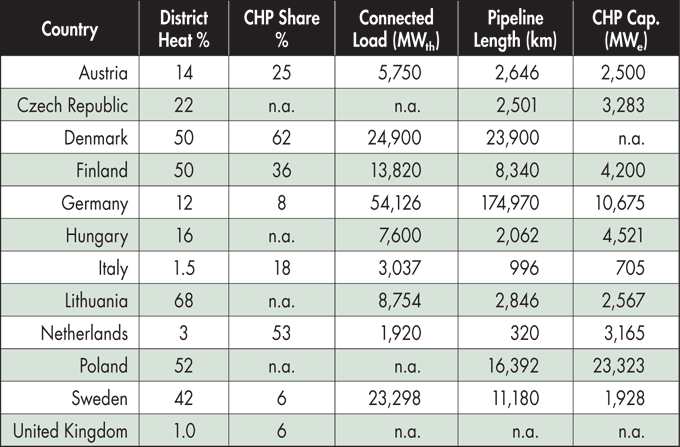
While market penetration of district energy systems in North America has been limited, much of the rest of the world is heavily committed to the technology. Reliance on district energy in northern Europe extends beyond commercial buildings to the residential sector and even single-family homes. Use of district heat in various European countries is shown in Table 1.

Understanding District Energy

District energy systems have three basic components: a source of thermal energy, a piping network to distribute that energy, and a mechanism for utilizing that energy in buildings. These components are addressed below.

Producing heat for district energy systems

Fossil Fuel Combustion. The heat source for most district energy systems is fossil fuel combustion using coal, natural gas, or oil (usually #2 or #6 heating oil). Steam or hot water can be produced in large boilers as the sole output, or this thermal energy can be a byproduct of electric power generation—a practice referred to as combined heat and power (CHP) or cogeneration. Environmentally, CHP has many advantages, as described below.

When chilled water is needed for district cooling systems, it can be produced at power plants or at satellite cooling plants that serve clusters of buildings. Electricity can be used to chill the water using large electric chillers (ideally operating at night with chilled water stored for daytime use), or a heat source can chill the water—typically using absorption cooling—so there is a wide range of options for the chilled water production.

While chilled water can be distributed directly through district cooling systems, another option is to distribute only heat and then to use that heat within buildings for cooling using thermally activated absorption chillers, adsorption chillers, or desiccant dehumidification systems. This practice can avoid the need to run dual piping loops.

Fossil Fuel CHP. Combined heat and power is an attractive option for district heating because it allows for the use of thermal energy that would otherwise be lost. In a typical coal-fired power plant today, about two-thirds of the primary energy content of the coal is lost as waste heat. Exactly how much heat is wasted depends greatly on the combustion technology used.

Conventional coal plants pulverize the coal and inject it into a furnace that produces pressurized steam; 33%–35% power generation efficiency is typical with these plants, though the latest technologies can achieve efficiencies as high as 45%. More advanced

integrated gasification combined cycle (IGCC) coal-fired power plants first gasify the coal by heating it to a very high temperature (1,800°F, 1,000°C) at high pressure in the presence of pure oxygen. The resultant gases (primarily hydrogen) are burned in a gas turbine at generation efficiencies of 42%–48%.

Natural gas is most efficiently burned in

natural gas combined cycle power plants that can achieve efficiencies of 50%–60%. Such systems are typically 25 megawatts (MW) or larger.

Microturbine gas generators operate at significantly lower efficiency (25%–29%), but their smaller size enables them to be used in buildings where the waste heat can be easily captured and used within the building.

Fuel oil is generally used in power plants of a few megawatts and smaller using

reciprocating engines—essentially large diesel engines similar to those used in heavy equipment. (Caterpillar, Inc. and Cummins, Inc., are two of the largest producers of reciprocating engine generators.) Electrical efficiency ranges from about 33% at 100-kilowatt (kW) capacity up to 41% at 5-MW capacity.

What about nuclear power? With an average generation efficiency of 30%, the large amount of waste heat generated by nuclear power plants makes them well suited to district energy systems. However, the typical isolation of nuclear power plants and concern about radioactivity has resulted in almost no district energy being derived from these plants—and none in North America.

Geothermal Heat and Deep-Lake Cooling. Where there is a convenient source of high-temperature geothermal energy, distributing this heat through district energy systems is an obvious choice. Roughly 95% of all space and water heating in Iceland is provided by geothermal district energy systems from the country’s tremendous geothermal resources. The oldest continually operating district energy system in the world (in France—see above) relies on a natural hot spring. In Boise, Idaho, a geothermal system has been heating a portion of the city since 1892, and dozens of other systems supply geothermal district heat throughout the western states. According to the Sustainable Energy Solutions Group at Northern Arizona University (www.geothermal.nau.edu), in 1998, 1,905 MW of thermal energy (MWth) were supplied through geothermal district energy systems in the U.S. and 4,645 MWth in Europe.

In most geothermal district energy systems, water is pumped underground, where it is heated, then pumped back out for distribution. In some systems, high-pressure steam is used for power generation, and the waste heat is distributed as district heat. The use of geothermal energy for district heating has been increasing in the U.S. in recent decades, but the potential is limited to geologically active areas. A new report by the Massachusetts Institute of Technology (see newsbrief, MIT Report Emphasizes Geothermal Power Potential) concludes that the geothermal resources in the U.S. that could be economically recovered are significantly greater than has long been believed.

In addition to capturing underground geothermal heat, some district energy systems provide

district cooling using water from deep lakes. The City of Toronto is pumping 39°F (4°C) water from a depth of 260 feet (80 m) in Lake Ontario to cool portions of the downtown; when completed, that system is expected to provide 183 MW (52,000 tons) of cooling to the city. At Cornell University, a 70-MW (20,000-ton) district cooling system is using 39°F water pumped from a depth of 250 feet (76 m) in nearby Cayuga Lake (see EBN

Vol. 11, No. 1) to cool most of the campus. This system allowed Cornell to eliminate all of its CFC-based chillers and save a projected 20 million kWh of electricity per year. While these two systems will raise the temperatures of their respective lakes, the temperature rise is so small as to be considered insignificant by the engineers.

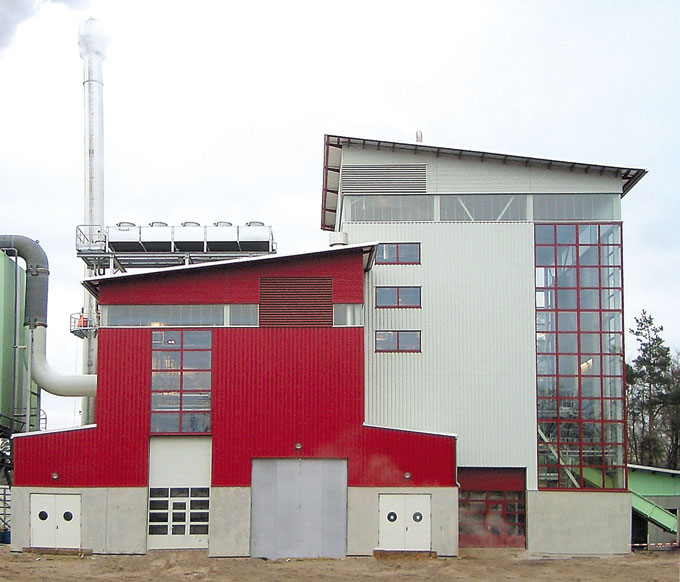
Renewable Energy Sources. Several renewable energy sources are being used as heat sources for district heat systems. Wood-chip boilers and CHP systems are growing in popularity both in the U.S. and worldwide. The Finnish company Wärtsilä Corporation is a world leader in wood-chip-fired CHP plants (see photo above). The company produces modular CHP plants delivering from two to five megawatts of electricity (MWe) and up to 20 MWth of hot water.

Methane can also be captured from landfills or derived from livestock manure using anaerobic biodigesters. Central Vermont Public Service’s Cow Power program is producing electricity from dairy farms (see

EBN

Vol. 15, No. 10), and, although the utility is not currently distributing waste heat from that power production through a district energy system, it could in the future. The University of California - Los Angeles (UCLA) pipes methane from a landfill three miles (5 km) to the campus, where it is burned in a 20-MWe CHP plant that provides the campus with district energy.

Even sewer and water lines can offer a district heat source if coupled with heat pumps to raise the temperature of that heat source. Tokyo uses sewer lines for this, and ground-source heat pump manufacturer Water Furnace International now offers the Water+™ system to use piped municipal water as a heat source and heat sink.

Distributing heat or chilled water

After generating the steam, or hot or cold water, the next task in a district energy system is to distribute that energy. While either steam or hot water can be distributed in district heating systems, steam is more common in older district energy systems and currently accounts for about 78% of all district heat in the U.S., according to IDEA.

However, most new district heating systems are being designed for hot water, and some older steam systems are being converted to hot water. “Almost all Europeans have gone to hot water,” according to Morris Pierce, Ph.D., one of the nation’s leading experts on district energy and an energy manager and adjunct assistant professor of history at the University of Rochester in New York. Steam flows through pipes without pumps, but the condensate causes problems. In some systems, the condensate is simply dumped into sewers (wasting the residual heat); in other systems, especially at universities, the condensate is pumped back, but Pierce calls that a “messy proposition,” due to corrosion and other problems. Other strikes against steam include more expensive piping, greater heat loss, and, when derived from CHP plants, a lower ratio of electricity to thermal energy produced from the power plant—and the electricity is the more valuable product. In short, “steam isn’t a good way to distribute heat,” Pierce told

EBN. We will focus primarily on hot water.

District Energy Piping. Buried pipes are integral to any district energy system. Many in North America resist the idea of a network of buried pipes to supply heated or chilled water, but such has been the mainstay of municipal water and sewer systems in much of the world for centuries. Burying pipes is something we know how to do.

A hot water district energy system always involves a piping loop. The supply and return pipes are installed side by side because at every branch pipe going off the supply pipe, a return line needs to feed back into the return pipe. By the time the main heating or cooling supply pipe reaches the last distribution point, its diameter has typically shrunk significantly because it’s carrying less water.

When a district energy system supplies both heating and cooling, four pipes are used: supply and return for both hot water and chilled water. Because a significant portion of the cost of a district energy system involves the trenching to lay pipes, it is wise to plan ahead and determine if a chilled-water loop is likely to be needed—and, if so, install it at the same time.

District energy systems use special pre-insulated piping. Most of the manufacturers are European, including the Danish companies Logstor A/S (www.logstor.com) and Star Pipe A/S (www.starpipe.com), and the Swedish company Powerpipe Systems AB (www.powerpipe.se). U.S. pre-insulated pipe manufacturers include Perma-Pipe of Niles, Illinois (www.permapipe.com) and Thermacor Process, L.P. of Fort Worth, Texas (www.thermacor.com). Most of the piping is steel that is insulated with polyurethane and then wrapped in a protective, high-density polyethylene (HDPE) jacket. A wide range of pipe diameters and configurations is available, including straight and curved sections, flexible pipe, double pipe (two pipes encased in the same insulated sheathing), and pipe sections fitted with built-in smaller-diameter branch pipes.

Determining the optimal pipe diameters is an important part of district energy system design. The amount of thermal energy delivered is a function of water temperature and flow volume, and a given flow volume can be achieved with fast-moving water in smaller pipes or at lower velocity in larger ones. Lowering the velocity reduces friction and therefore pumping energy, but larger pipes are more expensive to buy and bury. The required flow volume, the cost of pumping energy, and the cost of pipes determine what size pipes are used. Some pipes used in Europe are more than 30 inches (0.8 m) in diameter; the largest deliver hot water from remote power plants up to 30 miles (50 km) to urban areas. For smaller-diameter piping, especially branch connections into houses, pre-insulated flexible copper and cross-linked polyethylene (PEX) piping is also used. District energy pipes are often manufactured with embedded wires that are used to monitor for breaks and leaks.

Insulation is key to the success of district hot water systems. Two inches (5 cm) or more of high-density polyurethane (typically 4–6 lb/ft3, 65–90 kg/m3), mineral wool, or cellular glass insulation keeps heat loss from the pipes to a minimum—usually less than 2% per mile, sometimes a lot less. According to Pierce, the two miles (3 km) of pre-insulated steel piping at the University of Rochester’s district heating system—with pipes ranging in thickness from 3” (80 mm) to 16” (400 mm)—limits heat loss from the system to 0.5%. Some systems in Denmark, where hot water is piped as far as 30 miles (50 km), have less than 5% heat loss, according to Pierce.

Pipes are laid in well-drained trenches. Pipe joints and connections are made according to manufacturer recommendations (welding or soldering with metal pipe). Then the missing insulation around those connections is foamed in place or installed according to manufacturer specifications. Over this, the pipe joints are protected with sections of HDPE jacketing—often cylindrical jackets that fit over the pipe joints and are heat-shrunk in place. During this pipefitting, the continuity of monitoring wires (if provided) is maintained, and leads are connected to sophisticated alarm systems.

Using district energy

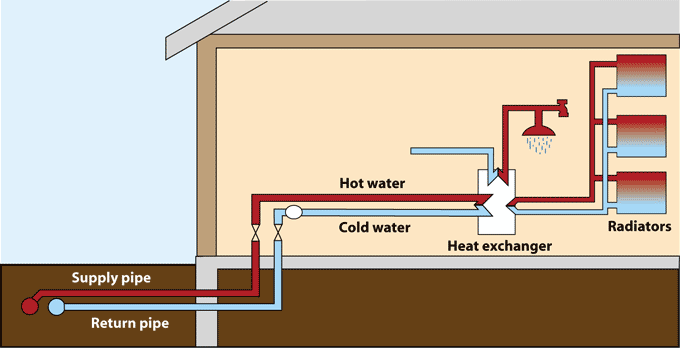
The third and final component of a district energy system is the mechanism for utilizing the heat in our buildings. Smaller branch pipes generally bring the hot water into a building from the trunk line. In the building, rather than being distributed directly (through a baseboard hydronic heating system, for example), the hot water usually transfers heat to a hot water tank via a heat exchanger (see figure). Hot water from this tank is usually used directly for heating; a separate heat exchanger may be used to heat domestic hot water. While hydronic heating is most commonly used with district heat, the heat can alternatively be used in forced-warm-air heating systems using a fan coil (a hydronic coil in the air handler).

Within this system is one or more meters (in North America, often called Btu meters) to measure how much heat from the district heating system the building is using. This key component allows the district energy utility to charge for energy use. The meters measure both incoming and outgoing water temperature and flow rate.

European manufacturers offer preplumbed modules that include the heat-exchange tank, all the valves and connections to the heat loads in the building, and meters. A single module replaces the individual boiler and water heater in a house. Indeed, European technology has advanced tremendously in recent decades, making it easy to use district heat.

If the temperature of the water being distributed is not high enough to satisfy heating loads, it can be boosted using small water-source heat pumps that use electricity to concentrate low-temperature heat. These are a common way of providing room-by-room thermal control in North American hotels and motels—the technology is well-developed, but the added cost and complexity is significant.

District cooling systems that deliver chilled water are used primarily in large commercial buildings, but a few new housing projects in Europe are utilizing such systems for air conditioning. As noted, in addition to distributing chilled water from a central source, it is also possible to cool a building with distributed

hot water using adsorption chillers, absorption chillers, or desiccant dehumidification. In either case, within the buildings, the cooling can be delivered via forced-air ducts or hydronic radiant cooling panels. If demand for air conditioning increases in Europe, due to either global warming or changing comfort standards, it will be interesting to see how these thermal needs are served by district energy systems.

Advancing District Energy Systems

For starters, in advancing district heating and cooling—and CHP plants to provide the thermal energy source—we should turn to northern Europe. District energy systems are used so widely in many countries that the knowledge base is tremendous; most of the mistakes have been made and the technology is fully mature. Described below are a number of strategies for advancing district energy and CHP in North America.

Regional planning

Strong, coordinated regional planning is key to the success of district energy systems. Regional planning agencies can assist in this process; where such entities already exist, their scope can be broadened to specifically address district energy. For example, in master planning for a neighborhood, town, or region, provisions could be made for buried pipe corridors.

With residential development, planning could encourage the level of density needed for district energy systems to be viable—while also encouraging the protection of larger tracts of open space. According to Pierce, residential developments in northern Europe are being served by district energy systems even with a density as low as five or six homes to the acre (12–15 homes per hectare). Malcolm Lewis, P.E., Ph.D., of CTG Energetics, Inc., suggests that in the western U.S., where he does most of his work, a residential housing density of 20–25 units per acre (50–60 units per hectare) is needed, while the density could be lower in areas with larger heating loads.

District energy systems could be encouraged through tax incentives, development density bonuses (allowing more homes per acre, for example, when district heat is being used), lower permitting costs, and pollution discharge fees for heating equipment in buildings. District energy hookups could also be

required, much as municipal water and sewer hookups are required as part of the permitting process. Finally, the adoption of carbon taxes or higher energy taxes would also indirectly encourage use of district energy; indeed, higher energy taxes may be one reason district energy and CHP are more common in Europe than in the U.S.

Making buildings ready for district energy

Even if district energy systems are not available when new homes and commercial buildings are being planned and designed, various measures can facilitate easy conversion to district heating and cooling if and when they become available. In homes, this may involve locating mechanical heating and cooling equipment on the street side of the house, where piping lines would likely be brought in.

The prospect of future district energy may also influence the systems for heat distribution within buildings. Houses with baseboard hydronic heat can easily be retrofitted for district heating simply by replacing the boiler with a heat-exchanger tank. Forced warm-air heating systems can also be adapted to district heat fairly easily. Electric heat, by contrast, is not adaptable to district heat.

With central air-conditioning systems in homes, if the evaporator and air handler are located in the same utility room as the boiler and water heater, retrofitting the system to make use of a chilled water supply should be relatively easy. Providing for easy access to all of the central equipment in a house will simplify later conversions.

Looking for synergies

If a district energy system is being considered in a community, synergies may improve the economics of the system. For example, suggests Pierce, consider burying fiber-optic cable with district energy pipes. Phone companies or cable television companies may be willing to share some of the cost of trenching for the opportunity to install cable in protected corridors. If municipal water or sewer lines are being upgraded, it might be possible to co-locate district energy supply and return pipes with the water and sewer lines.

Digging corridors for district energy piping may present opportunities to improve the landscaping treatments at the same time. Native vegetation could be planted, for example, and stormwater infiltration trenches could be provided in the same corridors.

LEED and district energy

The U.S. Green Building Council’s (USGBC) LEED® Rating System addresses district energy and CHP in several places. The new LEED for Neighborhood Development (LEED-ND) rating system that was released in a pilot draft in February 2007 includes a point for neighborhoods in which at least 80% of the total square footage is connected to a district energy system, and the system can meet at least 80% of the heating or cooling load. Additional constraints require minimum efficiency levels in the equipment and a limitation on pumping energy.

LEED for New Construction (LEED-NC) does not specifically address district energy, but in October 2005 USGBC released a brief guidance document, “CHP Calculation Methodology for LEED-NC v2.2 EA Credit 1,” that outlines conditions under which buildings supplied by CHP district energy systems can take advantage of those systems’ efficiency gains in applying for points under LEED’s energy optimization credit. This document is available on the “LEED for New Construction” page of USGBC’s website.

Final Thoughts

There are many compelling environmental and economic reasons to embrace district energy systems far more actively than has been done recently in North America. District heating systems can eliminate the need for dirtier individual-building heating equipment, and they provide higher overall energy efficiency. When the energy source for a district heating system is a CHP plant, the benefits are even greater, because capturing and using a significant portion of the waste heat improves the efficiency of conventional power generation. And when the fuel source for CHP plants is a carbon-neutral, renewable energy source, district energy systems offer the best of all worlds.

While the benefits are obvious, the potential for less expensive district heat or chilled water should not in any way reduce the motivation to design and build highly efficient buildings.

For green designers, builders, planners, and developers, district energy systems and CHP offer important additions to our greening toolkits. Especially when coupled with renewable fuel sources, district energy and CHP can play a big role in reducing the carbon footprint of our buildings. To achieve greater market penetration, we should look to Europe for experience, and we should address these systems in architecture schools, LEED training programs, and continuing education programs of professional societies. It’s time we give district energy and CHP the attention they deserve.

For more information:

Morris Pierce, Ph.D.

University of Rochester

Rochester, New York

585-275-4331

mapi@mail.rochester.eduwww.energy.rochester.edu

International District Energy Association

Westborough, Massachusetts

508-366-9339

www.districtenergy.org

International Association for District Heating, District Cooling, and Combined Heat and Power

Brussels, Belgium

32 02 740 21 10

www.euroheat.org

United States Combined Heat & Power Association

Bethesda, Maryland

301-320-2505

uschpa.admgt.com

U.S. Environmental Protection Agency

Combined Heat and Power Partnership

www.epa.gov/chp/

U.S. Department of Energy

Distributed Energy Program

www.eere.energy.gov/de/

A Handbook on Low-Energy Buildings and District-Energy Systems by L. D. Danny Harvey, Earthscan Books, James & James Publishers, Ltd., 2006 ($275)

District Energy St. Paul

St. Paul, Minnesota

651-297-8955

www.districtenergy.com

Published March 6, 2007

Cradle to Cradle Certification: A Peek Inside MBDC's Black Box

Feature

Cradle to Cradle Certification: A Peek Inside MBDC's Black Box

"We were looking at our whole sustainability strategy, and we wanted to take it to the next level,” said Richard Guinn, a vice president at Centria Architectural Systems, makers of composite wall-panel systems for commercial and institutional buildings. After researching its options, Centria chose to work with McDonough Braungart Design Chemistry, LLC (MBDC), the Charlottesville, Virginia, company founded in 1995 by architect William McDonough, FAIA, and chemist Michael Braungart, Ph.D.

Known for idealism, vision, and successful consulting with high-profile corporate clients like Ford Motor Company and Nike, McDonough and Braungart have envisioned “a new industrial revolution,” calling for “remaking the way we make things,” the subtitle of their 2002 book

Cradle to Cradle (see review in EBN

Vol. 11, No. 5). In that book and elsewhere, McDonough and Braungart disparage “cradle-to-grave” products that aren’t designed to be lasting parts of the manufacturing cycle and that poison the environment through pollution and disposal. MBDC’s Cradle to Cradle™ (C2C) protocol envisions every resource used to make products as a safe nutrient in an endless cycle.

In 2005, MBDC launched the C2C Certification Program (see

EBN

Vol. 14, No. 7). Whereas most other product certification standards look at single attributes like recycled content or indoor air emissions, C2C looks at multiple attributes based on cradle-to-cradle philosophy. C2C has certified a variety of building products and materials, from office chairs to piping components to a concrete admixture, as well as consumer items, including a cleaning product and a diaper. As demand for green products grows, so too does the list of C2C-certified products.

 

Three of Centria’s product lines have joined that list, including its Formawall™ Dimension Series® of insulated metal composite wall panels. As part of its C2C Silver certification, Centria eliminated PVC from the product, created a plan for phasing out other materials identified as hazardous, and identified recycling pathways for the product’s steel and polyisocyanurate foam, among other measures.

However, while the C2C protocol has generated much excitement, the corresponding certification program lacks some of the comprehensiveness and impartiality that are expected in an increasingly sophisticated market for green certifications. This article looks at what C2C entails, how it works, and the role that it plays in the market for green products.


The C2C Standard

McDonough and Braungart often promote three key concepts for environmental design:

waste equals food, use current solar income, and

respect diversity. “Waste equals food” is the conceptual basis for the cradle-to-cradle philosophy that all products should be made using materials that can be recycled indefinitely with minimal environmental impact. McDonough and Braungart use the phrase “current solar income” to argue that manufacturing processes should use energy from the sun or other renewable sources, instead of fossil fuels, which are Earth’s stored solar energy reserve. “Respecting diversity” is about evaluating the impact of industrial processes on all plant and animal life, or, as McDonough and Braungart say, “all the children of all species for all time.”

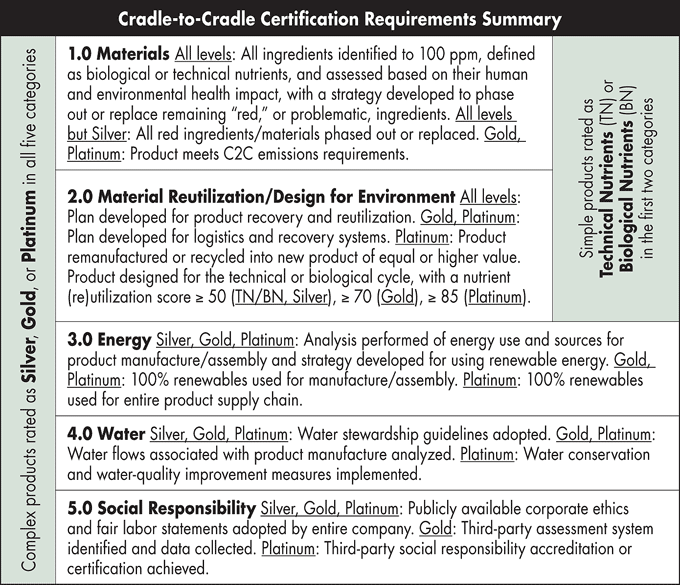
The C2C certification program works to express these principles through five categories of evaluation criteria. Two deal with the materials contained in a product, and the other three deal, respectively, with energy use in manufacturing, water use in manufacturing, and corporate social responsibility. Based on ratings in each of these categories, a product can be certified by MBDC as C2C Silver, Gold, or Platinum. MBDC evaluates a product in each of the five areas, and its final score is the lowest of its five individual scores. MBDC also performs a more limited evaluation, using only the two materials categories, to certify a simple product as a “technical nutrient” or a “biological nutrient.”
 

1.0 Material hazard assessment

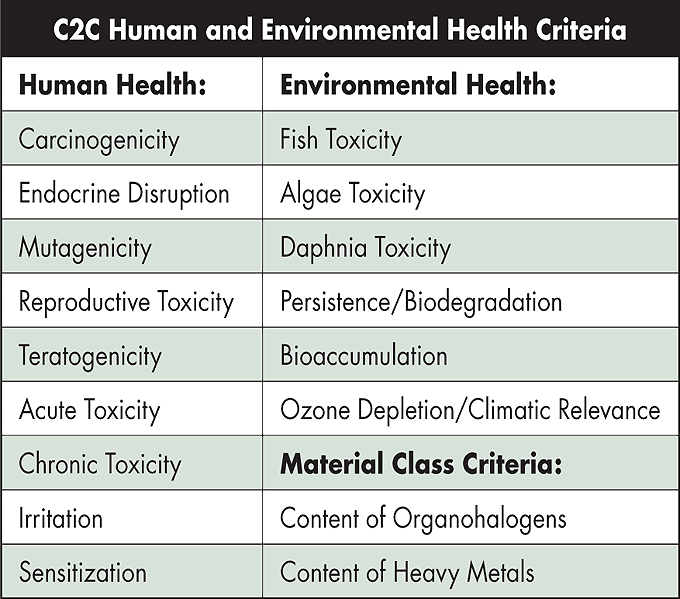
MBDC’s greatest strength and, according to MBDC’s Jay Bolus, executive vice president for certification, “the heart and soul of the program,” is material chemistry. To achieve any C2C certification requires that all ingredients be identified down to the 100 parts per million (ppm) or 0.01% level and assessed according to 19 human and environmental health criteria (see table). MBDC uses these criteria to categorize chemicals with a “stoplight model”—red, yellow, or green. Chemicals with incomplete environmental data are rated gray and are, according to Bolus, treated as if they were red. For a product to achieve any C2C certification other than Silver, it cannot contain any ingredients classified as red—unless red ingredients have no existing substitutes and the manufacturer contains those ingredients in a controlled, closed-loop technical cycle. “You don’t just look at it and say ‘Is it good or bad?’” McDonough told

EBN. “You look at how it is being deployed, and is it contaminating the biosphere?”

C2C’s stoplight model for evaluating chemicals derives from MBDC’s Chemical Profiles Knowledge Database. MBDC has populated this database through years of consulting with product manufacturers, whereby MBDC evaluates chemicals that those companies and their suppliers are using. Clients pay MBDC for its growing knowledge of chemicals based on the database.


2.0 The nutrient cycle

MBDC identifies

technical and

biological nutrients as raw materials that are well suited for either perpetual recycling in industrial systems or beneficial or benign participation in biological cycles. According to Bolus, “The idea is that for something to be truly considered a nutrient, it can be recaptured 100% and has no red ingredients.”

While C2C nutrient certifications, Bolus explained, “are only relevant for very simple things that are homogeneous—such as plastics, fibers, pigments,” all certified products must comply with some level of material reutilization criteria. This category requires that products are designed and manufactured for technical and biological cycles. The standard examines the levels of product recovery as well as use of component materials that are recycled or rapidly renewable and recyclable or compostable at the end of their useful life.

Published C2C literature doesn’t define “recyclable” or “compostable,” but MBDC uses European Union guidelines for biodegradability, Bolus said, and Federal Trade Commission (FTC) guidelines for recyclability. FTC guidelines require an established recycling pathway. However, Bolus told EBN that MBDC might approve a product that falls short of FTC guidelines if the company “has its own takeback program that is available to everyone.”
 

3.0–5.0 Energy, water, and social responsibility

While MBDC expresses its core expertise in C2C’s two materials categories, it piggybacks on other more established certification protocols in C2C’s three remaining categories. In the areas of energy, water, and social responsibility, a product manufacturer is required to first evaluate its own performance and then progressively increase its compliance with relevant protocols.

The energy criteria focus on the manufacturer’s use of renewable energy to make a product, with a company required to evaluate its energy use for C2C’s Silver certification. Manufacturers need to use renewable energy for the product’s manufacture to achieve Gold certification, and for the energy used in a product’s entire supply chain to achieve Platinum. The renewable energy may be produced either on site or through the purchase of Green-e® certified renewable energy credits.

C2C’s water criteria require companies to work to preserve the quality and supply of water resources. C2C provides a variety of principles and guidelines for companies to work from, with implementation required at the Platinum level.

In its social responsibility section, C2C requires manufacturers to adopt corporate ethics and fair labor statements reflecting company goals. To meet C2C Gold certification, companies must assess their performance against one of several third-party standards supporting fair labor practices, such as SA8000 from Social Accountability International. Companies must satisfy certification requirements under the same standard for C2C Platinum.


What C2C certification doesn’t mean

For someone seeking to understand the meaning of a C2C certification, it may be easy to confuse the cradle-to-cradle philosophy and ideals discussed by McDonough and Braungart with the actual requirements of C2C certification. Sara Graham, sustainable knowledge manager at HOK, told

EBN that based on hearing McDonough speak and reading about his ideas, “I’ve long thought of Cradle to Cradle as the holy grail of industrial process.”

However, there are a number of areas where the concept and the reality of certification—at least at the levels that are being achieved today—don’t match. A C2C Silver certification, for example, doesn’t guarantee that a product is free of all red ingredients—the only “knockout” chemical at the Silver level is PVC. Explaining MBDC’s choice of one knockout chemical, McDonough said, “We specifically focused on PVC because there were so many instances where we could optimize around alternatives.” Although C2C identifies red ingredients at the Silver level, and companies are asked to develop plans to phase them out or optimize them, there is no C2C report card for consumers that details what a certified product does or does not include.

As another example, a certified biological or technical nutrient may not necessarily be returned to biological or technical cycles as the nutrient cycle concept describes. The minimum requirement for certification is merely that a product be 67% recyclable or biodegradable (for details on that calculation, see the sidebar on page 11). Bolus acknowledged to

EBN that the requirement is weak, and explained that in the next version of C2C a product certified as a technical or biological nutrient would have to be 100% recyclable or compostable if it did not contain recycled content.

 

In addition, even a 100% recyclable or biodegradable product may not be able to return to either the technical or biological nutrient cycle. According to Bolus, “MBDC’s tendency is to certify just the product,” without looking at how it is installed or used. For example, when used as intended, Hycrete, an additive designed to waterproof concrete (see

EBN

Vol. 15, No. 12), is not biodegradable and cannot be recycled by any established process. In practice, then, C2C’s certification of Hycrete as a biological nutrient means that “if you accidentally spill a five-gallon bucket into a local stream, it’s going to degrade and isn’t going to do any harm,” said Bolus.

McDonough has often argued that biological and technical nutrients should be separate or easily separable in a product, and the C2C guidelines do mention “Design for Disassembly.” However, Gabe Wing, a chemical engineer for furniture-maker Herman Miller, Inc., which holds several C2C certifications, said, “We focus on disassembly, but Cradle to Cradle doesn’t spell out” what that should entail for a product.

The FTC recyclability guidelines used by MBDC also do not differentiate between the quality of re-application, or

upcycling and

downcycling, distinctions that McDonough has repeatedly emphasized over the years. In an interview with

EBN he took a softer position on this issue than he has in past speeches. “I think we support all of the companies in the processes they use in moving to cradle to cradle,” he said. “If people can find improved ways to do things, then hallelujah.”

For many of the C2C criteria, Silver and Gold certifications are based on plans and intentions. “Platinum is where the rubber meets the road and they’re actually recovering product,” said Kirsten Ritchie, director of sustainable design for Gensler and an expert on product certification. Tom Lent, policy director of the nonprofit Healthy Building Network, said, “It is pretty important to understand that C2C certification is, at least before Platinum, more about [the manufacturer’s] process with MBDC than actual final accomplishments in the product.” Explaining MBDC’s rationale for the tiered certifications, McDonough said, “People need the opportunity to improve products. We’ve got to give everybody a chance to get into the game, and then we need to test them on their promises.” These distinctions, however, may not be readily apparent to consumers and design professionals, who see the C2C logo stamped on a product, not a process.

Those familiar with C2C philosophy and McDonough’s wide-ranging ideals may be surprised to learn that C2C certification, although covering multiple attributes, is not a comprehensive standard. Lent called C2C a “mixed bag” in its comprehensiveness. C2C’s materials criteria, for example, refer only to the actual product, not manufacturing byproducts or the waste and energy use associated with resource extraction. C2C’s energy- and water-use standards focus on manufacturing, leaving aside energy and water consumption that result from use of a product. There is no assessment of manufacturing air emissions and no assessment of performance or product longevity—all of which can significantly influence a product’s environmental profile. McDonough, while arguing that including criteria on water quality and social issues influenced product design, acknowledged, “We’ve drawn a line around things we’re focused on right now.”

Centria’s Formawall product line illustrates some of the complications with C2C’s certification process. Kynar® is a colorful, durable, and popular choice as an exterior coating on Formawall panels, but as a fluoropolymer its manufacturing process uses—and releases—perfluorooctanoic acid, or PFOA, a bioaccumulative chemical and likely carcinogen (see

EBN

Vol. 15, No. 8). A chemical like PFOA could slip through C2C’s gaps because it wouldn’t be considered in C2C’s materials assessment since it’s not a product ingredient, and while it may be released in water, C2C’s water criteria don’t directly address pollutants. (Guinn told

EBN that MBDC had raised concerns about Kynar but that the specifics stayed between MBDC and Valspar Corporation, the coating supplier.)


Centria also claims that the steel sheets used in its products, as well as the foam infill, are recyclable, but steel coated in Kynar is likely to release toxic chemicals during recycling, and, as a thermoset plastic, polyisocyanurate foam has low value as a recycled material. Formawall panels contribute to a building’s energy efficiency—a benefit that is not considered in the certification—and other environmental attributes have been improved by Centria’s work with MBDC, but it’s hard to see how Formawall could progress beyond C2C’s Silver certification.

There may be other, undetectable, gaps in the system. Outside observers know little about MBDC’s proprietary Chemical Profiles Knowledge Database, with its reputation for comprehensiveness and reliability based on MBDC’s stature in the industry. While McDonough expressed MBDC’s desire to provide the database on a subscription basis, Howell Fendley, project scientist at MBDC, told

EBN that won’t happen “until we can get it more user-friendly—there are now holes in the data and language that is more internal.” Similar reasons were behind the faltering of a prior effort to offer the database by subscription through GreenBlue, the nonprofit McDonough and Braungart founded in 2003 (see

EBN Vol. 12, No. 6).


C2C version two

C2C is evolving. Bolus said that a second version would come out in late spring 2007, and, as they do every year, companies will have to recertify to the new standard to maintain their certifications. Version two will address some gaps in C2C, but it will mainly be a revision of existing criteria without fundamental changes, Bolus told

EBN. “We’re going to solicit feedback from companies who have gone through the program” to help guide the revision, he said, adding that he was not sure whether other stakeholders would be consulted.

In addition to strengthening the recycling requirements for nutrient certification, version two will likely add more knockout chemicals that would automatically bar a product from achieving the Silver rating. MBDC will also reevaluate renewable energy credits, said Bolus, and will revisit “materials and water metrics from a global perspective.” Bolus said MBDC has been working with the Business and Institutional Furniture Manufacturer’s Association (BIFMA) and will “add a lot of detail” to the product emissions criteria. “We’re looking to make Silver more stringent,” Bolus added. MBDC intends for C2C to continue as a widely applicable standard: “We’d like to have the logo mean the same thing regardless of what you see it on,” said Bolus.

 

C2C Certification Process

Manufacturers pay MBDC somewhere from a few thousand dollars to $60,000 for C2C certification. “It depends on how complex the product is,” said Bolus. According to Bolus, about half of the manufacturers who have sought certification first hired MBDC as consultants to help them improve their products. Mark Bonnema, an environmental design engineer for Haworth, Inc., told EBN that when Haworth sought and received Gold C2C certification for specific models of its Zody™ office chair, “we knew where it was because we’d been working with them for a long time.” Bonnema added, “We paid them one price for the consultation and the certification.”


Helping manufacturers drill down

C2C helps companies gain a thorough understanding of what is in their products. Most companies rely on components from other manufacturers. To learn what chemicals and materials are in those components, “they get what is on the MSD [Material Data Safety] Sheets,” said Ritchie. MSD Sheets report chemicals down to 1%–5% material composition and to 0.1% for anything carcinogenic or hazardous. “That’s the standard rule that the supply chain has been working off of, not down to 0.01%,” said Ritchie, “so where is that information coming from?”

According to Bolus, “hard work” is the answer. “We typically rely on suppliers to tell us what they put in the product,” he said. “We do reserve the right to test it if we’re not sure they’re being honest.” A Web-based tool developed by MBDC allows suppliers to enter proprietary information about their production formulas. That information is revealed to MBDC for analysis but not to anyone else, not even the product manufacturer who is the supplier’s customer. In return for participating, suppliers get feedback on which of their ingredients MBDC considers problematic.

Many products have colorants at 100 ppm that are “reds” in MBDC’s database, said Wing. “You find a lot more issues than at the MSD Sheet level,” he said, noting, “You’re deliberately adding ingredients at 100–200 ppm to some plastics, so it is appropriate to drill down to this level.” Wing, as well as representatives of other companies with C2C certifications, said that suppliers usually comply with the requests. “Everybody has their secret recipe,” said Melissa DeSota, who works on the environmental strategy team at Steelcase, Inc., “but they are reassured that they are sharing it only with this third party.” Rick Brow, director of marketing for Centria, agreed: “They were a little reluctant in the beginning, but in the end some of our suppliers took an interest in this for themselves.”

 

Replacing toxic ingredients

While manufacturers are not required to eliminate all red ingredients to achieve a Silver rating in C2C, companies must create a strategy for phasing out those chemicals in the future. Published C2C guidelines don’t detail what the certification requires of those strategies. ”We will help them develop the strategy and develop some measurable milestones,” Bolus explained. “Let’s say it’s a textile—we might know of some dyes that don’t have hazardous characteristics.” MBDC would share that information and help the manufacturer reformulate its product.

Products must also be recertified each year following review by MBDC. A manufacturer with a C2C-certified Silver product containing brominated flame retardants, for example, would have to demonstrate progress on its plan for phasing out that ingredient. Again, C2C lacks published guidelines on this process. “We look at what they’ve done,” said Bolus. If the company hasn’t eliminated the problematic ingredients, “it’s a judgment call to see whether they’ve made their best efforts,” he said. “We know from our materials experience that there aren’t replacements for some things right now.”

C2C’s requirement that companies engage in an improvement process means that products that otherwise comply with C2C’s requirements could lose their certification if MBDC decides that progress is lagging. “Probably 99% of all companies don’t understand what’s in their stuff,” Bolus said. “The clock starts as soon as they understand what they have, and their certification could get pulled because they don’t make progress on those reds.” So far, Bolus noted, MBDC hasn’t pulled any certifications.

Companies told

EBN that they value MBDC’s product improvement guidance. “What’s nice about this program is they help us identify areas where we can improve the product,” said Brow. DeSota acknowledged the challenges in removing hazardous ingredients from products but praised MBDC for “doing this type of work and furthering research.” Steelcase’s biggest success with its C2C-Silver Answer® Workstation, said DeSota, is that “there is no PVC in that workstation. We were able to work with one of our vendors to find a non-PVC power and cable solution, which is absolutely huge.”


Is Platinum attainable?

The couple dozen products now certified by C2C include a handful of biological and technical nutrients and a mix of Silver and Gold products—with most companies achieving Silver. No products so far have obtained C2C’s highest rating, Platinum. “Michael Braungart has said that the first Platinum product is probably three or four years away,” Bolus told

EBN.

While Wing suggested that “on the chemical side it is possible to get there,” Bonnema gave

EBN a few reasons why it would be difficult to go higher than Gold. Bonnema looked at the whole supply chain for the Zody chair to estimate how much renewable energy it would take for Haworth to meet the Platinum requirement. “My first calculation showed that it was a very large dollar number,” he said. “I passed that to MBDC and they said, ‘Wow, we weren’t really expecting that.’ But they don’t necessarily change the certification scheme every time something like that comes up.” Bonnema said he expects the first Platinum to be a simpler product, like a coating.

 

For Gold certification, Haworth was required to evaluate its performance against a major fair-labor standard like SA8000. “Most reputable North American manufacturers are going to easily meet most of those requirements,” like not using child labor, Bonnema said. However, he added, “The standard places limits on how many hours people can work and on compulsory overtime. North American manufacturing operations are largely built on the ability to flex capacity through compulsory overtime,” a situation he doesn’t believe is likely to change.

Acknowledging hurdles in C2C like SA8000, Bolus emphasized MBDC’s willingness to work with companies. “SA8000 is just one of several programs that we allow—we don’t want to reinvent the wheel as far as social considerations go,” he said. “If there’s something in SA8000 that doesn’t make sense, we’ll try to find some alternatives.”


A Higher Standard

Developing a certification system is tricky, especially when, as in C2C’s case, its language is closely tied to a philosophical framework that sets such a high bar. MBDC isn’t shying away from that challenge, however. “Platinum is going to be pretty hard to get,” said McDonough, especially for “existing products that were never designed to be that way.” However, portraying the C2C criteria as “a design assignment,” he emphasized that “Platinum products will result from a conscious design choice.”

Some experts, like Ritchie, have questioned whether C2C sets the bar impractically high, while others, like Lent, argue that many of the alternatives set the bar too low. “Many standards that come from collaboration with industry are just the next industry-consented hurdle—a comfortable stretch,” said Lent. “Standards that define an ideal, and rate progress on the way to it, are much more powerful actors for change.”


Multiple attribute programs

 

MBDC has few peers providing multiple attribute environmental certifications for products, but the field is growing. One of the most comprehensive alternatives is the Sustainable Choice standard from Scientific Certification Systems (SCS), which Ritchie worked on before she left SCS to join Gensler. Sustainable Choice, which includes social factors in addition to environmental ones, underlies both the new NSF-140 sustainable carpet assessment standard and the California Gold Sustainable Carpet Standard. SCS is also developing Sustainable Choice standards for a variety of other product categories. Sustainable Choice is closely related to SCS’s older Environmentally Preferable Products (EPP) program (see

EBN

Vol. 12, No. 11), and certification at the top two of Sustainable Choice’s four levels automatically qualifies a product for EPP certification.

Other organizations active in multiple-attribute analyses include the Institute for Market Transformation to Sustainability (MTS), which has developed a set of sector-specific standards, and BIFMA, which is developing a comprehensive standard that would apply to furniture. In addition, the

GreenSpec® product directory (published by BuildingGreen, Inc., also publishers of EBN), the Construction Specifications Institute’s GreenFormat, and the Healthy Building Network’s Pharos™ Project provide, or are beginning to provide, comprehensive product information, analysis, or screening, if not formal certification.

Key distinctions divide C2C and Sustainable Choice. The Sustainable Choice certification is a transparent standard—the details of the standard are open to the public, and SCS participated in an ANSI stakeholder review process in developing NSF-140, the Sustainable Choice standard for carpets. In contrast, C2C is MBDC’s internally developed proprietary standard. Many aspects of C2C, such as requirements for product improvement processes, are not spelled out in any detail while others, such as the chemical database, are not revealed at all.

C2C’s lack of transparency—it’s perceived as a “black box” of sorts—concerns some observers. “I have every reason to believe that it is a good, rigorous assessment—I just don’t know what that assessment is,” said Pamela Civie, industry research program manager at the State of Massachusetts Toxics Use Reduction Institute. “It is not something I’d discredit but not something we use because we don’t know how they get there,” she added. Stanley Rhodes, Ph.D., president of SCS, commented more bluntly: “No one should buy into a scheme where they don’t know what is under the hood.” Comments by Jason Pearson, executive director of GreenBlue, suggested that C2C is sometimes presented as a panacea, and that the system may need to do more to offer detailed, widely applicable guidance. “It makes it sound like if you’re just smart enough to ask the right questions, then everything else will fall into place like magic,” he said.

MBDC “doesn’t want to go through the ANSI consensus-based process because [we] don’t want to open up to discussion and have [C2C] watered down,” said Bolus. By maintaining direct control, he claimed, MBDC can avoid certifying products that “game the system”—a problem for some certification programs.

Rhodes disagreed with MBDC’s position. “The only way to have a leadership standard is to have it be transparent,” he said. “With carpet, we're dealing with highly technical products that change all the time—you’ll never have outside organizations with the technical expertise to write the standard, so you have to come back to the consensus process.” Knowing that manufacturers and industry groups “are going to water it down,” Rhodes argued for the strategy he said SCS is starting to use—working with industry to decide on specifications and then working with a leading company to set a higher standard that fits the same framework but pushes the industry further along.

Also a concern to some industry peers is that C2C is not a true third-party certification program. Third-party certifications like those offered by SCS are respected by consumers in part because the certifier doesn’t have a financial relationship with manufacturers that could influence the program’s standards or the certification results. According to Ritchie, the standards community is moving toward even greater compartmentalization, “separating the organizations who develop the standard from the ones who do the actual certification.” In contrast, MBDC developed the C2C standard and certifies products with it, while its primary business is consulting with manufacturers. Bolus acknowledged that C2C certification is “really a second-party program.” This interdependence is apparent in Brow’s description of how MBDC looked at Centria’s product formulations. “There is an economic return that is considered,” he added. “It’s not that they want you to go and do something that’s going to put you out of business—the point is to drive you to do the things that are least harmful.”


MBDC is considering having other groups do the majority of the certification work, said Fendley. However, MBDC would retain the final review and authority to issue certifications. MBDC is also considering having an auditor review the C2C certification process, Bolus told

EBN, arguing that this would provide some independent verification that “the process is valid and consistent.”


Final Thoughts

C2C is distinguished by its translation of inspiring ecological thinking into a real-world product certification system, its affiliation with respected thought leaders, and its idealism. Its usefulness, however, is complicated by lack of transparency, gaps in its underlying criteria at both broad and detailed levels, and the lack of boundaries between the C2C standards-developing body, the C2C certification body, and the MBDC consulting body. Architects and design professionals specifying C2C-certified products may believe that they fulfill McDonough and Braungart’s cradle-to-cradle ideals, without realizing that those ideals are reflected only at the unattained Platinum level.

However, if C2C’s certification raises concerns, MBDC has clearly spurred innovation from its clients. The primary value of C2C certification may be the manufacturer’s consulting relationship with MBDC, with C2C certification providing a way to market that reputation. MBDC isn’t the only certification company with that kind of arrangement—Air Quality Sciences is the only authorized testing lab in North America for the Greenguard Environmental Institute, and it offers consulting services related to the testing it performs for Greenguard certifications. As with companies working with Greenguard, a number of the companies working with MBDC are industry leaders who are known for trying to improve the environmental performance of their products. And while the C2C certification may on its face appear vulnerable to greenwashing, none of

EBN’s sources suggested that the certification was being used to make blatantly misleading environmental claims.

The field of product evaluation and certification systems is young, and C2C’s preeminence may be supplanted in coming years by other systems that surpass it in specificity, transparency, separation of functions, comprehensiveness, and engagement of multiple stakeholder groups. MBDC’s Fendley called for more groups to step up to the task—“It seems that the more companies that are out there doing this, the better,” he said. Said Bonnema, “I think it’s going to be interesting in the next three to five years to see which program or programs in sustainability certification really take off.” McDonough, contrasting MBDC’s present work with his dream of a more ecological nutrient cycle, said, “Right now we’re just trying to get some healthy products out there.”


For more information:

McDonough Braungart Design Chemistry

Charlottesville, Virginia

434-295-1111



Published February 1, 2007

Historic Preservation and Green Building: A Lasting Relationship

Feature

Historic Preservation and Green Building: A Lasting Relationship

Rehabilitation of existing buildings is important to sustainability in buildings, but with historic buildings, green building and preservationism can diverge

It’s a common saying in the green building movement that “the greenest building is the one that isn’t built.” This ideal may be great, but with growing demand in many parts of the U.S.—and the world—for buildings, it’s often ignored. Meanwhile, millions of buildings already exist but are not being used to their full potential, despite their historic character and environmental features. Built for a purpose that no longer exists or has changed and often lagging behind today’s performance standards, those buildings are strong candidates for rehabilitation.

When rehabbing a historic property, taking an unmoving stance as either a green building advocate or as a historic preservationist can lead to considerable differences with the other camp. There is, however, a growing desire within both communities to align their agendas, as demonstrated by several recent events. Participants in the Greening of Historic Properties National Summit in Pittsburgh in October 2006 contributed to a ground-breaking white paper that is currently circulating as a draft among the National Trust for Historic Preservation, the U.S. Green Building Council (USGBC), and The American Institute of Architects (AIA). That initiative comes on the heels of an increased focus on sustainability by the Association for Preservation Technology International and USGBC’s interest in applying its LEED® Rating System to historic properties.

In the midst of this activity, a new saying has been going around: “The greenest building is the one that is already built.” This article examines that claim, looking at the most common historic preservation standards and at some of the challenges and opportunities that owners, designers, and contractors face in handling historic property. Several case studies address common areas of concern, including energy efficiency, and recommendations follow.

Historic Building Rehabilitation Standards

A nationwide system in the U.S., from the federal level down to the state and local levels, works to protect historic buildings—and to offer incentives for building owners to take on major rehabilitation projects.

The National Register

At the federal level, the National Park Service (NPS), part of the U.S. Department of the Interior, oversees the National Register of Historic Places. Authorized under the National Historic Preservation Act of 1966, the National Register is the official federal list of districts, sites, structures, buildings, and objects deemed worthy of preservation. The register includes all National Historic Landmarks and historic sites administered by NPS. A building may be included in the register either individually or as part of a complex of buildings or a historic district.

Buildings on the National Register are generally at least 50 years old and are associated with historic people or events; significant for their architecture, craftsmanship, or design; or, as with an archeological site, of value for historical research. With about 80,000 listings, the National Register includes well-known national and state landmarks as well as properties of local renown. According to Sharon Park, FAIA, chief of technical preservation services for NPS, with many of those listings encompassing multiple buildings, there are about 1.3 million National Register buildings, the majority of them in private hands.

The National Register is first and foremost a tool for recognizing historic properties—not for mandating how they must be treated. A listing helps protect a property from adverse affects of federally funded projects but does not, in itself, restrict private property owners in any way. However, state and local regulation may add restrictions to a listed property. State Historic Preservation Offices (SHPOs, often pronounced “shippoes”) were federally mandated to carry out provisions of the Act of 1966. SHPOs in each of the 50 states have several responsibilities, including locating and recording historic resources, nominating historic resources to the National Register, and providing technical assistance and consultation. Some states have also enacted state historic registers, which come with their own regulations, and many municipalities recognize local historic sites or districts. These programs often go beyond federal regulation in restricting what private property owners can do.

According to Ralph DiNola, Assoc. AIA, a principal with Green Building Services, Inc., in Portland, Oregon, “a lot of people misinterpret National Register status. Because a project is listed, they feel that they can’t do certain things to that property,” he said. Noting that for private property owners, state or local regulation is likely to be more restrictive than federal regulation, DiNola recommends contacting the local planning office and the SHPO to see if a property is listed nationally or locally and if local historic property regulations are relevant.

In addition to identifying and recognizing historic properties, the National Register is relevant to building owners and developers because of the Federal Historic Preservation Tax Credit. Owners of a National Register property who follow certain standards for rehabilitation while going through a three-part application process are eligible for a federal tax credit equal to 20% of the construction cost. The Internal Revenue Service (IRS) has a set of financial and ownership requirements for obtaining the credit; most significantly, the construction cost must exceed the building’s cost basis and the building must be income-producing.

According to Park, those restrictions mean that most projects earning the tax credit are substantial renovations. “Most projects are in the range of $250,000 to $5 million of capital improvement,” she said, noting that the minimum project size is $5,000, and one of the largest recent projects, San Francisco’s Ferry Building, was valued at $94 million. Despite the restrictions, including some complex timing requirements, the program is popular. Each year about 1,200 projects are proposed, and about the same number are completed. “The capital investment in the completed projects is around $2.8 billion of private-sector investment every year,” Park said.

A 10% tax credit is available not only to National Register properties but also to any property built before 1936. (Buildings older than 50 years are generally eligible to be called “historic”; legislation setting the 1936 date was passed in 1986 and has not been updated.) According to Park, this credit is obtained relatively automatically through income tax filing, but, due to eligibility limitations by the IRS, it is not very popular.

The Secretary’s Standards

The major standards document in the U.S. preservation community, promulgated by NPS since 1977, is the Secretary of the Interior’s Standards for Rehabilitation. The Secretary’s Standards, as they are commonly known (actually one of four distinct Secretary’s Standards—see below), were originally developed to help determine the appropriateness of proposed work on registered historic properties. The standards are used to determine if a project qualifies as a Certified Rehabilitation eligible for the 20% federal tax credit. The standards also guide the work of federal agencies, and historic district and planning commissions across the U.S. have adopted them. Widely respected in the preservation community, their significance transcends the individual programs that require them.
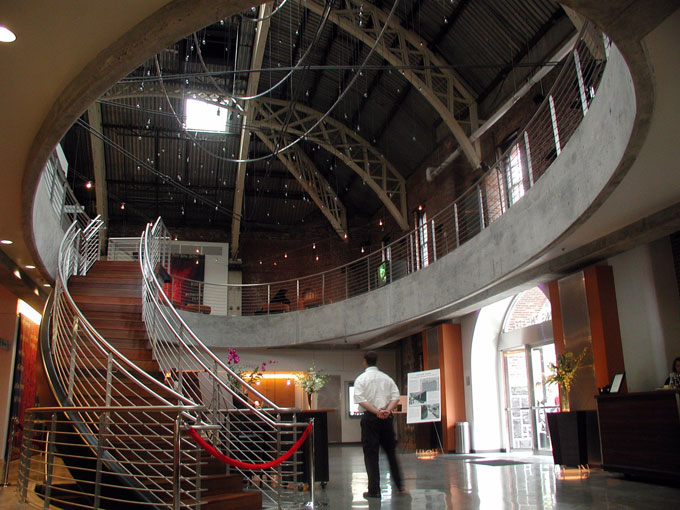
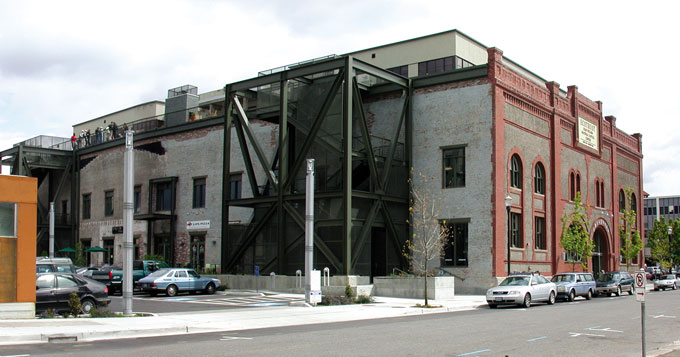
The standards define rehabilitation as “the process of returning a property to a state of utility, through repair or alteration, which makes possible an efficient contemporary use while preserving those portions and features of the property which are significant to its historic, architectural, and cultural values.” The standards are summarized in ten points, and respecting the “historic appearance” and “character-defining features” of a historic property is mentioned again and again. Along with the Secretary’s Standards, the NPS publishes an application guide, available on its website, dealing with various aspects of rehabilitation, including considerations for masonry, wood, and metal; roofs, windows, entrances, porches, and storefronts; structural systems, interior spaces, and mechanical systems; site and setting; and energy, new additions, accessibility, and health and safety. The standards outline each of these topics with

recommended and

not recommended practices and photos representing both scenarios. Summarizing the Secretary’s Standard for rehabilitation, Park said, “If you’re going to make modifications to upgrade a building or modernize certain parts of it, do it consistently, don’t rip out any of the really good stuff, and preserve as much as possible.”

Three other Secretary’s Standards guide preservation, restoration, and reconstruction projects. The standard for

preservation is the most protective of existing features. Park summarized it as: “You keep everything you’ve got,” including existing contemporary features, “and you keep it going.”

Restoration means taking a building back to an interpretation of a certain historic period. “That’s a pretty aggressive standard,” Park said. “You’re ripping off a lot of historic fabric that some people would consider significant.” Reconstruction of a lost building element can occur under rehabilitation standards, but the

reconstruction standards apply to documented reconstruction of a whole structure, as deemed necessary for interpretive purposes.

The Secretary’s Standards for rehabilitation are by far the most commonly applied, especially in private projects, said Park, but they are often misunderstood as being very rigid. “There’s inherent flexibility in the standards,” Park told

EBN. “You can make modifications as long as they are consistent with the character of the building,” she said, noting, “It’s a challenge to architects to have a sense of design that’s appropriate to the building.”

Applying the Secretary’s Standards

In practice, adaptive reuse—or maintaining an old building for a new function without damaging its “character-defining features,” in the language of the Secretary’s Standards—gives owners and architects a great deal of latitude. Two LEED-certified projects in Portland, Oregon, show some opportunities—and pitfalls—and illustrate the amount of flexibility available in historic rehabilitation projects.

With thick masonry walls and more gun-slits than windows, the Oregon National Guard Armory, built in 1891, might not seem like a good candidate for green rehabilitation. The developer, Gerding Edlen Development Company, LLC, wanted to make the building into a home for Portland Center Stage. That required a 600-seat main stage, a 200-seat studio theater, dressing and technical areas, reception space, and theater offices—in a National Register landmark previously encompassing none of those uses. Reopened in October 2006, the 55,000 ft2 (5,100 m2) building provided those spaces, earned the 20% federal tax credit, and became the first National Register building to achieve LEED Platinum certification.

To meet the need for theater space—and volume—that was not provided in the existing building, the project team excavated the building to below the level of the original basement. Even as the floorplan went through significant changes, a large oculus (an eye-shaped opening) in the second-floor floorplate maintains views from the first floor to the exposed roof trusses that were identified as a “character-defining feature.” The distinctive exterior appearance of the building was not altered, apart from the addition of several skylights, which were part of the historic design. The newer spaces are distinctly contemporary in appearance—and in function, with excellent lighting, air quality, and energy efficiency (modeling predicts a 30% improvement over ASHRAE standards), which all contributed to the LEED rating. NPS’s approval of the changes as required for the 20% tax credit demonstrates how the Secretary’s Standards provide flexibility for a building to be an evolving artifact.

Also in Portland, Ecotrust, a nonprofit supporting sustainability in the Pacific Northwest, took a similar path of adaptive reuse and rehabilitation of the Jean Vollum Natural Capital Center, a National Register building. (Published by Ecotrust,

Rebuilt Green discusses the project in detail—see review in EBN

Vol. 13, No. 7 and case study in

BuildingGreen Suite.) The project rehabbed a warehouse, built in 1895 to store building supplies and a classic example of Richardsonian Romanesque style architecture. Ecotrust added space and earned LEED certification, but it had less success convincing NPS that it had followed the Secretary’s Standards.

The project, completed and certified LEED Gold in 2001, transformed the neglected building into 70,000 ft2 (6,500 m2) of retail space and offices. In the rehabilitation, steel towers erected alongside the building serve a dual purpose as seismic support and fire stairs. The towers, located on an exterior wall that is less “character-defining” than the other façades, were added to prolong the life of the building and improve its safety. They would likely have been approved under the Secretary’s Standards, said DiNola. A penthouse addition, however, changes the appearance of the whole building and was a key factor in preventing the building from earning the 20% federal tax credit (it earned the less rigorous 10% credit). Better communication with the historic preservation authorities might have resulted in changes to the design that would have been more palatable historically, said DiNola.

What’s Green About Historic Buildings?

Performance-based energy-efficiency benchmarks are usually expressed in terms of improvement over relevant standards. New buildings typically accomplish these benchmarks using technologies, products, and materials that weren’t available when historic properties were built. Also unavailable, however, were air conditioning and other crutches that discourage architects from using passive, energy-saving design strategies. The Secretary’s Standards can bar changes that a green project team might be inclined to make, but teams should think twice anyway before scrapping the old strategies.

Old buildings and sustainability

Rather than rushing into a building project with preconceived notions of what needs to happen, many professionals working on historic buildings advocate for a gradual approach. Jean Carroon, AIA, principal for preservation at Goody Clancy in Boston, said that when her firm rehabilitated Trinity Church, an 1877 masterpiece by Henry Hobson Richardson (the only American architect, says Carroon, to have a major architectural style, Richardsonian Romanesque, named for him), she approached the building as an artifact. “Our first mandate was to do no harm,” she said. The firm monitored temperature and humidity conditions in the building, which were a concern relative to the interior artwork, for a year before beginning construction.

Mark Webster, senior staff engineer at Simpson Gumpertz & Heger, Inc., in Boston, said that besides respecting the historic features of a building, there are good reasons for treading lightly. “I think of these older buildings as laboratories for how to do things sustainably. They tend to be simpler, more long-lasting and durable,” he said. “One hundred years ago we didn’t automatically reinforce all our slabs-on-grade with mesh or rebar. Having those examples is helpful from a design standpoint.”

Matthew Bronski, a senior staff engineer who works with Webster, agreed: “There are technical benefits of traditional building design and materials that aren’t always widely recognized or appreciated today.” As an example, Bronski points to windows. “On old windows you tend to get dense, old-growth lumber that holds up well,” he said. While acknowledging the environmental benefits of lower-quality, finger-jointed wood often used in today’s windows, “their durability in exterior environments can be poor,” Bronski said. “I’ve seen low-quality finger-jointed wood windows deteriorate and rot in less than five years. You’ve more than lost any initial environmental benefit there.” Although new windows may boast double- or triple-pane sealed insulated glass units (IGUs), and glass with high energy efficiency, Bronski said the quality of the factory hermetic seal in the IGU can vary greatly, and this ultimately tends to limit the useful life of the IGU, as the hermetic seal fails and the IGU “fogs,” or allows condensation inside the panes. “I worked on a job where we rejected about 25% of the IGUs that showed up on the site because of voids or defects in the hermetic seal,” he noted.

Webster acknowledged many problems with older buildings, too. “Many older buildings don’t perform well in earthquakes,” he said. “You can generally retrofit them, but there are going to be some extra costs there.” Depending on the era of a building and construction type, it may not be very well built. For example, Bronski noted that “early 20th-century buildings with steel frames embedded in masonry often have corroding structural steel and can be really costly to rehabilitate.” With more recent buildings up for consideration as historic with every passing year, building professionals will find greater diversity and greater challenges as buildings based on newer technologies need historic rehabilitation.

Embodied energy in old buildings

Despite the environmental qualities of many older buildings, concerns about energy efficiency are common. “There’s an incredible bias throughout the green building agenda that if you want to achieve energy efficiency in a building, you have to start over,” said Michael Jackson, FAIA, chief architect for preservation services at the Illinois Historic Preservation Agency.

Jackson, like many in the historic preservation community, touts the

embodied energy of historic buildings as a way of balancing the desire within the green building community for

operating energy efficiency improvements that may be difficult to achieve. According to Jackson, in order to realize life-cycle savings in a new building, compared with renovating an old building, “the timeframes you need are longer than the predictable life of some of the buildings being built today.”

Jackson supports his view with studies claiming that the embodied energy associated with upgrading or replacing old buildings would take three decades or more to recoup from reduced operating energy in more efficient new or renovated buildings. The study that

EBN examined, however, appeared to significantly overstate its case because it failed to differentiate between site energy and source energy for building operations. The study also used outdated embodied-energy numbers rather than current information from environmental life-cycle assessment (LCA) databases.

Many historic buildings contain materials and features that are valuable from several perspectives: the energy and materials expenditure that reuse of existing materials displaces; the architectural features and workmanship that may be impossible to replace; and the societal value of maintaining artifacts. LEED for New Construction awards up to three points for building reuse, and, although numerous historic projects have been awarded the first of those points, for partial reuse of existing walls, floor, and roof elements, buildings are rarely awarded all three points, which require nearly full reuse of the shell and at least 50% maintenance of interior nonstructural elements.

Some historic preservation advocates suggest that LEED should be amended to award more credits for building reuse, and especially for reuse of historic buildings. At the same time, some in the green building community argue that the historic value of existing buildings and materials should not be confused with their environmental value. In the end, practical, case-by-case considerations will take precedence. Does the owner have a use for the existing building? Does the building have one foot in the grave, or is it structurally sound? Does the economic benefit of reusing the existing building—which may include grants or other incentives—balance the cost of rehabilitation? Do the client’s goals support preserving historic attributes of the building?

Operating energy

Whatever the reason for reusing a historic building, reducing energy use is usually at the top of the rehabilitation agenda. Fortunately, neither preservationists nor sustainability advocates believe that older buildings necessarily are, or need to be, energy hogs. “In doing energy modeling on an older building, you might find it’s better than you thought it would be,” said Bronski.

Marc Rosenbaum, P.E., of Energysmiths in Meriden, New Hampshire, has worked on several historic buildings for educational institutions in New England, and he said he has a strong message for his clients: “Here you’ve got a building that has served this institution and community for a century. Given how we are entering a vastly different resource climate, how do you make this building serve the community for another century?” Rosenbaum added, “If you preserve a historic building as an untouched object, then you can’t use it anymore.”

In Cambridge, Massachusetts, Rosenbaum consulted on the Harvard University Operations Services headquarters building on Blackstone Street. In this building, Rosenbaum focused on improvements to the building envelope, taking on the contentious issue of whether and how to insulate the building’s load-bearing brick walls. With monolithic masonry load-bearing walls, many building-science professionals believe that adding insulation is problematic. Adding insulation to a wall tends to reduce its drying potential by reducing movement of air and heat through and around the wall. These walls do not have the protection of the drainage plane common on today’s brick veneer walls, and, with increased exposure to freeze-thaw cycles with insulation added to the interior of the walls, they can degrade. “You’d love to insulate them on the outside,” said Rosenbaum, which would allow the introduction of a drainage plane and insulation from freeze-thaw cycles, “but if it’s a historic building, this is in direct conflict with the preservation intent.”

At Harvard, Rosenbaum and building scientist John Straube, Ph.D., of the University of Waterloo, Ontario, convinced the project team to insulate from the inside with sprayed, open-cell urethane foam. Recognizing the reduced drying potential of this arrangement, Straube advocated for a preventive approach, which involves keeping the brick dry from the outside with careful detailing of flashing, windows, and parapets so that there is no concentrated wetting of the wall. The team also installed rigid foam insulation across the building’s low-slope roof and energy-efficient replacement windows (the windows had been replaced previously in the early 1990s, reducing historic preservation concerns). The project is aiming for LEED Gold certification with targeted 30%–35% energy savings over ASHRAE standards. The building is on the National Register, so the Secretary’s Standards were used, but as a tax-exempt nonprofit, Harvard did not seek the federal tax credit.

An educational building in central Vermont is another exemplar in energy performance in historic structures. Debevoise Hall at Vermont Law School in South Royalton, Vermont, was built in 1893 as the town’s first central “graded school.” The wood-framed building with a distinctive belfry is a town landmark, part of a National Register historic district, and a striking example of Queen Anne-style architecture.

Among the more challenging aspects of Debevoise Hall from a green and a historic standpoint were the original double-hung wooden windows, which, according to Rosenbaum, who served as a consultant to the $6.5 million renovation and expansion project, were “in terrible condition.” The windows were restored, however, complete with sash weights. The building team installed fiberglass interior storm windows with low-emissivity, argon-filled glazing and dealt with the air gap containing the sash weights by adding insulation to both sides of the weights. Due to structural problems and general deterioration, most areas inside the building required a total gut, making insulation relatively easy. The work paid off, said Rosenbaum, with air leakage being reduced by four-fifths, even with a 26% increase in the building’s area. Total energy use could not be compared before and after construction, but energy use for heating dropped by two-thirds.

Although, like Harvard, Vermont Law School did not seek federal tax credits for its work, Lyssa Papazian, a historic preservationist based in Putney, Vermont, was retained for the job. “My job was to ensure that it met the Secretary’s Standards, and I feel that it did,” she said. The building’s most important historic feature, its exterior, was maintained. Historic preservation proceeded on the interior with a “zone system,” Papazian said. Two first-floor classrooms retained their many historic features. That proved more difficult elsewhere due to the need for structural work as well as an unexpectedly broken historic fabric, with renovations having been made over the years that weren’t sensitive to the building’s history, but key features were maintained wherever possible. Cautioning that “the devil’s always in the details with preservation projects,” Papazian noted that, despite carefully thinking through the installation of the storm windows, their visual impact on the original windows from the inside looking out was higher than expected.

Debevoise, the Harvard Operations Services headquarters, and numerous other green historic rehabilitation projects demonstrate that older buildings can compete with new buildings, even high-performing new buildings, in terms of energy performance.

Opportunities and Challenges

Old and historic buildings are often environmentally friendly, and they contain opportunities for becoming greener. The sidebar provides recommendations for teams working on historic rehabilitation projects. It is intended as a selective, not exhaustive, list. Resources such as

EBN and USGBC provide many more ideas for environmental measures, such as reducing stormwater runoff and potable water use, that design teams are implementing on historic buildings.

Green and historic conflicts

Rehabilitation standards generally encourage the preservation of existing materials or replacement of them with similar materials that don’t disrupt a building’s character-defining appearance. Recycled-content and otherwise green products that are increasingly available for roofing, cladding, and decking are unlikely to be approved under current rehabilitation standards.

But even in areas where green and preservationist agendas come into direct conflict, compromise is possible. According to Walter Sedovic, AIA, who has worked on projects combining preservation and green building, many of the earliest incandescent light fixtures showed off dozens, if not hundreds, of bare bulbs, which at the turn of the twentieth century were a “fabulous new sight.” Those fixtures can use an enormous amount of energy, yet in many cases it would be historically inappropriate to remove those fixtures or to retrofit them with compact fluorescent bulbs.

Faced with massive chandeliers in the Eldridge Street Synagogue restoration project in New York City, Sedovic engineered a compromise. “We’ve outfitted it with incandescents that are period appropriate, and we’ve incorporated a dimmer on that and many other light fixtures like it,” he said. “We have the ability to present the original light fixtures using far less energy than the first time around.” Modern energy-efficient fixtures were installed to supplement that light, and the incandescent lights were wired to come automatically to full brightness in an emergency, fulfilling the need for emergency lighting. “Elements should reflect the time in which they were conceived and manufactured,” said Sedovic, explaining the choice, consistent with the Secretary’s Standards, to install unobtrusive contemporary fixtures alongside historic ones.

Similar challenges—and opportunities to compromise—await architects in the bathroom. “If you look at most early sanitary plumbing fixtures,” said Sedovic, “you’ll see the piping is oversized, the faucets need to be shut off by hand, the urinals can be so large you can step into them and the toilet tanks are massive 8–12 gallon (30–45 l) affairs.” Rehabilitation approaches differ even among preservationists. Said Park, “In most cases, bathrooms and kitchens are considered areas where modernization goes on,” unless “you have something that is really extraordinary.” Sedovic agreed, but recommended trying to maintain historic fixtures, reducing waste by keeping them in good working condition, considering retrofits that can reduce their water use, and replacing potable water with rainwater or graywater.

The integrated design process has been established as an important component of green building, and examples like these demonstrate that the innovative approaches reached through that kind of process are needed just as much, if not more, in green historic rehabilitation. In fact, as in the case studies already discussed, teams need to involve historic preservationists as well as building-science professionals. The shortage of professionals who can navigate both green building and preservation has been an obstacle in the advancement of this field. There’s nothing like learning on the job, however—discussing the success of the Debevoise renovation, Papazian gave credit to the architect on the project, Stephen Rooney, AIA, of Truex, Cullins & Partners, who, she said, “transformed himself into a historic preservationist” during the project.

A shared outlook

Despite inherent conflicts in the environmental and preservationist movements, shared opportunities dwarf those concerns. The greatest enemy of both movements—in the public and in building owners—is short-term thinking, in which buildings are designed and built for the moment, without thought of the long-term consequences of design choices. Both the environment and cultural heritage suffer when buildings are treated as disposable. While green builders who value energy efficiency may not always see eye to eye with preservationists who treasure old windows and other existing features, both groups share a great deal of common ground and have a lot to teach each other.

For more information:

The American Institute of Architects

Historic Resources Committee

www.aia.org/hrc_default/

The Association for Preservation Technology International

www.apti.org

Federal Historic Preservation Tax Incentives

www.cr.nps.gov/hps/tps/tax

The National Park Service

Technical Preservation Services

www.cr.nps.gov/hps/tps/

The National Trust for Historic Preservation

www.nationaltrust.org

National Trust listing of state tax credits:

www.nationaltrust.org/help/taxincentives.pdf


Published January 2, 2007

Climate Change Dominates Greenbuild Conference Agenda

Feature

Climate Change Dominates Greenbuild Conference Agenda

Acknowledging that buildings are responsible for a large proportion of greenhouse gas emissions, both U.S. Green Building Council (USGBC) leadership and many of the 13,000 USGBC members and other attendees at USGBC’s November 2006 Greenbuild conference in Denver expressed a clear and urgent intention to mitigate that contribution. With several announcements, USGBC signaled that it would use its LEED® Rating System to reduce greenhouse gas emissions, by tightening LEED requirements and by increasing the number of buildings designed to LEED standards.

LEED and Carbon Reductions

Figures released by USGBC divide U.S. carbon dioxide emissions from fossil fuels into three sectors, with buildings topping the list at 38% of all contributions, compared with transportation (33%) and industry (29%). USGBC also projects that carbon dioxide emissions from buildings will grow faster than other sectors—1.8% a year through 2030. Buildings can also be a source of carbon reductions. Building half of new commercial buildings to use 50% less energy would save over six million metric tons of carbon dioxide emissions annually, or the equivalent of emissions from one million cars, says the USGBC.

At the opening plenary session of Greenbuild, USGBC CEO Rick Fedrizzi reported that LEED-certified buildings reduce carbon emissions by about 40% compared with conventional buildings. “But even that’s not enough,” he said. “We need to build more of them, we need to operate them properly, and we need to renovate the ones we have already built, because most of them are energy hogs of the first order.” Fedrizzi added, “Time, unfortunately, is not on our side.”

Following his call for action, Fedrizzi announced two new minimum requirements for future LEED projects. These requirements, proposed by the USGBC board and the LEED Steering Committee, are subject to a December 2006 member ballot. Approval would make them effective immediately for all subsequently registered LEED projects.

USGBC’s first proposal is a 50% carbon dioxide emissions reduction. All new commercial LEED projects would be required to reduce emissions by 50% compared to current emissions levels. That requirement will use a holistic accounting of a building’s “carbon footprint,” including contributions from energy and water use, transportation, and materials.

The second new requirement effectively raises the minimum energy performance prerequisite for LEED by requiring that all projects achieve at least two out of a possible ten points under Energy and Atmosphere (EA) Credit 1: Energy Optimization. This requirement is not insignificant—a recent analysis by the New Buildings Institute of the 420 LEED buildings certified under LEED for New Construction (LEED-NC) version 2 by the end of July 2005 reveals that 17% of those projects achieved less than two Energy Optimization points (see graph).
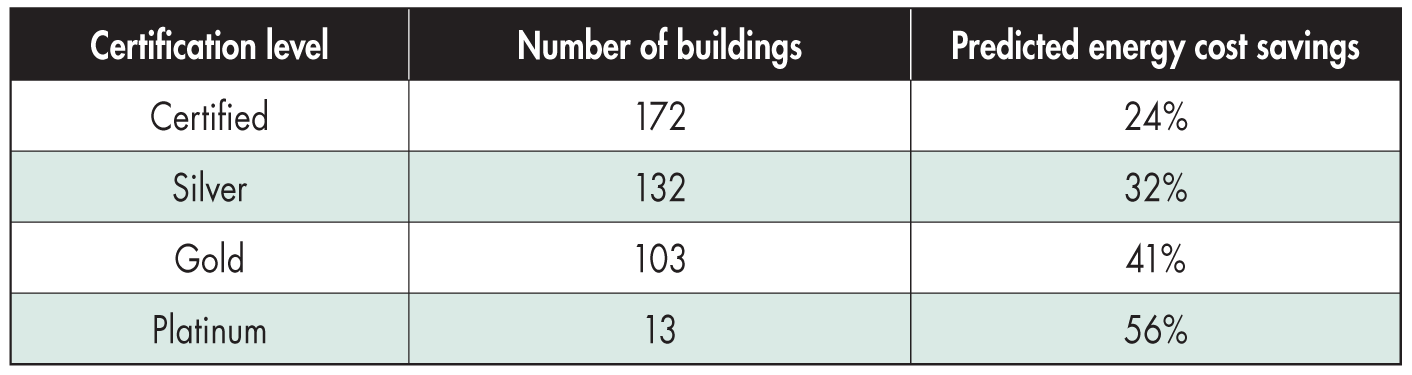
“Getting LEED buildings to go 50% beyond current practice—that’s really exciting,” said Scot Horst, chair of the LEED Steering Committee and President of Horst, Inc. He told

EBN, “We still have to work out exactly how we’re going to calculate that. The two additional prerequisite points in energy probably get buildings closer to 40% beyond typical practice,” but given the desire to look at the whole carbon footprint of a building, he said, “We need to start to quantify the carbon points relative to other credits. We think we can lead teams to achieving the requirement with a ‘carbon overlay’ of other credits, leading teams to align carbon with their other goals for the project.”

Endorsing the 2030 Challenge

Architect Ed Mazria, whose tireless campaigning and “2030 Challenge” (see

EBN

Vol. 15, No. 7) have pushed the design community to adopt aggressive energy reduction goals, spoke at the Greenbuild conference in an informal session and participated in a post-conference meeting with leaders from USGBC, The American Institute of Architects (AIA), and the American Society for Heating, Refrigeration, and Air-conditioning Engineers (ASHRAE). The meeting was called to bring about alignment between the organizations in terms of their energy efficiency goals and the means of measuring achievement against those goals. There was lively debate, according to sources present, as to whether it is appropriate to base these goals on energy use at the building site (“site energy”), as opposed to the energy used to provide that site energy (known as “source energy”), and whether LEED should be endorsed as the common tool for pursuing these aims.

In the end, the group signed onto goals laid out by Mazria and Architecture 2030—previously endorsed by AIA and others—of 50% reductions in operating energy for all new buildings, with further reductions leading to carbon-neutral buildings by 2030. They also agreed to use average site energy use by existing buildings, reported by the U.S. Department of Energy’s 2003 Commercial Buildings Energy Consumption Survey (CBECS), as the baseline.

ASHRAE and LEED (except LEED for Existing Buildings—LEED-EB) have both based their energy performance targets on ASHRAE Standard 90.1 rather than CBECS, so figuring out how they will measure up against the 50% energy use reduction goal is tricky. ASHRAE President Terry Townsend notes that the 2010 version of Standard 90.1 will be 30% more stringent than the current (2004) version, which he estimates will lead to an average savings against CBECS of 58%. LEED-NC v.2 projects have, on average, achieved a reduction in predicted energy cost compared with ASHRAE 90.1-1999 ranging from 24% for certified projects, LEED’s lowest level, to 56% for LEED Platinum projects, the highest level, according to the NBI analysis (see table).

While the actual numbers vary by building type, fuel choice, climate, and other factors, USGBC estimates that with the new requirement for a minimum of two energy optimization points LEED will be well on its way to meeting the 2030 Challenge. NBI performed more detailed analysis of a 94-building subset of the 420 buildings. The 26 office buildings in that subset predicted an average energy use intensity of 62 kBtu/ft2 (700 MJ/m2), which compares favorably with the average CBECS value of 93 kBtu/ft2 (1,100 MJ/m2) but doesn’t yet match the 50% reduction target. USGBC and NBI are now soliciting actual energy use data from those buildings to learn how they are performing in practice.

USGBC carbon offset program

Fedrizzi told Greenbuild attendees that USGBC wants to ensure that the offsets are of the highest quality, helping to define what it means to be carbon neutral. Fedrizzi also announced USGBC’s development of a carbon offset program, which would bring carbon reductions from LEED-certified buildings to the carbon offset market. Said Fedrizzi, the program would rely “on the verified performance data from LEED projects that deliver solid proof of LEED’s significant contributions to the reduction of carbon dioxide in our atmosphere. This program will capture actual energy performance data along with associated carbon dioxide emissions for those LEED-certified buildings that have achieved energy efficiency beyond the LEED prerequisites.” Anticipating a future rise in the cost of carbon offsets, Fedrizzi suggested that the program would spur owners and design teams to “make more aggressive and creative decisions,” increasing their incentives to use LEED and increasing the value of participating buildings.

The USGBC’s carbon dioxide offset program will support USGBC’s intent to become a climate-neutral organization by 2008, another initiative announced by Fedrizzi. In addition to buying, for the fifth year, carbon offsets to make Greenbuild carbon neutral, USGBC’s first act toward this goal is to move its offices for its 80 staff to LEED-certified offices in mass-transit-friendly downtown Washington, D.C., in November 2006. “The first step in carbon reduction is actually using less energy, not just purchasing offsets,” said Fedrizzi. Horst added that USGBC would pursue that goal by “traveling less and using the Web more for meetings,” in addition to buying high-quality offsets.

Process-improvement incentives

Several new initiatives announced at Greenbuild also signal USGBC’s intent to encourage a higher level of certification for LEED buildings. Starting immediately, USGBC pledged to rebate certification fees for LEED Platinum buildings. With certification fees averaging $2,000–$3,000, that rebate may represent a small part of the budget of most LEED projects, but the gesture proved popular with Greenbuild attendees, who were told by Fedrizzi, “We dare you to put us out of business!”

In addition, Fedrizzi announced that all LEED-NC and LEED for Core and Shell (LEED-CS) buildings that achieve certification or have achieved certification “will automatically (at no cost whatsoever) be registered for LEED for Existing Buildings.” Said Fedrizzi, “This change will drive a continued focus on building operations and maintenance, and the sustained performance that it requires.” Linking the LEED-EB initiative to USGBC’s focus on climate change, Michelle Moore, USGBC’s communications director, said, “Existing building stock is 90% of the problem and 90% of the solution.” The emphasis on LEED-EB, which looks at actual energy use, in contrast to LEED-NC, which relies on energy modeling prior to construction, also supports USGBC’s verified-performance carbon offset program.

Reaching More Buildings

USGBC has also recognized that in order to create the broad change necessary to significantly reduce manmade greenhouse gas emissions, it needs to reach more buildings—both through LEED and through other initiatives based on LEED.

One Million Plus LEED buildings

Speaking at Greenbuild’s opening plenary, Ira Magaziner, chair of the Clinton Climate Initiative and the Clinton Foundation (see

EBN

Vol. 15, No. 9) described the available window for mitigating catastrophic effects from climate change at ten years, or 3,650 days. For all the success LEED has achieved, it has certified a total of 600 buildings after six years—not a pace that can have a significant impact within the required time frame. To change that equation, USGBC leadership announced goals for dramatically increasing the rate at which buildings are certified. The goals had to be ambitious, according to incoming USGBC Board chair Sandy Wiggins, to drive home the urgency to staff and volunteers alike: “There is going to be a sea change in everything USGBC does as we stretch to make it happen,” he said.

USGBC announced goals to have 100,000 certified commercial buildings and one million certified homes by 2010 and ten times as many of each by 2020. These goals were derived, according to Wiggins, based on some rough calculations related to Kyoto Protocol targets. “We need 80 million metric tons of reductions from the commercial buildings sector to make its target,” says Wiggins.

To achieve that reduction, 40% of all commercial buildings (both existing and new) would have to achieve a 50% reduction in carbon emissions (the new minimum requirement in LEED), resulting in the goal of one million buildings. Based on commonly used models for technology adoption, to reach one million by 2020, LEED would have to certify 100,000 commercial buildings by 2010, according to Wiggins. (One way USGBC intends to meet its goal is through its portfolio program—see LEED Streamlined for Real Estate Portfolios, Volume Builders.) The calculations for the residential sector are similar but ten times larger. “Kyoto isn’t nearly good enough,” notes Wiggins, but he points out that if these goals are met, the actual reductions will be much larger because many LEED buildings will exceed the 50% minimum reduction, and other buildings, that don’t pursue LEED, will also improve.

Horst lauded the goals as a way of “changing the way we are acting and functioning as an organization and as a membership as well. The challenge,” said Horst, “remains to ensure that, as we’re increasing the number of buildings being certified, we aren’t decreasing the value of certification. We want to get more people involved without lessening the rigor of what it means to be involved.”

Changing building codes

Work continues on ASHRAE Standard 189P, a joint project between USGBC, ASHRAE, and the Illuminating Engineering Society of North America (IESNA), and the committee working on the standard has been charged with finalizing it in 2007. Officially called the “Standard for the Design of High-Performance, Green Buildings Except Low-Rise Residential Buildings,” the standard is intended as a way of putting minimum LEED performance into the form of a building code.

Regarding LEED’s use as a de facto green building code, since it has been adopted by numerous states and municipalities as a requirement for public buildings, Brendan Owens, director of LEED technical development for USGBC, told an information session at Greenbuild that “LEED is a rating system and was never intended to be used as a building code.” Although acknowledging that development of Standard 189 is at an early stage, Owens suggested that its place would likely be as an addendum to official building codes for municipalities that choose to require a basic green building standard for all new construction. Horst agreed: “The concept is that 189 pushes up from the bottom end of typical practice, and LEED pulls and leads the leaders to go way beyond that.” Certifying buildings, even at a lower level, “is an excellent open door for people to get involved in what we are doing,” he told

EBN.

What’s Ahead

The trend coming out of Greenbuild, the biggest U.S. green building event of the year, is clear: focusing on climate change, USGBC will certify more green buildings at a higher level, while working to spread green building into vast new areas, including building codes and facilities built and owned by the largest companies and institutions.

New tools will become available to support this trend: Fedrizzi announced an alliance between USGBC and Autodesk®, maker of the popular design software

AutoCAD, to expand green design capabilities in the increasingly popular building information modeling design tools. “If sustainable design is to hit the mainstream, we must embed its principles into the operating system of the industry,” said Fedrizzi, “and then deliver tools and knowledge to every desktop of every person involved in a project.” Without promising details, Fedrizzi called for modeling tools to help designers “visualize and evaluate a building’s carbon footprint while it’s still on the drawing board.”

At Greenbuild, USGBC also highlighted other partnerships established to address the problem of climate change, including its partnership with the Clinton Climate Initiative and a new partnership with the Enterprise Community Partners to develop green affordable housing. With the climate change imperative as a driver, USGBC has promised a tremendous effort to build on its remarkable success. This effort includes both initiatives to dramatically increase the reach and effectiveness of LEED and ambitious goals for figuring out how to measure and manage carbon emissions while there is still time to do so.

For more information:

U.S. Green Building Council

Washington, D.C.

202-828-7422

www.usgbc.org

Published December 5, 2006

The Evolution of Exit Signs (and Why the Latest is a Bad Idea)

Greening Your Electricity

Feature

Greening Your Electricity

A closer look at the environmental benefits of green power, including on-site renewables, what REC buyers should know about their purchases, and investing in energy conservation

Published September 28, 2006

Get a Whiff of This: The Lowdown on Product Emissions Testing

Treated Wood in Transition: Less Toxic Options in Preserved and Protected Wood