A Bad Week for PVC: Toxic Spill, and Imports Halted Due to Forced Labor

News Brief

A Bad Week for PVC: Toxic Spill, and Imports Halted Due to Forced Labor

A train derailment released toxic vinyl chloride in Ohio, and due to forced labor concerns, U.S. Customs has stopped the import of PVC products from the Xinjiang Uyghur Autonomous Region of China, a major supplier of vinyl flooring.

PVC’s already tainted health, environmental, and social justice record took two major hits this past month. First, PVC products were added to the Uyghur Forced Labor Prevention Act (UFLPA) list that is intended to prevent U.S. imports of products from the Xinjiang Uyghur Autonomous Region (XUAR) in China that are “mined, produced, or manufactured” with forced labor. And second, a train derailment in East Palestine, Ohio, has led to a significant release of toxic vinyl chloride—the building block of PVC.

The UFLPA listing could make vinyl flooring much harder to source. The act, which went into effect in June 2022, originally included construction products such as timber, steel, and photovoltaic panels, but did not include those made from PVC—whose troubled production in the region is outlined in Built on Repression: PVC Building Materials’ Reliance on Labor and Environmental Abuses in the Uyghur Region. That has changed. PVC is now on the UFLPA list, according to the international trade law firm Sandler, Travis & Rosenberg, P.A.

This means that PVC products from XUAR, such as luxury vinyl tile (LVT), cannot be imported into the U.S. and are now being detained unless “(1) the importer provides ‘clear and convincing evidence’ to CBP [U.S. Customs and Border Protection] that the goods were not made with forced labor and (2) the importer has fully complied with due diligence guidance and regulations and responded to all related CBP inquiries,” according to an article on the law firm’s website.

The prohibition adds to PVC’s poor environmental and social justice showing over the past month. The train derailment in Ohio is a serious domestic concern because vinyl chloride is flammable and can cause angiosarcoma, an aggressive liver cancer. East Palestine was evacuated and, to avoid an explosion risk, the five cars carrying vinyl chloride were intentionally set on fire, releasing toxic substances into the air, water, and surrounding communities. The chemical release is having implications far beyond East Palestine and has led to the closure of fresh water intakes as far away as Cincinnati.

More about vinyl flooring and PVC

Forced Labor and the Building Material Supply Chain 

Resilient Flooring: Finding the Green Sweet Spot 

Resilient Flooring

Liquid Linoleum: Seamless Natural Flooring 

The PVC Debate: A Fresh Look

Two Phthalate-Free PVC Plasticizers Stand Out in New Report

Published December 31, 1969

(2023, February 18). A Bad Week for PVC: Toxic Spill, and Imports Halted Due to Forced Labor. Retrieved from https://www.buildinggreen.com/departments/newsbrief

Add new comment

To post a comment, you need to register for a BuildingGreen Basic membership (free) or login to your existing profile.

AIA Declares Climate Emergency in Historic Resolution

News Brief

AIA Declares Climate Emergency in Historic Resolution

The resolution calls for big changes in how AIA and its members will approach the climate crisis.

The American Institute of Architects (AIA) has adopted the AIA Resolution for Urgent and Sustained Climate Action. The historic resolution passed 4,860 to 312 at the 2019 AIA National Convention in Las Vegas.

“Be it resolved that, commencing in 2019 and continuing until zero-net carbon practice is the accepted standard of its members, the AIA prioritize and support urgent climate action as a health, safety, and welfare issue, to exponentially accelerate the ‘decarbonization’ of buildings, the building sector, and the built environment,” reads the resolution. It also calls for the organization to engage members, clients, policymakers, other professional organizations, and the public through “a multi-year strategy for education, practice, advocacy, and outreach.”

“We echo our members’ commitment to fight climate change,” said Robert Ivy, FAIA, executive vice president and CEO of AIA, in a statement to BuildingGreen. He added, “We look forward to working with our members to advance this resolution and these principles.”

The resolution additionally calls for AIA to “adopt and implement the recommendations of the Blue Ribbon Panel on Codes and Standards [titled Disruption, Evolution, and Change] and the Sustainability Leadership Group.” Some of these recommendations:

  • Encourage members to adopt the Top Ten Measures from the Committee on the Environment.
  • Establish high-performance codes as standard practice.
  • Develop a more holistic definition of health, safety, and welfare (HSW) to include sustainability and resilience.
  • Commit to responsibility for existing building stock.
  • Transition to outcome-based building codes and standards.

“Between the launch of the Blue Ribbon panel and almost universal support for the resolution, we have two really, really foundational actions saying it is an urgent and profound realignment of the basic responsibilities we have as architects,” said Carl Elefante, FAIA, one of the lead advocates for the climate resolution. Add to that the recent sustainability-related changes to the AIA Code of Ethics, he said, and “it’s pretty amazing” how profound a change this represents.

Published December 31, 1969

(2019, June 13). AIA Declares Climate Emergency in Historic Resolution. Retrieved from https://www.buildinggreen.com/departments/newsbrief

Add new comment

To post a comment, you need to register for a BuildingGreen Basic membership (free) or login to your existing profile.

California Approves Flame-Retardant-Free Insulation Below Grade

News Brief

California Approves Flame-Retardant-Free Insulation Below Grade

Though products are not yet on the market, a state commission has given the go-ahead for select foam insulation without flame retardants or fire testing.

WARNING – FIRE HAZARD.

That’s how plastic foam insulation will have to be marked following a decision by the State of California Building Standards Commission to allow flame-retardant-free products to be used below grade. The boards will also have to say, in ½-inch-high red lettering, “This product is required to be installed below a minimum 3.5-inch-thick concrete slab on grade,” among other text explaining how the insulation must be used. Packaging will also instruct jobsite workers about storage requirements for the insulation, which will contain no flame retardants and have no fire-testing requirements.

That’s if this type of insulation ever makes it to the market, which is not guaranteed (manufacturers will need to see demand for the product and be willing to take the potential legal risk). But health advocates are claiming a “huge victory,” with an email from the Green Science Policy Institute (GSPI) declaring that flame retardants have “no fire safety benefit” and stating that the institute “applauds this very positive first step.”

The push for this type of ruling started bigger, with GSPI and others arguing to the International Code Council that flame retardants should not be needed in insulation that’s installed behind gypsum wallboard or underneath a concrete slab. A 2012 petition to change the rules in the International Residential Code was voted down, but work has continued at the state level, resulting in this first code ruling of its kind.

More on flame retardants in insulation

Getting Flame Retardants Out of Foam Insulation

New Flame Retardant for Polystyrene: Too Much Like the Old?

Increase Fire Safety Without Flame Retardants, Group Urges

For more information:

Green Science Policy Institute
greensciencepolicy.org


Published December 31, 1969

(2019, March 4). California Approves Flame-Retardant-Free Insulation Below Grade. Retrieved from https://www.buildinggreen.com/departments/newsbrief

Add new comment

To post a comment, you need to register for a BuildingGreen Basic membership (free) or login to your existing profile.

Health Product Declaration Collaborative Teams Up with USGBC

News Brief

Health Product Declaration Collaborative Teams Up with USGBC

A strategic partnership between HPDC and the U.S. Green Building Council aims to scale material transparency.

The creators of the Health Product Declaration (HPD) have teamed up with the U.S. Green Building Council (USGBC) with the goal of scaling product and material ingredient transparency in the building industry. The partnership has four major objectives, according to a Health Product Declaration Collaborative (HPDC) press release:

  • to increase the effectiveness of standards like the HPD and LEED to motivate industry transformation
  • to develop “cohesive, connected” tools and information technology platforms for both finding and reporting ingredient information
  • to increase educational offerings relating to material transparency
  • to convene designer and manufacturer groups “for communication, problem solving, and interaction”

“We’ve seen so much growth in the EPDs [environmental product declarations] available and the HPDs available,” Melissa Baker, senior vice president for technical core at USGBC, told BuildingGreen. “The collaboration with a group like HPDC further reinforces that. … It’s mutually reinforcing in a good way.”

More on HPDs and material transparency

HPD Quick-Start Guide: 5 Easy Steps

Why Chemical Transparency Matters

What’s an HPD? Health Product Declaration FAQs

For more information:

Health Product Declaration Collaborative
hpd-collaborative.org


Published December 31, 1969

(2018, November 15). Health Product Declaration Collaborative Teams Up with USGBC. Retrieved from https://www.buildinggreen.com/departments/newsbrief

Add new comment

To post a comment, you need to register for a BuildingGreen Basic membership (free) or login to your existing profile.

Health Is a Top Driver of Green Building

News Brief

Health Is a Top Driver of Green Building

On par with cost savings, occupant health comes in first place globally in the latest Dodge green building survey.

Health and wellness are trending worldwide in green building, a new report confirms. “When it comes to benefits, most participants cite occupant health and well-being in addition to lower operating costs,” says a press release from the U.S. Green Building Council (USGBC), a contributing partner to the Dodge Data & Analytics World Green Building Trends 2018 SmartMarket Report. The findings are based on surveys of 2,000 building professionals in 86 countries. Other highlights:

  • Two-thirds of those surveyed said that rating systems help their projects perform better.
  • The majority of their projects in the next three years will be green buildings, according to almost half of respondents.
  • Occupant health was the top priority when it came to social drivers.
  • More than half of respondents said they were planning green retrofits.

“With more and more people demanding and expecting healthier places to live and work, more and more leaders around the globe are committing to green building, which is now a trillion-dollar industry,” said Mahesh Ramanujam, president and CEO of USGBC.

More on health and wellness

WELL v2 Brings Big Changes, Aims for Greater Equity

How WELL Got Green Building’s Groove Back

Fitwel: Science That Works

For more information:

Dodge Data & Analytics
construction.com

Published December 31, 1969

(2018, November 13). Health Is a Top Driver of Green Building. Retrieved from https://www.buildinggreen.com/departments/newsbrief

Add new comment

To post a comment, you need to register for a BuildingGreen Basic membership (free) or login to your existing profile.

Cape Town’s Water Crisis: Little Rain for A Lot of People

News Brief

Cape Town’s Water Crisis: Little Rain for A Lot of People

Extensive water management efforts have not prepared South Africa’s second biggest city to survive an extended drought at a time of rapid population growth.

Cape Town’s four million residents are expected to run out of water very soon.

By the end of January, the dams holding the city’s water supply were down to 26% of their capacity, and the government is warning that a “Day Zero”—when capacity drops below 13.5%—is increasingly likely in the coming months. At that point, the City would stop supplying water to most homes and businesses. Residents would have to line up to collect their ration of water. (According to the City, if the level drops below 10%, it may be difficult to get any water at all from the dams.)

In recent years Cape Town had begun to take extensive measures to conserve water—repairing leaks in the system, installing meters, and imposing tariffs to track and control use. In fact, in 2014 Cape Town had a plentiful supply of water and was considered a model for how cities should adapt to climate change.

But over the past three years, the city has suffered from a severe drought while experiencing a rapid increase in population. And not enough new water sources have been developed to serve the growing number of residents.

Strategies and blame

Cape Town set a consumption limit of 87 liters (23 gallons) of water per person per day as an initial strategy to mitigate the issue. But that was ineffective. According to the City, only around half of the residents were complying with that limit. Now, the limit has been reduced to 50 liters (13.2 gallons), and those who exceed it will be charged heavy fines.

In addition, Cape Town has issued increasingly strict rules about how municipal water may be used. New restrictions, put in place February 1st, prohibit the use of municipal water for, among other things:

  • irrigation,
  • swimming pools, and
  • ornamental water fountains or water features.

Though the restrictions direct customers to install efficient fixtures and fittings wherever possible, maximum flow and flush rates are not specified. Instead, customers are “encouraged” to flush toilets with rainwater, well water, or grey water.

The plumber’s role

Cape Town has also called on its plumbers to be leaders in water conservation by focusing, in their daily work, on locating and fixing leaks, installing efficient fittings, and promoting alternative water technologies like greywater and rainwater harvesting systems.

To assist in this effort, the City has published a “plumbing checklist” that outlines the process for finding leaks and checking the efficiency of existing fittings.

Water any way you can get it

The City is also hurrying to construct desalination plants and extract water from aquifers to supplement the main supply in the dams. But these projects will take time. The hope is that, if residents adhere to the new limit, and if there is a sufficient amount of rain in the coming months, “Day Zero” could be put off a bit longer.

While the local government casts blame on residents who have been irresponsible with water use, the residents are angry with City officials for not adequately planning. And the city government has criticized the national government for not providing funding for water projects that could have prevented this situation.

Climate scientists had warned the City several times over the last couple of decades that it was at risk for drought. They encouraged it to secure additional sources of water, rather than rely solely on its rainfall-dependent dams. According to climate models, the city will become warmer and drier, and rains will become more unpredictable.

Ripple effects

Beyond the immediate issue of the lack of water, there are concerns that the water shortage could also have a negative impact on public health, social order, and the city’s economy. Some officials are worried that disease could spread due to a reduction in hand-washing and basic hygiene.

The drought is threatening two pillars of South Africa’s economy: farming and tourism. Agricultural production is down, and if the water is shut off, many businesses in the city that normally draw visitors would have to close. There is also concern that, as the situation becomes more uncertain and tension among residents rises, the local police force will not be able to maintain order.

Vulnerability

Other cities in Africa—a continent that climate scientists describe as particularly vulnerable to extended, recurring droughts—are at risk of ending up in the same situation as Cape Town. And many of these cities have fewer resources than Cape Town, so they are even less prepared for such a crisis.

Economic inequalities are playing out in Cape Town as well. While residents in the wealthier suburbs of the city are installing private water tanks in their backyards, those living in the sprawling outskirts far from water distribution points—and who can’t afford to own a car—are left to wonder how they’ll get their water home.

Support

Non-governmental organizations and others are stepping up to help, including at least one grassroots effort: a woman in East London, South Africa used social media to spread awareness of the crisis and ask people to donate bottled water. She received responses from people all across the country—and beyond—who wanted to help.

For information on various efforts to address the water shortage in Cape Town, follow these links:


Published December 31, 1969

(2018, February 20). Cape Town’s Water Crisis: Little Rain for A Lot of People. Retrieved from https://www.buildinggreen.com/departments/newsbrief

Add new comment

To post a comment, you need to register for a BuildingGreen Basic membership (free) or login to your existing profile.

Trump Imposes Tariffs on Imported Solar Panels

News Brief

Trump Imposes Tariffs on Imported Solar Panels

The Solar Energy Industry Association says the trade barriers will cost 23,000 jobs.

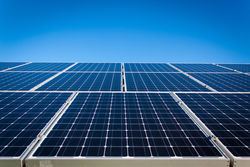
President Trump has imposed 30% tariffs on solar cells and panels manufactured in other countries, following the recommendation of the United States International Trade Commission (USITC).
When the president signed the action imposing the trade barriers he said, “…our workers are going to have lots of really great jobs with products that are going to be made in the good old USA.”

But Abigail Ross Hopper, the president and CEO of the Solar Energy Industry Association (SEIA), said in a statement that the tariffs “will create a crisis in a part of our economy that has been thriving, which will ultimately cost tens of thousands of hard-working, blue-collar Americans their jobs.”

The SEIA, which represents about 1,000 solar installers and manufacturers, predicts the tariffs “will result in the delay or cancellation of billions of dollars in solar investments.”

The trade barriers come on the heels of explosive growth in solar in the U.S.—an average 68% yearly jump in installed solar capacity in the past decade, according to the SEIA.

The association says most of the jobs in solar manufacturing in the U.S. in 2016 were not producing cells or panels, which is the target of the tariffs. Instead they made inverters, racking systems, and solar trackers.

The trade case was brought by solar manufacturers Suniva Inc. and SolarWorld Americas, Inc., which filed a petition last May with USITC claiming the large volume of crystalline silicon photovoltaic (CSPV) cells and modules that are imported into the U.S. are damaging the domestic PV manufacturing industry. The petition asked for tariffs on solar cells and a minimum price for solar panels.  It did not include thin-film solar panels.

Suniva, which was based in Atlanta and was a subsidiary of the Chinese company Shunfeng International Clean Energy Limited, filed for bankruptcy in April 2017. SolarWorld, the largest crystalline-silicon solar panel manufacturer in the U.S., laid off more than 300 employees in July 2017 after its German-owned parent company, SolarWorld AG, filed for the German equivalent of bankruptcy.

The SEIA, in its recommendations to President Trump in December 2017, pointed out that the two petitioners for trade barriers were foreign-owned. “Don’t bail out failed foreign firms at the expense of American workers,” the association wrote.

Juergen Stein, CEO and President of SolarWorld Americas Inc. reacted to the tariffs with this statement: “We are still reviewing these remedies and are hopeful they will be enough to address the import surge and to rebuild solar manufacturing in the United States.”

Trump’s tariffs aren’t as tough as what the two solar manufacturing companies had wanted, but they are still stringent enough to impact the domestic solar industry.

The tariffs on solar cells and modules start at 30% in the first year and fall to 15% four years later. 2.5 gigawatts (GW) of imported cells won’t be subject to a tariff each year.

In an August 2017 letter to the USITC, 27 solar companies in the U.S. opposed new tariffs, stating that “solar must remain competitive on price” in order to compete with other sources of electricity.  The National Electrical Contractors Association also fought the proposed trade barriers, saying they would “double the price of solar panels and stop solar growth dead in its tracks.”

A bipartisan group of governors from Nevada, Colorado, North Carolina, and Massachusetts also wrote the president before he imposed the tariffs, arguing against them. “At a time when our citizens are demanding more clean energy,” the governors wrote to the USITC, “the tariff would cause America to lose 47 gigawatts of solar installations….”

As a result of the tariffs, China could ask the World Trade Organization to intervene and arbitrate on its behalf.

More on Solar PV

Choosing the Right Solar PV Panel for the Job

For more information:

The United States International Trade Commission

USITC Determination and Views of Commissioners on crystalline silicon photovoltaic cells

USITC: Information Obtained in the Investigation of crystalline silicon photovoltaic cells

Published December 31, 1969

(2018, January 24). Trump Imposes Tariffs on Imported Solar Panels. Retrieved from https://www.buildinggreen.com/departments/newsbrief

Add new comment

To post a comment, you need to register for a BuildingGreen Basic membership (free) or login to your existing profile.

USGBC Announces RELi As Its Resilient Design Rating System

News Brief

USGBC Announces RELi As Its Resilient Design Rating System

RELi is USGBC’s new standard for projects designed to endure and recover from extreme weather.

The U.S. Green Building Council (USGBC) launched a new certification Tuesday that sets the first standard for designing buildings and communities that withstand and recover from natural disasters including floods, tornadoes, droughts, and wildfires.

Mahesh Ramanujam, president and CEO of USGBC and Green Business Certification Inc. (GBCI) announced the new resilient design rating system, called RELi (pronounced ‘rely’), during an opening summit at the Greenbuild Convention in Boston.

“Designing with resiliency in mind is crucial to developing sustainable buildings, communities, and cities,” said Ramanujam. “We need to raise awareness, increase capacity and adoption of resiliency in our built environment if we truly want to realize a sustainable future for all.”

Ramanujam said GBCI will verify certification of projects under the RELi standard, develop an associated professional credential program, and scale “this mission to the global market place.”

RELi was developed by The Institute for Market Transformation to Sustainability (MTS) to help design teams plan for hazards and emergencies that could cut power and heat, or compromise a building’s functionality.  (For more on RELi, see The C3 Living Design Project.)

RELi has been developed for more than two years (see The Four Core Issues to Tackle for Resilient Design).

GBCI’s announcement comes after a historic season of hurricanes and wildfires that devastated communities across North America and the Caribbean, which are just now beginning to recover and rebuild.

At the beginning of the design process, the RELi system lays out a “panoramic” approach that requires studying the adaptation needs of a project and facilitating an integrative design process that includes community stakeholders.

RELi specifies steps for preparing for hazards and emergencies by making sure people have food, water, backup power, and the technology to communicate in the days or weeks following a disaster.

It includes specific requirements such as providing first aid training for a percentage of staff or occupants, 96 hours of emergency supplies such as “compressed food bars” and low-glycemic foods, as well as basic communication technologies, including land-lines, text-messaging, and walkie-talkies.

Projects can also earn points towards certification by including provisions for people in the community who don’t live in the building. For example, there are credits that set standards for providing food, water, sanitation, and shelter for twice the project occupancy.

RELi also requires avoiding developing in vulnerable areas and providing backup power as well as infrastructure for temporary generators and boilers.

USGBC, GBCI, and MTS will establish a RELi Steering Committee “to enhance the current resilient standard that will also include the LEED pilot credit,” according to Ramanujam. The Steering Committee will be chaired by Doug Pierce of Perkins+Will, lead author of RELi.

“I’m thrilled that the U.S. Green Building Council will be taking a leadership role with resilience,” noted Alex Wilson, founder of the Resilient Design Institute and BuildingGreen. Wilson was co-chair of the USGBC Resilience Working Group, which is being sunset, and will be vice-chair of the new RELi Steering Committee. “Events this year in Houston, Florida, Puerto Rico, and Northern California have amplified just how important resilience is for our nation’s well-being.” Wilson was instrumental in the development of the Resilient  Design pilot credits in LEED, which are being folded into RELi.

“With the stakes so high,” Ramanujam said, “we have no time to waste, and now is the time to combine all of our efforts to make sure we are looking in the same direction and have a stronger planet.”

Published December 31, 1969

(2017, November 7). USGBC Announces RELi As Its Resilient Design Rating System. Retrieved from https://www.buildinggreen.com/departments/newsbrief

Add new comment

To post a comment, you need to register for a BuildingGreen Basic membership (free) or login to your existing profile.

To Save Cities, Save Trees

News Brief

To Save Cities, Save Trees

Urban forests do $500 million worth of heavy lifting each year for the world’s largest cities—and there’s plenty of room to plant more.

Dr. Seuss’s Lorax spoke for the trees, but you don’t have to be a fantastical creature out of a children’s book to do that anymore. A new study published in Ecological Modeling suggests that urban forests play a vital economic role in very large cities, and they could be doing even more.

According to the researchers, urban trees are known to:

  • Remove air pollution
  • Manage stormwater runoff
  • Reduce heating and cooling costs in buildings
  • Sequester carbon

The scientists put a dollar amount on of each of these natural functions that benefit humans, also known as ecosystem services. Their goal? Provide a baseline that can be used strategically to increase conservation efforts in megacities worldwide, including London, Los Angeles, Cairo, Tokyo, and others. (A megacity has a population of more than ten million.)

Unlike in smaller cities, estimating tree cover in megacities is quite difficult and expensive when using on-the-ground surveys, according to the paper, so the scientists had to develop a way to do it using computer modeling. The models account for the costs of managing trees.

The total annual value of tree cover in each megacity averaged more than $500 million. Air pollution reduction was the most prominent benefit. Overall, researchers found that urban trees provide nearly $1 million in these services per square kilometer per year. Urban forests also provide $20,000/km2 of stormwater processing, $820/km2 in reduced heating and cooling expenses, and $17,000/km2 in carbon sequestration services.

Perhaps the best news of all: according to modeled projections, the average megacity has space to increase its urban tree cover by 85%, which would increase all these benefits by a similar amount.

More about trees

Primer: Ecosystem Services

Tree-Covered Neighborhoods Pop Out Healthier Babies

Kids Breathe Easier When Trees Eat Smog

Urban Trees Curb Shady Behavior

For more information:

Ecological Modeling, Volume 360, 24 September 2017, Pages 328–335
sciencedirect.com


Published December 31, 1969

(2017, October 6). To Save Cities, Save Trees . Retrieved from https://www.buildinggreen.com/departments/newsbrief

Add new comment

To post a comment, you need to register for a BuildingGreen Basic membership (free) or login to your existing profile.

Trump’s EPA Sets New Rules for Chemicals Under TSCA

News Brief

Trump’s EPA Sets New Rules for Chemicals Under TSCA

Faster reviews and more industry-friendly risk assessments are among the changes.

New chemical reviews are speeding up at the U.S. Environmental Protection Agency (EPA).


Under the Toxic Substances Control Act (TSCA), before newly developed chemicals can be used in the U.S., EPA must review them for safety. Administrator Scott Pruitt recently announced how the agency plans to do this, stating that the rules will protect human health and the environment “while also being supportive of bringing new chemicals to market.”

The changes include faster reviews, more collaboration with chemical manufacturers, and a subtle but important shift in how the agency will conduct risk evaluations—predictions of how likely a chemical is to harm people or the environment.

EPA will focus on the “intended uses” of new chemicals, meaning the specific uses the chemical manufacturer already expects. “Reasonably foreseen uses”—things the new chemical could be used for in the future—will be taken into account only “where facts suggest the activity is not only possible, but, over time under proper conditions, probable.” This suggests the agency will focus its risk evaluations narrowly and is unlikely to account for potential hazardous impacts throughout manufacture, use, and degradation.

The American Chemistry Council praised the new rules, saying in an email statement to BuildingGreen, “We strongly support the Administrator’s commitment to a more predictable and transparent process for decision-making and look forward to continued collaboration in achieving these improvements.”

Chemical watchdog groups were more hesitant. “I thought we were finally making progress with TSCA reform,” wrote Richard Denison, Ph.D., of the Environmental Defense Fund in a recent blog post. “The law requires … that EPA must conduct broad reviews of chemicals across their full life cycles and accounting for their known, intended, and reasonably foreseen uses,” he explained. “Yet the changes made to the final rules represent a renewed effort to move us squarely away from that.”

The new rules do not cover how EPA handles chemicals already on the market.

More on risk assessment and chemical regulations

EPA to Regulate Hazardous Chemicals in Building Materials

Building Products and Health: A Look at Risk vs. Hazard

TSCA Reform: Chemical Regulations, at a Cost

Chemical Risk Assessments Come to LEED v4

For more information:

U.S. Environmental Protection Agency
epa.gov


Published December 31, 1969

(2017, August 25). Trump’s EPA Sets New Rules for Chemicals Under TSCA. Retrieved from https://www.buildinggreen.com/departments/newsbrief

Add new comment

To post a comment, you need to register for a BuildingGreen Basic membership (free) or login to your existing profile.